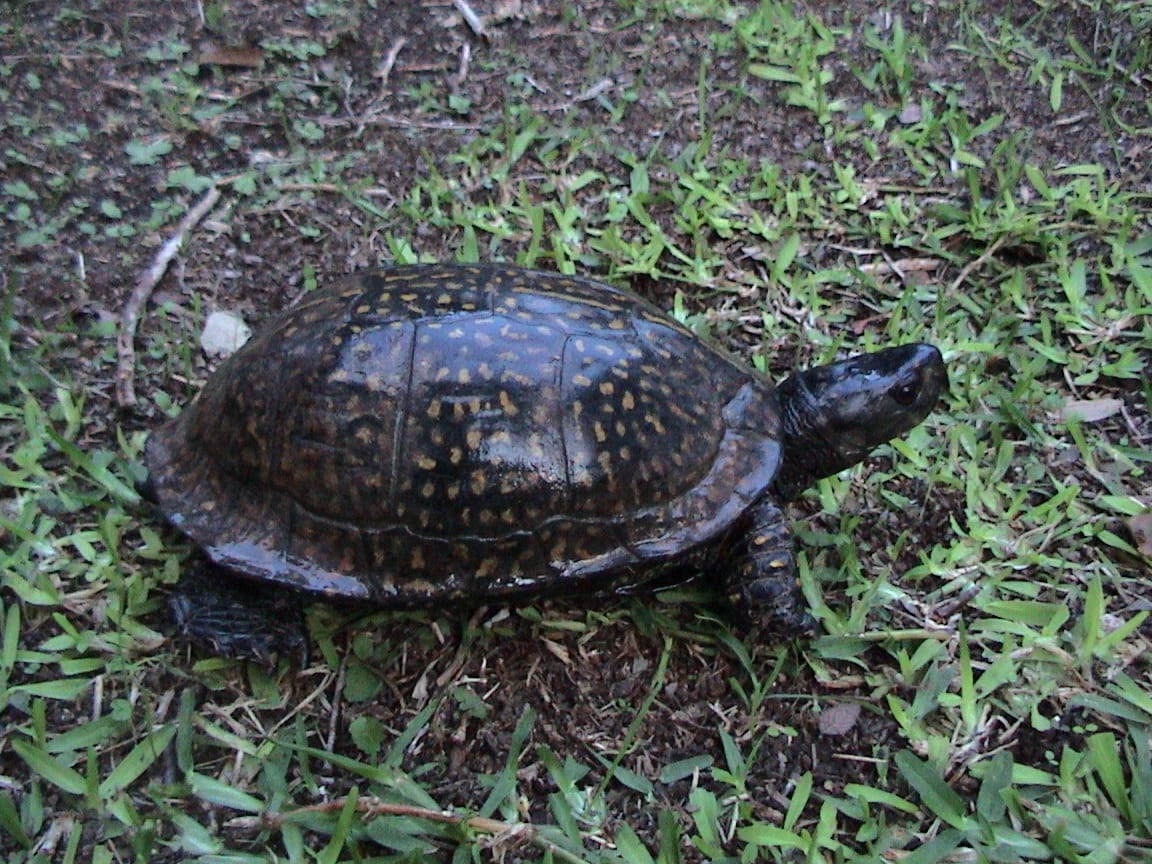
 © Dawson (English Wikipedia) / CC BY-SA 2.5
Gulf Coast Box Turtle
The Gulf Coast Box Turtle is the largest subspecies of the common box turtle, native to the coastal plains along the Gulf of Mexico. Large males can grow to over 20cm in carapace length, giving them a noticeably substantial build compared to other box turtles. This subspecies tends to spend more time in and around water than its relatives, making an enclosure with a generous water feature a natural fit. Coloration and pattern vary widely between individuals, and many show traits that blend with neighboring subspecies, so no two turtles look quite alike. Suited to keepers with some reptile experience, they're thought to be long-lived with limited data on captive lifespan, so it's worth planning for a lasting commitment before bringing one home.
View Gulf Coast Box Turtle encyclopedia →0% commission on your first sales!Register by September 30, 2026 and your first 2 sales are commission-free!
Breeder Wanted!
List on BreederDirect and sell directly to customers nationwide!
6 Transparency Promises from Br-Choku
Every Reptiles & Amphibians from verified Breeder breeders includes complete information: morph, genetics, feeding requirements, and temperament details.
- Morph Information
- Actual Photos
- Feeding Information
- Temperament Information
- Genetics Information
- Age (Months)
Browse all 319 breeds
Difficulty Level
Feeding Type
Temperament
Verified breeders wanted for Reptiles & Amphibians
Breeders are signing up now ahead of launch. Subscribe to be notified when new listings go live.
Getting alerts is free with a member account. When new listings match your saved search, we'll notify you by email and in-app.
Browse other categories
Verified breeders (preview)
Are you raising reptiles & amphibians?
Register as a breeder and connect with buyers directly.
Apply as a breederGulf Coast Box Turtle key facts
- Care level
- Intermediate
- Lifespan
- Few captive lifespan data (plan for a long-lived pet)
- Size
- Large males exceed 20 cm carapace length (largest subspecies)
- Diet
- Omnivore (insects, worms, fruit, leaves)
- Housing
- It uses water more than other subspecies, so add a wide, shallow soaking area to the land section, plus moisture-holding substrate and hides.
- Temperature & Humidity
- It lives around swamps and estuaries. Subspecies-specific husbandry temperatures are scarce, so provide a basking spot, a cooler area and a gradient.
- Diet & Feeding
- Box turtles are omnivores; combine insects, worms, snails, fruit, leaves and fungi.
- Temperament
- Males are territorial and fight by biting and trying to flip each other, so do not house males together.
- Notes
- It is hard to distinguish from other subspecies and intergrades by looks alone; check locality data together with size (large males exceed 20 cm). Never release a captive animal into the wild.
About Gulf Coast Box Turtle
The Gulf Coast Box Turtle, the largest subspecies of the common box turtle from the Gulf coastal plains, grows to over 20cm in males and shows a stronger affinity for water than other subspecies—a species suited to keepers with some experience.
7 things to know before welcoming a Gulf Coast Box Turtle
1Water-Loving Habits
Gulf Coast Box Turtles are known to spend more time in and around water than other subspecies of the common box turtle. Set up the enclosure with a shallow water area alongside dry land so they can move freely between the two.
2Large-Growing Males
This is the largest subspecies of the common box turtle, with large males reaching over 20cm in carapace length. Plan for that eventual size from the start and provide a spacious enclosure rather than upgrading later.
3Individual Variation in Markings
Coloration and shell patterns vary widely among individuals, and many show traits that overlap with neighboring subspecies. That means no two turtles look exactly alike, which is part of the appeal.
4Plan for the Long Term
Detailed data on captive lifespan is limited, but box turtles as a group are known to be long-lived. Plan on caring for one over many years rather than treating it as a short-term commitment.
5Intermediate Care Level
This species is generally considered suitable for keepers with some prior experience, since maintaining proper temperature and humidity takes a bit of know-how. First-time reptile owners should brush up on the basics before bringing one home.
6A Balanced Omnivore Diet
Box turtles are omnivores, and individual preferences can vary quite a bit. Keep an eye on how each turtle eats and adjust the diet as needed to keep it well balanced.
7Preparing Before You Bring One Home
Before bringing one home, set up the enclosure in advance with both a water area and dry land, plus a hiding spot. It also helps to know of a vet experienced with reptiles in case any health concerns come up.
Frequently asked questions about Gulf Coast Box Turtle
- Q.How difficult is the Gulf Coast Box Turtle to keep?
- A.It's generally considered suitable for keepers with some experience. Having a basic understanding of reptile care, including temperature, humidity, and water setup, makes for a smoother start.
- Q.How large does it grow?
- A.It's the largest subspecies of the common box turtle, with large males exceeding 20cm in carapace length. Prepare an enclosure with that eventual size in mind.
- Q.What's its expected lifespan?
- A.Detailed data on captive lifespan is limited. Since box turtles as a group are known to be long-lived, it's best to plan for long-term care from the start.
- Q.How does it differ from other subspecies?
- A.It grows to the largest size among common box turtle subspecies and tends to spend more time near water than the others. It also shows wide variation in appearance, with many individuals sharing traits with neighboring subspecies.
- Q.Is it listed under CITES?
- A.Yes, the Gulf Coast Box Turtle is listed under CITES Appendix II. Be sure to check the listing details before bringing one home.
Useful tools for Gulf Coast Box Turtle care
Learn more about Gulf Coast Box Turtle in the encyclopedia
View Gulf Coast Box Turtle encyclopedia entry →
Care difficulty, lifespan, size and diet — all basics covered.
More in this category
Can't find the one you're looking for?
Post your wishes for free and breeders with matching animals will contact you with introductions.