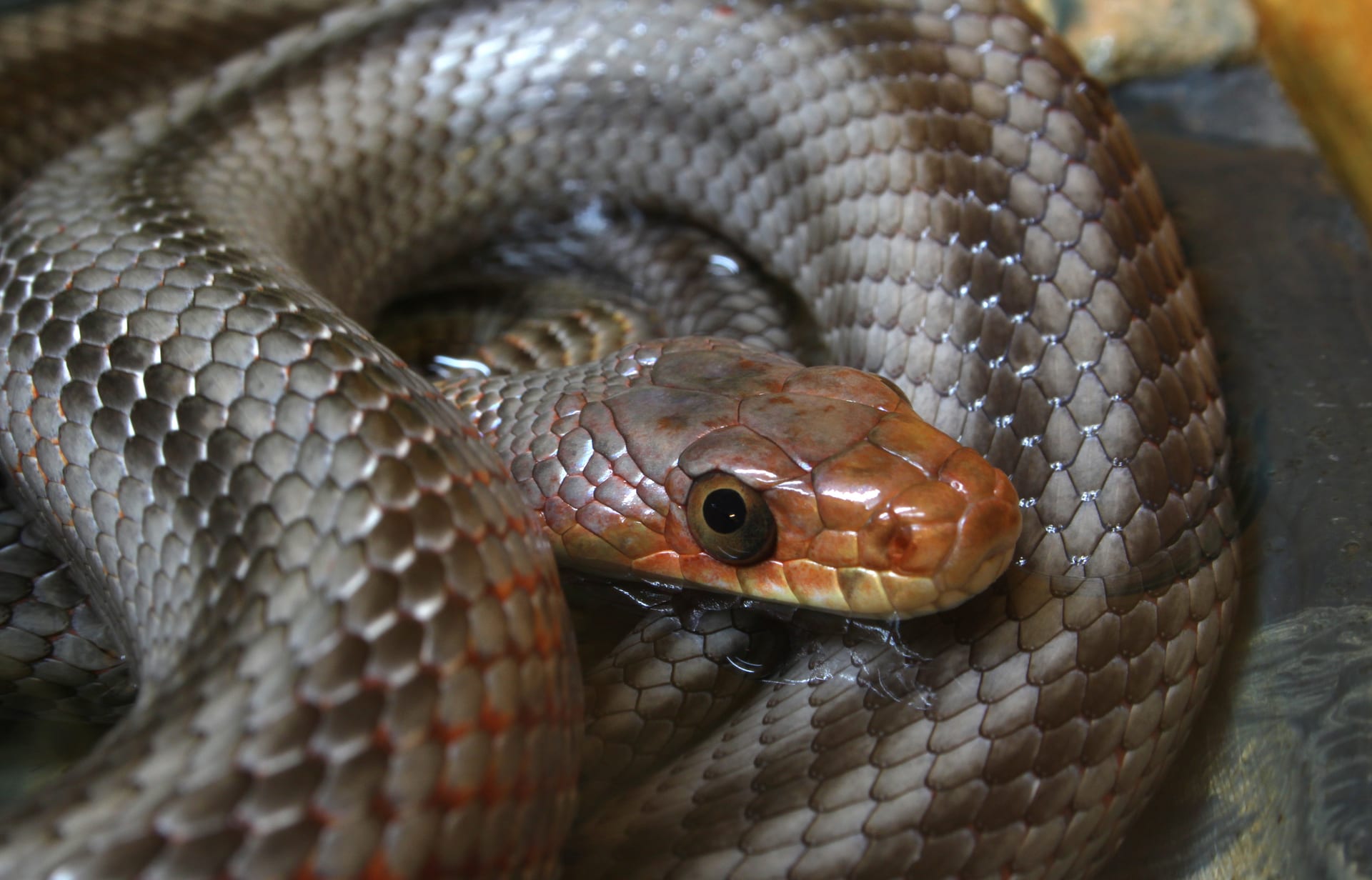
 © Holger Krisp / CC BY 3.0
Baird's Rat Snake
Baird's Rat Snake is a colubrid native to the semi-arid rocky terrain stretching from western Texas to northeastern Mexico. Its body ranges from burnt orange to deep salmon, marked with four stripes running from neck to tail — a striking pattern that makes it a real standout among pet snakes. Compared to closely related species, it has a notably calm and easygoing temperament, making it comfortable to handle once acclimated. Considered beginner-friendly, it's a great choice for anyone taking their first steps into snake keeping.
View Baird's Rat Snake encyclopedia →0% commission on your first sales!Register by September 30, 2026 and your first 2 sales are commission-free!
Breeder Wanted!
List on BreederDirect and sell directly to customers nationwide!
6 Transparency Promises from Br-Choku
Every Reptiles & Amphibians from verified Breeder breeders includes complete information: morph, genetics, feeding requirements, and temperament details.
- Morph Information
- Actual Photos
- Feeding Information
- Temperament Information
- Genetics Information
- Age (Months)
Browse all 280 breeds
Difficulty Level
Feeding Type
Temperament
Verified breeders wanted for Reptiles & Amphibians
Breeders are signing up now ahead of launch. Subscribe to be notified when new listings go live.
Getting alerts is free with a member account. When new listings match your saved search, we'll notify you by email and in-app.
Browse other categories
Verified breeders (preview)
Are you raising reptiles & amphibians?
Register as a breeder and connect with buyers directly.
Apply as a breederBaird's Rat Snake key facts
- Care level
- Beginner-friendly
- Lifespan
- 15-20 years
- Size
- 64-140cm
- Diet
- Thawed frozen mice and rats
- Temperature & Humidity
- Its habitat is semi-arid rocky country and upland desert from western Texas into north-eastern Mexico. Build a gradient from a basking side to a cool side and adjust from measured readings and the snake's behaviour.
- Enclosure
- As an inquisitive snake reaching about a metre, it needs a front-opening enclosure with enough floor space to stretch out. Since it lives among rocks, combine stacked rock or cork bark hides with something to climb. Remove faeces and soiled substrate promptly.
- Diet & Feeding
- In the wild it takes mainly rodents plus birds, and juveniles often eat lizards, so scenting pinkie mice can help a reluctant hatchling start feeding. Once grown, offer thawed frozen mice or rats sized to the snake.
- Temperament
- Regarded as gentler than other rat snakes and easy to handle. Keep it singly. It is wary and elusive in the wild, but captive animals settle readily.
- Notes
- It is not listed in the CITES appendices, and it is neither a specified animal nor an invasive alien species under Japanese law. The IUCN Red List assesses it as Least Concern. Trade names for rat snakes are easily confused, so confirm the scientific name Pantherophis bairdi.
About Baird's Rat Snake
A colubrid native to the rocky semi-arid regions of western Texas and northeastern Mexico, with an orange-to-salmon body marked by four stripes. Calm-tempered and beginner-friendly, reaching 64-140cm as an adult.
7 things to know before welcoming a Baird's Rat Snake
1Calm Temperament
Baird's Rat Snake is known for a calmer temperament than many related species, and individuals often settle into handling well once acclimated. That said, personality varies by individual, so it's best to build trust gradually rather than handling right away.
2Adults Can Reach 140cm
Adults range from 64 to 140cm, so this species can grow quite large in captivity. Choose an enclosure with future growth in mind, not just a size that fits the snake at the time of purchase.
3Prefers a Drier Setup
In the wild, this species lives in the semi-arid rocky terrain of western Texas and northeastern Mexico. Aim for a drier substrate and good ventilation rather than a humid setup.
4Set Up a Temperature Gradient
Set up both a basking spot and a cooler area to create a temperature gradient inside the enclosure — this is fundamental to keeping the snake healthy. Check temperatures regularly, especially as room temperature shifts with the seasons.
5Understand Its Rodent Diet
True to its name, the rat snake's staple diet is frozen-thawed mice or rats. Getting comfortable with feeding schedules and prey sizing beforehand will make the transition to ownership much smoother.
6Shedding and Health Checks
Snakes shed periodically as they grow, and the condition of a shed can be a useful health indicator. Get into the habit of checking whether sheds come off cleanly and watching for any issues with the skin or eyes.
7Choose a Trustworthy Source
Before bringing one home, it helps to choose a breeder or seller who can clearly explain the snake's health history and how it's been kept. Don't hesitate to ask questions ahead of time about anything you're unsure of.
Frequently asked questions about Baird's Rat Snake
- Q.Can beginners keep this species?
- A.Yes, Baird's Rat Snake is generally considered a beginner-friendly species. Its temperament is calmer than many related snakes, making it approachable even for first-time keepers.
- Q.Is it docile, or does it tend to bite?
- A.It's generally regarded as calmer than closely related species, though individual personalities do vary. Handling tends to go more smoothly when the snake is introduced to touch gradually rather than suddenly.
- Q.How large does it grow?
- A.Adults typically reach 64 to 140cm in length. Since there's considerable variation between individuals, it's wise to plan your enclosure with future growth in mind from the start.
- Q.What should it be fed?
- A.As the name suggests, its staple food is frozen-thawed mice or rats. The key is choosing appropriately sized prey and keeping a consistent feeding schedule.
- Q.Is this species subject to regulation?
- A.Baird's Rat Snake is not listed under CITES.
Useful tools for Baird's Rat Snake care
Learn more about Baird's Rat Snake in the encyclopedia
View Baird's Rat Snake encyclopedia entry →
Care difficulty, lifespan, size and diet — all basics covered.
More in this category
Can't find the one you're looking for?
Post your wishes for free and breeders with matching animals will contact you with introductions.