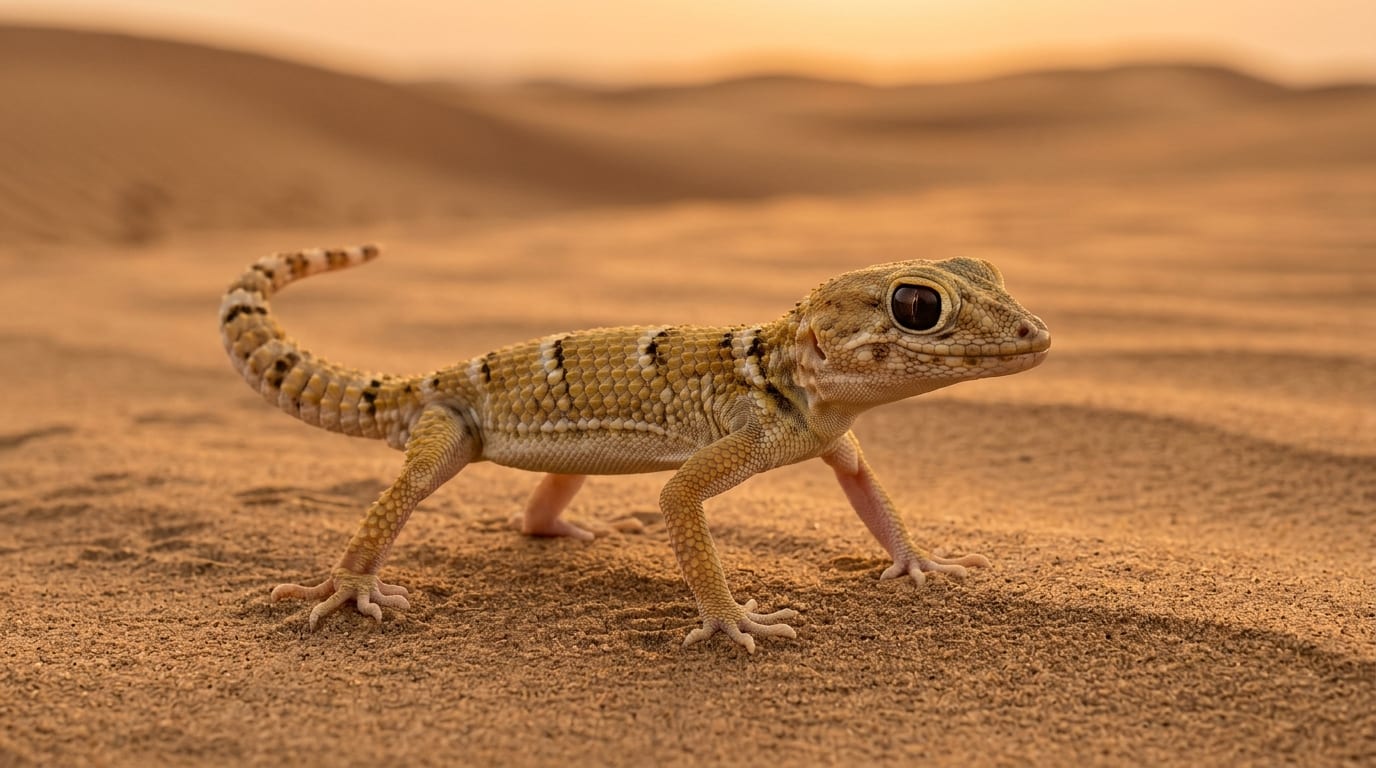
Turpan Wonder Gecko
The Turpan Wonder Gecko is a desert-dwelling species found only in the Turpan Basin of Xinjiang, China, making it one of the more range-restricted geckos in the trade. Adults reach a modest 7.6 to 9.4 cm in body length, with males developing noticeably broader heads than females. Its most striking trait shows up in juveniles: when threatened, they curl their tail forward over the body, a posture thought to mimic the scorpions that share their habitat. Calm and manageable once settled in, it still calls for some desert-husbandry know-how, making it better suited to keepers with prior gecko experience. It's a distinctive, conversation-worthy gecko for the right owner.
View Turpan Wonder Gecko encyclopedia →0% commission on your first sales!Register by September 30, 2026 and your first 2 sales are commission-free!
Breeder Wanted!
List on BreederDirect and sell directly to customers nationwide!
6 Transparency Promises from Br-Choku
Every Reptiles & Amphibians from verified Breeder breeders includes complete information: morph, genetics, feeding requirements, and temperament details.
- Morph Information
- Actual Photos
- Feeding Information
- Temperament Information
- Genetics Information
- Age (Months)
Browse all 280 breeds
Difficulty Level
Feeding Type
Temperament
Verified breeders wanted for Reptiles & Amphibians
Breeders are signing up now ahead of launch. Subscribe to be notified when new listings go live.
Getting alerts is free with a member account. When new listings match your saved search, we'll notify you by email and in-app.
Browse other categories
Verified breeders (preview)
Are you raising reptiles & amphibians?
Register as a breeder and connect with buyers directly.
Apply as a breederTurpan Wonder Gecko key facts
- Care level
- Intermediate
- Lifespan
- 10-15 years
- Size
- SVL 7.6-9.4cm
- Diet
- Mainly insects in spring, shifting to fruit in summer and autumn, with caper bush fruit an important item
- Temperature & Humidity
- It lives in arid shrubland and desert in the Turpan Depression. For Teratoscincus the general approach is a localised hot spot by day while keeping the base of the substrate damp rather than letting the whole enclosure dry out. In the wild it hibernates through the winter.
- Enclosure
- Terrestrial and an active burrower, so use a terrarium with a deep sand substrate. Layering the substrate dry on top and damp at the base keeps burrows from collapsing. Seat rocks and hides on the enclosure floor before adding substrate.
- Diet & Feeding
- In the wild it takes a near-omnivorous diet, mainly insects in spring and fruit in summer and autumn. In captivity use crickets and roaches as the staple and small amounts of fruit may be offered alongside. Dust feeders with calcium and vitamin supplements.
- Temperament
- Teratoscincus scales come away easily and will slough off if the animal is grasped, so avoid handling. Juveniles adopt a distinctive posture, curling the tail forward, when threatened. Keep animals singly as a rule.
- Notes
- Not listed on any CITES appendix. The IUCN assesses it as Least Concern. It appears neither on the schedule of designated dangerous animals under the Order for Enforcement of the Act on Welfare and Management of Animals nor on Japan's list of invasive alien species. Being restricted to the Turpan Depression it is a narrow-range endemic and very little enters trade. The Japanese name element sasakure-yamori properly belongs to the Madagascan and Comoran genus Paroedura, a different genus from this species of the Chinese deserts. Care information published under that name does not describe this species, so confirm the scientific name Teratoscincus roborowskii.
About Turpan Wonder Gecko
A rare desert gecko found only in China's Turpan Basin, reaching 7.6-9.4 cm in body length. Juveniles curl their tails to mimic local scorpions. Best suited to intermediate keepers.
7 things to know before welcoming a Turpan Wonder Gecko
1Recreate a Desert Habitat
Turpan Wonder Geckos come from an arid desert region, so their enclosure should stay on the dry side. Use low-moisture sand or dry substrate and avoid excess humidity. Good ventilation helps keep them healthy.
2Day-Night Temperature Swings
Their native habitat has sharp temperature swings between day and night, so a warmer basking area by day and a cooler night temperature mimic natural conditions. Provide both a warm spot and a cool hideout.
3Best for Intermediate Keepers
This species is considered suited to intermediate keepers rather than absolute beginners. Prior experience managing temperature, humidity, and feeding routines with another species is a helpful foundation.
4Juveniles Mimic Scorpions
When threatened, juveniles curl their tail forward over their body, a posture thought to resemble the scorpions found in the same habitat. It's a natural startle response, so observe calmly rather than provoking it.
5Males Have Broader Heads
Adult males develop noticeably broader, sturdier heads than females, which is a useful visual cue for sexing. Males also tend to appear more robust overall.
6Nocturnal and Low-Key
These geckos are nocturnal and typically stay hidden and still during the day. Keep handling minimal and let them settle in a quiet enclosure to stay calm.
7Prep the Enclosure First
Before bringing one home, set up a dry substrate, hiding spots, and a proper temperature gradient. Having the environment ready in advance makes the transition to its new home much smoother.
Frequently asked questions about Turpan Wonder Gecko
- Q.Can beginners keep a Turpan Wonder Gecko?
- A.This species is considered suited to intermediate keepers rather than beginners. Prior reptile-keeping experience helps with managing temperature and humidity.
- Q.How big do they get?
- A.Adults reach a body length of about 7.6 to 9.4 cm. Total length including the tail is somewhat longer.
- Q.Why do juveniles curl their tails?
- A.When they feel threatened, juveniles curl their tail forward over their body, a behavior thought to mimic the scorpions that share their habitat. It's a natural startle response, so it's best to observe calmly rather than provoke it.
- Q.Is this species regulated under CITES?
- A.The Turpan Wonder Gecko is not subject to CITES.
- Q.Are they calm and easy to handle?
- A.Most individuals are nocturnal and fairly low-key, tending to stay hidden during the day. It's best to keep handling minimal and let them settle in a quiet enclosure.
Useful tools for Turpan Wonder Gecko care
Learn more about Turpan Wonder Gecko in the encyclopedia
View Turpan Wonder Gecko encyclopedia entry →
Care difficulty, lifespan, size and diet — all basics covered.
More in this category
Can't find the one you're looking for?
Post your wishes for free and breeders with matching animals will contact you with introductions.