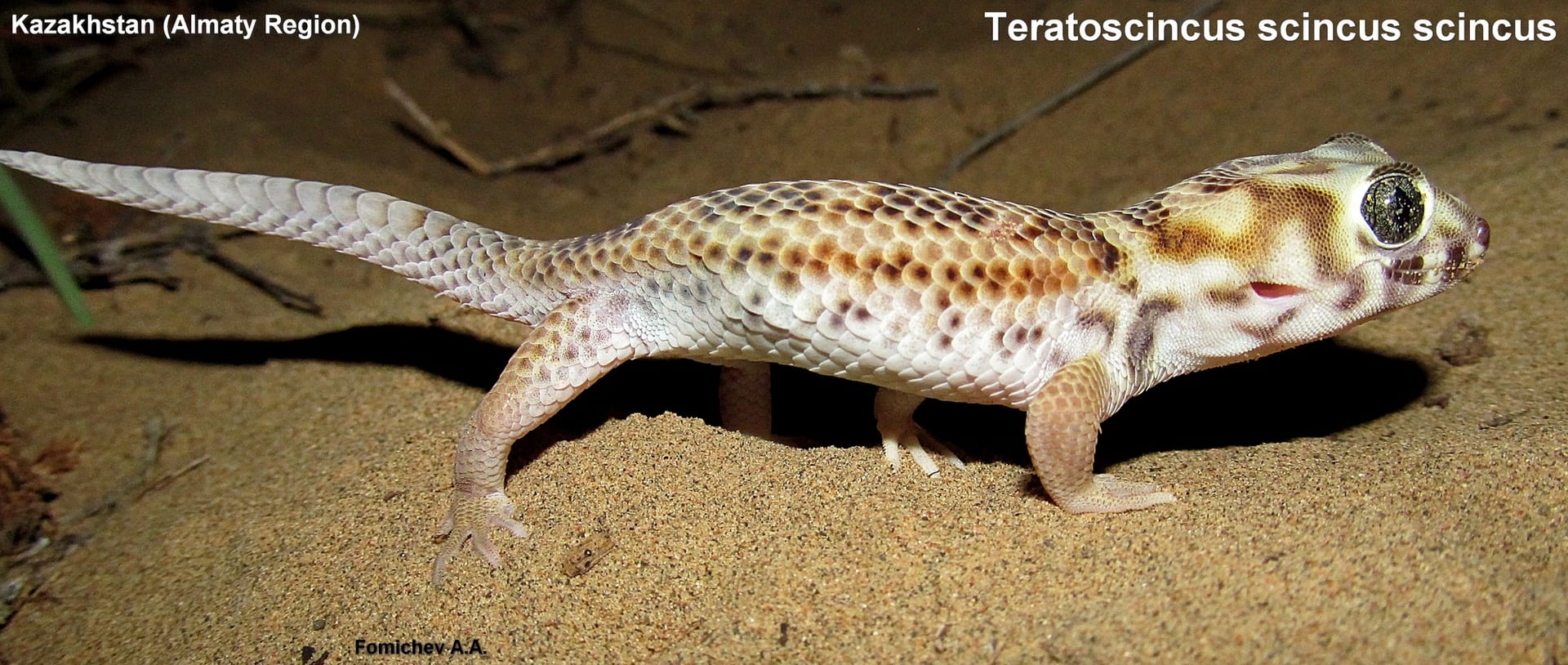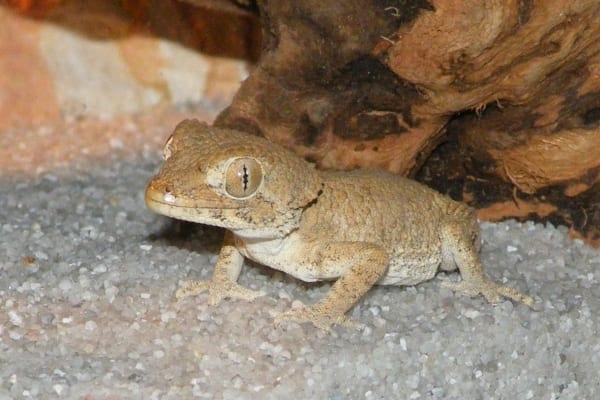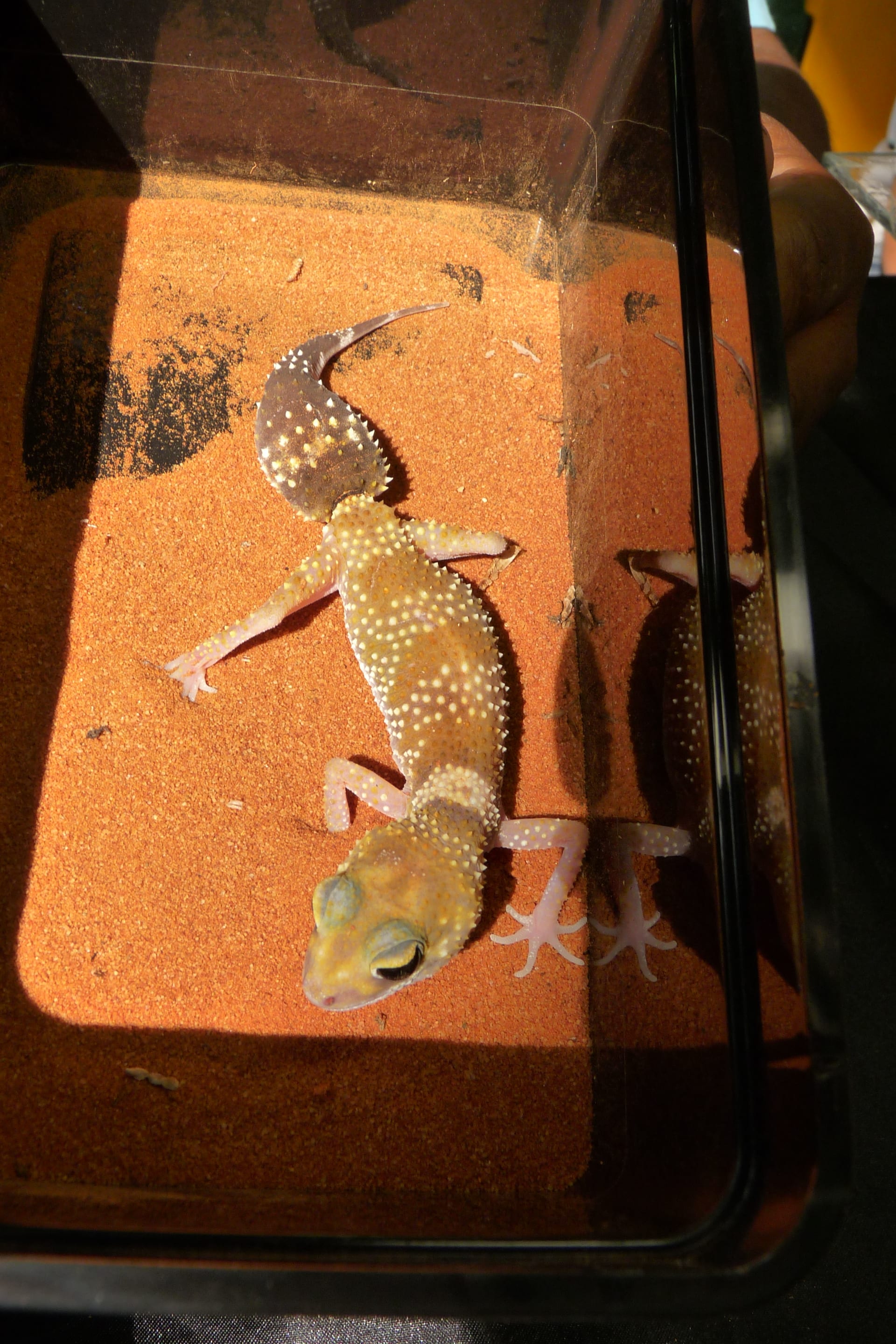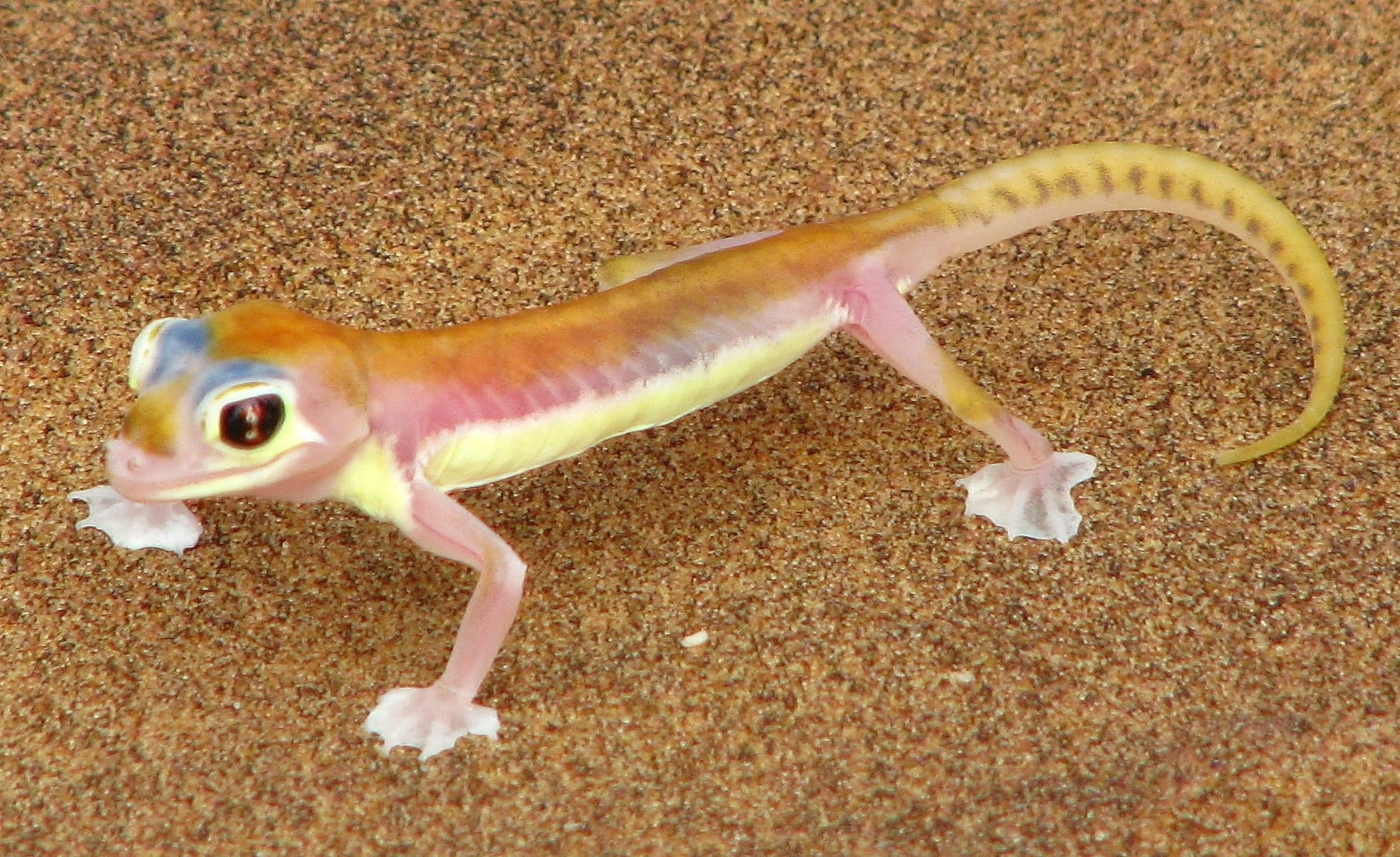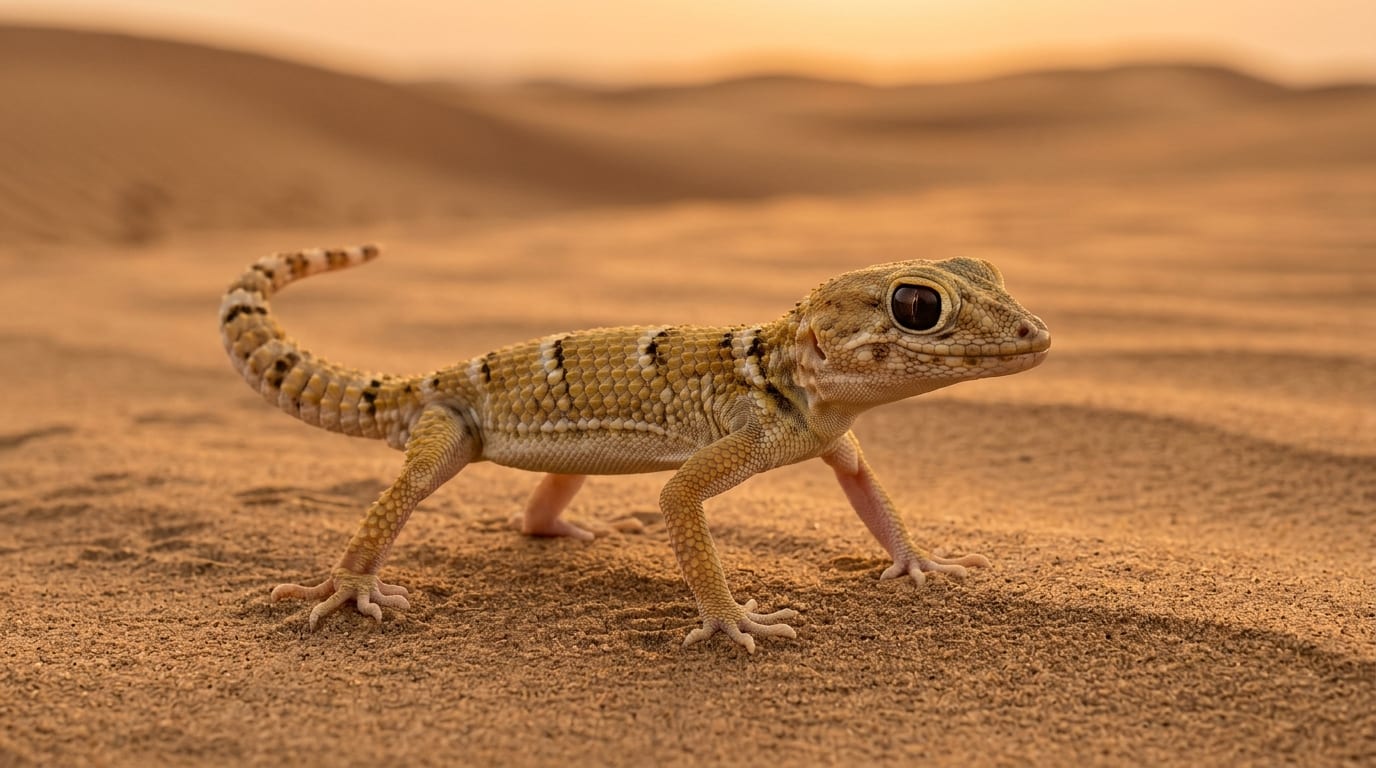
AI-generated image
Turpan Wonder Gecko
IntermediateTeratoscincus roborowskii
A desert gecko restricted to the Turpan Depression in Xinjiang, China. It reaches a snout-vent length of 7.6-9.4 cm, and adult males have broader heads. Juveniles curl the tail forward when threatened, apparently mimicking the scorpions that share their range.
Difficulty
Intermediate
Temperature
25〜32℃
Lifespan
10-15 years
Size
SVL 7.6-9.4cm
Humidity
40〜70%
Diet
Mainly insects in spring, shifting to fruit in summer and autumn, with caper bush fruit an important item
About
The Turpan wonder gecko (Teratoscincus roborowskii) is a sphaerodactylid gecko endemic to the Turpan Depression in Xinjiang, China. It reaches a snout-vent length of 7.6-9.4 cm, and adult males have wider heads than females. Jacques von Bedriaga described it in 1906, the epithet honouring the Russian explorer Roborovsky. The holotype was reported from the oasis of Dunhuang in Gansu, but the species does not occur there and the label is believed to have been mixed up, the specimen probably coming from the Turpan Depression. It is nocturnal and ground-dwelling, emerging from its burrow to forage. Its diet shifts with the seasons, dominated by insects in spring and fruit in summer and autumn; it feeds heavily on caper bush fruit and acts as a seed disperser for that plant. It hibernates in its burrow through winter. Juveniles curl the tail forward when threatened, thought to be Batesian mimicry of the Mesobuthus scorpions that share their habitat.
Source: Wikipedia (CC BY-SA 4.0)
Lifespan of the Turpan Wonder Gecko
The Turpan Wonder Gecko lives 10-15 years.
Size of the Turpan Wonder Gecko
The Turpan Wonder Gecko grows to SVL 7.6-9.4cm.
Basic Info
Origin
Endemic to the Turpan Depression, Xinjiang, China, in arid shrubland and desert
Lifespan
10-15 years
Size
SVL 7.6-9.4cm
Care Specifications
Semi-aggressiveSolitaryBreeding: Hard
Sources: Reptile Database: Teratoscincus roborowskii / Wikipedia (English) / Wikipedia (Japanese): Teratoscincus
References & Sources
Edited & verified by: BreederDirect editorial team
The taxonomic, regulatory, and husbandry data on this page are compiled and verified against the authoritative primary sources below.
Taxonomy & Authority
Accepted name: Teratoscincus roborowskii Bedriaga, 1906
Synonyms: Teratoscincus toksunicus Wang, 1989
Authority databases: GBIF · Reptile Database
Nomenclature follows global taxonomic authority databases.
Regulations & Conservation Status
Not CITES-listedIUCN LC · Least Concern
Not listed in any CITES appendix (not recorded in Species+). IUCN Red List assessment: Least Concern (LC). This species is not included in either the specified animals listed in the appended table of the Ordinance for Enforcement of the Act on Welfare and Management of Animals, nor the specified invasive alien species under the Ordinance for Enforcement of the Invasive Alien Species Act.
Sources: CITES Species+ (species not listed) / IUCN Red List
Regulations may change. Always verify the latest information with the relevant authorities.
Turpan Wonder Gecko Listings
Loading latest listingsFind listings for this species