Source: Wikimedia Commons
Namib Web-Footed Gecko
AdvancedPachydactylus rangei
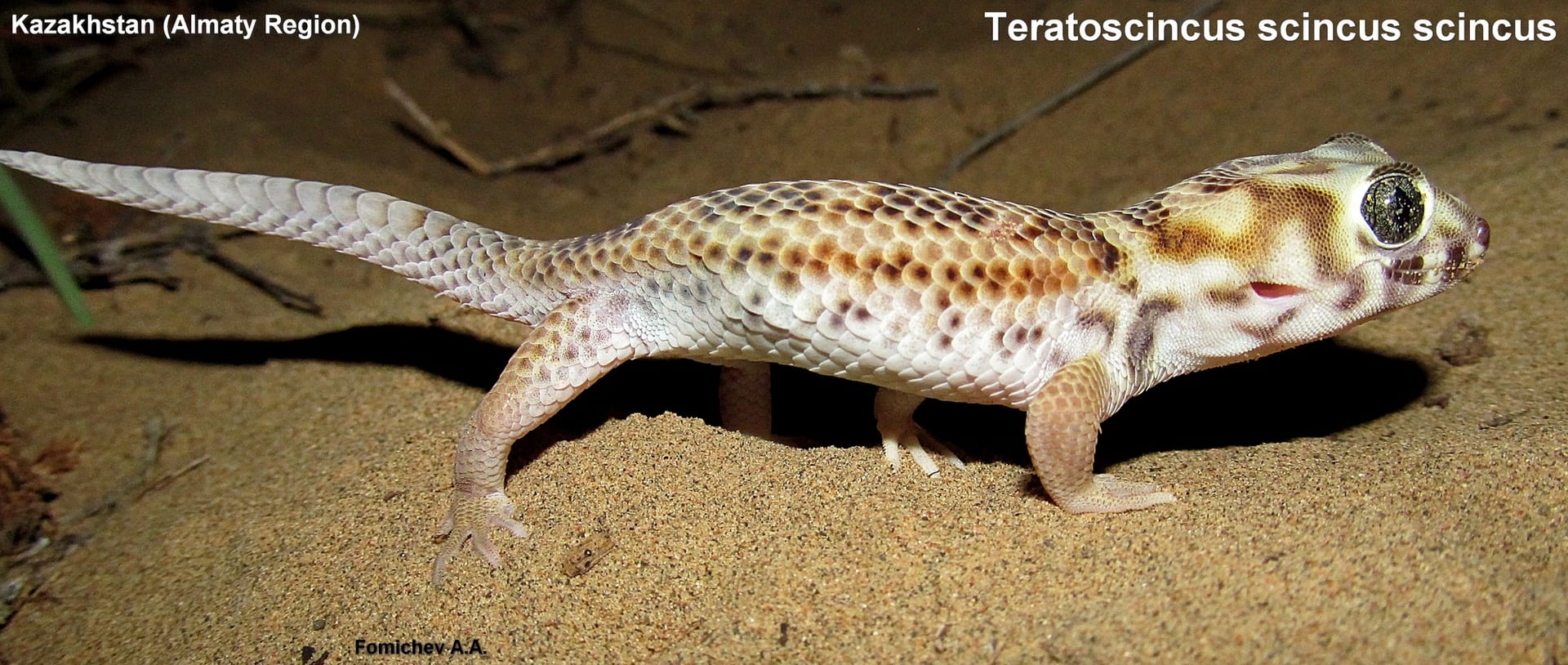
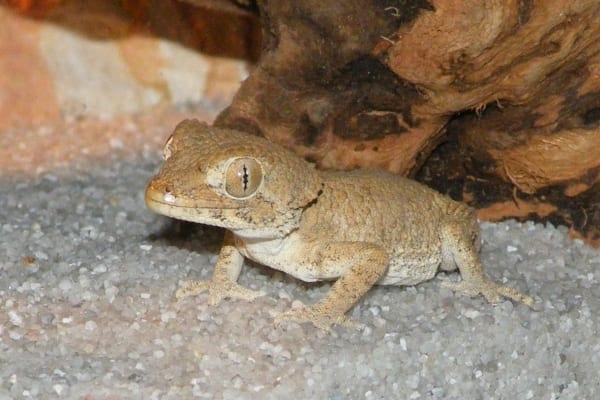
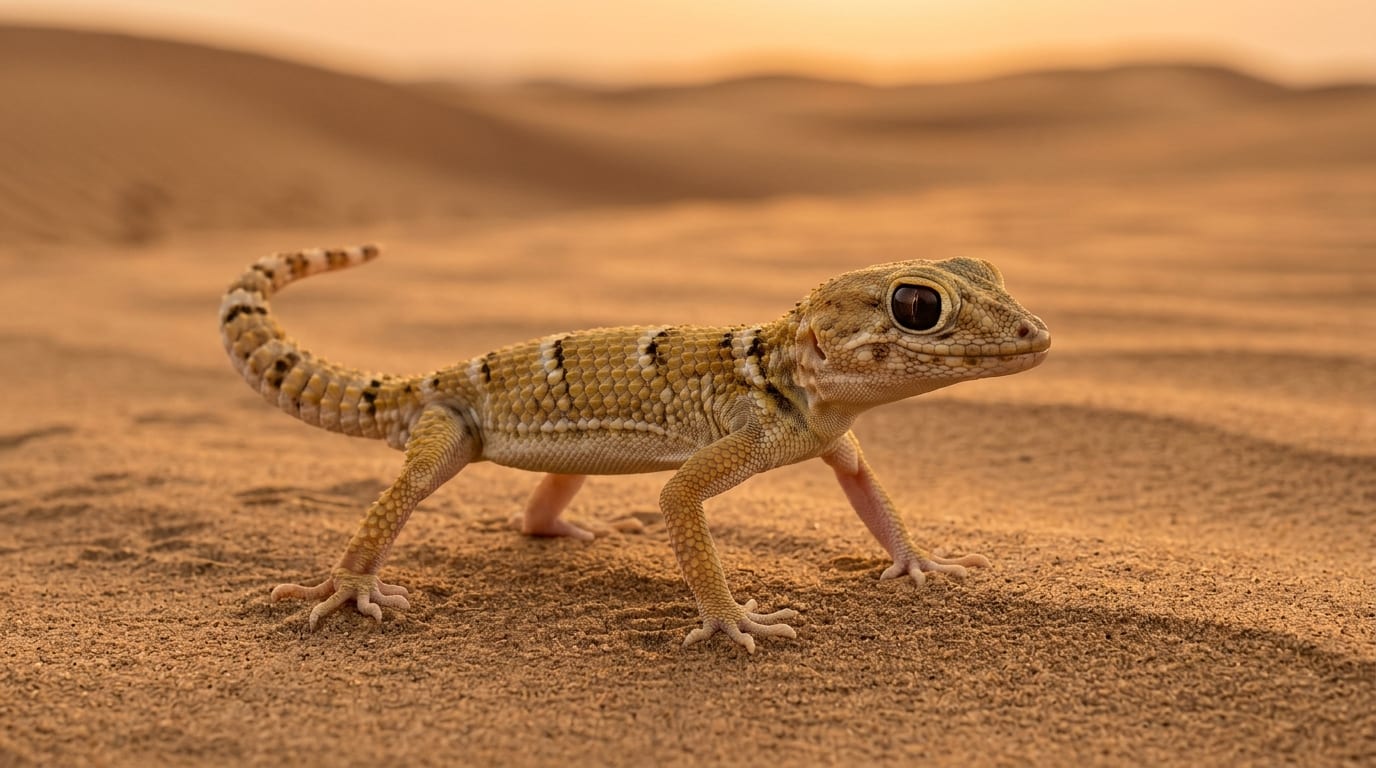
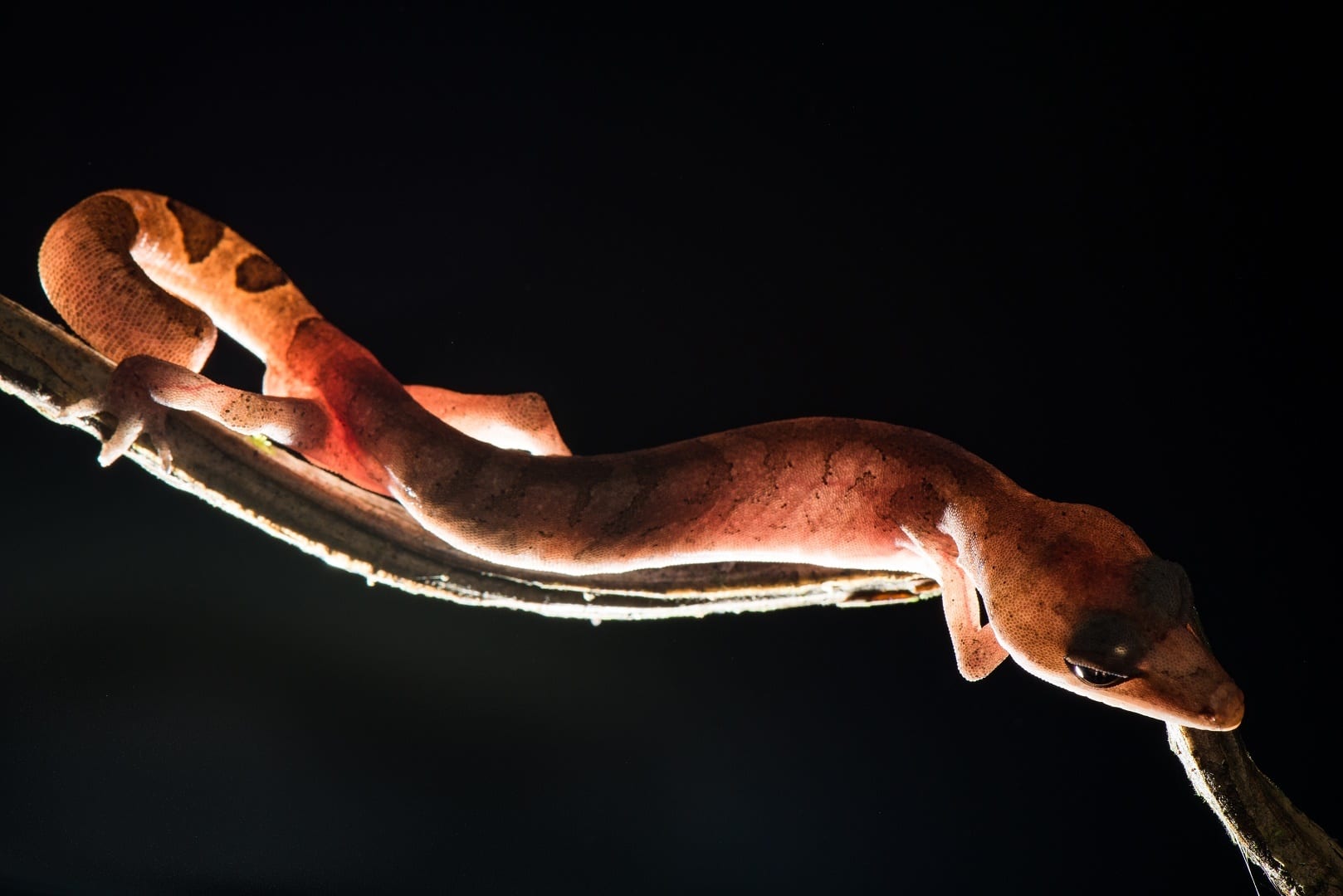
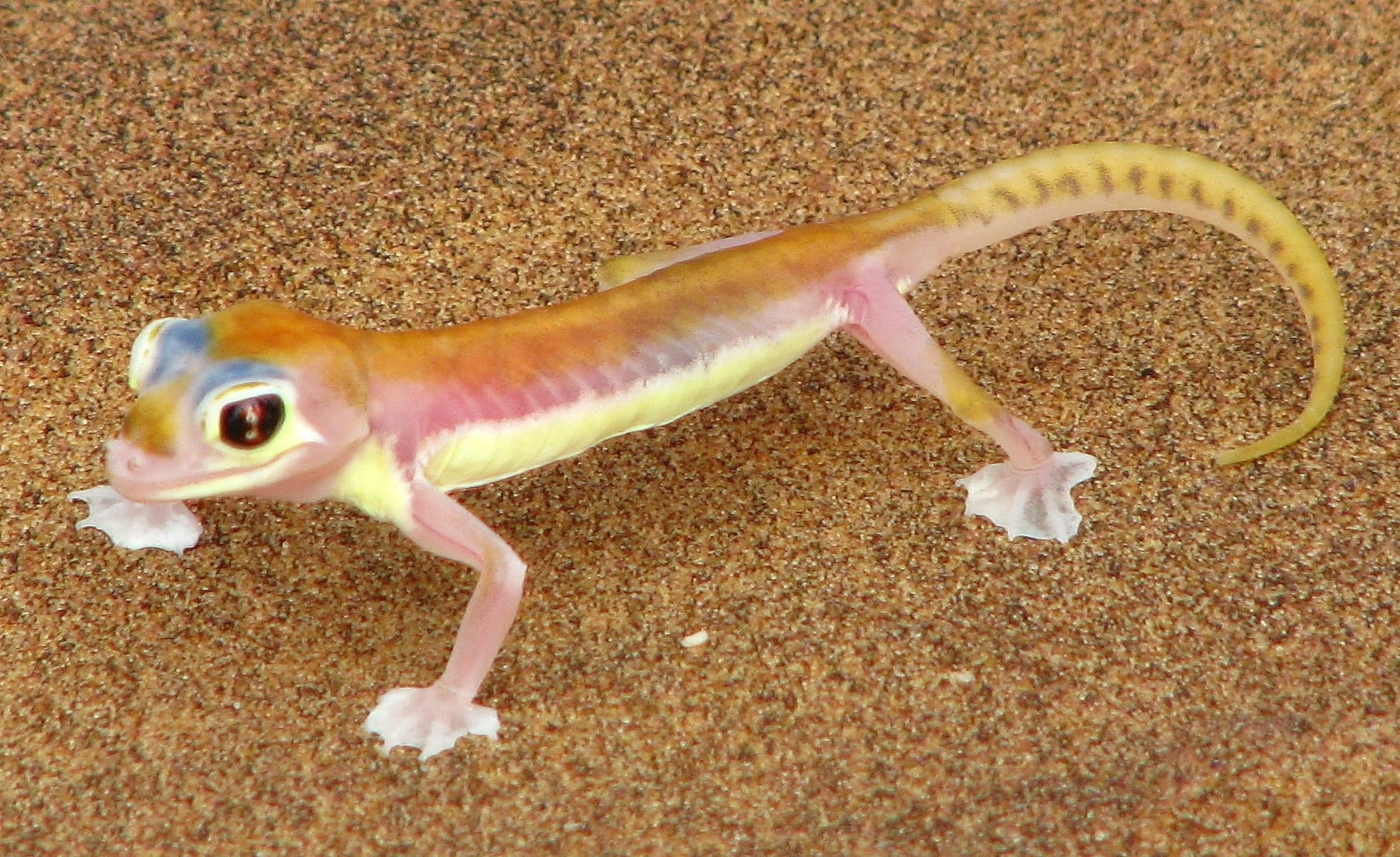
A gecko endemic to the Namib Desert, with webbing that reaches the tips of its toes. The skin is so thin and translucent that some internal organs show through, and its colour blends into the sand. The webbed feet let it run over fine sand without sinking, and dig burrows.
Difficulty
Advanced
Temperature
25〜32℃
Lifespan
5-10 years
Size
12-14cm total length (tail 6cm, 6-10g)
Humidity
40〜70%
Diet
Carnivorous: a wide range of arthropods including termites, darkling beetles, crickets and spiders
About
The Namib web-footed gecko (Pachydactylus rangei) is a gekkonid gecko found only in the Namib Desert. Its defining feature is the webbing that extends to the tips of the toes on its slender, delicate limbs, letting it run over fine sand without sinking and scoop sand out when digging. The skin is velvety with fine scales and translucent enough that some internal organs show through. The eyes are large and protuberant with vertical pupils. It is strictly nocturnal, spending the day in an unbranched burrow 80-100 cm deep that it digs itself and emerging at night to forage. It obtains water by licking dew. In 2021 it was reported to show neon-green biofluorescence produced by iridophores. Males fight fiercely with one another.
Source: Wikipedia (CC BY-SA 4.0)
Lifespan of the Namib Web-Footed Gecko
The Namib Web-Footed Gecko lives 5-10 years.
Size of the Namib Web-Footed Gecko
The Namib Web-Footed Gecko grows to 12-14cm total length (tail 6cm, 6-10g).
It reaches 12-14 cm in total length, of which the tail accounts for 6 cm, and weighs about 10 g in females and 6 g in males.
Basic Info
Origin
The Namib Desert in Namibia, southern Angola and South Africa, from the Atlantic coast to about 130 km inland, on dunes up to 300 m high
Lifespan
5-10 years
Size
12-14cm total length (tail 6cm, 6-10g)
Care Specifications
Semi-aggressiveSolitaryBreeding: Hard
Sources: Reptile Database: Pachydactylus rangei / Animal Diversity Web: Pachydactylus rangei / Wikipedia (German): Namibgecko
References & Sources
Edited & verified by: BreederDirect editorial team
The taxonomic, regulatory, and husbandry data on this page are compiled and verified against the authoritative primary sources below.
Taxonomy & Authority
Accepted name: Pachydactylus rangei (Andersson, 1908)
Synonyms: Palmatogecko rangei Andersson, 1908, Syndactylosaura schultzei Werner, 1910
Authority databases: GBIF · Reptile Database
Nomenclature follows global taxonomic authority databases.
Regulations & Conservation Status
Not CITES-listedIUCN LC · Least Concern
It is not listed on the CITES appendices (no records on Species+). This species is not included in the designated special animals under the Animal Protection Act enforcement order, nor is it designated as a regulated invasive species under the Invasive Alien Species Act.
Sources: CITES Species+ (species not listed) / IUCN Red List
Regulations may change. Always verify the latest information with the relevant authorities.
Namib Web-Footed Gecko Listings
Loading latest listingsFind listings for this species