Types of Geckos and Care Guide | Complete Comparison of 5 Popular Species from Beginner-Friendly to Rare
A comprehensive comparison of characteristics, care difficulty, and required environments for 5 popular gecko species including Leopard Geckos, Crested Geckos, Tokay Geckos, Gargoyle Geckos, and Day Geckos. A complete guide for those unsure about species selection.

Key Takeaways
A comprehensive comparison of characteristics, care difficulty, and required environments for 5 popular gecko species including Leopard Geckos, Crested Geckos, Tokay Geckos, Gargoyle Geckos, and Day Geckos. A complete guide for those unsure about species selection.
Related Species
What Are Geckos?
Geckos (Gekkonidae) are reptiles belonging to the order Squamata, with over 1,500 species distributed worldwide. In English, they are called "Gecko," a term commonly used in the pet industry as well. Their most distinctive feature is the microscopic hair-like structures on their toe pads, which utilize van der Waals forces to enable them to cling to glass surfaces and even ceilings with remarkable ability.
As pets, geckos require less space than dogs or cats, are relatively quiet, and have a unique appearance and movement that appeal to many enthusiasts. However, as ectothermic animals, proper temperature control is essential, and since each species has entirely different environmental and dietary needs, choosing a species that matches your husbandry style is crucial.
Characteristics and Care Difficulty of 5 Popular Species
| Species | Difficulty | Native Range |
|---|---|---|
| Leopard Gecko | ★☆☆☆☆ (Beginner-friendly) | Afghanistan to northwestern India |
| Crested Gecko | ★★☆☆☆ (Beginner-friendly) | New Caledonia |
| Gargoyle Gecko | ★★☆☆☆ | New Caledonia |
| Day Gecko (Phelsuma genus) | ★★★☆☆ (Intermediate) | Madagascar |
| Tokay Gecko (Gekko gecko) | ★★★★☆ (Advanced) | Southeast Asia |
1. Leopard Gecko
Difficulty: ★☆☆☆☆ (Beginner-friendly)
The quintessential pet gecko. Native to arid regions from Afghanistan to northwestern India, this terrestrial (non-climbing) species has low escape risk. Adult length is 20-25 cm, with a lifespan of 10-15 years under proper care, making them quite long-lived.
Morphs (selectively bred color variants) are highly developed, with hundreds of color variations available including albino, blizzard, eclipse, and tangerine. Temperature management is simple—just create a basking spot of 30-32°C using under-tank heaters—and they are insectivorous, feeding on crickets, dubia roaches, mealworms, and similar prey.
2. Crested Gecko
Difficulty: ★★☆☆☆ (Beginner-friendly)
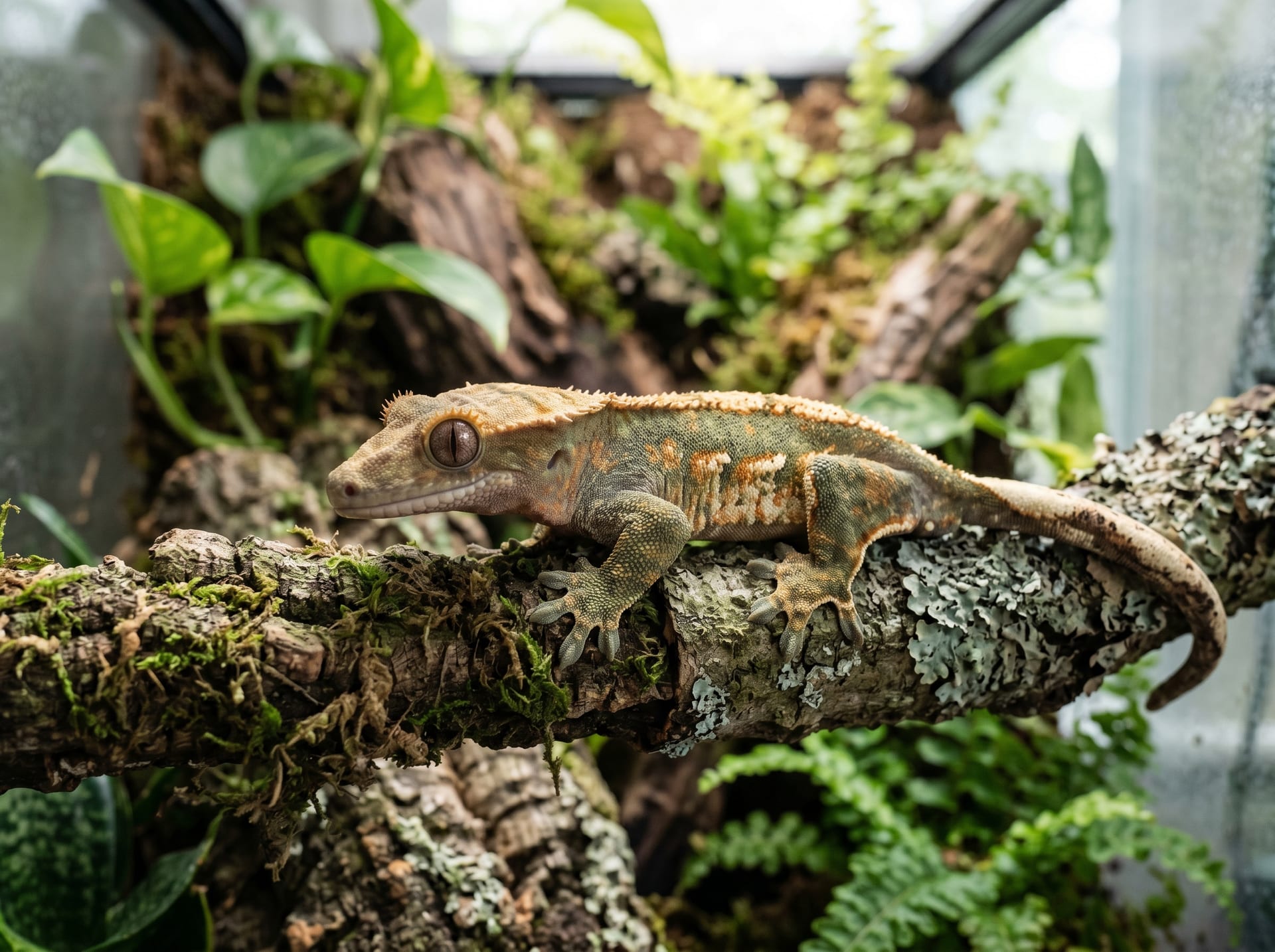
A semi-arboreal gecko native to New Caledonia. Its most distinctive feature is the crest (crown-like protrusion) running from the head down the back, and it is also affectionately known as the "eyelash gecko." Adult length is approximately 18-22 cm.
The main advantage is that they are omnivorous. They can be managed with specialized artificial diets such as "Repashy Crested Gecko Diet," making it possible to keep them without live insects. They prefer cooler temperatures of 22-26°C, and excessive summer heat (above 30°C) can be fatal, so special attention is needed during Japan's hot summers. Maintain humidity at 60-80%.
3. Gargoyle Gecko
Difficulty: ★★☆☆☆
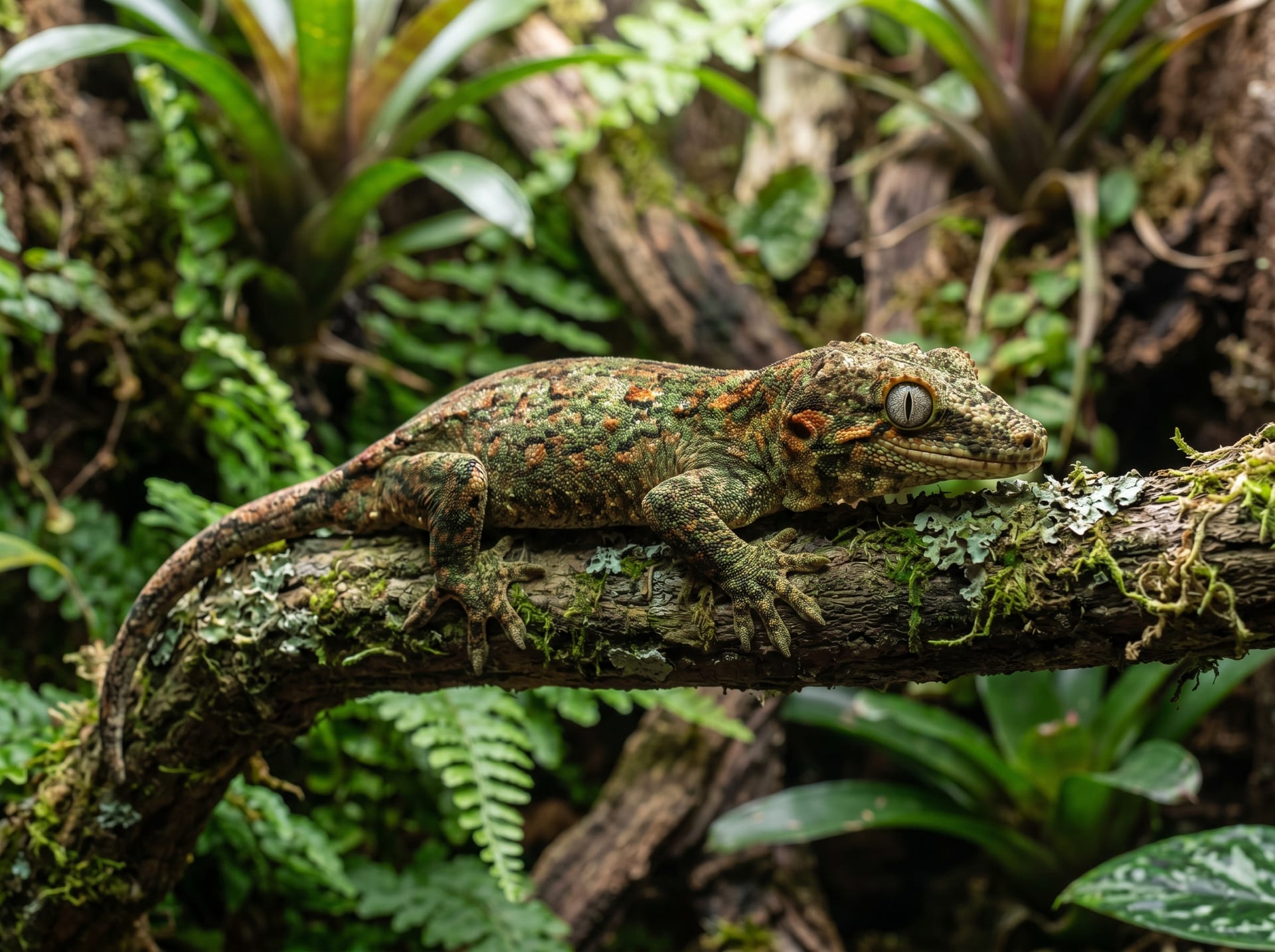
Also native to New Caledonia, it is closely related to the crested gecko. It is named for the head protrusions that resemble gargoyle statues. It can be kept under nearly the same conditions as the crested gecko, but it has a calmer temperament and tends to tolerate handling (manual restraint) more readily.
While not as diverse as crested gecko morphs, a variety of colors such as red, orange, and striped patterns are available.
4. Day Gecko (Phelsuma genus)
Difficulty: ★★★☆☆ (Intermediate)
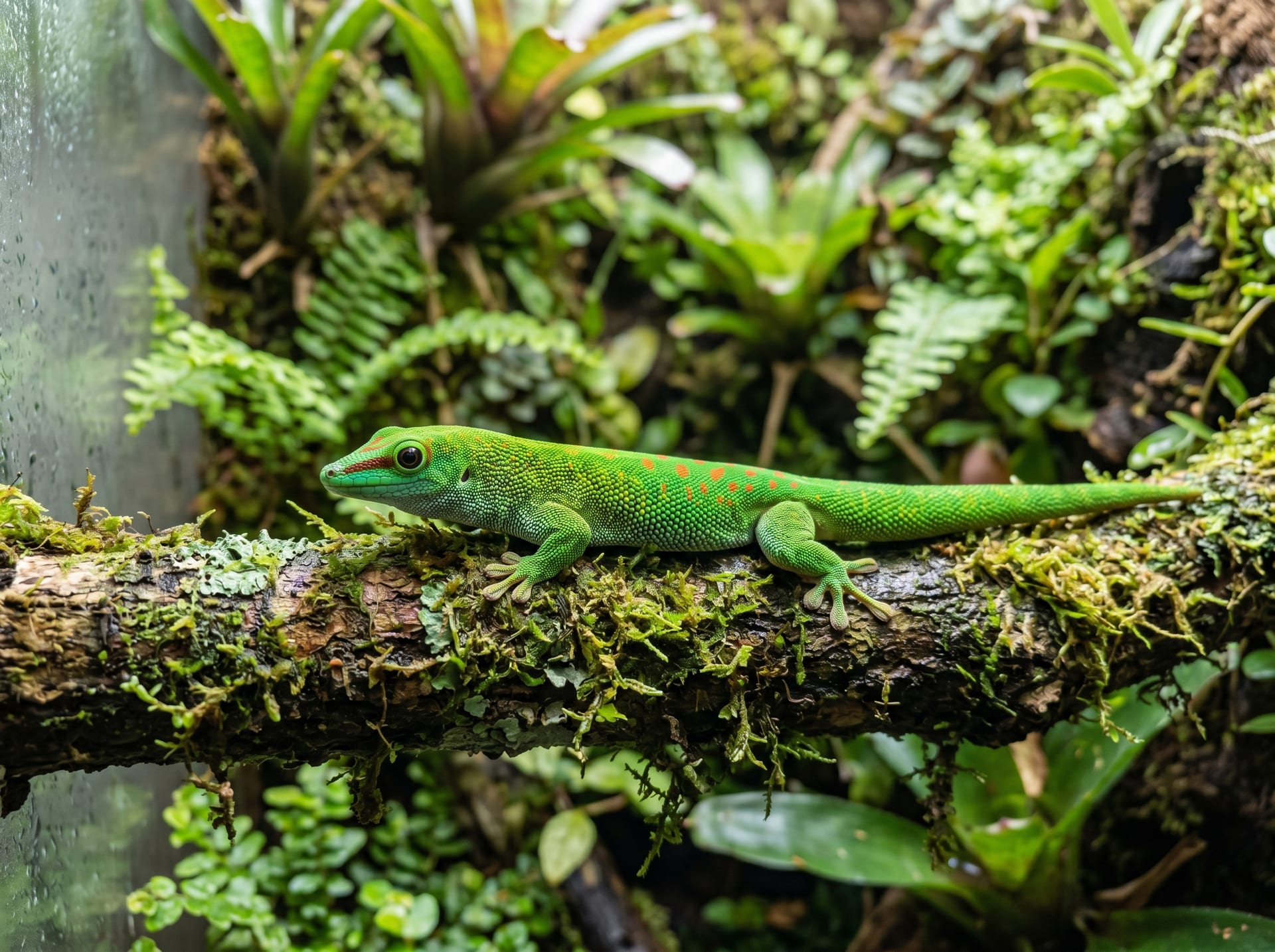
A diurnal gecko native to Madagascar. As the name suggests, they are active during the day, displaying striking contrasts of vivid green, blue, and red, making them highly ornamental. The most commonly available species is the giant day gecko (P. grandis), which reaches 25-30 cm in length and is considered a large species.
Because they are diurnal, UVB lighting is necessary, which increases equipment costs. They are also nervous in temperament and should generally not be handled, making them well-suited to a "look but don't touch" care style. They pair exceptionally well with a vivarium (a naturalistic enclosure containing live plants).
5. Tokay Gecko (Gekko gecko)
Difficulty: ★★★★☆ (Advanced)
A large gecko native to Southeast Asia, reaching 30-35 cm in length. The name comes from its call "tok-kay," and as it vocalizes loudly at night, caution is needed in multi-unit housing.
They have a powerful bite and aggressive temperament, making handling difficult; however, their striking appearance with blue-gray coloration dotted with orange spots commands impressive presence. They are a "connoisseur's choice" favored by experienced breeders.
Basic Enclosure Setup
While gecko enclosure setups vary by species, there are some fundamental principles that apply to all.
- Enclosure Size: For one adult, terrestrial species (leopard geckos) require a plastic or glass enclosure of at least 45×30 cm. For arboreal species (crested and day geckos), a vertical enclosure of approximately 60×45×90 cm is ideal.
- Substrate: For leopard geckos, use paper towels (beginner-friendly and easy to clean) or calcium sand. For crested geckos, a mixture of clay pellets and coconut husk is effective for humidity retention.
- Temperature and Humidity: It is important to create a temperature gradient (hot and cool zones) using basking lights or under-tank heaters. Since geckos self-regulate by choosing their preferred temperature, a temperature differential within the enclosure is essential.
- Hydration: Many species obtain water by lapping moisture from misting on enclosure walls, so daily misting 1-2 times is standard practice. A shallow water bowl can also be provided.
Diet and Nutrition
- Insectivorous species (Leopard and Tokay geckos): Two-spotted crickets and dubia roaches are optimal staple foods. Before feeding, provide the insects with specialized food (gut-loading) for at least 48 hours to enhance nutritional value, then coat them with calcium powder just before offering (dusting). Calcium with vitamin D3 should be provided 1-2 times per week as a guideline; over-supplementation can cause hypervitaminosis, so care is necessary.
- Omnivorous species (Crested and Gargoyle geckos): Specialized prepared diets are the easiest to manage and offer excellent nutritional balance. Supplementarily offering fruits (papaya, mango, banana, etc.) or small insects 1-2 times per week helps maintain appetite.
- Feeding Frequency: Juveniles should be fed daily to every other day; adults every 2-3 days. Uneaten food will decompose in the enclosure and create unsanitary conditions, so remove any leftovers within 30 minutes.
Health Management and Common Illnesses
Gecko health can be assessed by the brightness of their eyes and the thickness of their tail. In species that store nutrients in their tail (such as leopard geckos), an extremely thin tail is a sign of malnutrition.
- Cryptosporidiosis (Crypto): A gastrointestinal protozoan infection with no cure, particularly of concern in the leopard gecko community. Infected individuals must be isolated, and equipment must never be shared.
- Rickets (MBD: Metabolic Bone Disease): Bone softening due to calcium or UVB deficiency. It is especially common in diurnal species that lack UVB lighting. Prevention is the best treatment, with calcium supplementation and UVB lamp installation being fundamental.
- Incomplete Shedding: Improper shedding caused by insufficient humidity, resulting in retained shed on the toes and around the eyes. Shed retained on toes can lead to necrosis, so gently remove it after soaking in warm water. This can be prevented by maintaining proper humidity levels.
Tips for Acquiring from Breeders
Acquiring from breeders rather than pet shops offers several advantages:
- Clear information about husbandry conditions and parent animals
- Easy verification of health status
- Information about individual temperament is readily available
Points to confirm before purchase are as follows:
- Ask whether appetite and elimination are normal
- Confirm the birth/hatch date and generation information (WC: wild-caught, CB: captive-bred). CB individuals are acclimated to captive conditions and are easier for beginners.
- Ask the breeder any questions without hesitation. They may become a long-term resource for husbandry advice.
Geckos offer lower initial costs than dogs or cats and are creatures full of unique appeal. With careful species selection, you can build a long partnership lasting over 10 years.