Source: Wikimedia Commons
Frog-Eyed Gecko
IntermediateTeratoscincus scincus
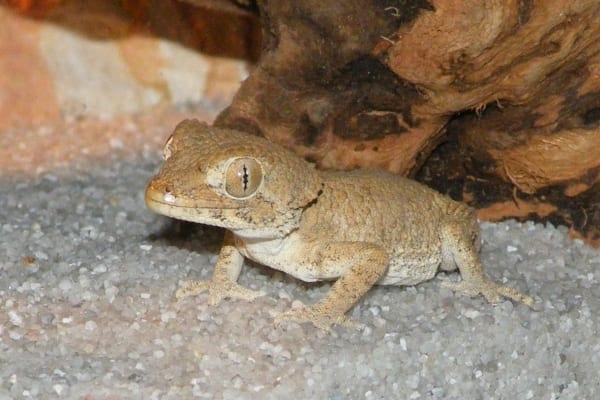
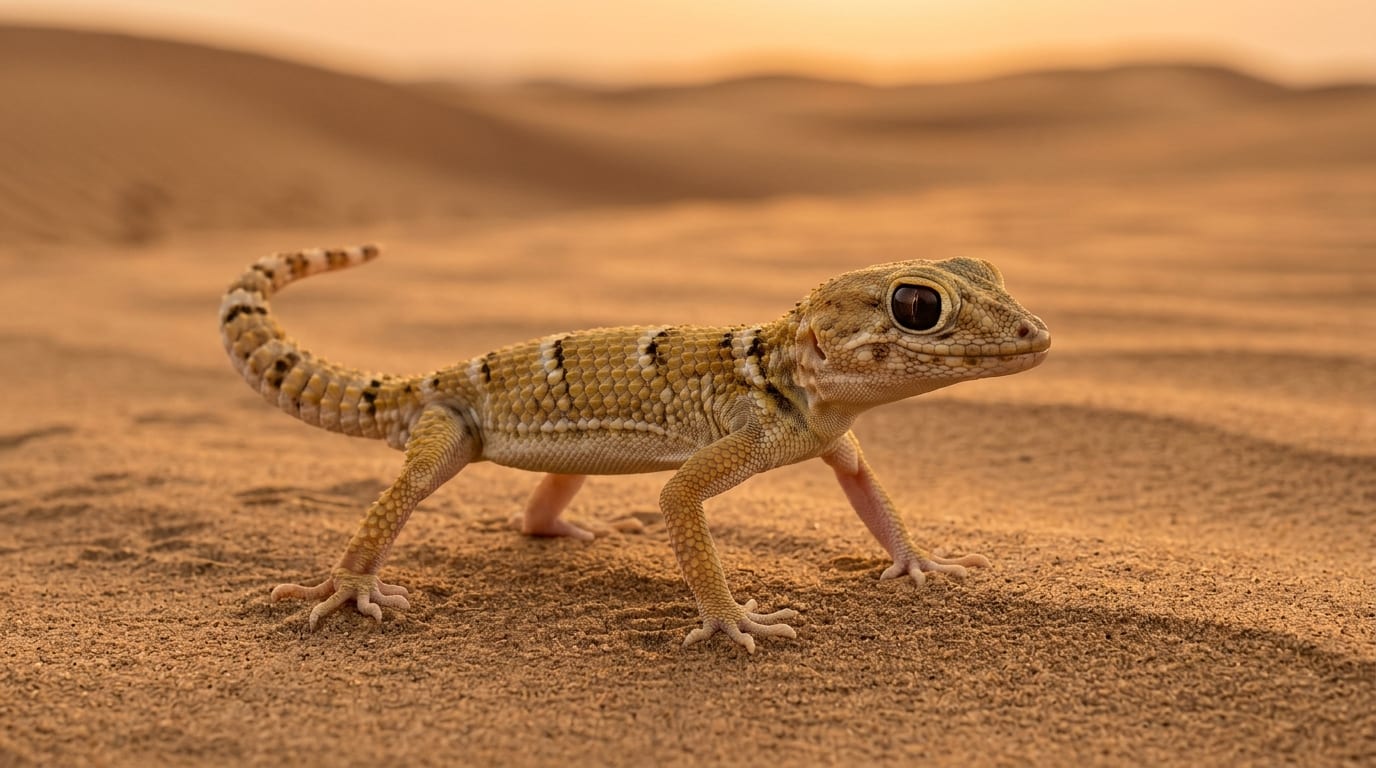
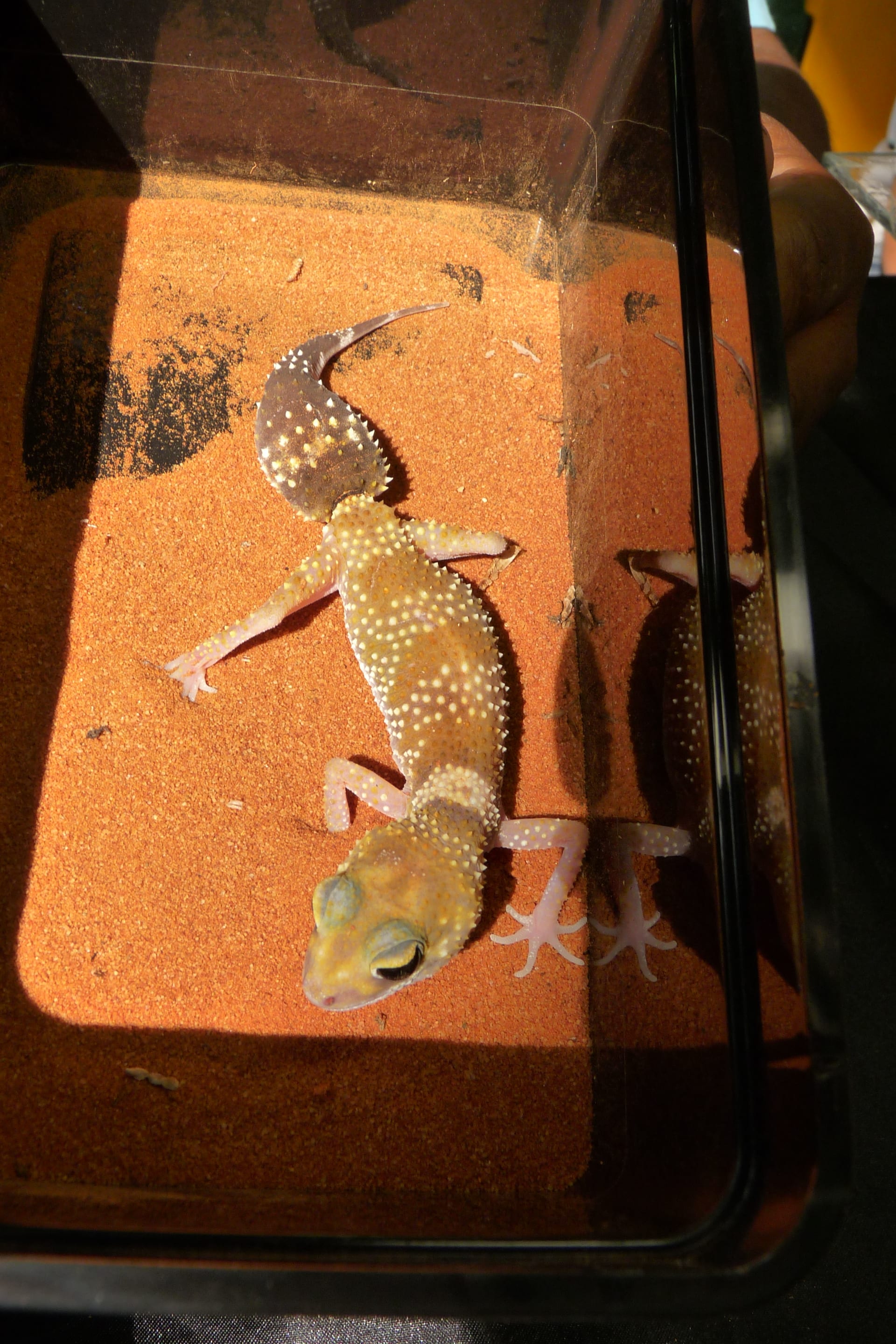
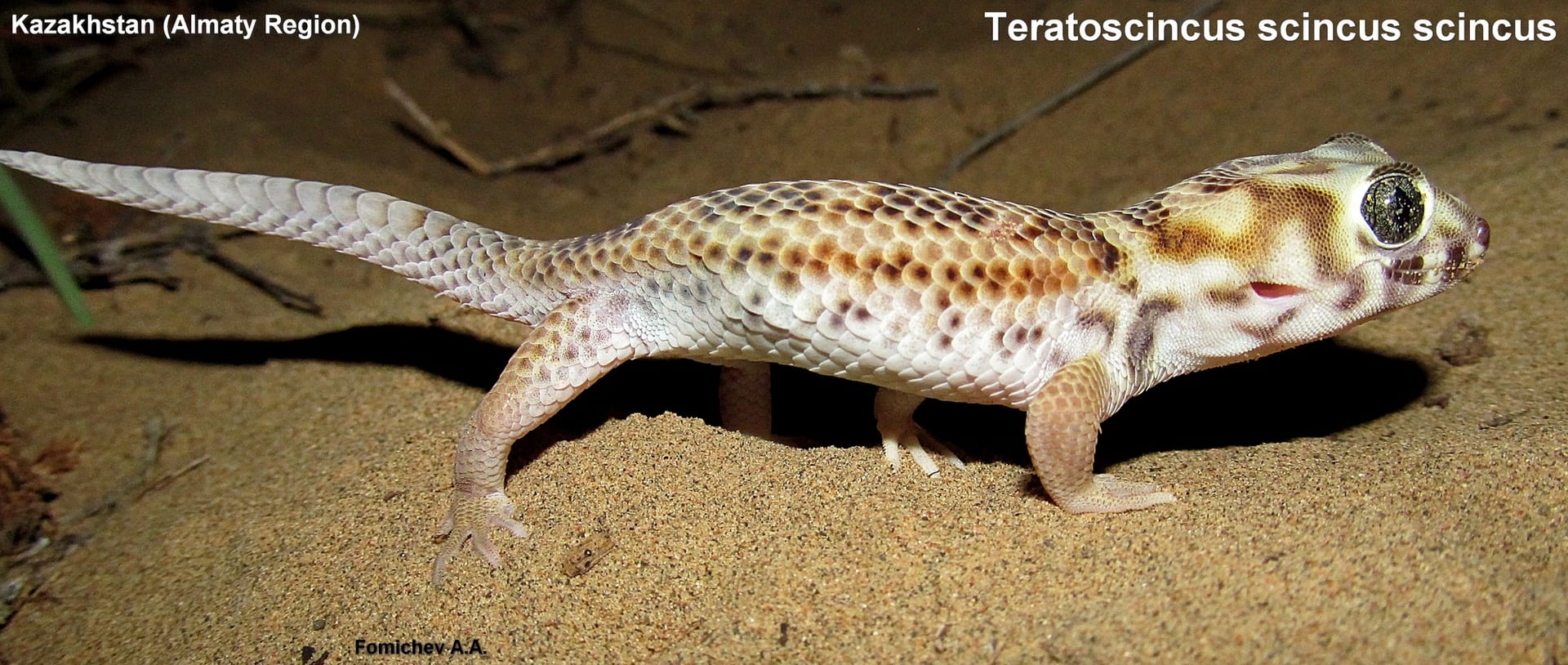
A desert-dwelling terrestrial gecko clad in large semicircular scales, with a broad head and very large eyes. It escapes predators by shedding its readily detached scales, which regrow at the next slough, and its digits are fringed with comb-like scales suited to loose sand.
Difficulty
Intermediate
Temperature
25〜32℃
Lifespan
Up to 13 years
Size
About 16cm total length (up to 18-20cm)
Humidity
40〜70%
Diet
Carnivorous, mainly small insects and other arthropods; it also takes fruit and berries at times
About
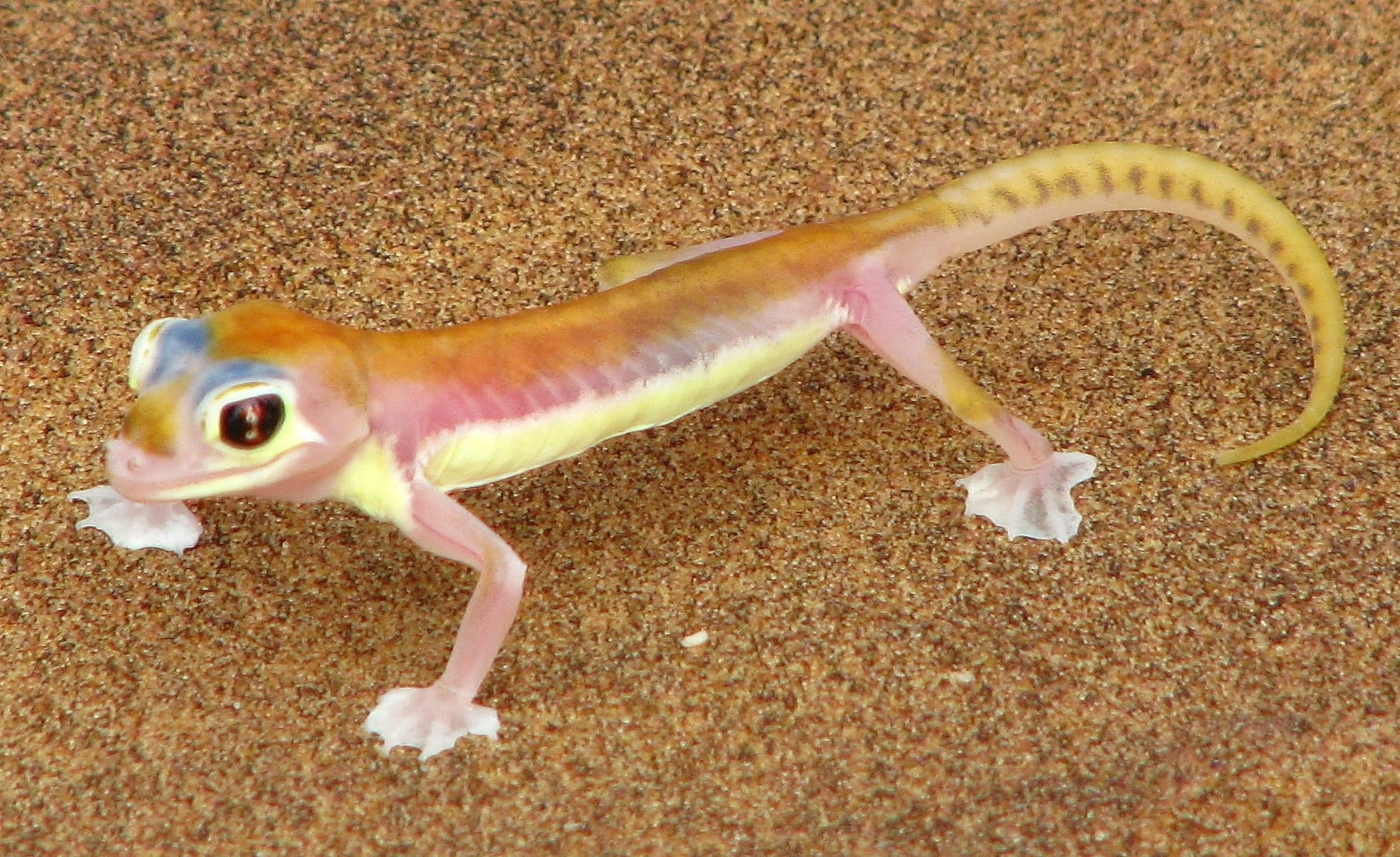
The frog-eyed gecko (Teratoscincus scincus) is a sphaerodactylid gecko widespread in the deserts of Central and West Asia. It reaches about 16 cm in total length, with large individuals attaining 18-20 cm. The head is broad and the eyes are very large, an adaptation to nocturnal life. Body and tail are covered in large semicircular scales that detach readily, letting the animal shed them and escape a predator. The tail has several breakage points and regrows completely if lost. It lacks the adhesive toe pads of many geckos and instead has comb-like fringes along the digits for walking on loose sand. Adults are buff to yellowish brown with broken black stripes or irregular dark blotches, while newly hatched juveniles are bright yellow with dark crossbands. It digs a burrow to spend the day in and rests for several months through the cold season. Most animals imported into Japan are wild-caught, though captive-bred stock is also traded.
Source: Wikipedia (CC BY-SA 4.0)
Lifespan of the Frog-Eyed Gecko
The Frog-Eyed Gecko lives Up to 13 years.
Size of the Frog-Eyed Gecko
The Frog-Eyed Gecko grows to About 16cm total length (up to 18-20cm).
Basic Info
Origin
Central and western Iran, western Afghanistan, northern Baluchistan in Pakistan, the region east of the Caspian Sea, western China, Kazakhstan, Turkmenistan, Uzbekistan, Tajikistan and the eastern Arabian Peninsula, in deserts, semi-arid country and sand dunes
Lifespan
Up to 13 years
Size
Care Specifications
Semi-aggressiveSolitaryBreeding: Moderate
Sources: Reptile Database: Teratoscincus scincus / Wikipedia (Japanese): Teratoscincus / Wikipedia (German): Wundergecko
References & Sources
Edited & verified by: BreederDirect editorial team
The taxonomic, regulatory, and husbandry data on this page are compiled and verified against the authoritative primary sources below.
Taxonomy & Authority
Accepted name: Teratoscincus scincus (Schlegel, 1858)
Synonyms: Stenodactylus scincus Schlegel, 1858
Authority databases: GBIF · Reptile Database
Nomenclature follows global taxonomic authority databases.
Regulations & Conservation Status
Not CITES-listedIUCN LC · Least Concern
Not listed in CITES appendices (no record of listing in Species+). Assessed as Least Concern (LC) on the IUCN Red List. This species is not listed as a designated animal under the Wildlife Protection and Management Act Enforcement Ordinance, nor as a specified alien species under the Alien Species Act Enforcement Ordinance.
Sources: CITES Species+ (species not listed) / IUCN Red List
Regulations may change. Always verify the latest information with the relevant authorities.
Frog-Eyed Gecko Listings
Loading latest listingsFind listings for this species