Gecko Species Comparison Guide | Popular Species Characteristics and Care Difficulty from Beginner to Advanced
Compare characteristics, care difficulty, and required equipment of popular gecko species including Leopard Geckos, Crested Geckos, and Gargoyle Geckos. We also explain native species like the Japanese Gecko found around homes, and clarify the differences between geckos, newts, Leopard Geckos, and gecko terminology.
Key Takeaways
Compare characteristics, care difficulty, and required equipment of popular gecko species including Leopard Geckos, Crested Geckos, and Gargoyle Geckos. We also explain native species like the Japanese Gecko found around homes, and clarify the differences between geckos, newts, Leopard Geckos, and gecko terminology.
Basic Knowledge to Know Before Choosing a Gecko
Among reptile pets, "geckos" are relatively compact, and many species have modest temperature and UV requirements, making them a group that beginners can easily take on. However, even though we call them "geckos," their ecology, care difficulty, and required equipment vary greatly by species. Selecting based solely on reasons like "it's cute" or "it was cheap" can lead to situations where, after bringing it home, you find "it's not what I expected."
There are three key points to consider first when keeping geckos.
①Whether you want to handle (touch) it
②Whether UV lighting is necessary
③Whether live food such as crickets is necessary
Narrowing down species to match your preferences and tolerance is the first step to enjoying a long-term relationship. In this article, we support your gecko selection by comparing representative popular species.
Leopard Gecko | The Best Beginner Species
Care Difficulty: ★☆☆☆☆ (Very Easy)
The Leopard Gecko is the archetypal beginner reptile species. It can be kept if you maintain a temperature gradient of 25-30°C, and UV lighting is generally not necessary. Furthermore, it can be housed in compact enclosures such as Pantheons or plastic cages, so it doesn't take up much space.
Its greatest appeal is its adaptability to artificial feed. Even if you're not comfortable with live food such as crickets, you can keep them without live food by acclimating them to Leopard Gecko gel or Leopard Gecko blend food. Additionally, enjoying abundant morphs (color variations) is one of the great pleasures of keeping Leopard Geckos. Hundreds of morphs exist, such as Albino, Blizzard, and Patternless, making them highly collectible.
They are also relatively docile when handling, and acclimated individuals often don't mind perching on hands—a defining characteristic. They are the most recommended species for those attempting reptile keeping for the first time or those who find live food management difficult.
Crested Gecko | Intermediate-Beginner Species with Arboreal Nature and Cute Face
✍️
BreederDirect Editorial
The BreederDirect editorial team specializes in care information for animals, covering veterinary care and breeding to deliver beginner-friendly guides.
Find Reptiles on BreederDirect
Buy directly from verified breeders
Browse Related Listings
Find Reptiles listings related to this article on BreederDirect. Buy directly from verified breeders.
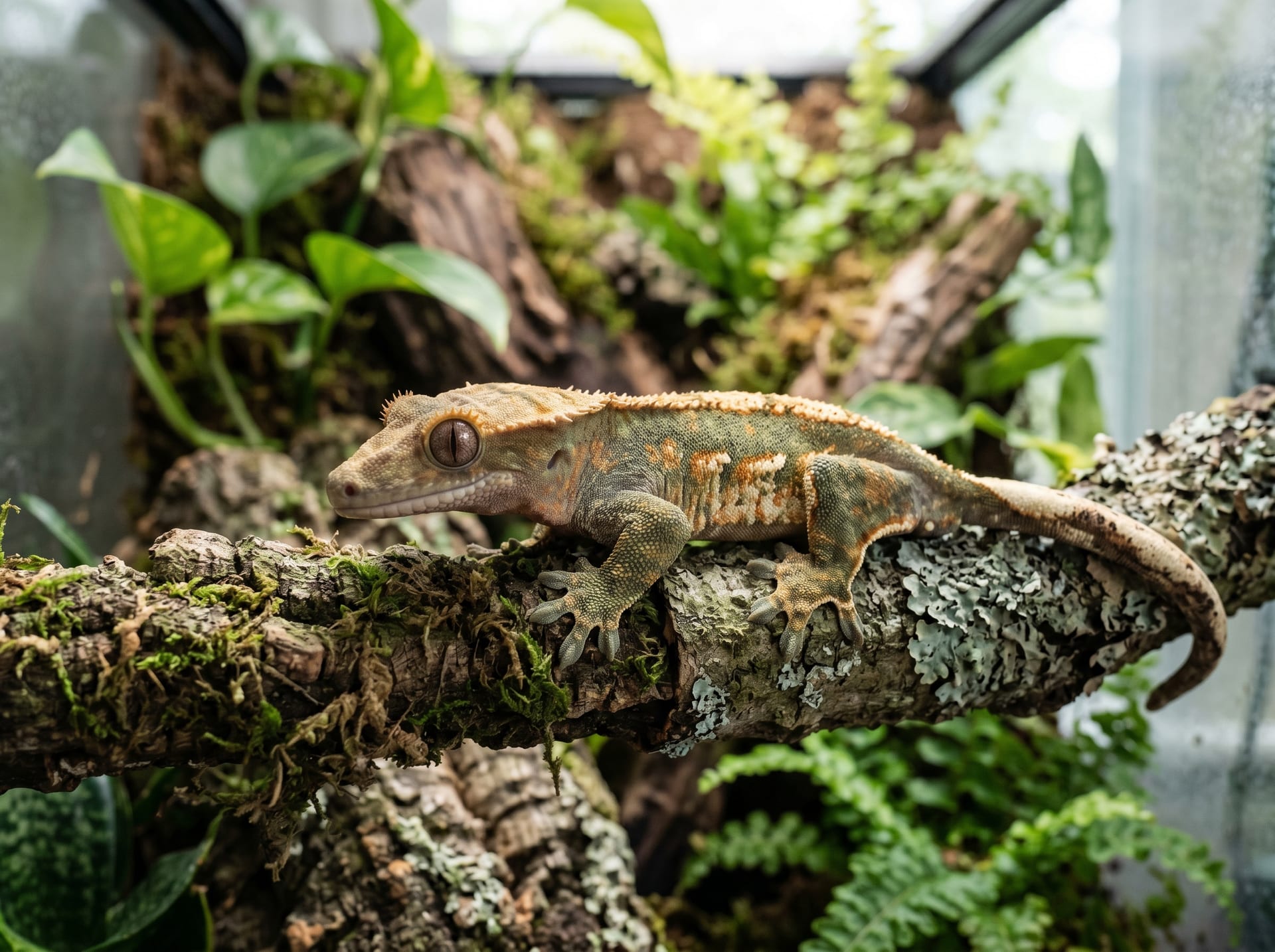
The Crested Gecko is a popular arboreal gecko characterized by lash-like spines and a unique gaze. Native to New Caledonia, it prefers relatively cool environments around 20-26°C and is sensitive to high summer temperatures (28°C or above). Only summer temperature management requires attention.
Its greatest feature is that it can be kept on fruit-based powdered food (such as Repashy or Pangea). While you can feed mainly crickets, they grow sufficiently on powdered food alone, so even those uncomfortable with insects can keep them with confidence.
The enclosure should be a tall, arboreal-specific type, and it pairs beautifully with planted layouts. It's also suited for those who want to display them as ornamental vivariums. Handling varies by individual, and even when acclimated they move quickly, so they lack the docile ease of Leopard Geckos, but they enjoy steady popularity for their unique appearance and ease of care.
Gargoyle Gecko | Intermediate-Advanced Species Popular with Collectors
Care Difficulty: ★★★☆☆ (Intermediate)
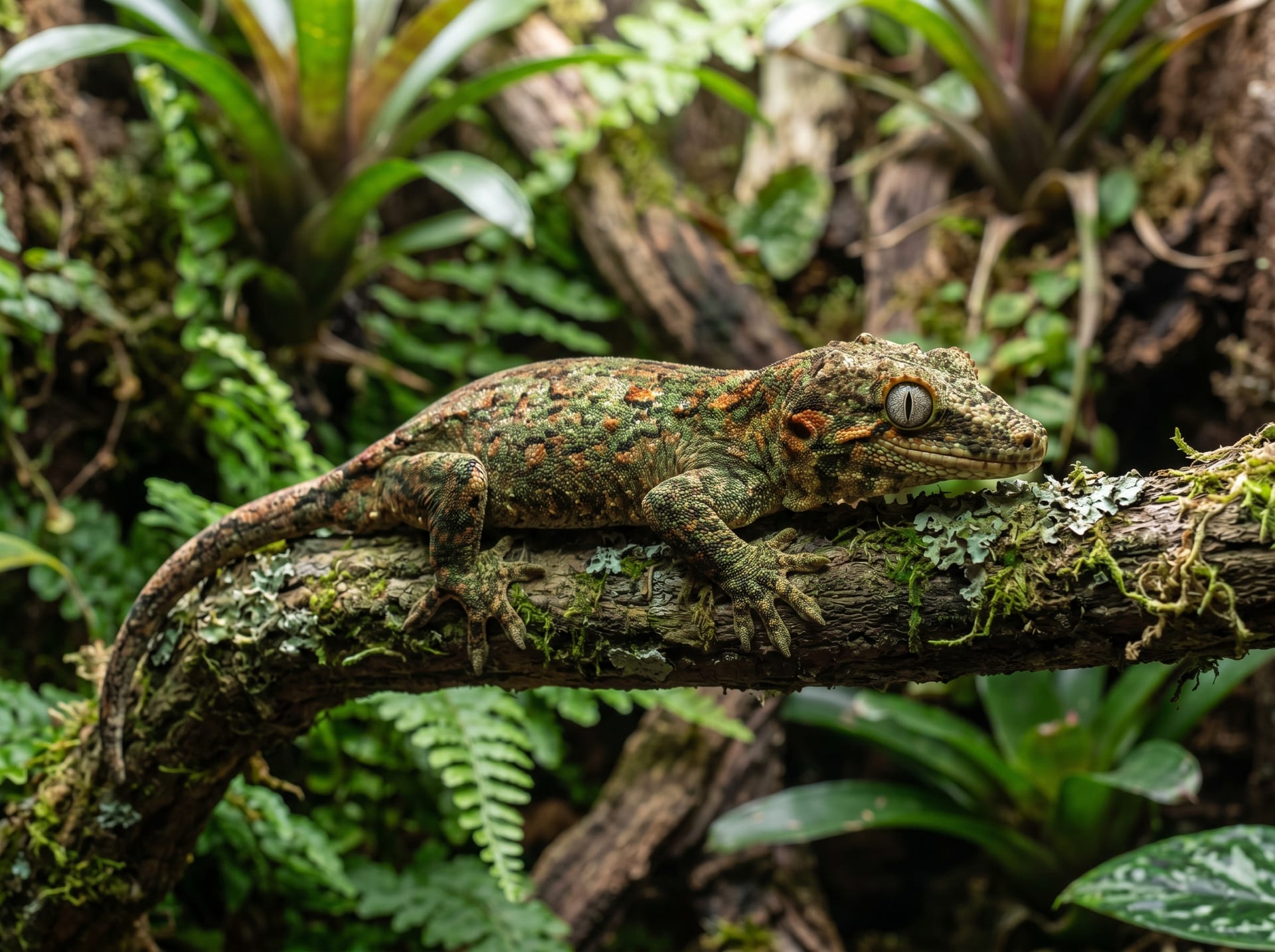
From the same New Caledonia as Crested Geckos, Gargoyle Geckos are slightly larger and have the ability to autotomize and regenerate their tails. They have a slightly calmer temperament compared to Crested Geckos, and are said to adapt well to handling.
While morphs are not as diverse as Crested Geckos, breeders have been expanding individual variation in recent years, increasing their collectibility. Care conditions are roughly similar to Crested Geckos, but since adults are slightly larger, the enclosure needs to be proportionally more spacious.
While they can be kept primarily on powdered food, feeding a higher proportion of insects compared to Crested Geckos results in better coloration and body condition.
Day Gecko | Beautiful Coloration and Striking Large Species
Care Difficulty: ★★★★☆ (Advanced)
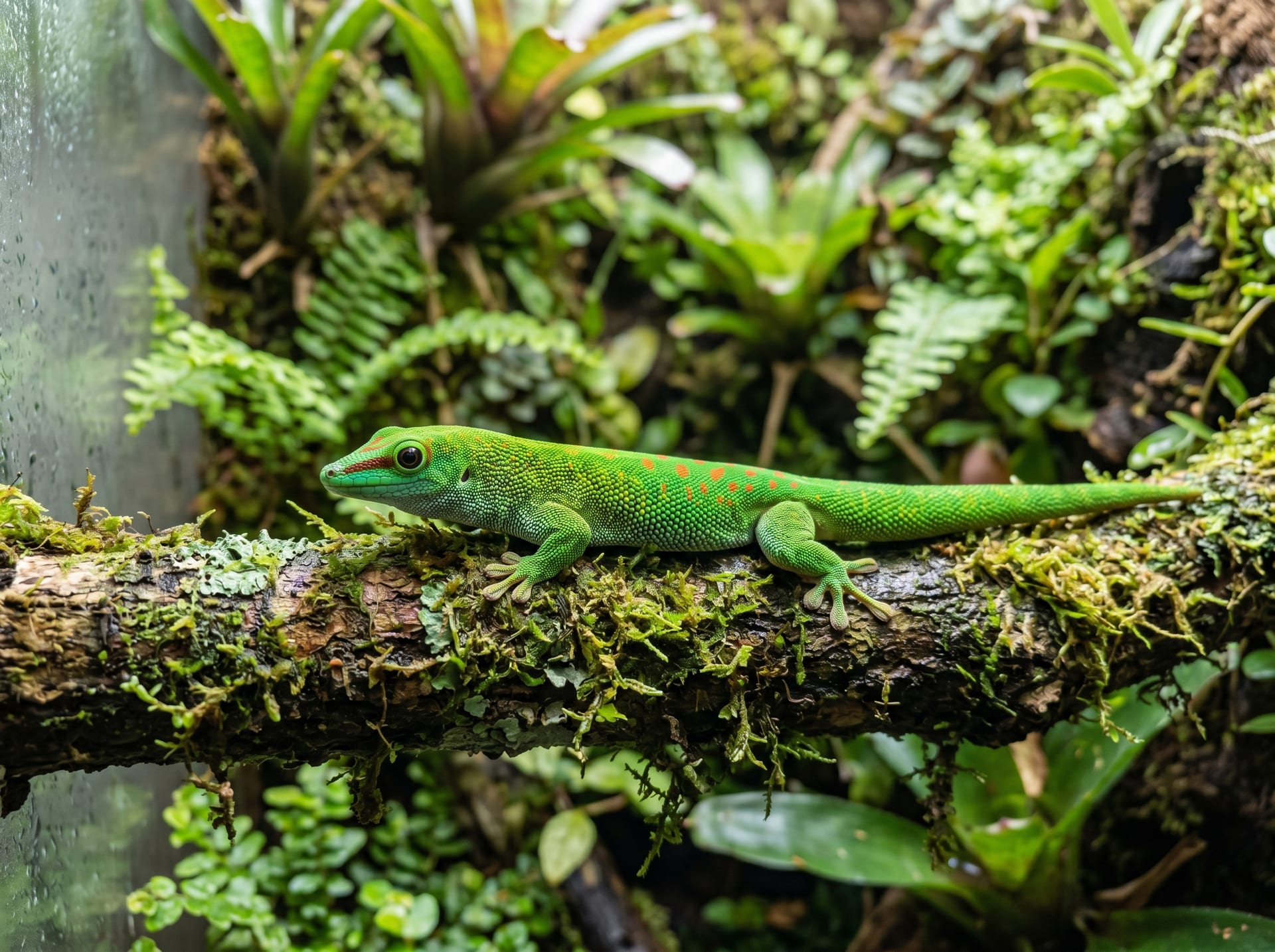
The Day Gecko, native to Madagascar, is a visually striking gecko with vibrant green and red spots. They are not suitable for handling, and because their skin is extremely thin and delicate, they are kept primarily as display specimens.
UV lighting, temperature management of 25-28°C, and high humidity maintenance are necessary. They are highly suited for advanced keepers who prefer an aesthetically impressive planted vivarium and decorative keeping style. Feeding is recommended as a combination of fruit-based food and insects.
What Kind of "Gecko" Do You See at Home? Japanese Native Geckos
Many people investigating "gecko species" want to identify the gecko they've found on a home's wall or windowsill before selecting a pet species. Geckos that appear around human dwellings in Japan are nearly always one of the following.
Japanese Gecko
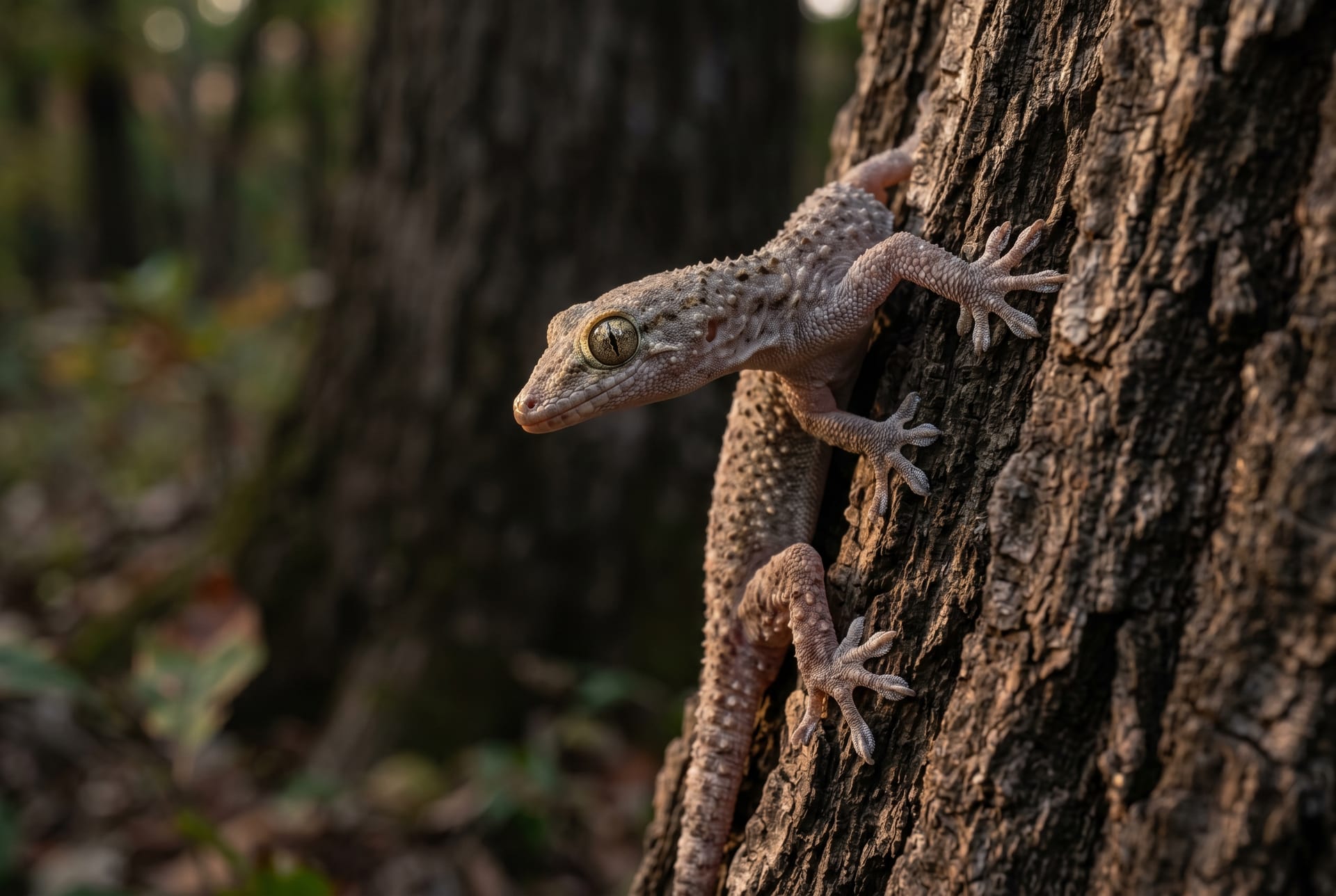
The most commonly seen gecko in urban areas of Honshu, Shikoku, and Kyushu, with a body length of approximately 10-14 cm including the tail. It has grayish-brown skin with a rough texture. Nocturnal, it is often seen clinging to walls targeting small insects attracted to streetlights and window light. It is a species that has expanded its distribution by relying heavily on human dwellings, and it is widely believed that it arrived from the continent in ancient times through human migration.
Southern Gecko, Black-Cheeked Gecko, and Others
From western Japan to the southwestern islands, multiple species such as the Southern Gecko, Black-Cheeked Gecko, and Tower Gecko are distributed, with the species seen varying by region. Since some are similar in appearance and difficult to identify, narrowing down by distribution is practical.
Can You Keep a Wild House Gecko?
Keeping them is possible, but it is more difficult than keeping pet species. Since they scarcely accept artificial food, live insects must be constantly available, and wild-caught individuals may carry parasites and mites. Also, collection may be restricted by local ordinances in some areas, so prior confirmation is necessary. If your motivation is to keep a gecko, starting with captive-bred individuals from breeders with established feeding and health stability will result in fewer failures.
Clearing Up Easily Confused Terms — Geckos, Newts, Leopard Geckos, and Gecko Terminology
Before selecting a species, clarifying naming confusion makes information easier to find.
Geckos and Newts
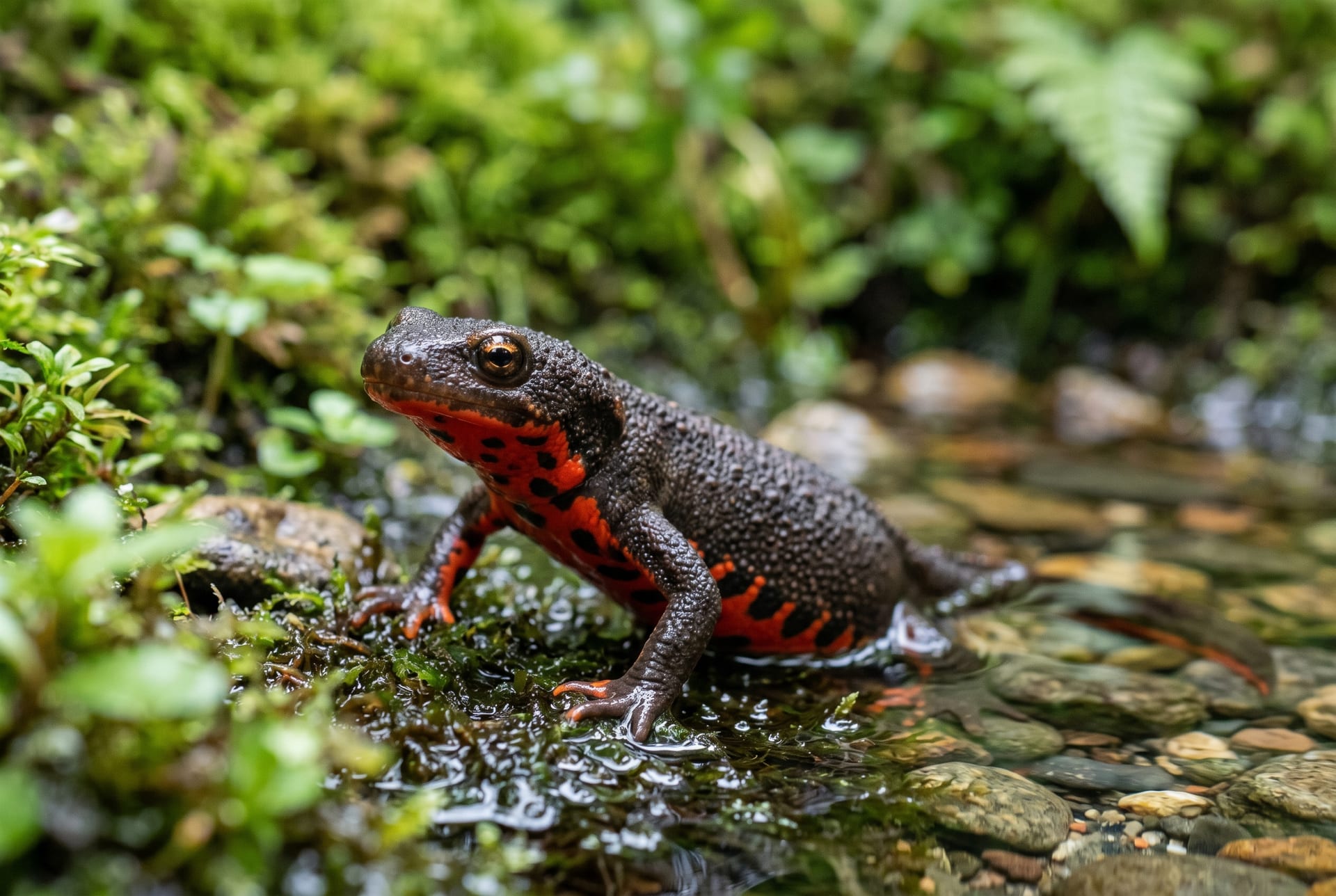
Their names are similar, but they are completely different groups. Geckos are reptiles with dry, scale-covered skin, live on land, and climb walls. Newts are amphibians with moist skin and live in water or around water. The commonly known Japanese Red-Bellied Newt is characterized by a red underside. Since their care equipment and food are completely different, first confirm which one you have.
Geckos and Skinks
Both are reptiles but belong to different lineages. In familiar Japanese examples, geckos are nocturnal and found on house walls, while Japanese Skinks and Grass Lizards are diurnal and appear in grass and stone walls. A practical way to distinguish them is: if it's on a wall at night, it's a gecko; if it's running on the ground during the day, it's a skink.
Is a Leopard Gecko a "Gecko"?
The Leopard Gecko is closely related to geckos but belongs to a different family from the Crested Geckos mentioned in this article. There are two easily distinguishing differences. One is that they have movable eyelids. Eyelid geckos can blink and don't need to lick their eyes for cleaning. Another is that they cannot climb walls because their toe pads lack adhesive structures, so they cannot stick to vertical glass surfaces. The low priority of tall enclosures or escape prevention in Leopard Gecko keeping is due to this body structure.
The Term "Gecko"
"Gecko" is the English word for gecko, and semantically means the same thing. Species that came from overseas, such as Crested Geckos and Gargoyle Geckos, have their English names established as common names, making them appear different from native species with Japanese names. If you're looking for the difference between "gecko" and "gecko," you should be looking for species differences, not terminology differences.
Summary of Choosing Species | Find Your Ideal Gecko on BreederDirect
Once you've identified the gecko species right for you, the next step is acquiring an individual. Organizing the characteristics of each species yields the following niche distribution.
Species
Care Difficulty
Characteristics
①Leopard Gecko
★☆☆☆☆ (Very Easy)
Very easy to keep and can be kept without live food
②Crested Gecko
★★☆☆☆ (Easy)
Can be kept primarily on fruit food, unique appearance
③Gargoyle Gecko
★★★☆☆ (Intermediate)
Similar conditions to Crested Gecko, docile temperament
④Day Gecko
★★★★☆ (Advanced)
Display-focused, for advanced keepers
BreederDirect offers direct breeder sales of various gecko species, allowing you to select while directly verifying breeding environment, morphs, and health status. If you're still undecided about which species is right for you, consulting directly with a breeder is also recommended. Find the perfect gecko for you on BreederDirect.