Snake Types and Beginner's Selection Guide | Corn Snake vs. Ball Python Comparison
A comprehensive comparison of corn snakes and ball pythons, the most popular beginner species. We explain differences in size, temperament, housing requirements, and morphs to help you choose the right snake without regret.

Key Takeaways
A comprehensive comparison of corn snakes and ball pythons, the most popular beginner species. We explain differences in size, temperament, housing requirements, and morphs to help you choose the right snake without regret.
Related Species
What Beginners First Wonder About When Getting a Snake
"I'm interested in reptiles, but I really do want to try keeping a snake"—many people think this way. However, when you visit a reptile shop, you'll find many species like corn snakes, ball pythons, and California kingsnakes, making it easy to wonder which one to choose. Today, we'll focus on comparing the two most popular beginner species: corn snakes and ball pythons.
When starting out with snake keeping, there are three points beginners should first check: ① adult size, ② whether handling is possible and temperament, ③ availability of frozen mice and comfort with feeding. Confirming these points beforehand will help you make a choice you won't regret. Also, large species designated as "specified dangerous animals" (such as reticulated pythons) have been prohibited for new private ownership since June 2020, so please exclude them from your options.
Corn Snake | Sleek, Colorful, Perfect for Handling
Difficulty Level: ★☆☆☆☆ (Very Easy)
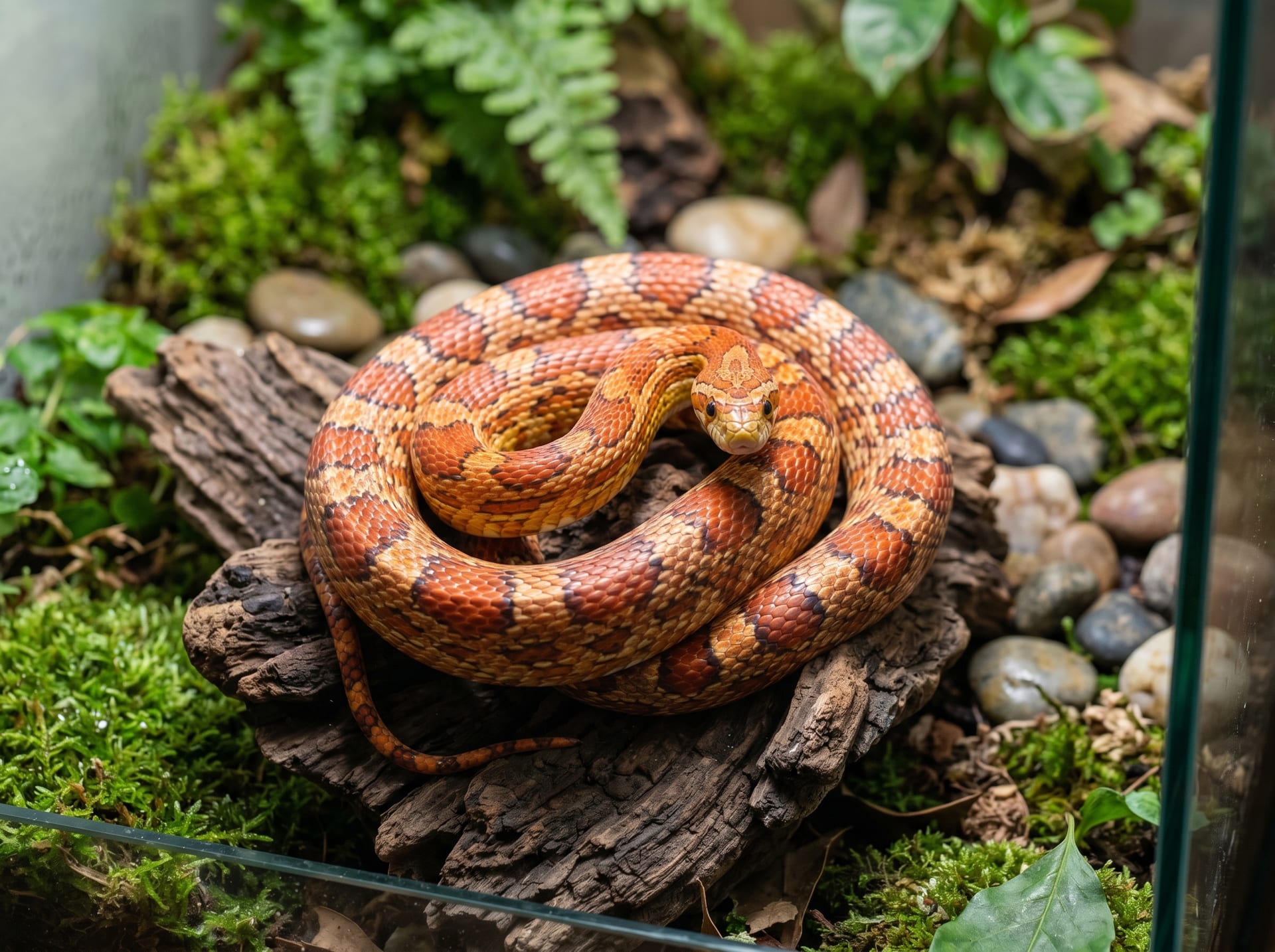
The corn snake (Pantherophis guttatus) is a rat snake native to North America. Adults reach about 90–120 cm in length, making them an easy-to-manage size. Their slender build and quick movements mean that once you become comfortable handling them, you can enjoy watching their active behavior up close.
Their greatest feature is the variety of color options. Many morphs exist, including anery (no black pigment), amelanistic (no red pigment), hypo, and blood red. Combinations create nearly endless color patterns. Priced around ¥3,000–¥30,000, they've become established as a "beginner reptile" right alongside leopard geckos.
Here's a guide to their housing requirements:
- Temperature: Warm spot 30–32°C, cool side 24–26°C (maintain a temperature gradient)
- Humidity: 40–60% (increase to 60–70% before shedding)
- Enclosure Size: Juveniles 30×30 cm, adults 60×45 cm or larger
- UV Light: Not required (they're nocturnal)
- Feeding Frequency: Juveniles 1–2 times per week, adults 2–3 times per month (frozen mice from pink size to adult medium)
Corn snakes' strong appetite and resistance to refusing food is a major strength. They're especially recommended for beginners worried about feeding refusal. However, they're skilled escape artists, so always lock the enclosure lid. They can slip through surprisingly small gaps.
Ball Python | Stocky Build and Abundant Morphs
Difficulty Level: ★★☆☆☆ (Easy)
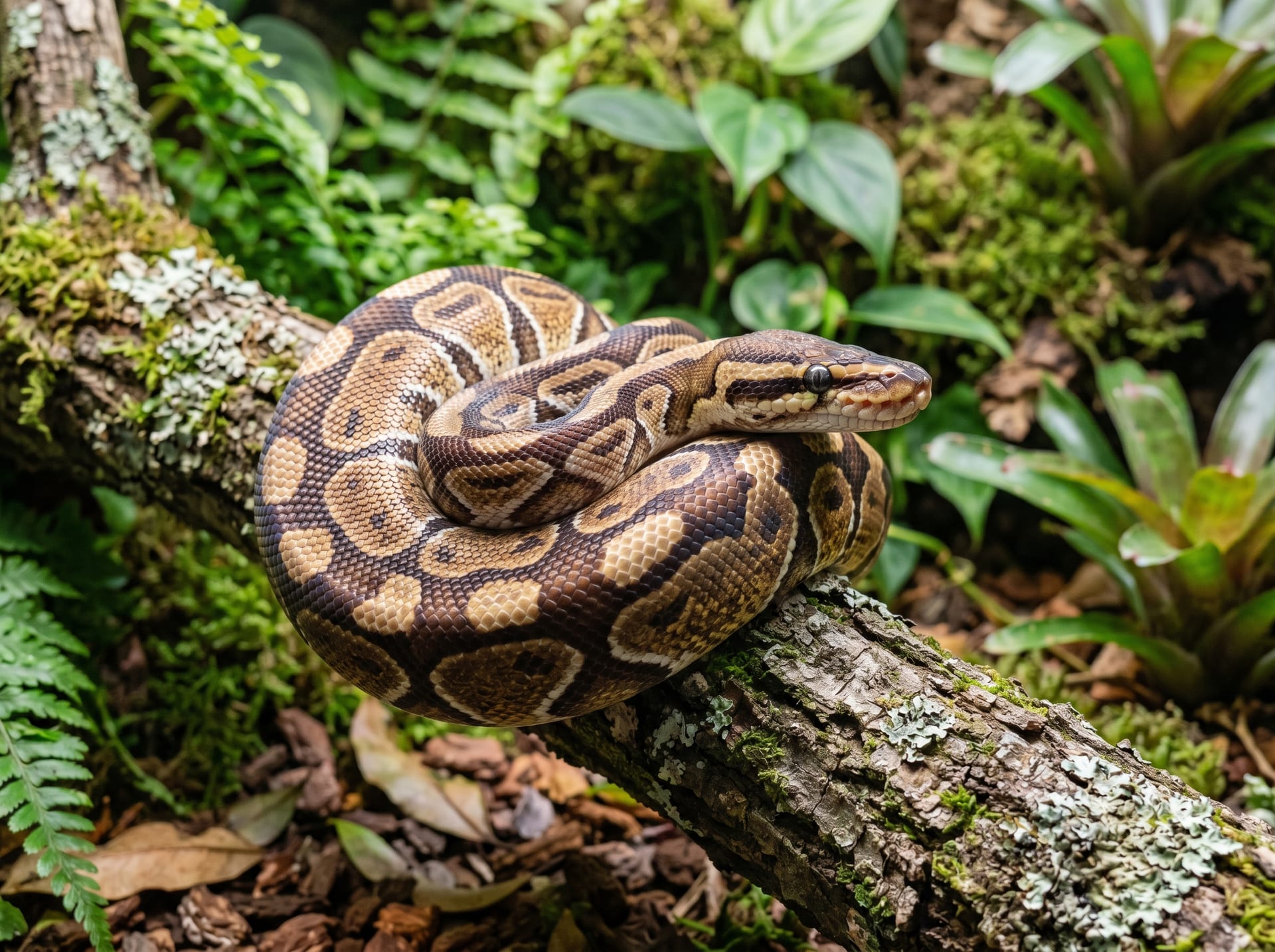
The ball python (Python regius) is a python native to West Africa. Adults reach 120–150 cm in length and weigh around 1.5–2 kg. While "python" might conjure images of enormous snakes, ball pythons are considered small to medium-sized and have calm temperaments, making them exceptionally suited for handling. Their name comes from their defensive behavior: when threatened, they curl into a tight ball with their head protected in the center. Once acclimated to people, many individuals won't curl up at all and will readily climb onto your hand.
Here's a guide to their housing requirements:
- Temperature: Warm spot 34–35°C, cool side 28–30°C
- Humidity: 60–70% (especially important to prevent shedding problems)
- Enclosure Size: Juveniles around 40×30 cm, adults 90×45 cm or larger
- Shelter: Essential (they're more stable when they have hiding spots)
- Feeding: Juveniles once per week, adults once every 10–14 days (most transition to rat-sized prey)
The main caveat is feeding refusal. Ball pythons may stop eating for weeks to months due to various factors—breeding season (fall to winter), pre-shedding, temperature drops, or environmental changes. If weight hasn't dropped more than 10–15%, observation is usually fine, but this can be psychologically taxing for beginners. Be sure to ask a breeder or expert beforehand about how to handle feeding refusals.
The variety of morphs and wide price range is also a major draw. Normal individuals start around ¥10,000. Basic morphs like Ball, Crown, and Spider range from ¥30,000–¥100,000. Rare individuals combining multiple morphs (such as Panda Ball) can exceed hundreds of thousands of yen, and passionate collectors exist both domestically and internationally.
Corn Snake vs. Ball Python | Which Should You Choose?
| Aspect | Corn Snake | Ball Python |
|---|---|---|
| Adult Size | 90–120 cm | 120–150 cm |
| Temperature Requirement | 24–28°C | 27–32°C |
| Humidity Requirement | 40–60% | 60–70% |
| Temperament | Docile and active | Extremely docile |
| Tendency to Refuse Food | Low | Moderate |
| Number of Morphs | Many | Extremely many |
| Price Range | ¥3,000–¥30,000 | ¥5,000–millions |
| Lifespan | 10–15 years | 20–30 years |
Corn snakes are recommended if: you want to enjoy active movement, you're worried about feeding refusal, you want simple care requirements, or you're on a budget.
Ball pythons are recommended if: you enjoy morph collecting, you prefer a calm and easy-to-handle individual, or you plan to try breeding in the future.
Note that ball pythons can live 20–30 years with proper care—an exceptionally long lifespan. Before purchasing, it's important to think carefully about whether you can commit to a long-term relationship with your snake.
Common Housing Considerations and Initial Cost Estimate
Whichever species you choose, there are certain essential supplies to prepare:
- Enclosure: A front-opening enclosure designed for reptiles is most convenient (¥2,000–¥15,000)
- Heat Panel: Install across about one-third of the floor area (¥1,500–¥4,000)
- Thermostat/Humidity Gauge: Digital models are easiest to read (¥500–¥2,000)
- Shelter: Essential as a hiding spot (¥500–¥2,000)
- Water Dish: Ideally sized for the snake to soak in (¥300–¥1,500)
- Substrate: Paper towels for juveniles → coconut husk or aspen shavings for adults
Plan for initial costs of about ¥10,000–¥30,000 including all equipment. Beyond that, ongoing costs mainly consist of regular frozen mice or rat purchases (roughly ¥500–¥2,000 per month).
Find Breeder-Direct Snakes on BreederDirect
For either species, purchasing directly from a breeder rather than a pet shop allows you to check in detail the housing conditions, feeding situation, and genetic information of the morphs. Especially when buying specific morphs of ball pythons, accurately understanding the parent's genetic makeup (heterozygous vs. homozygous) is crucial for collecting.
On BreederDirect, specialist breeders of corn snakes and ball pythons list their animals directly, so you can choose with confidence while reviewing photos and descriptions. Feel free to ask the breeders questions like "Which is better for my first snake?" or "What should I do if my snake refuses to eat?" Starting out with an experienced breeder is the fastest path to long-term success in snake keeping.