Source: Wikimedia Commons
Helmeted Gecko
BeginnerTarentola chazaliae
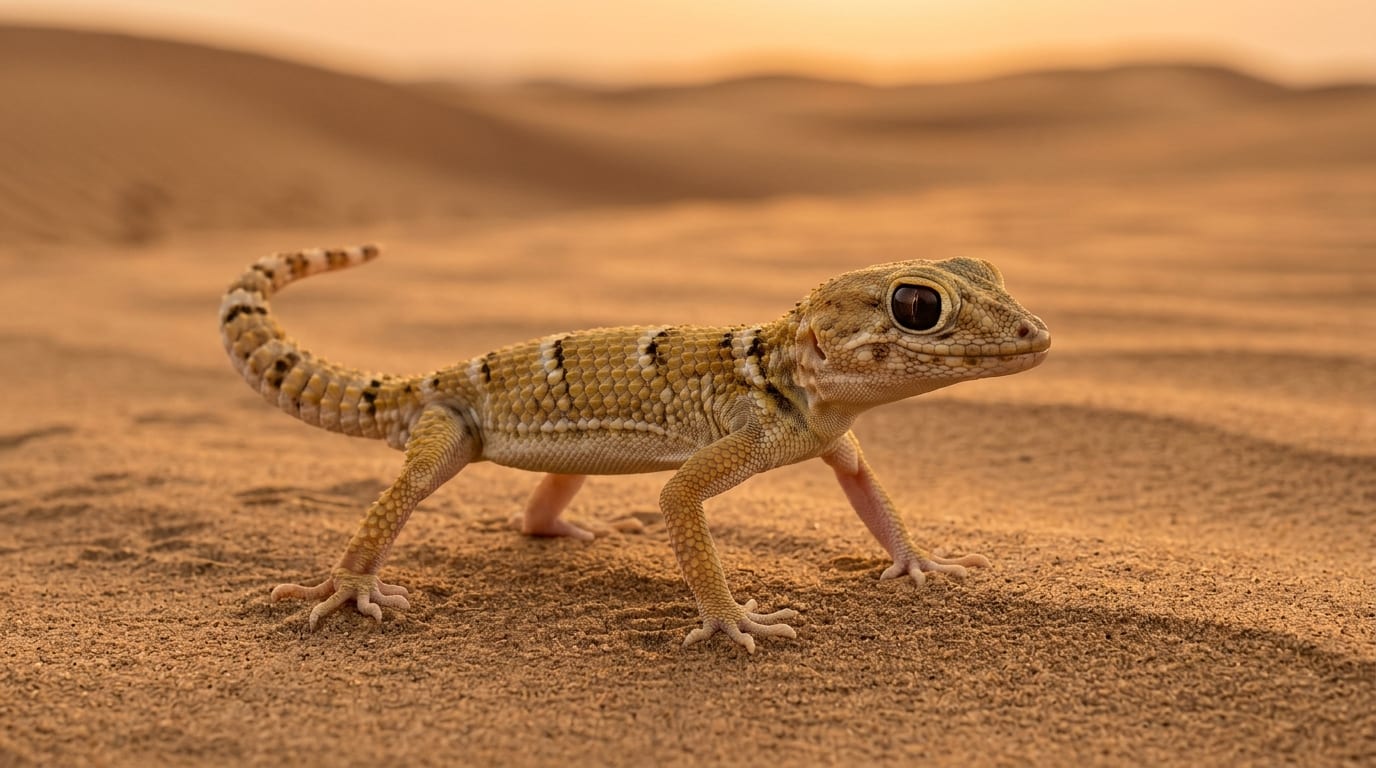
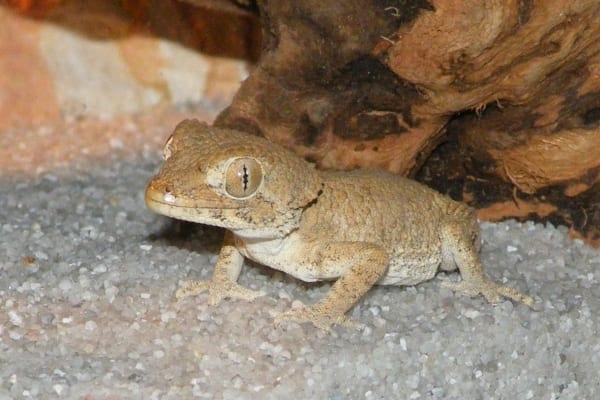
A small terrestrial gecko whose enlarged tubercles at the back of the head form a helmet-like casque. It reaches 9-11 cm and varies from reddish brown to grey. It is known as the only vertebrate able to distinguish colours at night.
Difficulty
Beginner
Lifespan
8-12 years
Size
9-11cm total length (SVL about 7.5cm)
Humidity
40〜70%
Diet
Carnivorous: insects and other arthropods
About
The helmeted gecko (Tarentola chazaliae) is a small gecko of the family Phyllodactylidae. The enlarged tubercles at the back of its head form a casque, the origin of both its Japanese and English names, and together with its broad build give it a distinctive look. It measures 9-11 cm in total length with a snout-vent length of about 7.5 cm, and varies in colour through reddish brown, ochre, brown and grey. Its range is confined to the Atlantic coast from southern Morocco to Senegal, in sandy and rocky desert kept humid by sea fog. It is nocturnal and rests by day in a burrow it digs in the ground. Its pupils are circular at night but contract to pinholes by day. With a highly sensitive retina it is the only vertebrate known to distinguish colours in the dark. In captivity it wants a dry, warm setup and does poorly when the floor is cold. The IUCN assesses it as Vulnerable.
Source: Wikipedia (CC BY-SA 4.0)
Lifespan of the Helmeted Gecko
The Helmeted Gecko lives 8-12 years.
Size of the Helmeted Gecko
The Helmeted Gecko grows to 9-11cm total length (SVL about 7.5cm).
Basic Info
Origin
The Atlantic coast from southern Morocco through Western Sahara and Mauritania to Senegal, in sandy and rocky desert with sparse vegetation, in a coastal belt kept humid by sea fog
Lifespan
8-12 years
Size
9-11cm total length (SVL about 7.5cm)
Care Specifications
Semi-aggressiveSolitaryBreeding: Moderate
Sources: Reptile Database: Tarentola chazaliae / Wikipedia (Japanese): Helmeted gecko / Wikipedia (English)
References & Sources
Edited & verified by: BreederDirect editorial team
The taxonomic, regulatory, and husbandry data on this page are compiled and verified against the authoritative primary sources below.
Taxonomy & Authority
Accepted name: Tarentola chazaliae (Mocquard, 1895)
Synonyms: Geckonia chazaliae Mocquard, 1895, Geckonia malazodes Ahl, 1930
Authority databases: GBIF · Reptile Database
Nomenclature follows global taxonomic authority databases.
Regulations & Conservation Status
CITES Appendix IIIUCN VU · Vulnerable
Listed on CITES Appendix II (effective 23 February 2023). As an Appendix II species, no registration certificate for internationally rare wild fauna and flora is required. The IUCN Red List assessment is vulnerable (VU). This species is not included in the designated animals listed in the Schedule of the Order for Enforcement of the Law Concerning the Protection and Management of Animals, nor is it designated as a designated alien species under the Order for Enforcement of the Alien Species Act.
Sources: CITES Species+ (Tarentola chazaliae, Appendix II) / IUCN Red List
Regulations may change. Always verify the latest information with the relevant authorities.
Helmeted Gecko Listings
Loading latest listingsFind listings for this species