Source: Wikimedia Commons
Ackie's Dwarf Monitor
IntermediateVaranus acanthurus
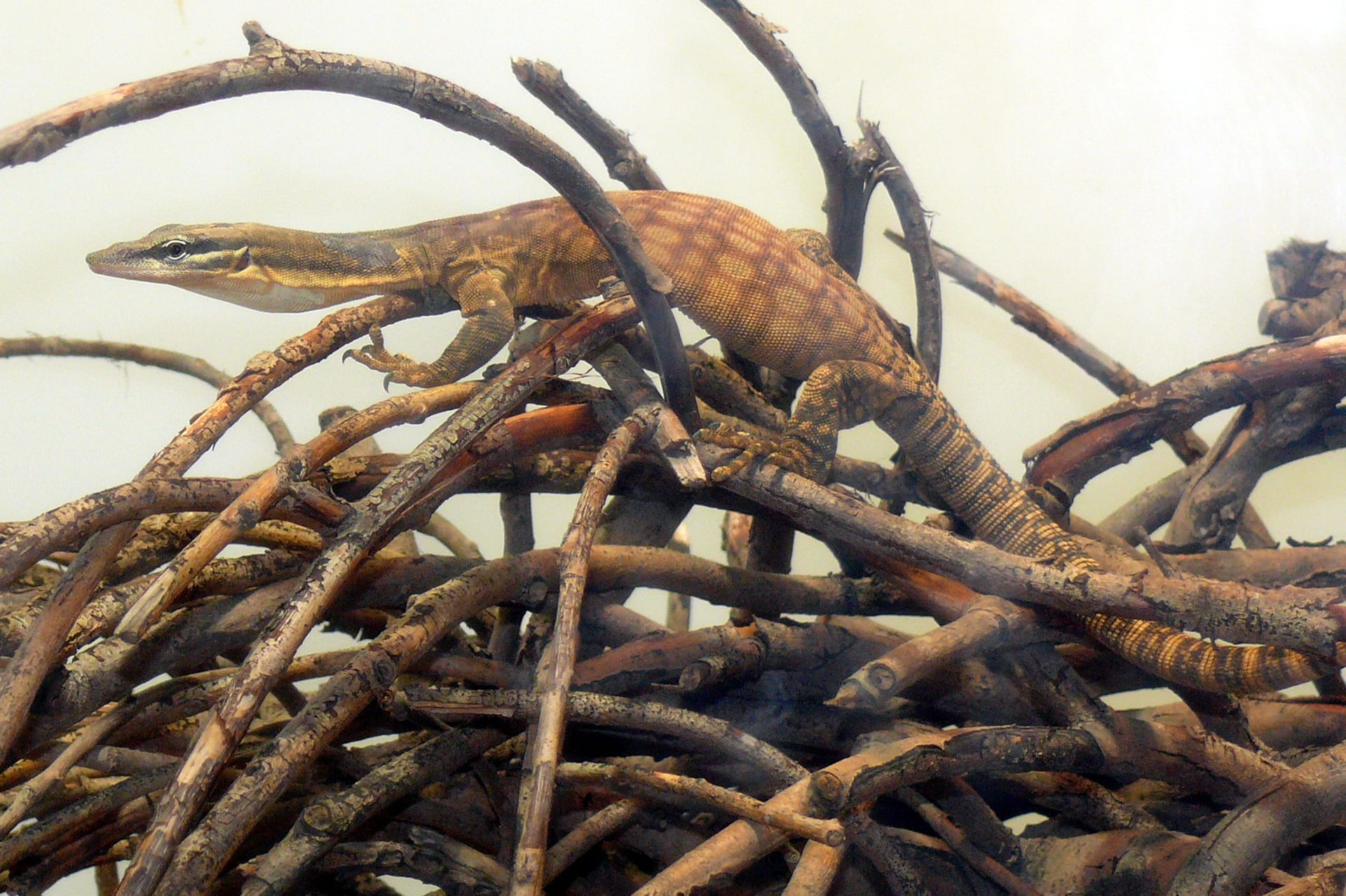
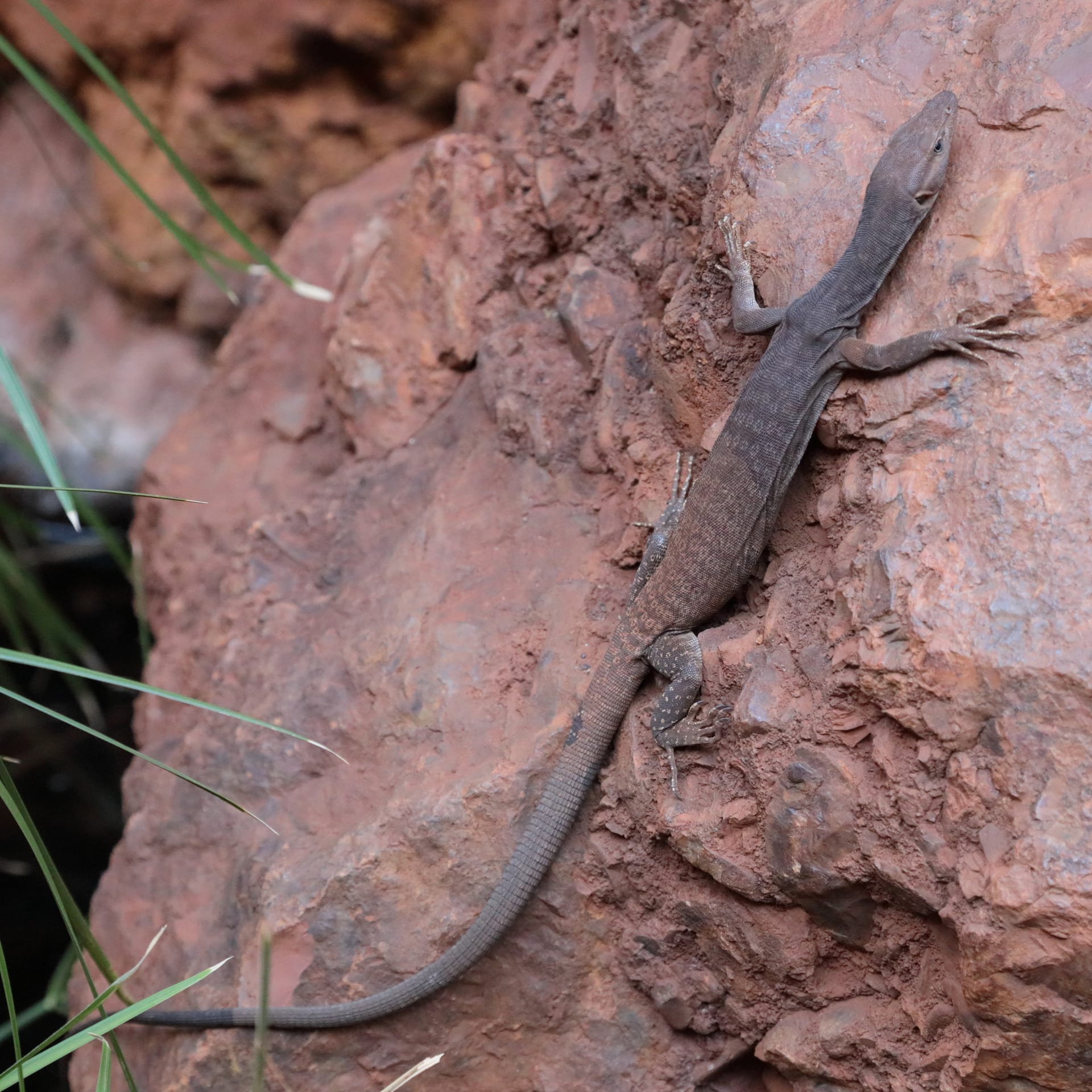
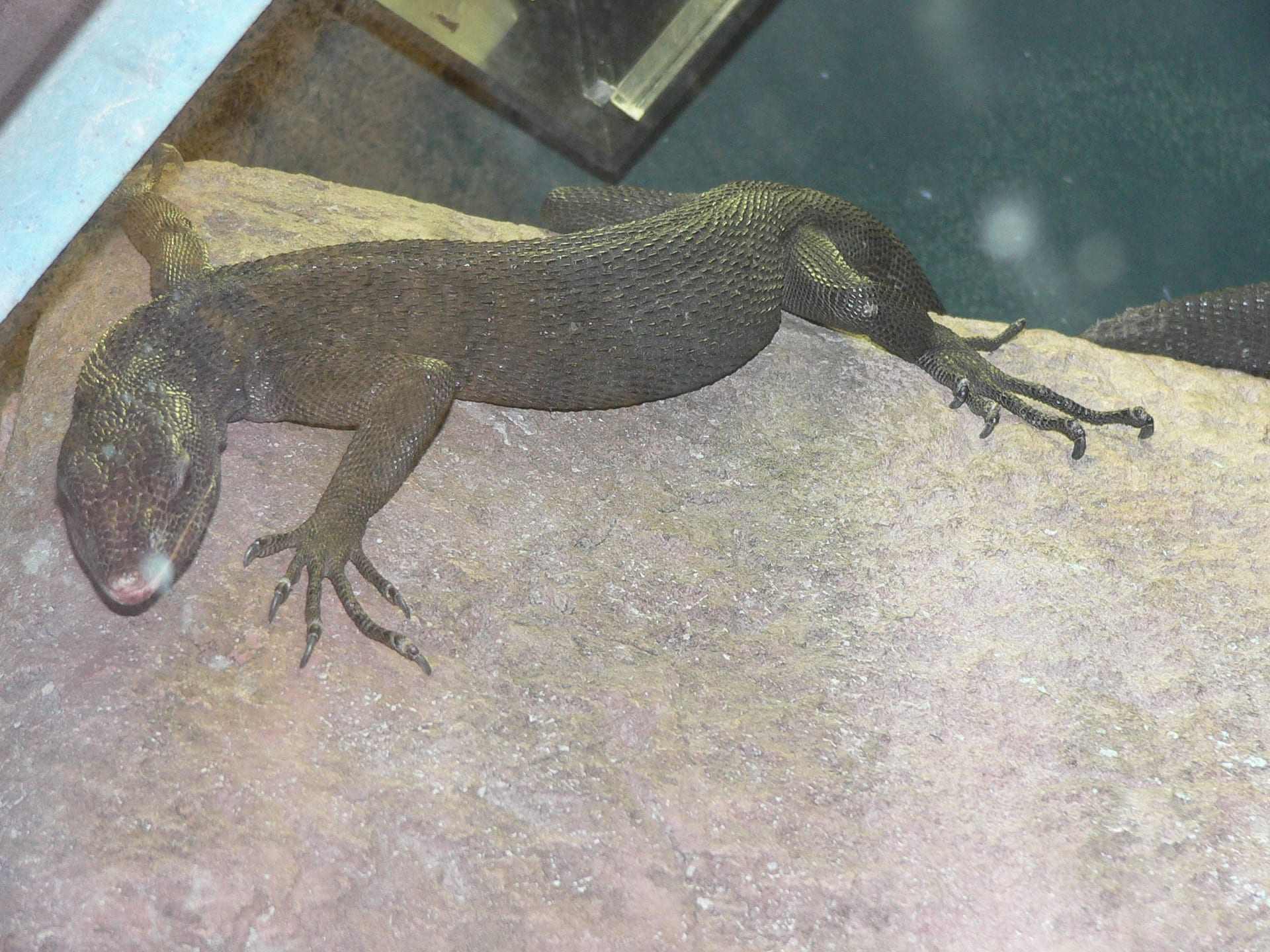
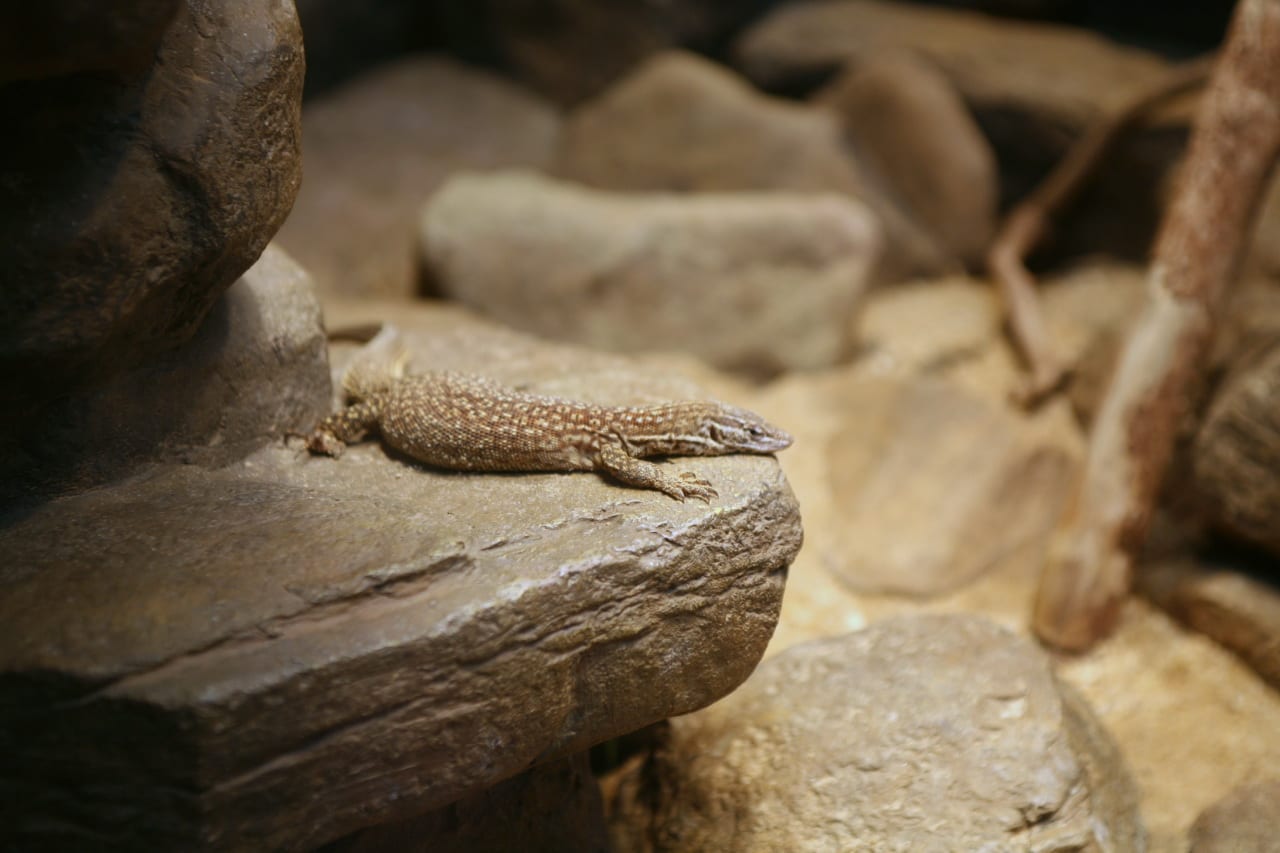
A small Australian monitor reaching 70 cm, dark brown with bright yellowish to cream spots. Its tail is round in section and covered with very spiny scales, which is what gives the species its common names.
Difficulty
Intermediate
Lifespan
15-20 years
Size
Up to 70cm; the tail is 1.3-2.3 times the head and body combined, and hatchlings measure 15cm
Diet
Mainly insects such as crickets and dubia roaches
About
Varanus acanthurus is a small varanid of semi-arid Australia belonging to the subgenus Odatria. It attains a total length of up to 70 cm, with unconfirmed reports of wild animals reaching 34 inches. The tail is 1.3 to 2.3 times the length of the head and body combined, round in section and covered with very spinose scales. The upper side is a rich dark brown scattered with bright yellowish to cream spots that often enclose a few dark scales, and there are 70 to 115 scales around the midbody. Males mature at about 30 cm snout-vent length and females at 25 to 36 cm; hatchlings measure 15 cm and emerge after three to five months of incubation. In captivity it needs an extremely hot basking surface, but without somewhere cool to escape to it will die of heat stroke, so a large enclosure with a genuine temperature gradient is essential. Substrate moisture matters more than ambient humidity: the substrate should be damp enough to hold burrow humidity at 80 per cent or above. Small and manageable, it is widely kept as an introductory monitor.
Source: Wikipedia (CC BY-SA 4.0)
Lifespan of the Ackie's Dwarf Monitor
The Ackie's Dwarf Monitor lives 15-20 years.
Size of the Ackie's Dwarf Monitor
The Ackie's Dwarf Monitor grows to Up to 70cm; the tail is 1.3-2.3 times the head and body combined, and hatchlings measure 15cm.
Basic Info
Origin
Semi-arid Australia in Western Australia, the Northern Territory, Queensland and South Australia
Lifespan
15-20 years
Care Specifications
PeacefulSolitaryBreeding: Moderate
Sources: ReptiFiles: Ackie Monitor Care / ReptiFiles: Ackie Monitor Temperatures & Heating / ReptiFiles: Ackie Monitor Enclosure Size Requirements / Wikipedia (English) / Reptile Database
References & Sources
Edited & verified by: BreederDirect editorial team
The taxonomic, regulatory, and husbandry data on this page are compiled and verified against the authoritative primary sources below.
Taxonomy & Authority
Accepted name: Varanus acanthurus Boulenger, 1885
Synonyms: Varanus acanthurus brachyurus Sternfeld, 1919
Authority databases: GBIF · Reptile Database
Nomenclature follows global taxonomic authority databases.
Regulations & Conservation Status
CITES Appendix IIIUCN LC · Least Concern
Varanidae spp. are listed in CITES Appendix II. Because of Appendix II listing, an international CITES registration certificate is not required, but an export permit issued by the exporting country is necessary for importation. In Japan, only 2 species of Varanidae are designated as Specified Animals; this species is not included. It does not fall under Designated Invasive Species under the Invasive Species Act.
Sources: CITES Appendices (Varanidae spp., Appendix II) / IUCN Red List
Regulations may change. Always verify the latest information with the relevant authorities.
Ackie's Dwarf Monitor Listings
Loading latest listingsFind listings for this species