Source: Wikimedia Commons
Carpet Chameleon
IntermediateFurcifer lateralis
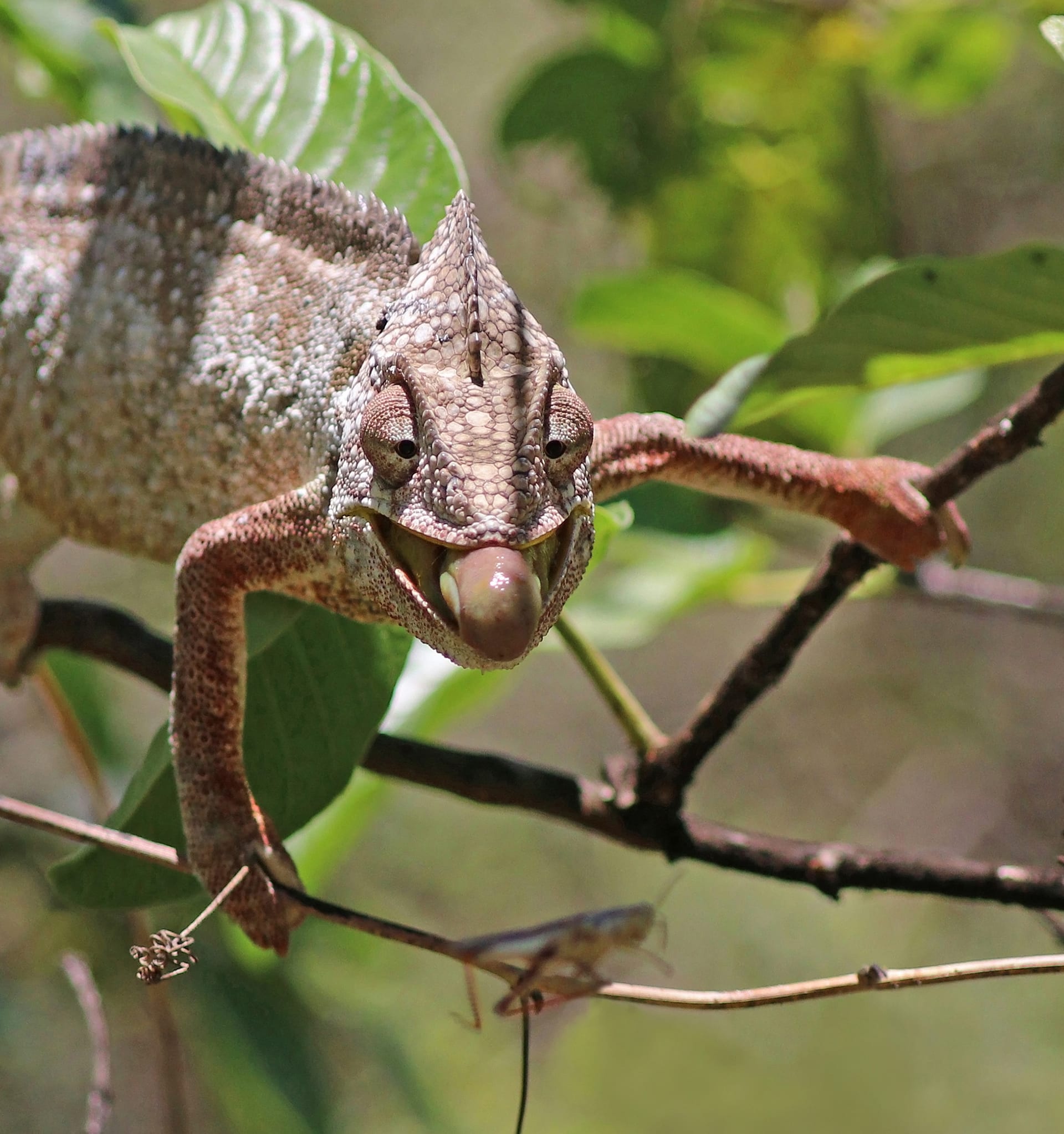
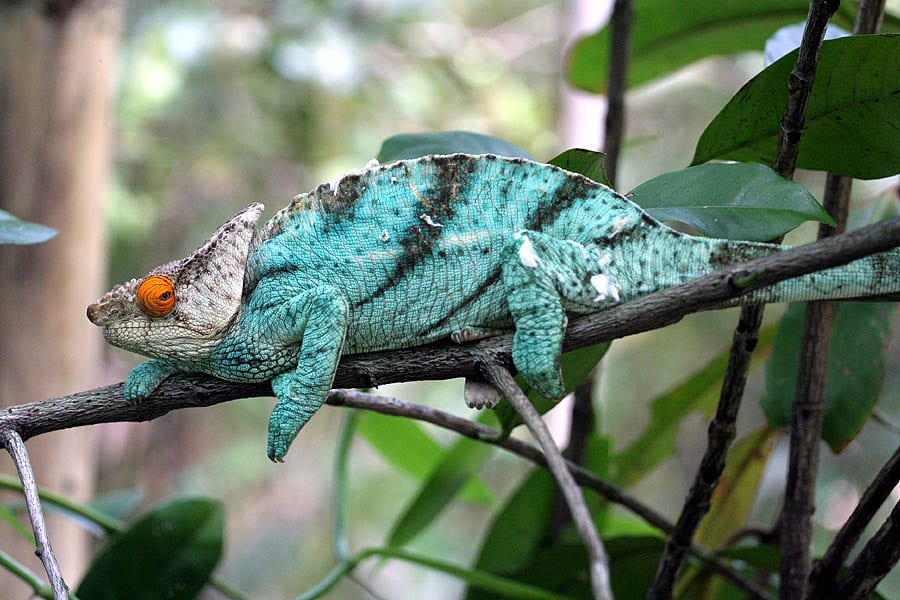
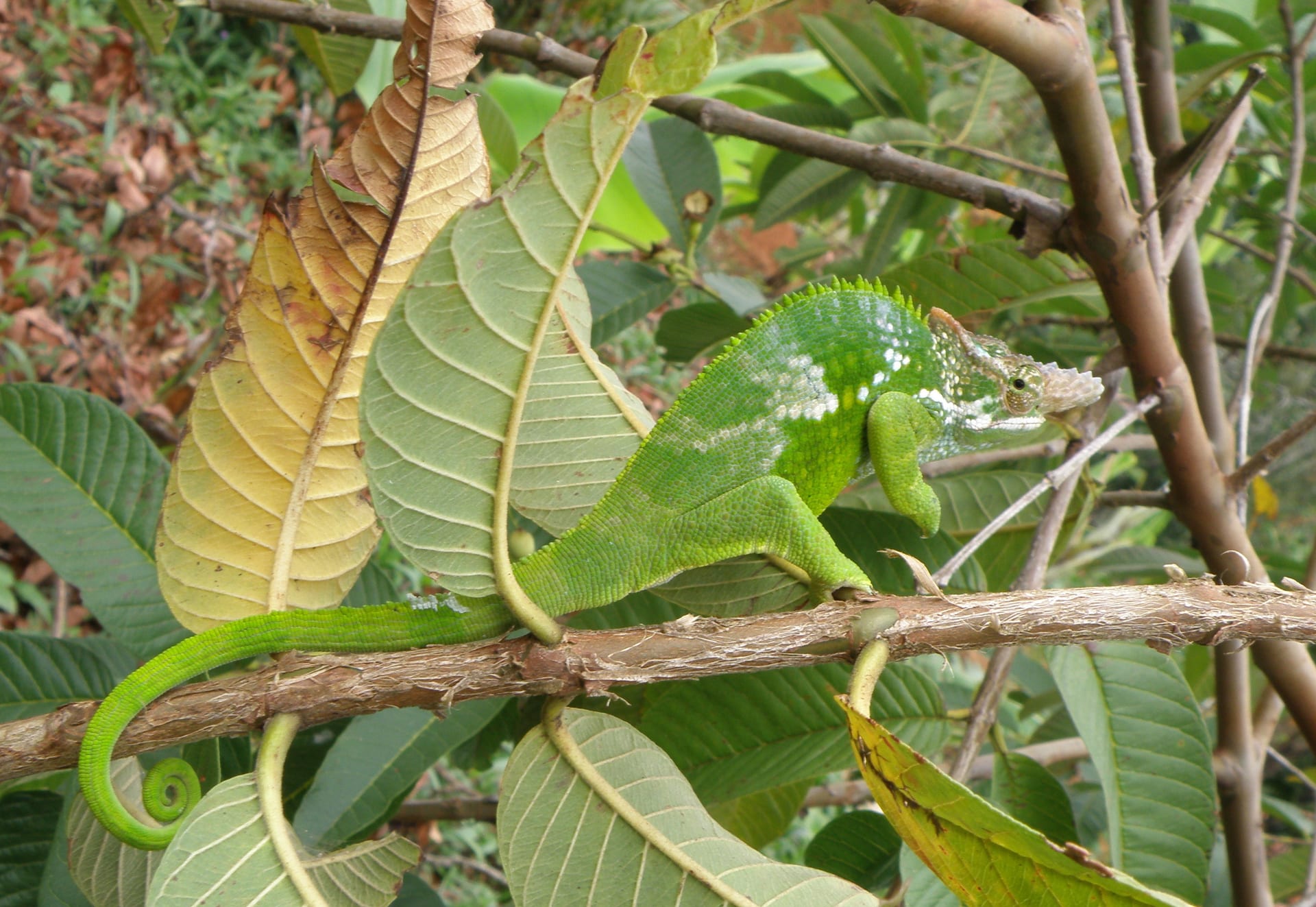
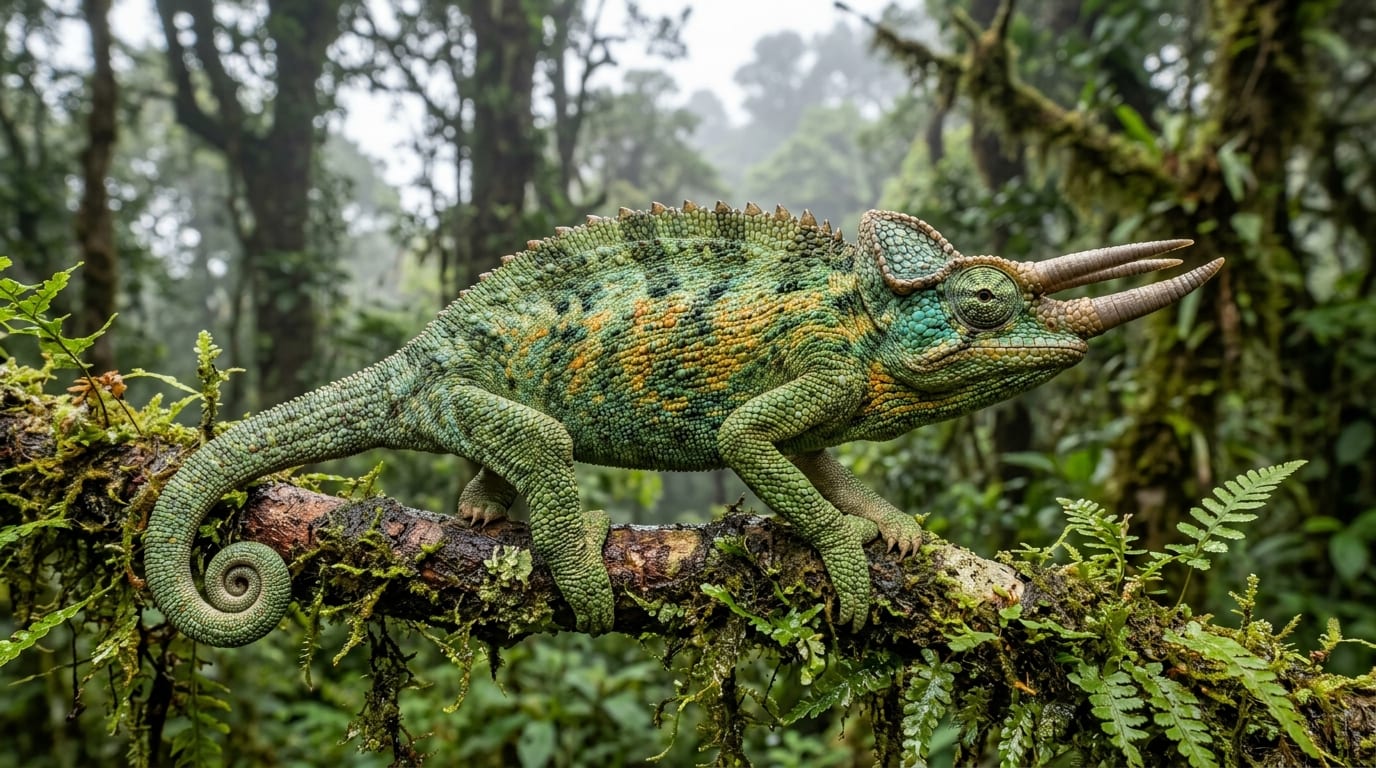
A small chameleon endemic to eastern Madagascar. Males are green with whitish and yellowish markings, but females are the showier sex, darker with markings in blue, yellow and orange.
Difficulty
Intermediate
Temperature
21〜35℃
Lifespan
5-8 years
Size
17-25cm
Humidity
40〜70%
Diet
Crickets, fruit flies, dubia roaches and other insects
About
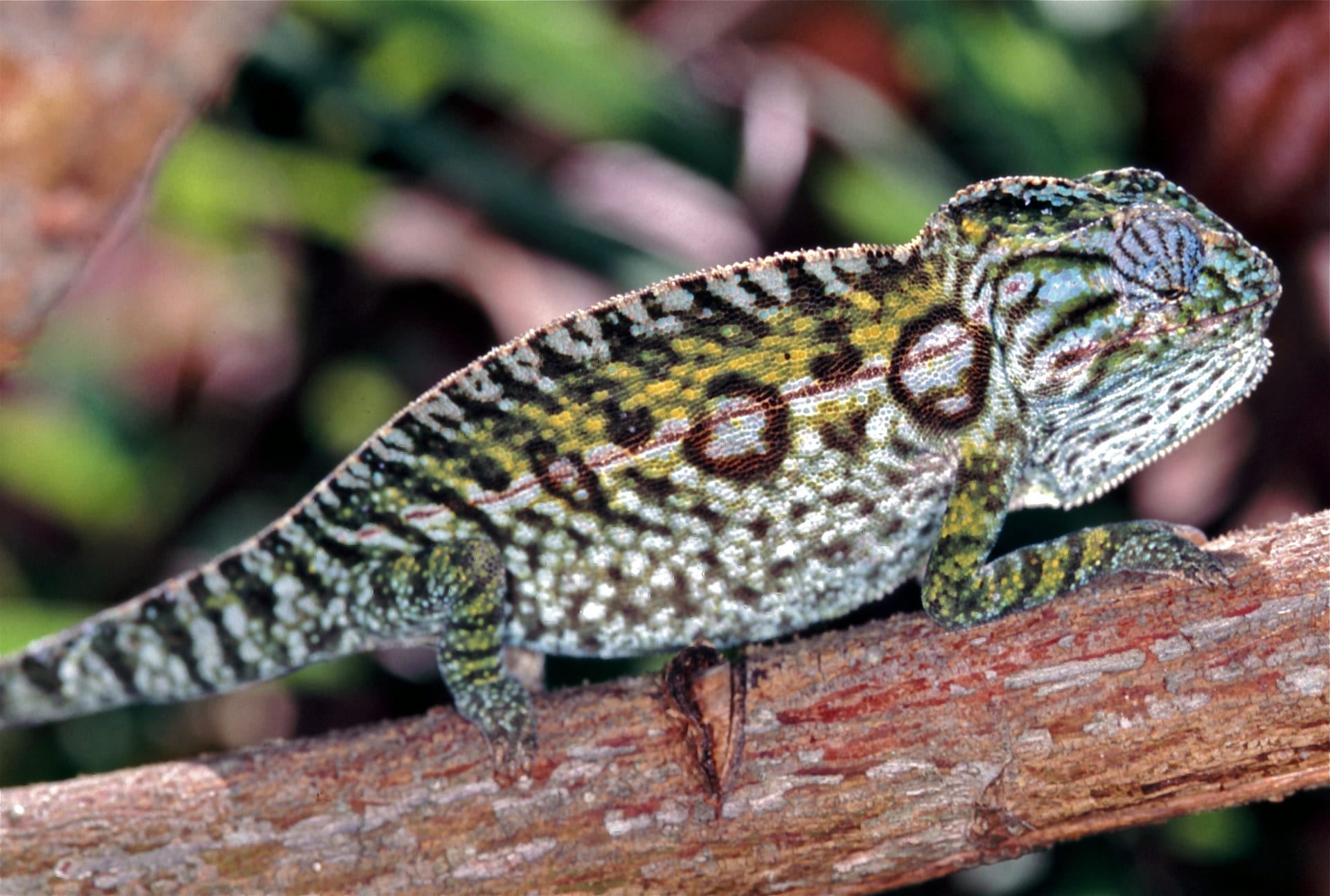
Furcifer lateralis is a small chameleon endemic to eastern Madagascar. Both sexes reach 17 to 25 cm and live between 120 and 1,925 m in forest, scrub, grassland and well-vegetated gardens. Males are largely green with whitish, yellowish and dark markings. Females are heavier-bodied and darker, blackish or sometimes reddish, with markings that run through white, blue, yellow and orange, making this one of the species where the female is the showier sex. Both sexes have stripy throats and lips, and a lateral line with several ring-shaped markings along the flank. They change colour with mood and conditions, gravid females most strongly of all, and normally start the day dark. Its range exceeds 130,000 square kilometres and it tolerates some habitat degradation, so the IUCN assesses it as Least Concern.
Source: Wikipedia (CC BY-SA 4.0)
Lifespan of the Carpet Chameleon
The Carpet Chameleon lives 5-8 years.
Size of the Carpet Chameleon
The Carpet Chameleon grows to 17-25cm.
Temperature & humidity for the Carpet Chameleon
The ideal temperature for the Carpet Chameleon is 21〜35℃.
Basic Info
Origin
Eastern Madagascar, between 120 and 1,925 m elevation, in forest, scrub, grassland and well-vegetated gardens
Lifespan
5-8 years
Care Specifications
Semi-aggressiveSolitaryBreeding: Hard
Sources: Reptiles Magazine: Carpet Chameleon Information And Care / Wikipedia (English) / Reptile Database
References & Sources
Edited & verified by: BreederDirect editorial team
The taxonomic, regulatory, and husbandry data on this page are compiled and verified against the authoritative primary sources below.
Taxonomy & Authority
Accepted name: Furcifer lateralis (Gray, 1831)
Synonyms: Chamaeleo lateralis Gray, 1831, Chamaeleo lambertoni Angel, 1921
Authority databases: GBIF · Reptile Database
Nomenclature follows global taxonomic authority databases.
Regulations & Conservation Status
CITES Appendix IIIUCN LC · Least Concern
Family Chamaeleonidae spp. has been listed on CITES Appendix II since February 4, 1977 (Species+). Because it is on Appendix II, registration as an international rare species is not required. This species is not included in the specific animals listed in the Schedule of the Enforcement Ordinance of the Animal Protection and Management Law.
Sources: CITES Appendices (Chamaeleonidae spp., Appendix II, effective 4 February 1977) / IUCN Red List
Regulations may change. Always verify the latest information with the relevant authorities.
Carpet Chameleon Listings
Loading latest listingsFind listings for this species