Chameleon Care Beginner's Guide | Essential Knowledge for Enclosure Setup, Hydration, and Feeding Refusal Solutions
This guide explains the basic information you should know before starting chameleon care. It introduces beginners to the necessity of UV lighting, vertical mesh enclosures, and misting hydration systems, as well as the main causes of feeding refusal and how to address them.
Key Takeaways
This guide explains the basic information you should know before starting chameleon care. It introduces beginners to the necessity of UV lighting, vertical mesh enclosures, and misting hydration systems, as well as the main causes of feeding refusal and how to address them.
Related Species
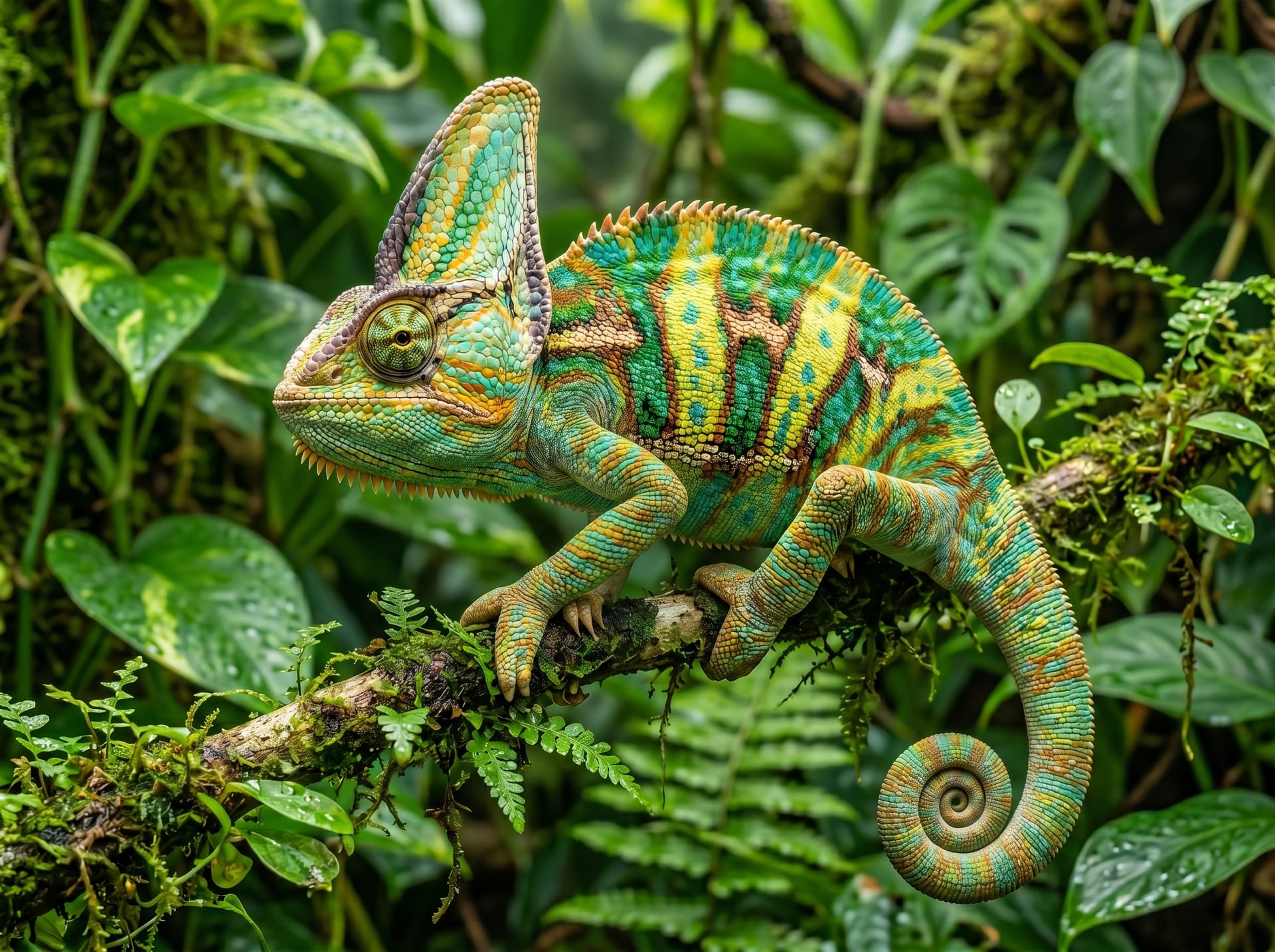
Chameleons Are "Observation Reptiles"
Chameleons are extraordinary reptiles that enjoy immense popularity due to their unique appearance—color change, independently moving eyes, and their distinctive Godzilla-like body shape. However, contrary to their popularity, their care difficulty is extremely high, and failures among beginners, such as chameleons dying within a few months of acquisition, continue to occur.
A chameleon's color change reflects "emotion, thermoregulation, and communication." When angry, they display bright colors, and when in poor health, they become dark overall. Observing this color change daily is the first step in health management. This is an animal suited to owners who find value in "watching and observing" rather than handling and interacting.
This article provides a thorough explanation of the essential knowledge for successful chameleon care—enclosure setup, hydration, and feeding refusal prevention.
Enclosure: "Vertical Type and Ventilation" Are Absolute Requirements
Chameleons are arboreal and rarely descend to the ground in the wild. Therefore, a vertical (height-prioritized) mesh enclosure is essential. Glass tanks, no matter how expensive, are prone to insufficient ventilation, and numerous cases of respiratory illness and death from poor air circulation have been reported.
Recommended enclosure size (medium-sized species such as Veiled and Panther Chameleons):
- Dimensions (width × depth × height): 60 × 60 × 120 cm or larger
- Material: Full metal mesh (permitting airflow on all four sides)
Inside the enclosure, arrange branches and non-toxic plants (such as Pothos, Ficus, and Dracaena), creating multiple height levels. Choose branches with a diameter that the chameleon's foot can grip (roughly thumb-sized). If too thin, the joints bear excessive strain. Since chameleons perceive high places as "safe," they naturally prefer to remain at the highest point. Position the basking spot near the top of the enclosure and encourage natural behavior.
The placement location is also important. Areas with high human traffic, such as the center of a busy living room or in front of a television, cause chronic stress due to excessive visual stimuli. Ideal locations are against a wall or in a corner where the chameleon is less likely to see people in its field of vision.
Lighting: UV-B and Basking Lights Are a Must-Have Pair
Chameleons require UV-B lighting for the production of vitamin D3. Long-term care without UV-B leads to metabolic bone disease (rickets), resulting in deformities of the jaw and limbs, and ultimately death.
Lighting combination:
- UV-B lamp (UVI 2.0–3.0 recommended): 10–12 hours daily. Maintain a distance of 40–60 cm from the top of the enclosure (excessive exposure occurs if the distance is too close)
- Basking light: Creates a warm spot of 35–40°C at the top of the enclosure during the day. Use a 60–100 W incandescent bulb or specialized basking lamp
- Nighttime lighting is unnecessary: Darkness is necessary for chameleons. At night, turn off all lighting and allow the temperature to drop to around 20–22°C
The UV-B output of lamps decreases depending on the type and duration of use. Even if the appearance and light intensity remain unchanged, UV-B output drops significantly within 6–12 months. It is easier to manage your lamp replacement schedule by noting it on a calendar when you purchase it.
Hydration: Understand That They Drink Only "Moving Water"
One of the most common causes of chameleon care failure is "dehydration." Chameleons do not have the habit of drinking from standing water dishes; instead, they absorb water by licking water droplets on leaves and walls. Assuming all is well because a water dish is present will inevitably lead to dehydration.
Essential hydration methods:
- Misting system (automatic mister): 2–4 times daily, 5–15 minutes per misting, is nearly essential. Manual misting is also possible, but automation is practical for daily consistency. Products from brands such as "Exo Terra" and "Zoo Med" are widely available
- Drip system (dripper): A device that continuously drips water from a container. Commercial drippers or DIY alternatives (small holes in a water bottle) also work. The sound and movement help encourage drinking
- Humidity management: Maintain 60–80% humidity immediately after misting, then 40–60% afterward. Constant high humidity promotes mold and respiratory infections, so allow time for the enclosure to dry after misting
Signs of dehydration include "sunken eyes, loose skin, and open-mouth breathing." If these are observed, immediately increase misting frequency and consider consulting a reptile veterinary specialist if necessary.
Food and Nutrition: Gut-Loading and Dusting
Chameleons primarily eat insects such as crickets, dubia roaches, honey worms, and mealworms. Their herbivorous intake is minimal; they basically rely on reflexive predation of moving insects.
Two key points for feeding:
Gut-loading is the practice of feeding nutritious foods (such as kale, carrots, and oatmeal) to feeder insects beforehand, so that when the chameleon eats the insect, it indirectly receives nutrition. Continuously feeding "nutritionally poor crickets" will result in malnutrition even if the chameleon appears to be eating.
Dusting is the practice of coating feeder insects with calcium powder or vitamin supplements before offering them. When using UV-B lamps, use calcium without vitamin D3; without UV-B, select calcium with D3. Excessive D3 can cause hypercalcemia, so pay careful attention to frequency and type.
Feeding frequency is daily for juveniles (up to 6 months) and every 2–3 days for adults. Overfeeding leading to obesity is also a problem, so limit the amount given per feeding to what the chameleon can finish in 10–15 minutes.
Main Causes of Feeding Refusal and Solutions
Chameleons are extremely sensitive to environmental stress and may stop eating (feeding refusal) with even minor changes.
Main causes of feeding refusal and remedies:
- Improper environment (temperature, UV, ventilation): The most common cause. Set multiple thermometers and hygrometers to double-check values. Also verify the UV-B lamp replacement schedule
- Stress (frequent handling, gaze of other pets, enclosure placement): Move to a quiet location and avoid handling for at least 1–2 weeks. Cohabitation with the same species causes stress simply by being in view; place enclosures in separate rooms
- Food boredom: Feeding the same insect type continuously can cause feeding refusal. Rotate between crickets, dubia roaches, and honey worms
- Parasites or infection: If accompanied by marked decrease in activity, weight loss, or abnormal fecal matter, consult a reptile veterinary specialist. Self-treating with medications is dangerous
- Pre-laying (females): Pregnant females often refuse food. If you observe abdominal swelling and restlessness, provide a nesting box (a container with 15+ cm of moistened vermiculite or clay pellets)
The basic approach is to "set up the environment and wait." Attempting forced feeding only adds additional stress. If feeding refusal persists for more than two weeks or is accompanied by weight loss, it is strongly recommended to consult a veterinary hospital that treats reptiles.
Chameleons require significant management effort, but the sense of achievement in their care is equally great. By daily observation, you will develop the ability to read health status from color, eye movement, appetite, and fecal matter. With proper knowledge and equipment in place, long-term care is entirely possible. Set up correctly and enjoy your time with your chameleon.
Popular Chameleon Species and How to Choose
Veiled Chameleon (Chamaeleo calyptratus)
This is the most recommended species for beginners. The male has a distinctive "helmet" on its head and grows to 40–60 cm in length, while females reach 25–35 cm. Compared to other chameleons, this species has greater tolerance for environmental variation and can adapt to minor fluctuations in temperature and humidity. However, even "easy to keep" is relative among reptiles, and basic equipment must be provided.
Panther Chameleon (Furcifer pardalis)
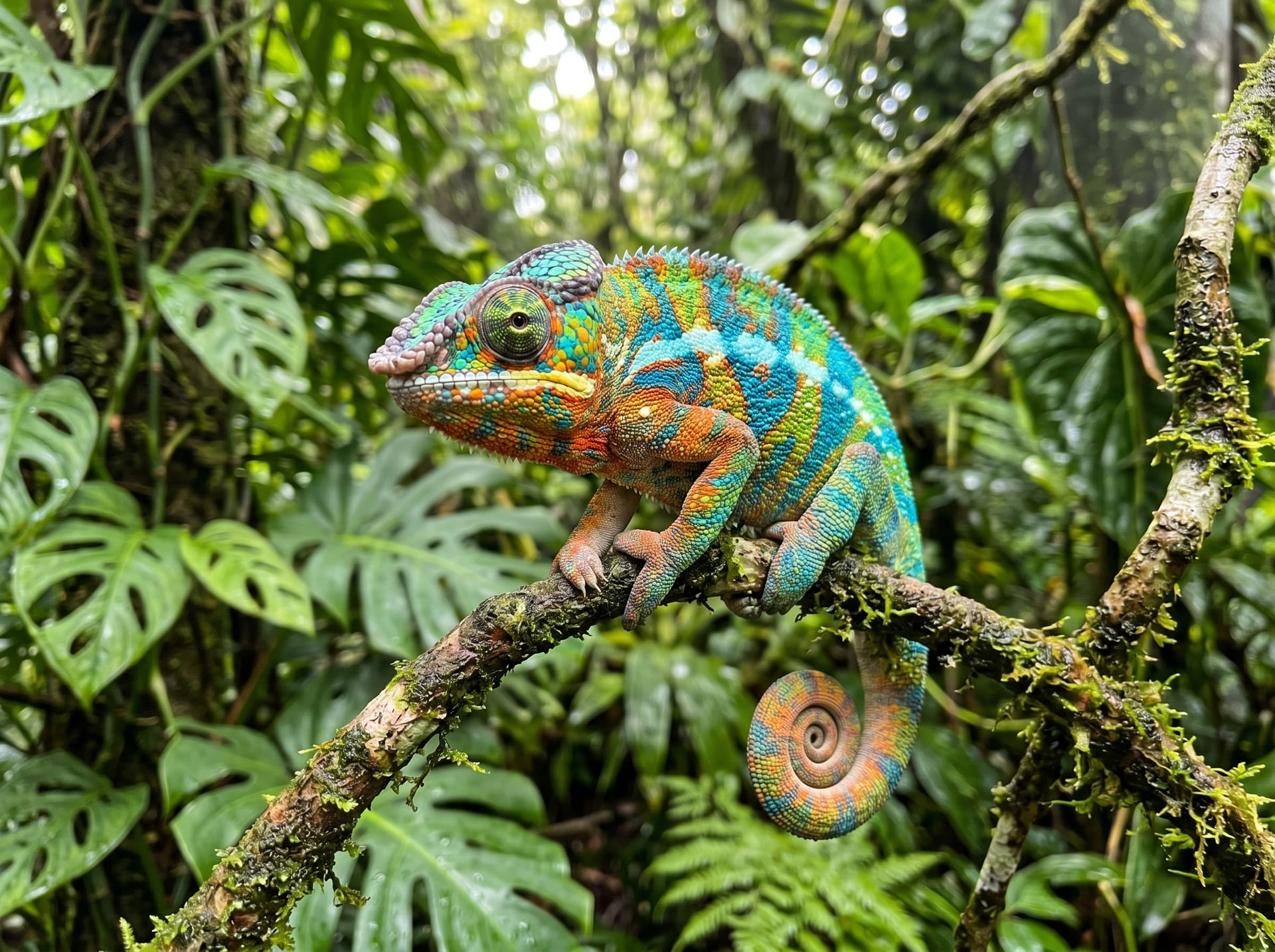
Native to Madagascar, males are known for their vibrant coloration that varies by region. Color variants are abundant depending on locality—blue for Ambilobe-origin, green for Nosy Be-origin, and orange for Sambava-origin. Adult size is comparable to the Veiled Chameleon, but climate management is delicate and this species is considered better suited to experienced keepers.
Pygmy Chameleons and Other Small Species
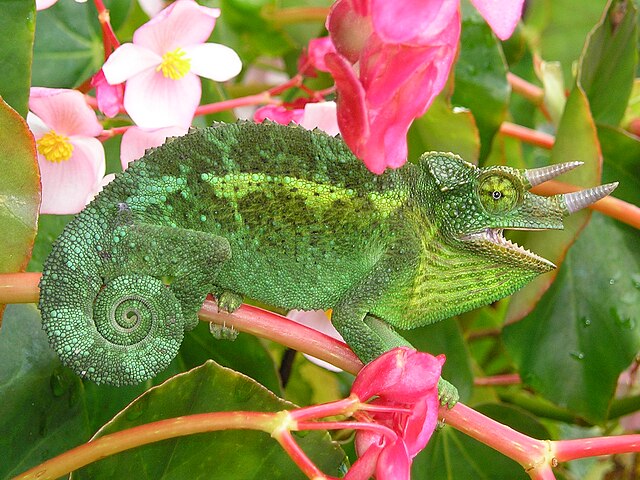
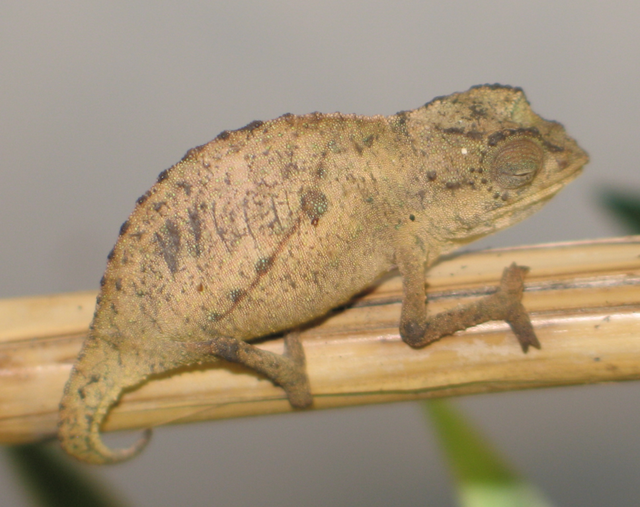
The pygmy chameleon, represented by the super-small genus Brookesia, has seen increased availability in recent years. Their body length is only a few centimeters, allowing management in dedicated enclosures and easier care in limited spaces; however, they require meticulous humidity and temperature control. Detailed care information is provided in the Pygmy Chameleon (Brookesia Genus) Care Guide. Jackson's Chameleon (males with three horns) and Flap-Necked Chameleon are also available, but information is limited and care difficulty is high. It is strongly recommended to start with either a Veiled or Panther Chameleon.