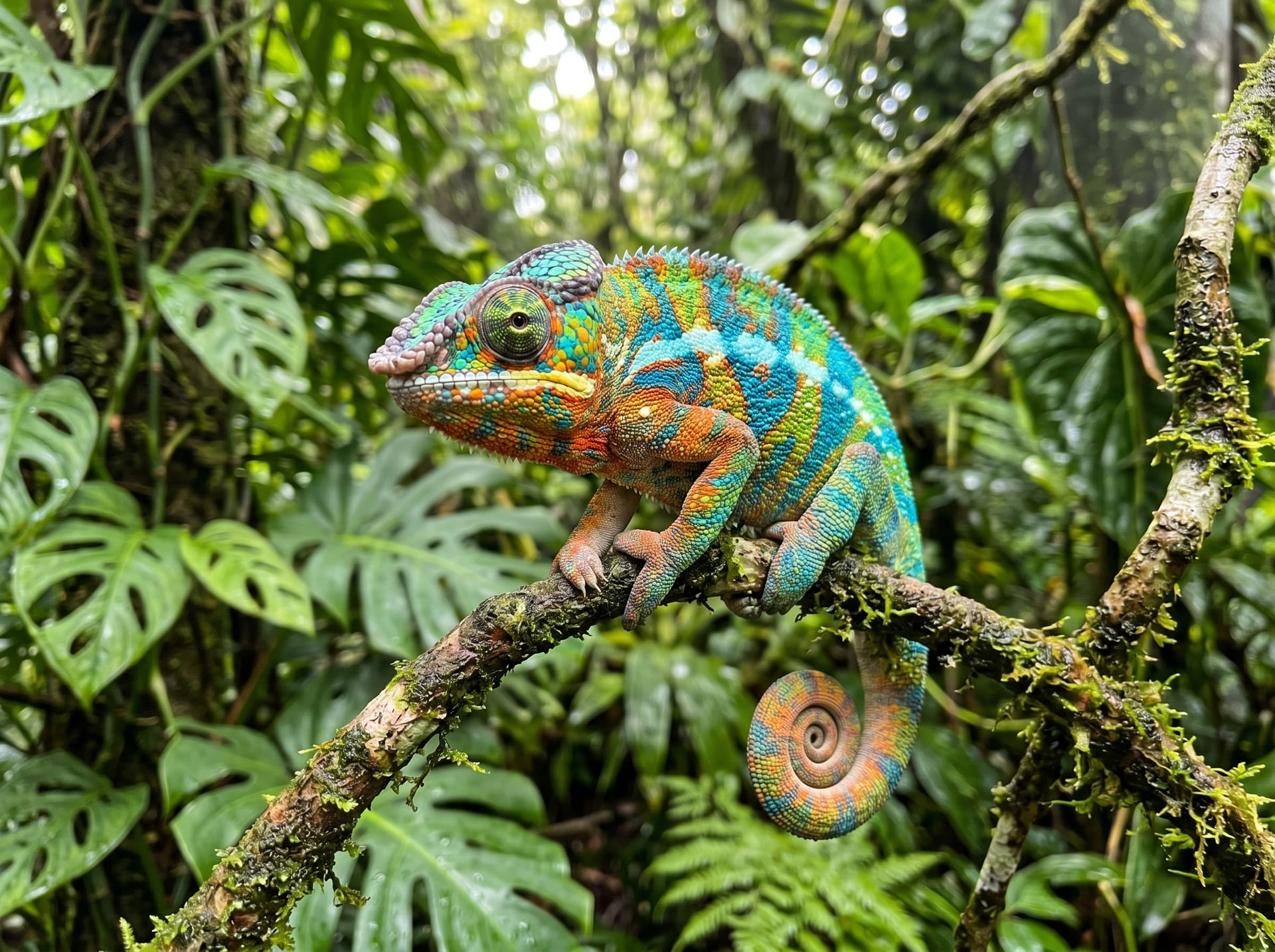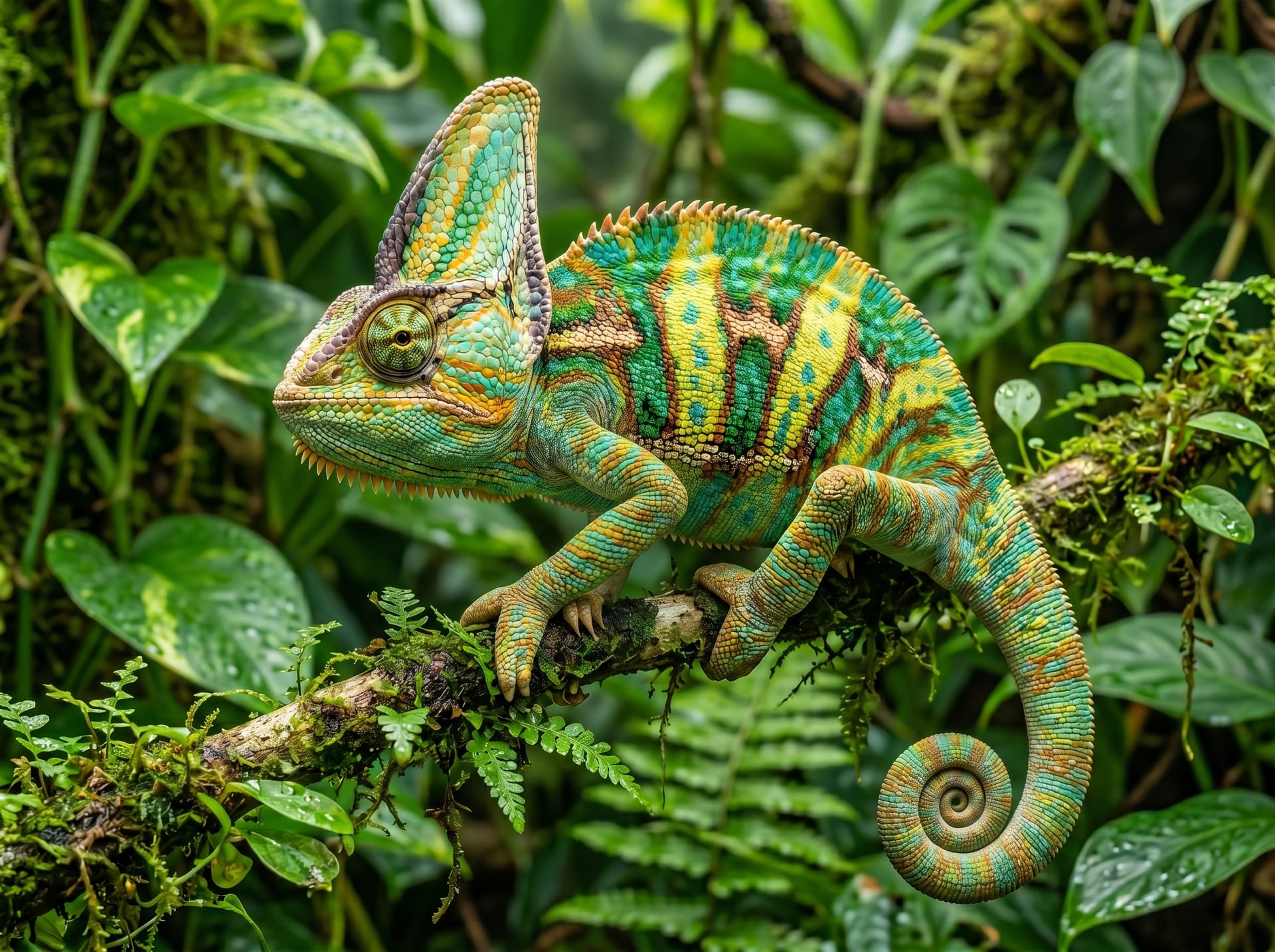
AI-generated image
Veiled Chameleon
IntermediateChamaeleo calyptratus
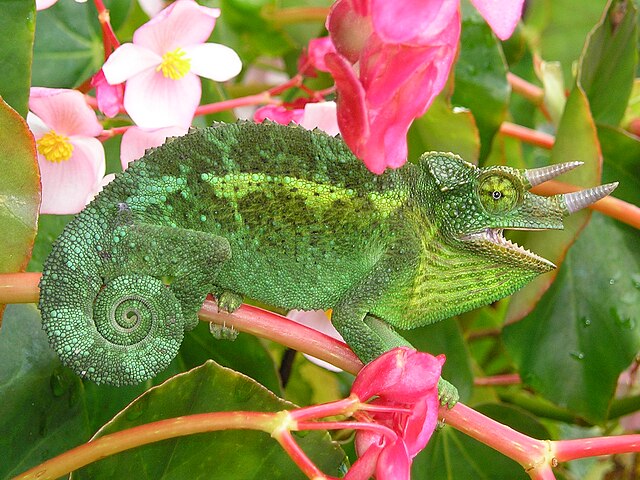
Chameleon distinguished by its large head casque (helmet). Hardiest chameleon species, relatively recommended for beginners. Vivid green with yellow bands.
Difficulty
Intermediate
Temperature
22〜32℃
Lifespan
5-8 years
Size
30-60cm
Humidity
50〜70%
Diet
Insects (crickets, dubia) + some vegetables/fruit
About
The veiled chameleon (Chamaeleo calyptratus) is an arboreal chameleon native to Yemen and southwestern Saudi Arabia in the southern Arabian Peninsula. Its name comes from the large helmet-like crest (casque) on its head, which is especially prominent in males. Adult males reach about 30–60 cm in total length, with green coloration marked by yellow and blue banding. Among chameleons it is relatively hardy and well-documented, and it is sometimes treated as a beginner species, though proper management of temperature, humidity, ventilation, and hydration remains essential. As an arboreal species it should be kept in a tall, well-ventilated enclosure with branches and plants, along with strong UVB and basking lighting. Because it drinks moving water droplets, hydration is provided via a dripper or misting. It is insectivorous and also eats some vegetables and fruit.
Lifespan of the Veiled Chameleon
The Veiled Chameleon lives 5-8 years.
Size of the Veiled Chameleon
The Veiled Chameleon grows to 30-60cm.
Temperature & humidity for the Veiled Chameleon
The ideal temperature for the Veiled Chameleon is 22〜32℃. Ideal humidity is 50〜70%.
Basic Info
Origin
Southern Arabian Peninsula (Yemen and southwestern Saudi Arabia)
Lifespan
5-8 years
Size
30-60cm
Morphs (Varieties)
Veiled chameleon (Chamaeleo calyptratus) morph trade is small-scale, centered on selective breeding. Translucent (semi-transparent skin) is representative, but sources differ on whether it is recessive or co-dominant, and as the inheritance pattern remains unconfirmed it is not documented. Pied Bald also circulates as a separate trait, but boundaries are unclear and the inheritance pattern is not documented. Sunburst and similar types are line-breeding color names and are not morphs.
Other
TranslucentPiebald
Sources: More Reptiles - Veiled Chameleon (Translucent = selectively bred) / Chameleon Forums - Translucent veiled chameleons
A curated selection of notable morphs. Inheritance modes are a breeding-planning guide; actual appearance varies with combos.
References & Sources
Edited & verified by: BreederDirect editorial team
The taxonomic, regulatory, and husbandry data on this page are compiled and verified against the authoritative primary sources below.
Taxonomy & Authority
Accepted name: Chamaeleo calyptratus Duméril & Duméril, 1851
Synonyms: Chamaeleo calcaratus Peters, 1870, Chamaeleo calcarifer Peters, 1870
Authority databases: GBIF · Reptile Database
Nomenclature follows global taxonomic authority databases.
Regulations & Conservation Status
CITES Appendix IIIUCN LC · Least Concern
Chameleon family is generally CITES Appendix II.
Sources: CITES Checklist (Chamaeleo spp. Appendix II) / IUCN Red List
Regulations may change. Always verify the latest information with the relevant authorities.
Veiled Chameleon Listings
Loading latest listingsFind listings for this species