What is the Pygmy Chameleon (Brookesia genus)?
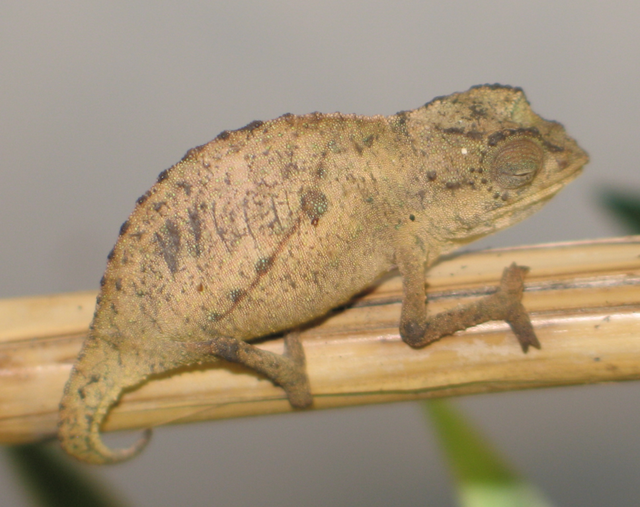
The genus Brookesia is a group of ultra-small chameleons endemic to Madagascar, also called "pygmy chameleons" or "nano chameleons." The smallest species, Brookesia nana, measures just 22mm (including tail) even as an adult, making it one of the smallest reptiles in existence.
The following species are primarily seen in the pet trade:
- Brookesia thieli (Thiel's Pygmy Chameleon): Relatively hardy and commonly available
- Brookesia stumpfii: Medium-sized with extensive husbandry records
- Brookesia superciliaris: Characterized by prominent supraocular protrusions
- Brookesia minima: Small and delicate
---
CITES Regulations and Acquisition
All Brookesia species are listed on CITES Appendix II, with strict restrictions on wild collection and export. Legal acquisition is limited to individuals with export country permits or captive-bred (CB) specimens from registered breeders.
Always verify the following when purchasing:
- Import permits (through official distribution channels)
- Breeder certification for CB specimens
- Wild-caught (WC) individuals carry high risk of early death from import stress
---
Cage Design and Environmental Setup
Size and Materials
Escape prevention and visibility are the primary challenges due to their ultra-small size.
- Recommended enclosure: Mesh cage (for ventilation) or custom glass + mesh hybrid enclosure
- Size: 30×30×45cm (vertical) is the minimum suitable size for one adult pair
- Mesh size: Must be fine enough to prevent feeder insects (fruit flies, isopods, etc.) from escaping
Layout
In the wild, most species are terrestrial to semi-arboreal, living near the ground among leaf litter.
- Arrange low shrubs, thin branches, and artificial plants vertically
- Substrate: Layer 5–8cm of moisture-retaining soil mix (such as dragon soil or coconut fiber)
- Placing a few oak leaves creates hiding spots and promotes stability
---
Temperature and Humidity Management
Temperature Settings
Brookesia habitats in Madagascar are at high elevation (500–2000m), with relatively cool conditions.
| Species | Daytime Ideal | Nighttime Ideal |
|---|
| B. thieli / B. stumpfii | 20–26°C | 18–22°C |
| B. minima / Highland species | 18–24°C | 15–20°C |
Prolonged temperatures above 28°C cause rapid decline. Air conditioning is essential during Japanese summers; direct sunlight must be completely avoided.
High Humidity Management
Humidity of 70–90% is required. Due to their ultra-small size, large water droplets pose a drowning risk.
Misting tips:
- Use fine mist (atomizer-type spray)
- Direct mist toward plants and surfaces, not directly at the animal
- If using automatic misters, set to the lowest flow rate
---
Feeding Management
Due to their ultra-small body size, they can only consume extremely small prey.
- Fruit flies (Drosophila hydei / melanogaster): Most readily available primary food
- Isopod nymphs: Their ground-wandering behavior stimulates Brookesia's hunting instinct
- Micro crickets (SS–XS size): For slightly larger individuals
- Aphids: Occasionally offered when fresh
Feed daily to every other day. Managing fruit flies by releasing a few at a time into the enclosure is easiest.
Vitamin and Calcium Supplementation
Metabolic bone disease (MBD) from calcium and vitamin D3 deficiency is a common cause of death in chameleons. Always dust feeders before offering:
- Calcium powder (D3-containing): Dust 2–3 times weekly
- Multivitamin: Dust once weekly
---
Breeding and Egg Management
Brookesia species lay eggs in soil near the ground. It is important to provide at least 10cm depth of soil in a breeding setup.
- Egg size: Varies by species but is extremely small, 4–8mm in diameter
- Incubation period: Approximately 60–100 days (varies by temperature and species)
- Post-laying egg care: Manage temperature in moist vermiculite
Hatchlings can be raised exclusively on fruit flies. Daily dusting is essential for juveniles as well.
---
Common Mistakes and Solutions
Mistake 1: Acute stress death from high temperature
Failed temperature control during summer is the leading cause of death. Install a thermometer in the enclosure and monitor it constantly.
Mistake 2: Drowning after misting
Large water droplets hitting the body directly will drown ultra-small individuals. Use a fine-mist atomizer and direct it toward plants.
Mistake 3: MBD from insufficient dusting
Calcium demand is especially high during growth and breeding periods. Do not forget to dust 2–3 times weekly.
---
Conclusion
Brookesia pygmy chameleons are among the smallest and rarest reptiles, and their ultra-tiny size and unique appearance make them highly popular with collectors. However, they present multiple complex challenges: high humidity, low temperature requirements, ultra-small prey, and CITES regulations, making long-term care difficult without proper knowledge and equipment. By sourcing CB specimens from trusted channels and maintaining meticulous temperature and humidity control along with daily feeding, rewarding cohabitation with these remarkable tiny chameleons is achievable.