Source: Wikimedia Commons
Oustalet's Chameleon
IntermediateFurcifer oustaleti
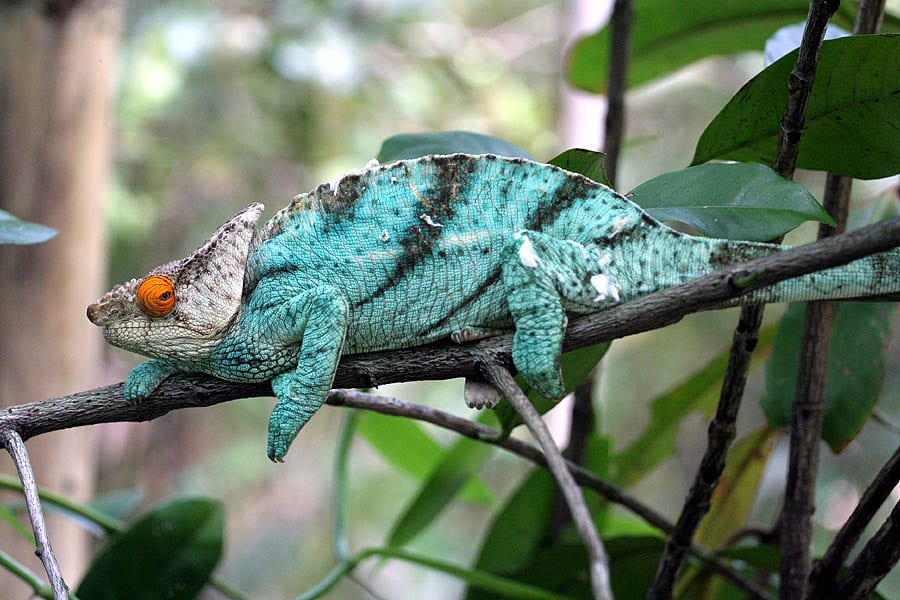
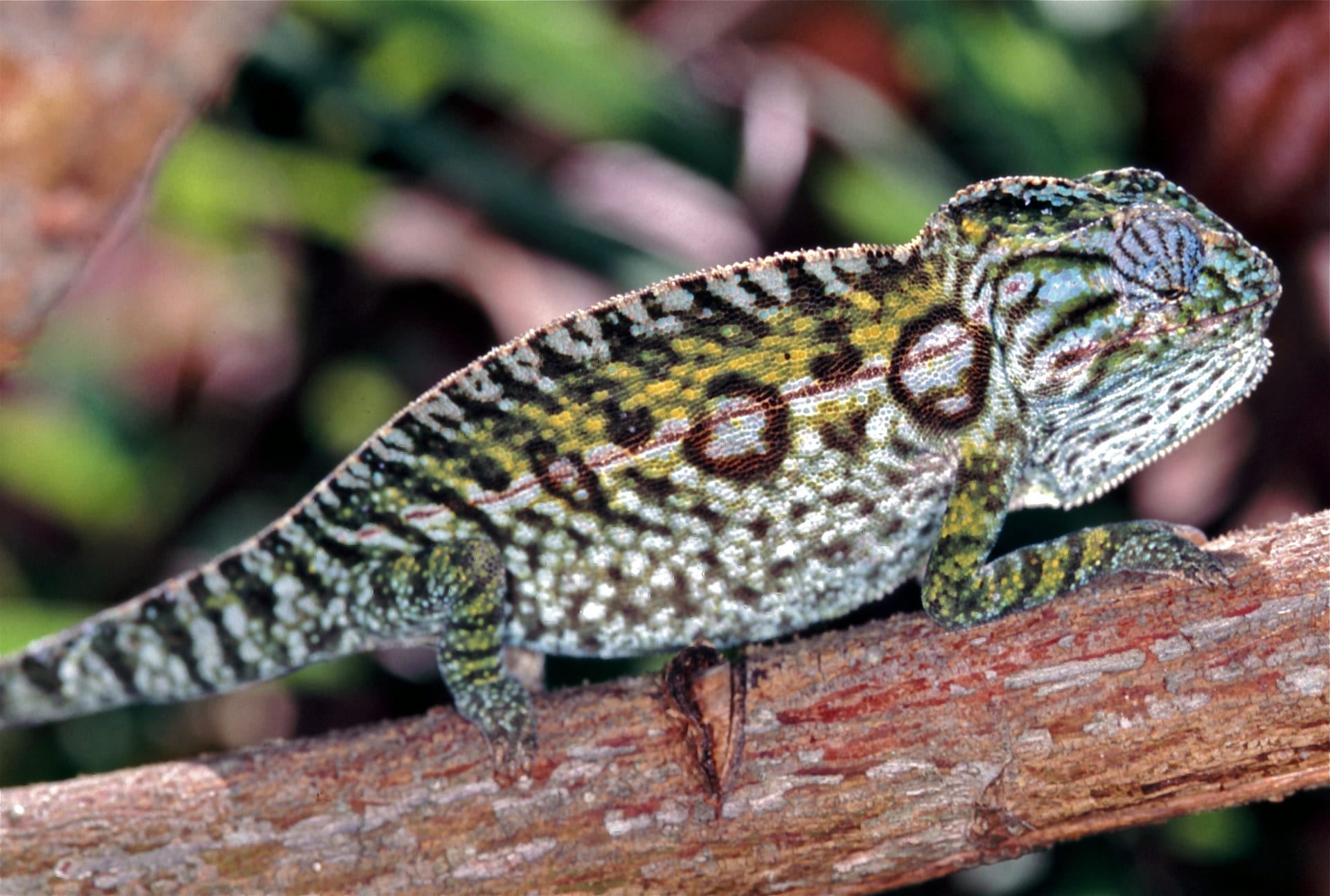
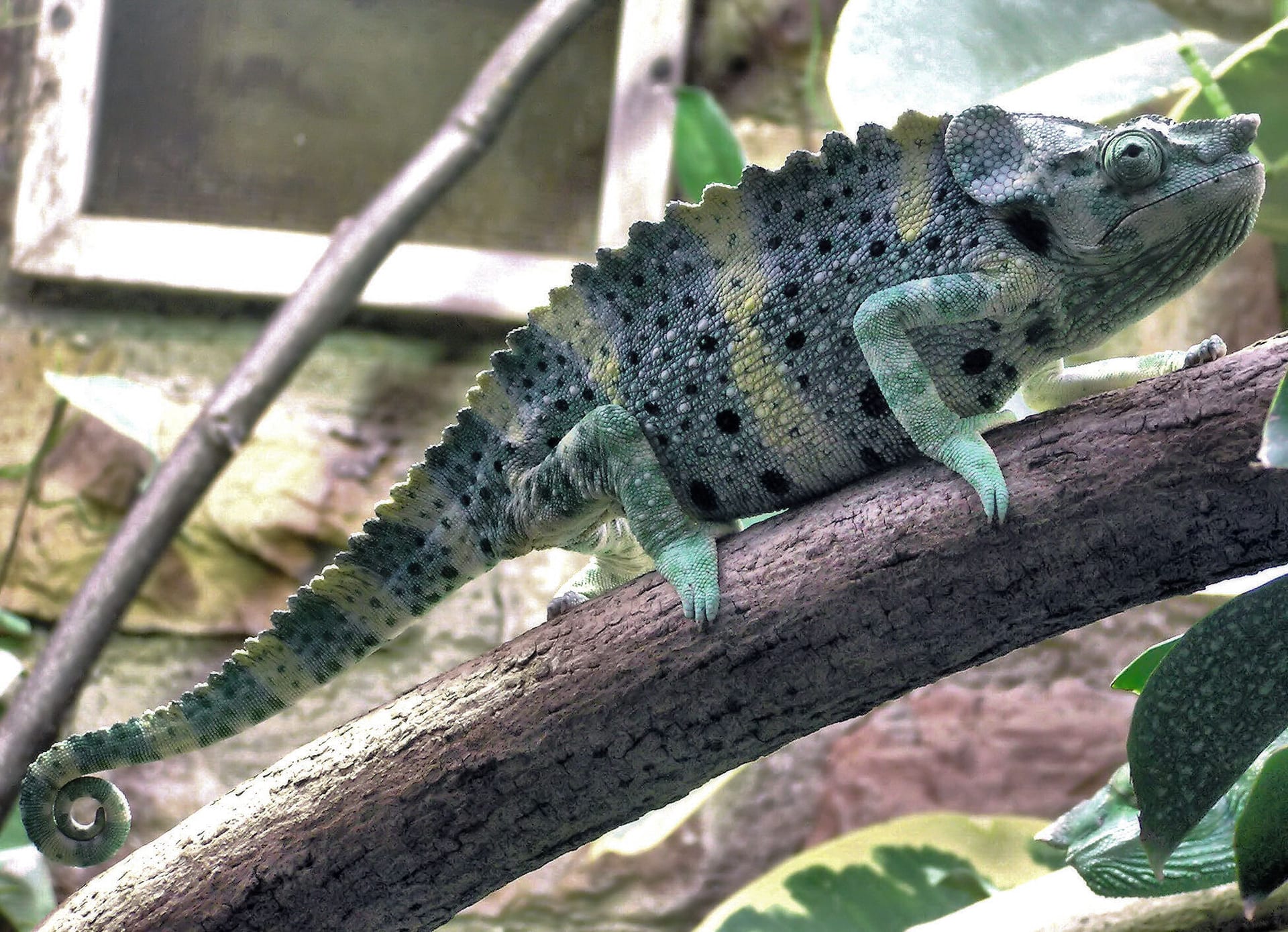
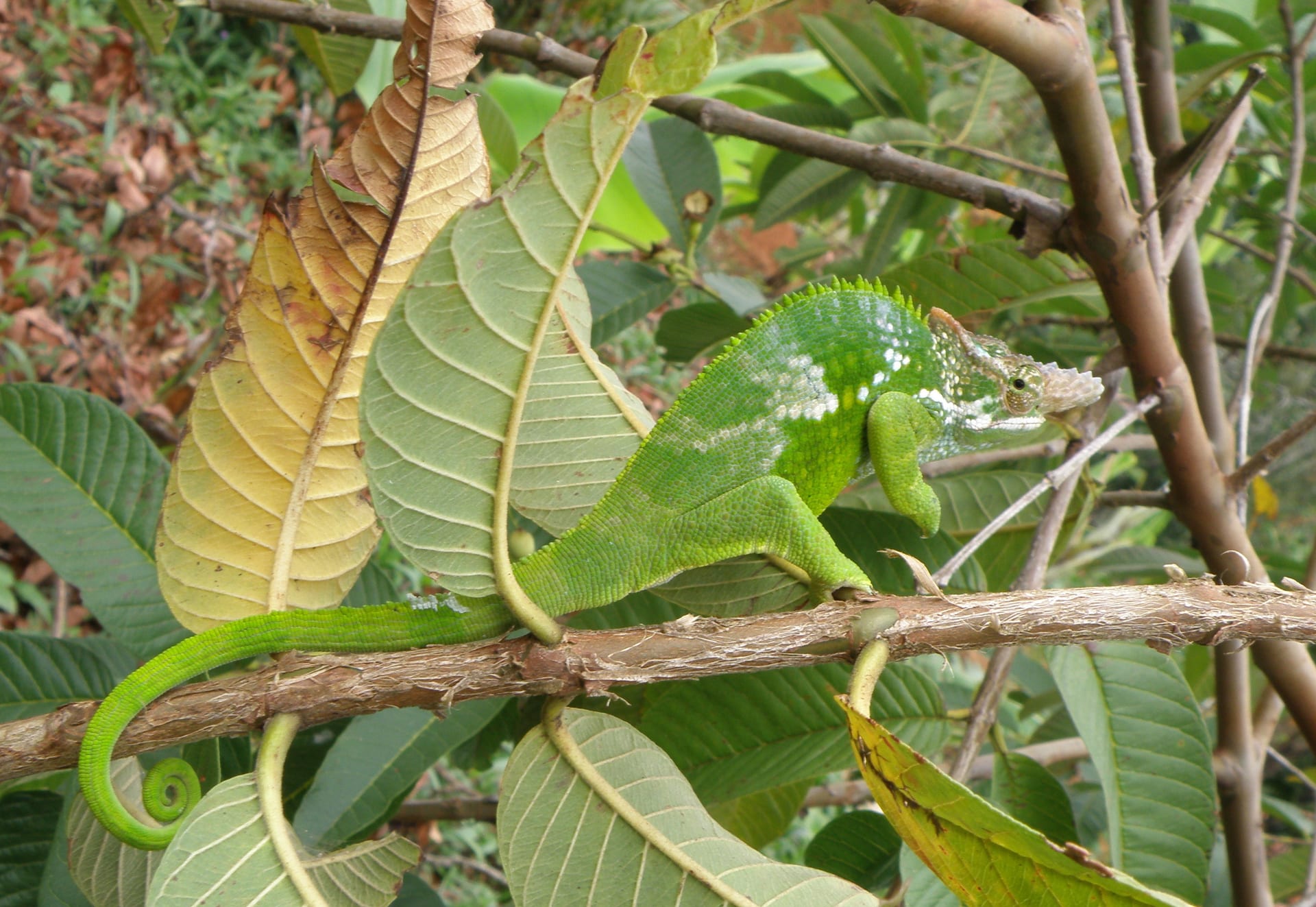
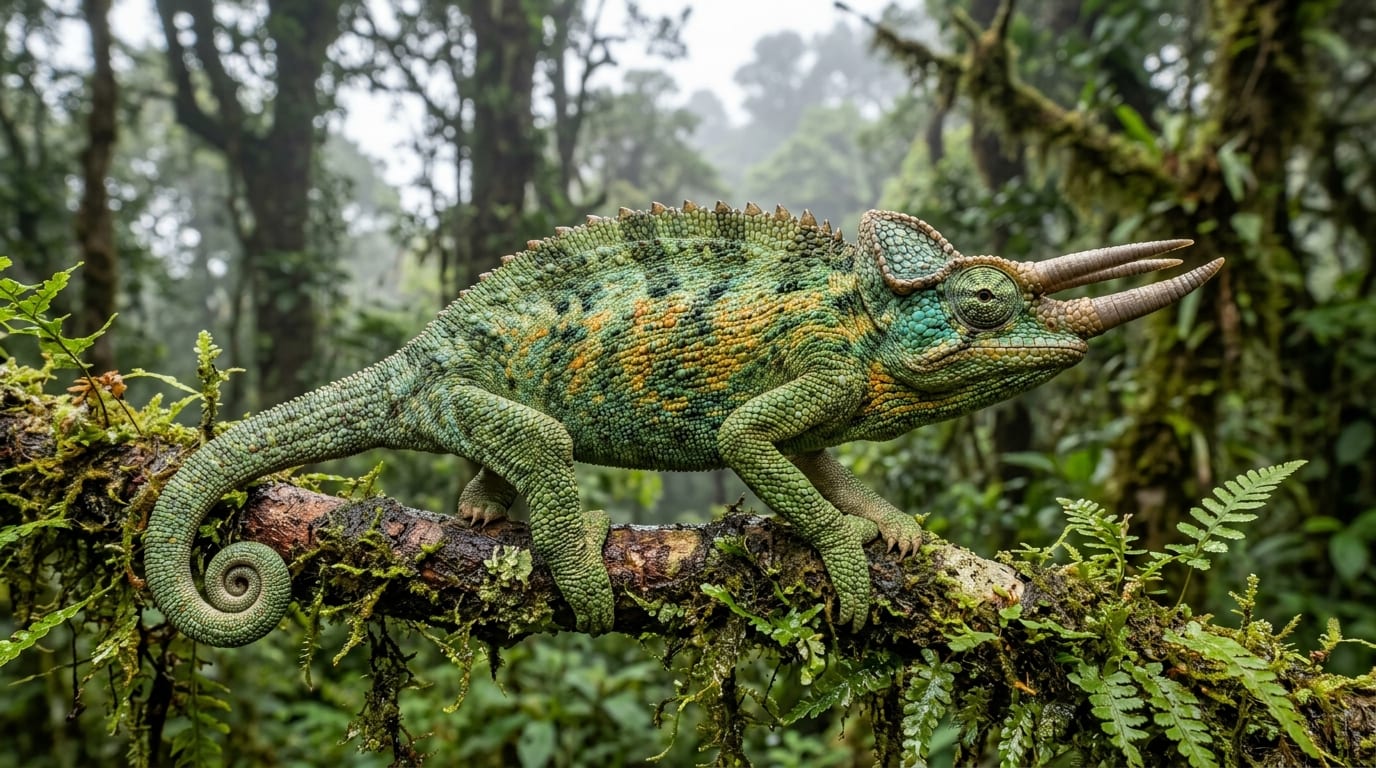
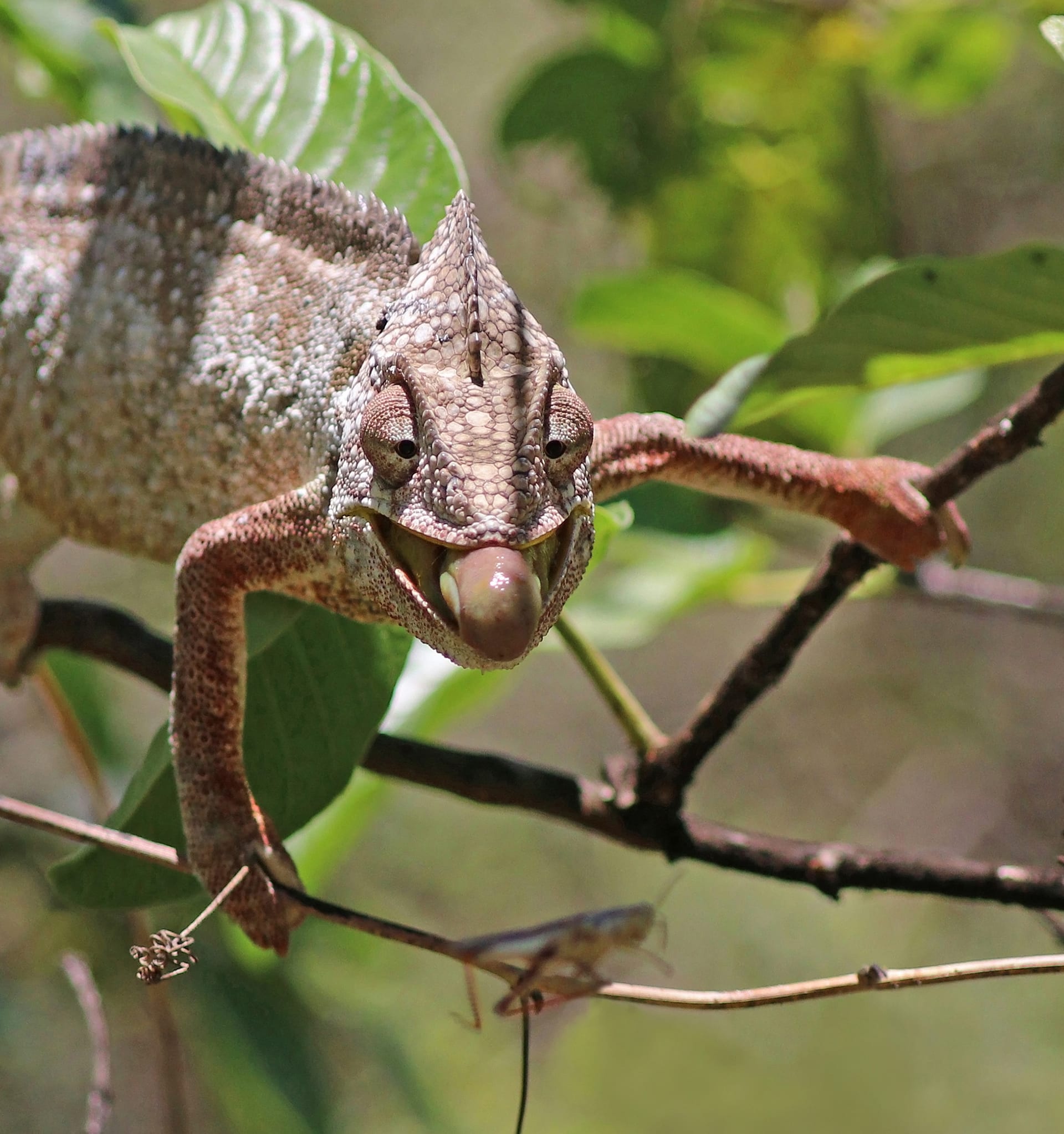
One of the world's largest chameleons, found throughout Madagascar. Including the tail it reaches 68.5 cm; males wear drab brown and grey camouflage while females are mainly green with white spots along the flanks.
Difficulty
Intermediate
Temperature
25〜32℃
Lifespan
Up to 15 years in captivity
Size
Up to 68.5cm; females to about 40cm
Humidity
40〜70%
Diet
Crickets, dubia roaches and other insects, occasionally small lizards and mammals
About
Furcifer oustaleti is a large chameleon found across Madagascar. Including the tail it reaches 68.5 cm, making it the largest chameleon species by that measurement. The head carries a high casque with several crests, and a dorsal crest of 45 or more small triangular spines runs along the spine. Males are drab brown and grey while females are the more colourful sex, dominated by green. It occupies dry deciduous forest, humid evergreen forest, montane savanna, farmland and even urban settings, but is rare deep inside primary forest and prefers forest edges. It feeds mainly on insects, also taking small lizards and mammals. Females bury up to 50 eggs, which hatch after about 250 days at 28 C.
Source: Wikipedia (CC BY-SA 4.0)
Lifespan of the Oustalet's Chameleon
The Oustalet's Chameleon lives Up to 15 years in captivity.
Size of the Oustalet's Chameleon
The Oustalet's Chameleon grows to Up to 68.5cm; females to about 40cm.
Large males weigh 400-500 g; females stay clearly smaller at about 40 cm.
Basic Info
Origin
Throughout Madagascar, in dry deciduous forest, humid evergreen forest, montane savanna, degraded forest, farmland and even towns; introduced near Nairobi in Kenya and in Miami-Dade County, USA
Lifespan
Up to 15 years in captivity
Size
Up to 68.5cm; females to about 40cm
Care Specifications
Semi-aggressiveSolitaryBreeding: Hard
Sources: Reptiles Magazine: Oustalet's Chameleon Care And Breeding / Wikipedia (German): Riesenchamäleon / Wikipedia (English)
References & Sources
Edited & verified by: BreederDirect editorial team
The taxonomic, regulatory, and husbandry data on this page are compiled and verified against the authoritative primary sources below.
Taxonomy & Authority
Accepted name: Furcifer oustaleti (Mocquard, 1894)
Synonyms: Chamaeleo oustaleti Mocquard, 1894, Chamaeleon oustaleti Mocquard, 1894
Authority databases: GBIF · Reptile Database
Nomenclature follows global taxonomic authority databases.
Regulations & Conservation Status
CITES Appendix IIIUCN LC · Least Concern
Family Chamaeleonidae spp. has been listed on CITES Appendix II since February 4, 1977 (Species+). Because it is on Appendix II, registration as an international rare species is not required. This species is not included in the specific animals listed in the Schedule of the Enforcement Ordinance of the Animal Protection and Management Law.
Sources: CITES Appendices (Chamaeleonidae spp., Appendix II, effective 4 February 1977) / IUCN Red List
Regulations may change. Always verify the latest information with the relevant authorities.
Oustalet's Chameleon Listings
Loading latest listingsFind listings for this species