Source: Wikimedia Commons
Meller's Chameleon
AdvancedTrioceros melleri
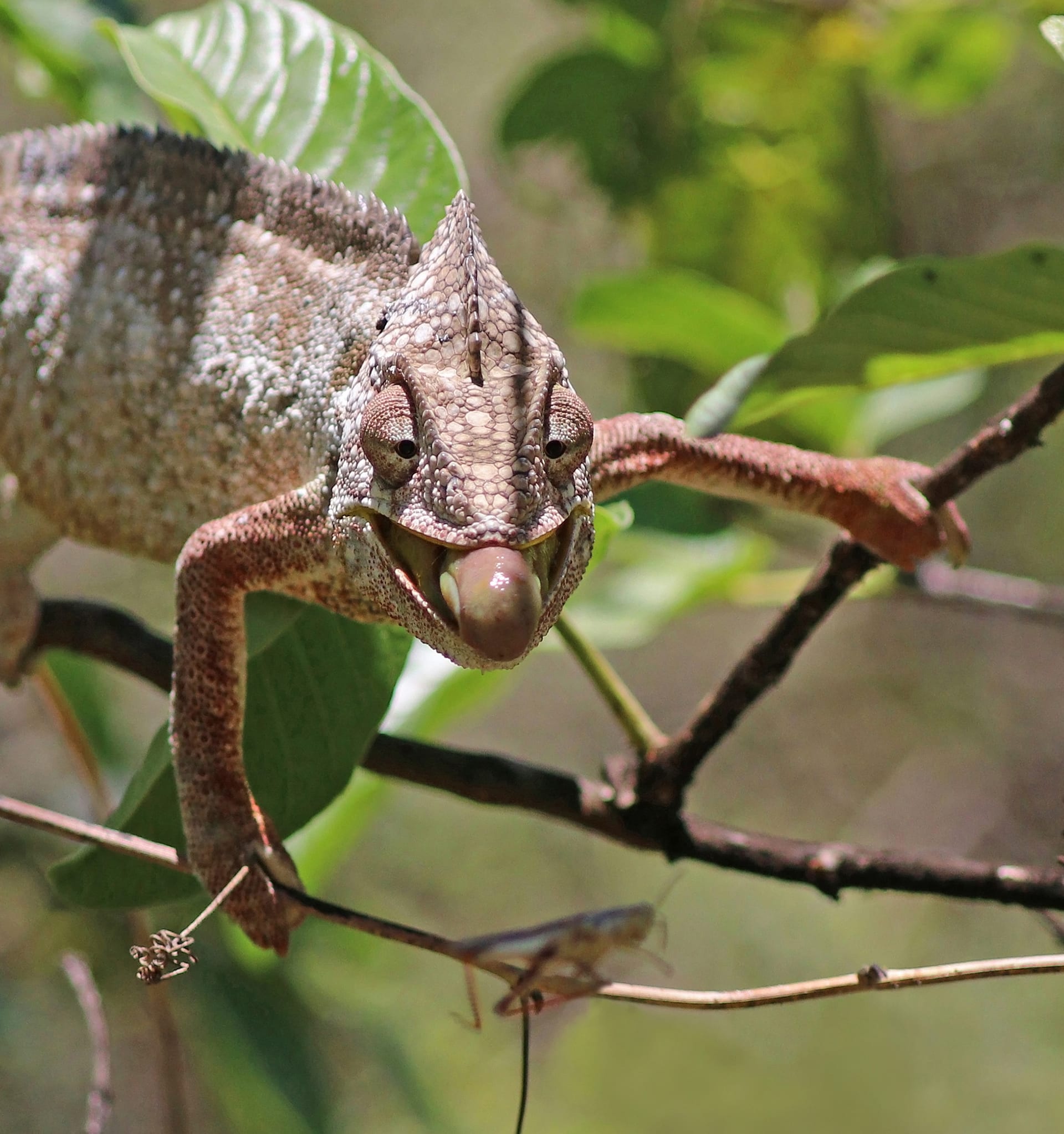
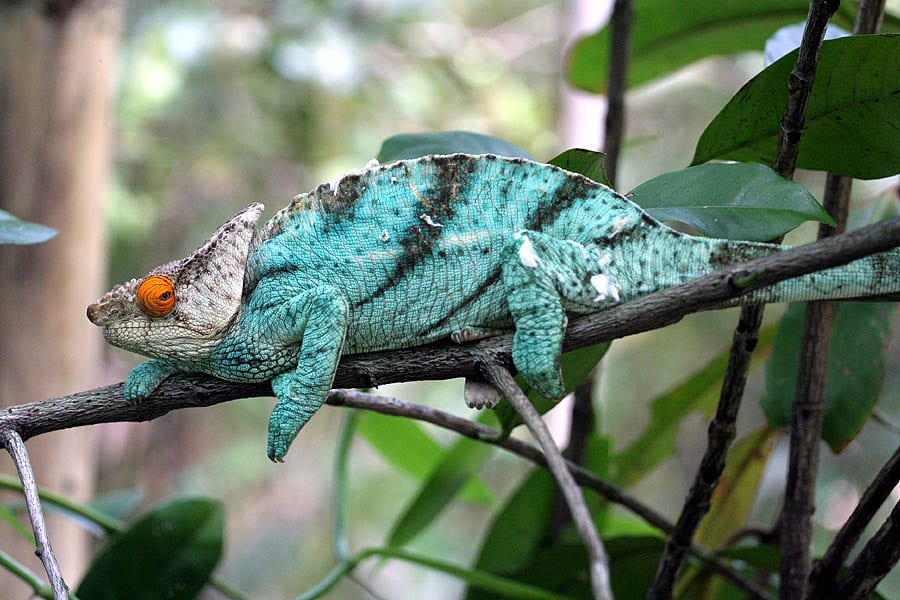
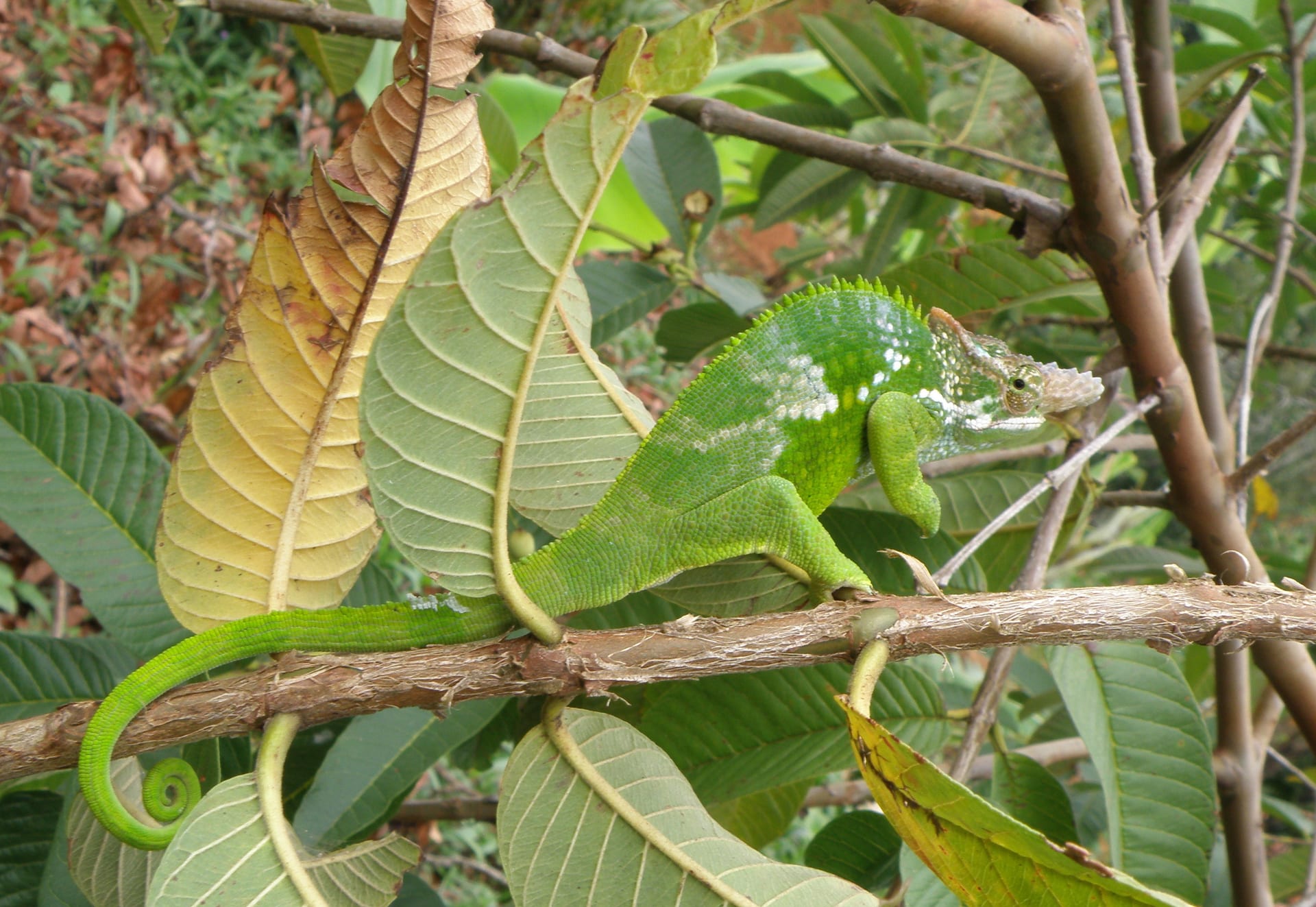
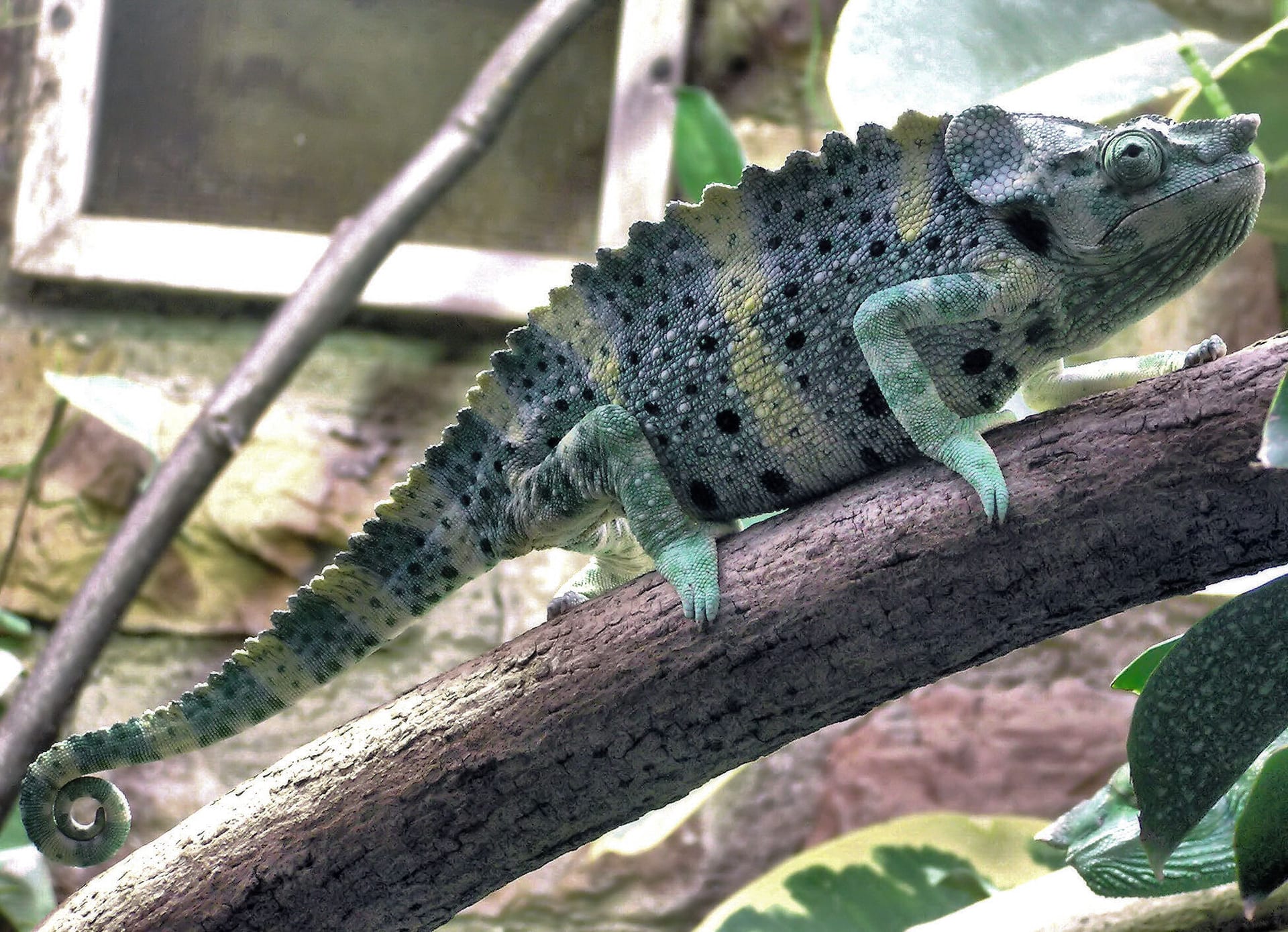
The largest chameleon of mainland Africa, from the bushy savannas and woodlands of East Africa. A deep forest green body carries white stripes and a single small horn on the snout. It needs extremely high humidity.
Difficulty
Advanced
Temperature
25〜27℃
Lifespan
Up to 12 years
Size
30-61cm, reportedly up to 76cm
Humidity
95〜100%
Diet
Crickets, house flies, locusts, silkworms, cockroaches and other insects
About
Trioceros melleri is a chameleon of the bushy savannas and woodlands of Malawi, northern Mozambique and Tanzania, where it is relatively common, and it is the largest chameleon of mainland Africa. The head is small relative to the body and more elongated than in related species, with a single small horn on the snout. The occipital lobes are greatly enlarged, and longitudinal rows of large granular scales on the throat are among its most distinctive features. The basic colour is deep forest green with white stripes, with flank spots and broad bands in brown, dark green, yellow or black. Colour tracks mood and health: severe stress turns the animal charcoal grey and then pure white with yellow stripes. The tongue reaches prey up to 51 cm away. Females produce a single annual clutch of up to 80 eggs.
Source: Wikipedia (CC BY-SA 4.0)
Lifespan of the Meller's Chameleon
The Meller's Chameleon lives Up to 12 years.
Size of the Meller's Chameleon
The Meller's Chameleon grows to 30-61cm, reportedly up to 76cm.
Adults are 30-61 cm including tail and weigh 300-500 g, with exceptional individuals reported at 76 cm and 600 g.
Temperature & humidity for the Meller's Chameleon
The ideal temperature for the Meller's Chameleon is 25〜27℃. Ideal humidity is 95〜100%.
Basic Info
Origin
East Africa, in the bushy savannas and woodlands of Malawi, northern Mozambique and Tanzania
Care Specifications
Semi-aggressiveSolitaryBreeding: Very hard
Sources: Reptiles Magazine: Meller's Chameleon Care / Chameleon Academy: Meller's Chameleons / Wikipedia (English)
References & Sources
Edited & verified by: BreederDirect editorial team
The taxonomic, regulatory, and husbandry data on this page are compiled and verified against the authoritative primary sources below.
Taxonomy & Authority
Accepted name: Trioceros melleri (Gray, 1865)
Synonyms: Ensirostris melleri Gray, 1865, Chamaeleo melleri (Gray, 1865)
Authority databases: GBIF · Reptile Database
Nomenclature follows global taxonomic authority databases.
Regulations & Conservation Status
CITES Appendix IIIUCN LC · Least Concern
Family Chamaeleonidae spp. has been listed on CITES Appendix II since February 4, 1977 (Species+). Because it is on Appendix II, registration as an international rare species is not required. This species is not included in the specific animals listed in the Schedule of the Enforcement Ordinance of the Animal Protection and Management Law.
Sources: CITES Appendices (Chamaeleonidae spp., Appendix II, effective 4 February 1977) / IUCN Red List
Regulations may change. Always verify the latest information with the relevant authorities.
Meller's Chameleon Listings
Loading latest listingsFind listings for this species