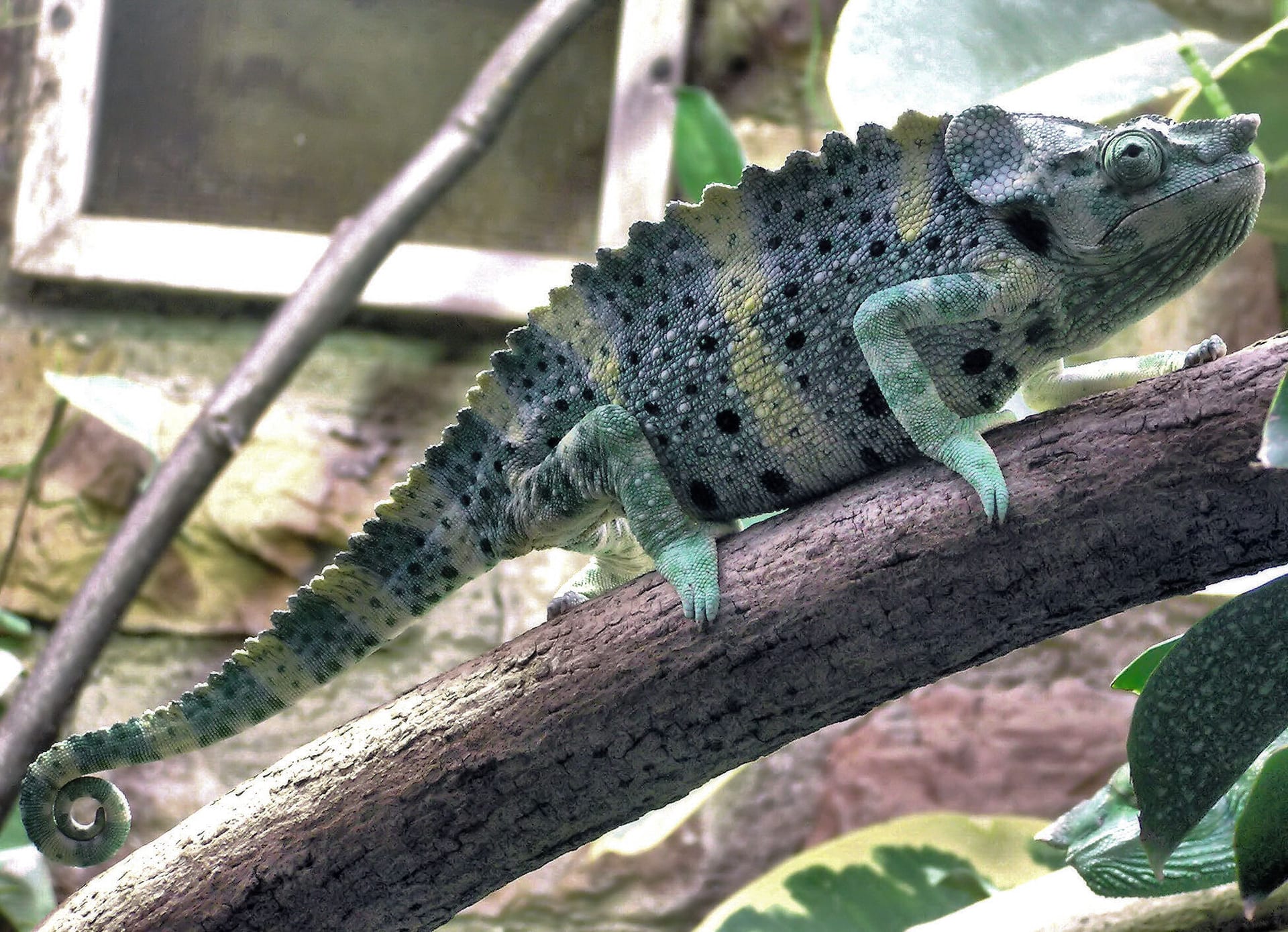
 © Adrian Pingstone / Public domain
Meller's Chameleon
The Meller's Chameleon is one of mainland Africa's largest chameleon species, native to the open woodlands and savannas of East Africa. Its body is a deep forest green marked with pale stripes, and a single small horn tops its snout, giving it a striking, dignified presence. Temperament varies from individual to individual, from shy to fairly aggressive, and it is generally kept alone, yet watching it survey its surroundings from the branches and change color is rewarding in itself. Keeping one healthy demands consistently high humidity and careful climate management, making this a species best suited to experienced keepers.
View Meller's Chameleon encyclopedia →Breeder Wanted!
List on BreederDirect and sell directly to customers nationwide!
BreederDirect's 6 Transparency Commitments
Every Reptiles & Amphibians from verified Breeder breeders includes complete information: morph, genetics, feeding requirements, and temperament details.
- Morph Information
- Actual Photos
- Feeding Information
- Temperament Information
- Genetics Information
- Age (Months)
Browse all 319 breeds
Difficulty Level
Feeding Type
Temperament
Verified breeders wanted for Reptiles & Amphibians
Breeders are signing up now ahead of launch. Subscribe to be notified when new listings go live.
Getting alerts is free with a member account. When new listings match your saved search, we'll notify you by email and in-app.
Browse other categories
Verified breeders (preview)


Are you raising reptiles & amphibians?
Register as a breeder and connect with buyers directly.
Apply as a breederMeller's Chameleon key facts
- Care level
- Advanced
- Lifespan
- Up to 12 years
- Size
- 30-61cm, reportedly up to 76cm
- Temperature
- 25〜27℃
- Humidity
- 95〜100%
- Diet
- Crickets, house flies, locusts, silkworms, cockroaches and other insects
- Temperature & Humidity
- Its preferred optimum temperature zone is 25-27 C, which is easy enough to provide. The real difficulty is holding ambient humidity at 95-100 percent, which is hard to sustain in an ordinary home. Plan humidification, misting and ventilation together from the start and monitor with a hygrometer at all times.
- Enclosure
- At over 60 cm it needs a very large enclosure, and keepers sometimes devote an entire room to it. Build for high humidity, then furnish with live plants and horizontal branches of varying thickness at different heights so it can choose its temperature and light.
- Diet & Feeding
- A strict carnivore, taking insects, smaller lizards and spiders, with large specimens known to eat small birds. In captivity offer crickets, house flies, locusts, silkworms and cockroaches. Hatchlings must be fed fruit flies and tiny crickets for their first three weeks.
- Temperament
- Reactions to people range from timid to moderately aggressive, and some individuals become friendly. Keep it singly. Its colour reveals its state: dark spotting, black mottling or a shift to charcoal grey is a signal to review the setup.
- Notes
- Wild-caught animals are often imported carrying heavy parasite loads and suffer high mortality in captivity. It is regarded as a species for advanced keepers, and captive-bred stock is preferable. Listed on CITES Appendix II as Chamaeleonidae spp. since 4 February 1977, so no registration certificate is required. The IUCN Red List assesses it as Least Concern.
About Meller's Chameleon
Meller's Chameleon: one of mainland Africa's largest chameleons, prized for its deep forest-green coloring and nose horn — a species suited to experienced keepers.
7 things to know before welcoming a Meller's Chameleon
1High Humidity Is Essential
Meller's Chameleons inhabit the open woodlands and savannas of East Africa, yet in captivity they need extremely high ambient humidity of 95–100%, kept stable. Frequent misting or a misting system is recommended. Prolonged dry conditions can easily lead to health problems.
2Best Suited to Experienced Keepers
With demanding humidity control and a need for spacious enclosures, this species is generally recommended for keepers with prior chameleon experience. First-time chameleon owners may want to start with an easier-to-keep species.
3Impressive Mainland-Africa Size
Adults typically reach 30–61 cm, with records of individuals up to 76 cm. As one of the largest chameleons on the African mainland, it needs an enclosure sized to match.
4Forest-Green Body With a Nose Horn
Its coloring is a deep forest green with pale vertical stripes along the sides. A single small horn on the snout gives it a distinctive look unlike other chameleon species.
5Individual Temperament and Solitary Housing
Reactions to people range from shy to moderately aggressive depending on the individual, and some become tame. It is generally kept alone, and an observation-focused style suits it better than frequent handling. Dark blotches or a shift to charcoal gray signal stress, so review the setup if you see them.
6Plan for Long-Term Care
With a lifespan of up to about 12 years, this is a long-term commitment. Before bringing one home, confirm you can adjust the enclosure as it grows and keep up daily humidity and temperature management.
7Watch for Health Changes Early
Changes in color or a drop in appetite can signal health issues. Make daily observation a habit, and consult a reptile-experienced vet promptly if you notice any changes.
Frequently asked questions about Meller's Chameleon
- Q.Can beginners keep this species?
- A.Meller's Chameleons require demanding humidity control and are considered a species for experienced keepers. It's best to gain chameleon-keeping experience before taking one on.
- Q.How large does it grow?
- A.Adults reach about 30–61 cm, with records of individuals up to 76 cm. It ranks among the largest chameleons found on the African mainland.
- Q.What is its lifespan?
- A.It can live up to about 12 years. Keepers should be prepared to maintain suitable care conditions over that long span.
- Q.What requires special care?
- A.Maintaining extremely high ambient humidity of 95–100%, consistently, is the top priority. Prolonged dryness can easily cause health issues, so frequent misting or a misting system is recommended.
- Q.What is its temperament like?
- A.Temperament varies widely, from shy to moderately aggressive, and some individuals become tame. It is generally kept alone and suits an observation-focused keeping style more than frequent handling.
Useful tools for Meller's Chameleon care
Learn more about Meller's Chameleon in the encyclopedia
View Meller's Chameleon encyclopedia entry →
Care difficulty, lifespan, size and diet — all basics covered.
More in this category
Can't find the one you're looking for?
Post your wishes for free and breeders with matching animals will contact you with introductions.