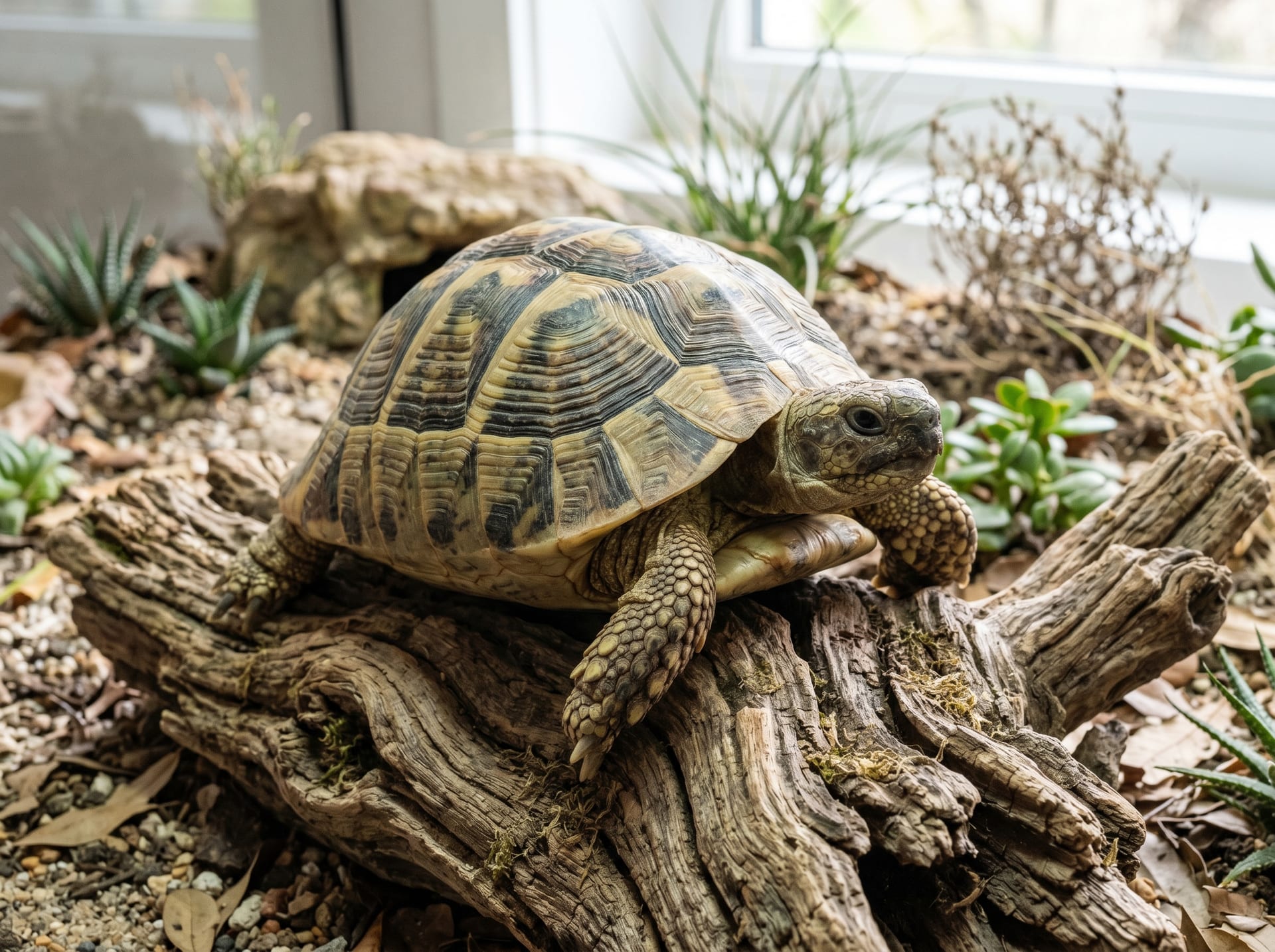
Turtle / Tortoise
Turtles and tortoises are long-lived companions that can share your life for decades, prized for their calm temperament and distinctive presence. Their care needs vary greatly depending on whether the species is aquatic, semi-aquatic, or terrestrial, so understanding your chosen species before bringing one home is essential. Quiet and odor-minimal, they are increasingly popular as reptile pets suited even for apartment living.
0% commission on your first sales!Register by September 30, 2026 and your first 2 sales are commission-free!
Breeder Wanted!
List on BreederDirect and sell directly to customers nationwide!
6 Transparency Promises from Br-Choku
Every Reptiles & Amphibians from verified Breeder breeders includes complete information: morph, genetics, feeding requirements, and temperament details.
- Morph Information
- Actual Photos
- Feeding Information
- Temperament Information
- Genetics Information
- Age (Months)
Browse all 34 breeds
Difficulty Level
Feeding Type
Temperament
Verified breeders wanted for Reptiles & Amphibians
Breeders are signing up now ahead of launch. Subscribe to be notified when new listings go live.
Getting alerts is free with a member account. When new listings match your saved search, we'll notify you by email and in-app.
Browse other categories
Verified breeders (preview)
Are you raising reptiles & amphibians?
Register as a breeder and connect with buyers directly.
Apply as a breederAbout Turtle / Tortoise
Turtles are among the oldest reptile groups on Earth, with ancestors dating back over 200 million years. Their iconic shells—formed from modified ribs and vertebrae—are a remarkable evolutionary adaptation that protects them from nearly all natural predators. Today, more than 300 species thrive across aquatic, semi-aquatic, and terrestrial environments worldwide, including native Japanese species such as the Japanese pond turtle and the Chinese softshell turtle. Appearance varies enormously: from palm-sized musk turtles to leatherback sea turtles exceeding one meter in shell length. Temperamentally, most turtles are calm and non-aggressive; with regular interaction, many will approach their keepers with curiosity. The greatest appeal of keeping a turtle lies in its extraordinary longevity—under proper care, they become decades-long companions, sometimes passed down across generations. Silent, relatively compact, and suitable for those with pet allergies, turtles offer a uniquely deep and rewarding connection.
7 things to know before welcoming a Turtle / Tortoise
1Species Choice Is Everything
Care requirements differ fundamentally between aquatic species (e.g. red-eared sliders), semi-aquatic species (e.g. Japanese pond turtles), and fully terrestrial tortoises. Before acquiring one, verify the adult size, required equipment, and any legal restrictions such as invasive species regulations in your region. Impulse purchases often lead to abandonment of these long-lived animals.
2Lifespan Spans Decades
Most species live 20–50 years, and some tortoise species can exceed 80 years. When starting out, consider the commitment as potentially lifelong and factor in future life changes such as moving or family circumstances. The ability to consistently provide proper care over many decades is a key responsibility.
3Water Quality Is Critical for Aquatic Species
Aquatic and semi-aquatic species require efficient filtration and regular water changes; poor water quality leads to skin infections and pneumonia. Aim for a water volume at least three times the turtle's body size, and perform partial water changes one to two times per week. Always provide a dry basking area as well.
4UV Light and Temperature Control
Turtles synthesize vitamin D3 through UVB exposure, which is essential for calcium metabolism and shell health. Provide both a UVB lamp and a basking lamp, creating a temperature gradient with the basking spot around 30–35°C. UVB bulbs lose effectiveness over time and must be replaced regularly according to usage hours.
5Diet Varies by Species
Many aquatic species are omnivorous and accept pellets, small fish, and shrimp, while tortoises are herbivorous and thrive on leafy greens and edible weeds. Excess animal protein is harmful to tortoise kidneys, so feeding according to your species' natural diet is fundamental to health. Calcium supplementation via cuttlebone or calcium carbonate is also beneficial.
6Hibernation Requires Careful Handling
Some domestic turtle species, such as the Japanese pond turtle, naturally hibernate, but individuals in poor health or captive-bred animals face a risk of dying during hibernation. If hibernation is attempted, prior health checks and careful temperature and humidity management are essential. Beginners may want to consider overwintering indoors with supplemental heating instead.
7Budget for Equipment and Vet Costs
Initial setup costs include a tank, filter, UVB lamp, basking lamp, and heater, which can total tens of thousands of yen depending on the species. Reptile-specialist veterinarians are limited in number, and treatment for shell diseases, infections, or abnormal shedding can be costly. Confirm in advance whether a reptile-capable clinic is accessible near you.
Frequently asked questions about Turtle / Tortoise
- Q.Do turtles bond with their owners? Can you handle them?
- A.Turtles don't show affection the way dogs or cats do, but many learn to recognize their owner's presence and feeding routine. Handling is possible, though sessions should be kept brief to minimize stress, and hand-washing before and after is important for hygiene.
- Q.Do turtles need to hibernate in winter?
- A.Native Japanese species such as the Japanese pond turtle naturally hibernate outdoors, but they can be kept active year-round indoors with proper heating. If you choose to allow hibernation, confirm the turtle is in good health and at an adequate weight beforehand.
- Q.Are there concerns about odor or hygiene with turtles?
- A.Aquatic species can produce odor if water quality deteriorates, but a proper filter and regular water changes keep this well under control. There is a risk of Salmonella exposure, so thorough handwashing with soap after handling turtles or cleaning their enclosure is strongly recommended.
- Q.What turtle species are suitable for beginners?
- A.Hardy and widely available species like the reeve's turtle, Japanese pond turtle, and red-eared slider are popular choices for beginners. Among tortoises, Hermann's tortoise is considered relatively manageable. For any species, check the adult size and required setup before purchasing.
- Q.How much space does a turtle need?
- A.Small aquatic species can start in a 60–90 cm tank, but you'll need to upgrade as they grow. Tortoises require spacious land enclosures, and larger species may need outdoor space. Always plan your setup with the turtle's adult size in mind rather than its size at purchase.
Useful tools for Turtle / Tortoise care
Turtle / Tortoise related articles
Aldabra Tortoise Care Guide | Environment, Feeding, Growth Management, and Legal Regulations for the World's Largest Land Tortoise
A comprehensive guide to the Aldabra tortoise (Aldabrachelys gigantea), the world's largest land tortoise, covering basic ecology, enclosure requirements, temperature management, herbivorous feeding plans, environmental adjustments according to growth stage, and compliance with Washington Convention (CITES) Appendix II.
Indian Star Tortoise Care Guide | Complete Guide to Temperature Management, UVB, Diet, and Legal Regulations
Detailed explanation of Indian Star Tortoise care methods. Introduction covering CITES regulations, temperature, humidity management, feeding, and health checks for beginners to intermediate keepers.
Radiated Tortoise Care Guide | Madagascar Tortoise Characteristics, Legal Regulations, Cage Setup, and Diet Management
Comprehensive guide to caring for the Radiated Tortoise (Astrochelys radiata), an endemic species of Madagascar. Covers the distinctive radiating shell pattern, legal regulations under CITES Appendix I, cage setup and temperature control, herbivorous diet guidelines, and long-term care management for this long-lived species.
Complete Care Guide for Chinese Softshell Turtles | Housing, Feeding, and Hibernation Management for Soft-Shelled Turtles
A complete guide for keeping Chinese softshell turtles (Pelodiscus sinensis) as pets. From proper sandy substrate environments and carnivorous feeding methods to water quality management and safe hibernation induction, this guide clearly explains all the knowledge necessary for long-term care of soft-shelled turtles, written for beginners.
Sulcata Tortoise Care Guide | How to Properly Raise the World's Third-Largest Terrestrial Tortoise
The Sulcata Tortoise (Centrochelys sulcata) is the world's third-largest terrestrial tortoise, native to Africa's Sahel region. This comprehensive guide covers essential pre-purchase information about this species—from preparation and proper temperature management to herbivorous diet, outdoor space requirements, and long-term care tips for a species that commonly exceeds 30 kg as an adult.
Japanese Pond Turtle Care Guide | Native Species Conservation and Tank/Outdoor Breeding Basics
A detailed guide to caring for the Japanese pond turtle (Mauremys japonica), a species endemic to Japan. We cover acquisition methods, legal considerations, tank and outdoor pond setup, hibernation management, feed types and feeding frequency, common illnesses and prevention—everything you need to know for responsible native species care.
More in this category
Can't find the one you're looking for?
Post your wishes for free and breeders with matching animals will contact you with introductions.