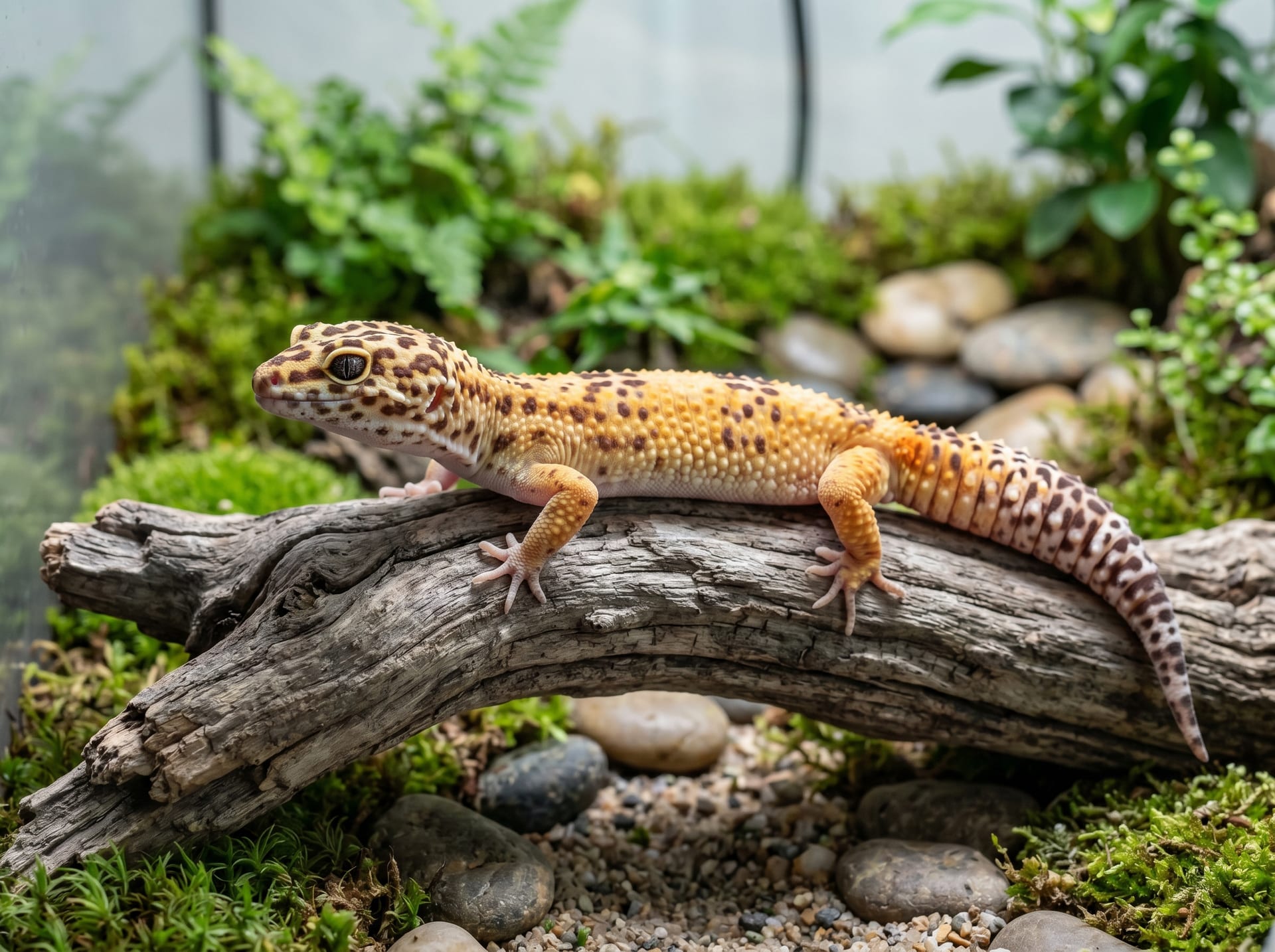
Leopard Gecko
Perfect entry-level gecko with a docile temperament, minimal space requirements, and extensive morph variety.
View Leopard Gecko encyclopedia →0% commission on your first sales!Register by September 30, 2026 and your first 2 sales are commission-free!
Breeder Wanted!
List on BreederDirect and sell directly to customers nationwide!
6 Transparency Promises from Br-Choku
Every Reptiles & Amphibians from verified Breeder breeders includes complete information: morph, genetics, feeding requirements, and temperament details.
- Morph Information
- Actual Photos
- Feeding Information
- Temperament Information
- Genetics Information
- Age (Months)
Browse all 34 breeds
Difficulty Level
Feeding Type
Temperament
Verified breeders wanted for Reptiles & Amphibians
Breeders are signing up now ahead of launch. Subscribe to be notified when new listings go live.
Getting alerts is free with a member account. When new listings match your saved search, we'll notify you by email and in-app.
Browse other categories
Verified breeders (preview)
Are you raising reptiles & amphibians?
Register as a breeder and connect with buyers directly.
Apply as a breederLeopard Gecko key facts
- Care level
- Beginner-friendly
- Lifespan
- 15-20 years
- Size
- 20-25cm
- Temperature
- 25〜32℃
- Humidity
- 40〜60%
- Diet
- Insectivore (crickets, mealworms, dubia roaches)
- Enclosure
- Glass tank 30x30cm or larger
- Temperature
- Hot spot 32°C, cool spot 25°C
- Temperature & Humidity
- Aim for 25-32°C and 40-60% humidity. A moist shedding zone inside the hide helps prevent stuck sheds.
- Feeding
- Baby: daily / Adult: every 2-3 days
- Diet & Feeding
- Insects such as crickets, mealworms and dubia roaches are the staple. Dusting the feeders with calcium powder is essential.
- Notes
- Watch for stuck shed. Humidity and calcium supplementation are key
About Leopard Gecko
The Leopard Gecko (Eublepharis macularius) originates from the arid, rocky terrain of Pakistan, Afghanistan, and northwestern India. Captive breeding began in earnest during the 1970s, and today it is one of the most widely kept reptiles in the world. Adults typically reach 20–25 cm in length — a manageable size — and uniquely among geckos, they lack the adhesive toe pads needed to climb smooth surfaces. The wild-type pattern features yellow or white scales with black spotting, but selective breeding has produced hundreds of morphs, including albinos, blizzards, and bold-striped varieties. Temperamentally, leopard geckos are among the calmer lizards; they tend to tolerate handling well once acclimated and rarely bite unprovoked. With proper husbandry, they commonly live 10–15 years, making them a long-term companion rather than a short-lived novelty.
Featured breeders for Leopard Gecko
See all Leopard Gecko breeders (2) →7 things to know before welcoming a Leopard Gecko
1Proper Enclosure Size
An enclosure at least 45 cm wide is recommended for one adult. Since leopard geckos are terrestrial, floor space matters more than height. Always provide at least one hide shelter, and avoid housing two males together to prevent aggression.
2Temperature Is Critical
As ectotherms, they rely on external heat sources to regulate body temperature. Provide a thermal gradient with a warm side of 32–35 °C and a cool side of 24–28 °C. An under-tank heat mat covering half the floor is the most common approach; maintain at least 24 °C at night.
3Strong UV Light Not Needed
Leopard geckos are crepuscular/nocturnal and do not require high-intensity UVB lighting. However, low-level UVB and a natural light–dark cycle can support vitamin D3 synthesis and overall health. Ambient room lighting often suffices, though a dedicated low-output UV lamp is a beneficial addition.
4Calcium Supplementation Is Essential
Since their diet consists primarily of insects, dusting feeder insects with calcium (with vitamin D3) at each feeding is essential. Deficiency can lead to metabolic bone disease. Placing a small dish of plain calcium powder inside the enclosure allows the gecko to self-supplement as needed.
5Price Varies by Morph
Normal (wild-type) individuals are relatively affordable, while rare morphs such as albino strains, Eclipse, or Blizzard can cost tens of thousands of yen or more. Initial setup costs for enclosure, heater, thermometer, and hides typically range from ¥10,000–¥30,000, with monthly ongoing costs around ¥1,000–¥3,000 for feeder insects and supplements.
6Handle with Care
Leopard geckos are among the more handleable reptiles, but allow a newly acquired gecko 1–2 weeks to settle before attempting handling. Never grab or pull the tail, as it can autotomize (self-detach) as a defense response. The safest approach is to let the gecko walk across your open hand at a low height.
7Support During Shedding
Leopard geckos shed regularly, and incomplete sheds (retained skin) can restrict circulation and cause necrosis in the toes or tail tip. Providing a moist hide with humidity of 60–80% greatly aids shedding. Avoid handling during the process, and afterward check that the eyes and toe tips are completely clear of retained shed.
Frequently asked questions about Leopard Gecko
- Q.Do leopard geckos need daily care?
- A.Fresh water should be checked and replaced daily, but adult geckos only need to be fed every 2–3 days. Juveniles benefit from daily feeding. Overall, the daily time commitment is relatively low, making leopard geckos well-suited for people with busy schedules.
- Q.How much does it cost to get started?
- A.Basic setup equipment — enclosure, heating pad, hides, and thermometer — typically costs around 10,000–20,000 yen. The gecko itself can range from a few thousand yen for common morphs to well over 30,000 yen for rare ones. Ongoing monthly costs for feeders and supplements are relatively modest.
- Q.Can leopard geckos be handled?
- A.Yes, leopard geckos can become comfortable with handling once they have settled into their new home. Start with short sessions and gradually increase the duration as the gecko acclimates. Avoid grabbing the tail, as they can autotomize it — dropping it as a defense mechanism — though it does regrow over time.
- Q.Can I feed frozen or dried insects?
- A.Live prey is generally recommended, but some individuals will accept frozen-thawed or dried insects. That said, geckos raised exclusively on live feeders can be reluctant to switch to alternatives. Starting with live prey and experimenting with other options once the gecko is settled is a sensible approach.
- Q.How long do leopard geckos live?
- A.Under proper care, leopard geckos commonly live 10–15 years, with some individuals reported to exceed 20 years. They are genuinely long-lived animals, so prospective owners should consider the multi-decade commitment involved before bringing one home.
Useful tools for Leopard Gecko care
Learn more about Leopard Gecko in the encyclopedia
View Leopard Gecko encyclopedia entry →
Care difficulty, lifespan, size and diet — all basics covered.
Leopard Gecko related articles
Leopard Gecko Genotypes and Color Genetics Explanation | Morph Pairing Plans
Leopard Gecko Genotypes and Color Genetics Explanation
Feeder Insect Breeding Guide for Leopard Geckos and West African Fat-Tailed Geckos | Cricket, Dubia, and Worm Management
Learn the benefits and methods of breeding feeder insects for leopard geckos and West African fat-tailed geckos. This practical guide covers cricket (two-spotted and house cricket) care, Dubia roach breeding, and mealworm cultivation, including enclosure setup, temperature management, and gut-loading.
Complete Guide to Leopard Gecko Care | Cages, Temperature & Humidity, Feeding, and Handling for Beginners
Complete guide to keeping leopard geckos (Leos), the classic beginner reptile. Covers everything from cage selection to temperature and humidity management, food types and feeding frequency, shedding support, and how to acclimate them to handling—all the essentials beginners need to know.
Leopard Gecko Beginner's Guide: Enclosure, Food, and Temperature Management
A beginner's guide to caring for leopard geckos (leos). Covers enclosure size, substrate, temperature and humidity settings, through detailed feeding management with crickets, dubias, and more.
Lizard Species Care Difficulty Comparison | Complete Guide to Bearded Dragons, Leopard Geckos, Japanese Grass Lizards, and Green Iguanas
A thorough comparison of care difficulty for Bearded Dragons, Leopard Geckos, Japanese Grass Lizards, and Green Iguanas from a beginner's perspective. We explain equipment costs, required skills, and failure risks in ranked format to help you choose the right lizard for you.
Complete Care Guide for West African Fat-tailed Geckos | Differences from Leopard Geckos, Temperature, Diet, and Breeding
A comprehensive guide to caring for West African Fat-tailed Geckos (West African Fat-tails). Explaining the differences from Leopard Geckos, required temperature and humidity management, types and frequency of feeding, morph varieties, and breeding methods—a complete guide useful for beginners to aspiring breeders.
More in this category
Can't find the one you're looking for?
Post your wishes for free and breeders with matching animals will contact you with introductions.