Leopard Gecko Genotypes and Color Genetics Explanation | Morph Pairing Plans
Leopard Gecko Genotypes and Color Genetics Explanation。What is a Leopard Gecko Morph? Leopard Geckos ( Eublepharis macularius ) are among the reptile species…
Key Takeaways
Leopard Gecko Genotypes and Color Genetics Explanation。What is a Leopard Gecko Morph? Leopard Geckos ( Eublepharis macularius ) are among the reptile species…
What is a Leopard Gecko Morph?
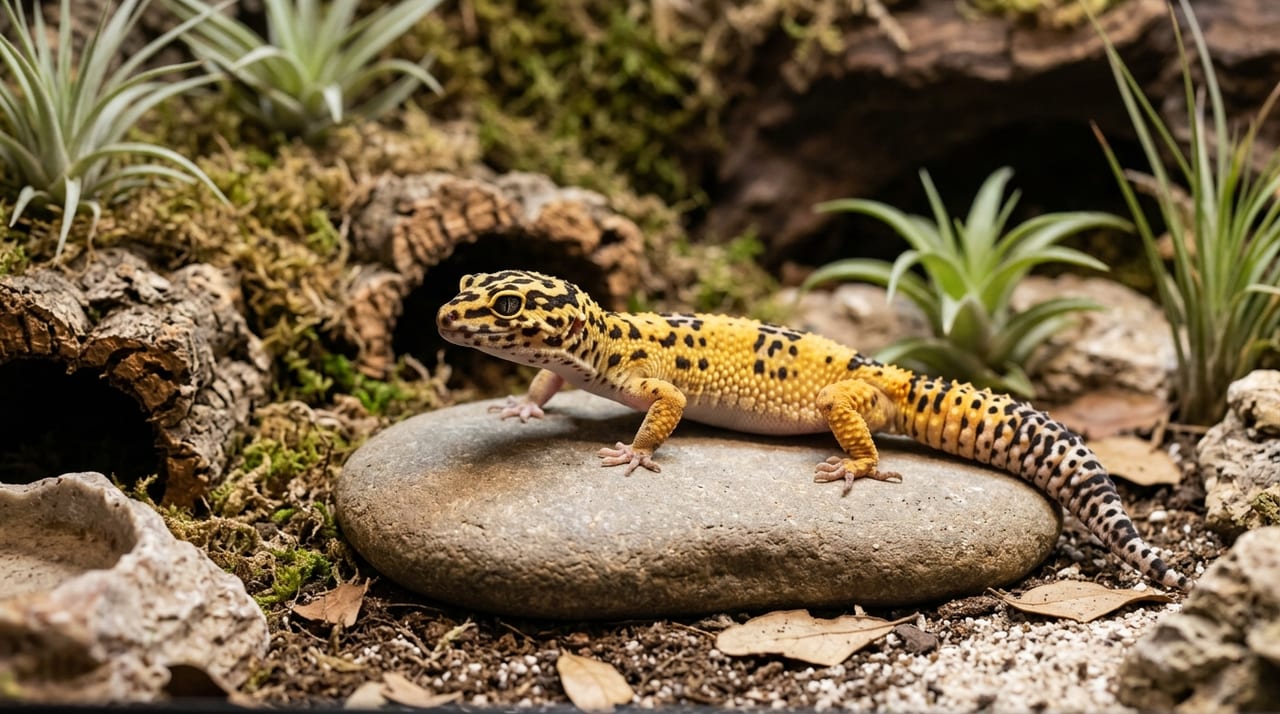
Leopard Geckos (Eublepharis macularius) are among the reptile species with the most diverse morph variations in the breeding world. The term "morph" refers to phenotypes of body color and markings that result from genetic mutations, and over a hundred varieties have been established through selective breeding by breeders since the 1990s.
✍️
BreederDirect Editorial
The BreederDirect editorial team specializes in care information for animals, covering veterinary care and breeding to deliver beginner-friendly guides.
Find Reptiles on BreederDirect
Buy directly from verified breeders
Browse Related Listings
Find Reptiles listings related to this article on BreederDirect. Buy directly from verified breeders.
Wild-type leopard geckos have a yellowish base color with black spots, but when diverse genes like albino, patternless, melanic, and snow genes combine, offspring can range from entirely white individuals to those with glowing red eyes and some with spots completely disappearing. To intentionally create these morphs, it is essential to understand how individual genes are inherited. This article will systematically explain genetics fundamentals through practical pairing plans.
Genetic Basics: Recessive, Dominant, and Co-dominant
Leopard gecko inheritance can be categorized into three major types.
Recessive inheritance is expressed only when both parents pass one copy of the same gene. Examples include albino strains, blizzard, and eclipse. Individuals that receive the gene from only one parent are called "heterozygous (het)" and, while appearing similar to wild-type, carry the gene.
Co-dominant inheritance shows effects even with a single copy, and when two copies are present, a "super form" emerges. Mack Snow is the representative example. Heterozygous individuals display reduced spots while developing a snowy white base color, while super snow individuals have almost no black spots and are entirely white.
Dominant inheritance is fully expressed with a single copy, with no super form existing (or having no meaningful variation). Enigma is the typical example, though neurological symptoms (wobble) have been associated with it, requiring careful consideration in ethical breeding.
Understanding the differences between these inheritance types is the essential first step before pairing.
Major Gene Loci and Morph Types
Here are the gene loci most important for leopard gecko breeding.
The three albino strains exist at independent gene loci. Tremper (T+) Albino, Bell Albino, and Rainwater Albino appear similar but are non-allelic genes. When different strains are crossed, double albinos are not produced, and all offspring become heterozygotes. Since mixing strains makes genotype management difficult, thorough record-keeping is essential.
Eclipse is a recessive gene that uniformly changes eye color to black, red, or orange. When combined with Tremper albino, the red-eyed "RAPTOR (Red-eyed Albino Patternless Tremper Orange Raptor)" is produced. RAPTOR is a complex morph combining eclipse, albino, and patternless genes, and exemplifies multi-gene combinations.
Blizzard is a recessive gene that completely eliminates body patterns, with the base color becoming cream to near white. Popular combinations include Ghost (blizzard + Mack Snow) and White Knight (blizzard + albino).
Mack Snow is co-dominant inheritance. The super form, Super Snow, has a white base with almost no black spots, resembling a snowy landscape. When Super Snow is bred with Super Snow, all offspring will be Super Snow.
Understanding Heterozygotes (Het)
The concept of "het" (heterozygous) is particularly important in breeding recessive morphs. Heterozygous individuals carry only one copy of a gene, which does not appear phenotypically but will certainly be passed to the next generation.
The notation "possible het (poss het)" is used for individuals that are theoretically heterozygous but have not been confirmed through genetic testing or hatching results. When two heterozygotes are bred, the expected offspring ratio follows Mendelian inheritance, averaging 25% visual (phenotypically expressed), 50% het, and 25% non-carrying.
It is important to note that this is an "average." Clutches typically produce 2–4 eggs, and with such small sample sizes, actual hatch ratios can deviate significantly from predictions. Accuracy increases by accumulating data across multiple clutches for statistical evaluation or by utilizing DNA genotyping tests (offered by certain research institutions and overseas vendors).
Practical Pairing Plans: Reading Offspring Ratios
Let us confirm how to read ratios using specific pairing examples.
Example 1: Visual Tremper Albino × Wild-type
→ All offspring will be het Tremper Albino. No albinos are produced.
Example 2: Het Tremper Albino × Het Tremper Albino
→ Theoretical ratio: 25% albino / 50% het / 25% non-carrying
Example 3: Visual Tremper Albino × Het Tremper Albino
→ Theoretical ratio: 50% albino / 50% het
When multiple recessive genes are involved, calculate each gene locus independently, then multiply the probabilities together. For example, in a breeding where Eclipse het × Eclipse het AND Albino het × Albino het, the probability that both traits are visual is 25% × 25% = 6.25%. As combo complexity increases, probabilities drop, making it essential to plan for sufficient breeding opportunities and clutch numbers.
The Path to Combo Morphs: Record Management and Long-term Vision
For intentional creation of complex morphs, accurate genotype records for each individual are essential. If albino strains are confused, plans built over multiple generations can be lost. At minimum, breeding records should include the following for each individual:
Individual ID, hatch date, sex
Confirmed visual morphs
Confirmed or presumed het genes and strain names
Parent individual IDs, purchase source, and source clutch numbers
Additionally, from an ethical breeding perspective, careful consideration must be given to using genes like Enigma that carry neurological symptom risks. Using individuals with severe symptoms for breeding damages a breeder's reputation and is considered problematic from an animal welfare standpoint.
At BreederDirect, visual morph and het-carrying leopard geckos are sold directly by breeders, with parent genotype information listed on product pages. A messaging system also allows purchasers to directly confirm strain details with sellers before purchase, enabling breeders pursuing intentional combo creation to make informed individual selections. Armed with genetic knowledge, enjoy designing your ideal breeding morphs.