Reptile Adoption & Rehoming Guide | What to Consider Before Giving Up, Preparation for the Receiving End, and How to Find Trustworthy Rehoming Options
Explains how to safely rehome reptiles you can no longer care for. Covers pre-rehoming checklist, how to find trustworthy rehoming destinations, and preparation for the receiving party.
Key Takeaways
Explains how to safely rehome reptiles you can no longer care for. Covers pre-rehoming checklist, how to find trustworthy rehoming destinations, and preparation for the receiving party.
When keeping reptiles, various unavoidable circumstances such as relocation, family situations, allergies, or economic reasons can lead you to face a situation where you can no longer continue caring for them. However, without proper knowledge, searching for adoptive families or rehoming can result in the animal being placed in an inappropriate environment or lead to the worst outcome of abandonment. This article explains methods to safely and reliably connect reptiles you can no longer care for with the next caregiver, from both the perspective of the person rehoming and the one receiving.
Must Verify Before Giving Up
Before deciding on rehoming, first review the following points. If the problem can be resolved, you may be able to avoid rehoming altogether.
For cost-related problems, there are ways to review your monthly maintenance expenses (electricity and food costs). Consider switching to LED lighting, replacing heating mats with energy-efficient models, or switching to frozen food—explore methods to reduce costs while continuing care before making a final decision.
With allergy issues, the cause is often not the reptile itself but rather the substrate (particularly pine chips and alfalfa pellets) or feeder insects (allergens from crickets). Sometimes improvement can be achieved by changing the substrate or switching food types. Consult with a medical professional to identify the specific cause.
For relocations, most reptiles can actually be transported. First, consider whether a suitable care environment can be set up at the new location. Rehoming should only be considered if that proves impossible.
Why Abandonment is Absolutely Unacceptable
Releasing a reptile you can no longer care for into the wild violates the Animal Welfare and Management Law. For invasive species, it may also breach the Invasive Species Act.
Beyond ecological impact, reptiles born and raised in captivity lack the survival skills needed in the wild and are likely to die within a short period. The emotional decision to "return it to nature" often results in the cruelest outcome for the animal. Regardless of circumstances, abandonment should never be an option.
How to Find Trustworthy Rehoming Options
Contacting breeders and specialty shops is the most reliable approach. Reach out to the store or breeder from whom you purchased the reptile and ask about taking it back. While there may be a rehoming fee, proper care is guaranteed.
Reptile-specific rehoming services are also an option. Through specialized online communities such as "RRJP (Reptile Rehoming Information Bureau)" or "Reptile and Amphibian Adoption Bulletin Boards," you can find adoptive families. Rehoming through reptile keeper communities on social media is also common.
General pet rehoming services (such as Jmotty) are convenient, but the experience, knowledge, and setup of potential adopters can vary widely. Since reptiles require specialized expertise, if possible, rehoming through reptile-specific communities is recommended.
Animal shelters and rescue organizations also exist that accept reptiles. While still limited nationwide, searching for "reptile rescue intake" may help you find organizations in your area.
Information and Handover for Rehoming
Be sure to communicate the following information to the recipient. Insufficient information increases the risk of the animal's health declining after transfer.
- Individual information: Species, sex (if known), age, weight, origin (captive-bred or wild-caught)
- Enclosure setup: Cage size, heater used, UVB light type and remaining usable life, substrate
- Feeding information: Current food type and size, feeding frequency, date of last feeding
- Health status: Medical conditions, medical history, date of last bowel movement, shedding status
- Behavioral traits: Handling tolerance, warning signs, specific habits (tendency to bite, etc.)
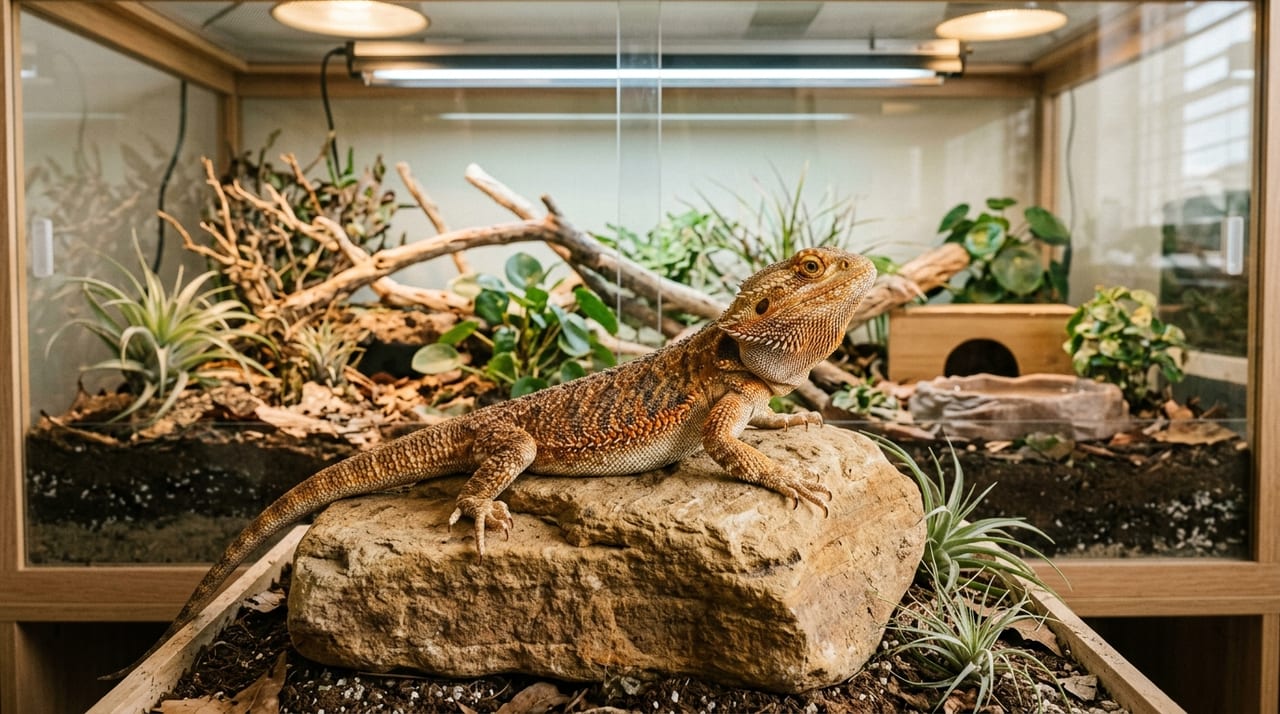
If possible, transfer the reptile along with the current enclosure and equipment to prevent drastic environmental changes. Bringing along familiar substrate and shelters to the new home is also effective in reducing stress for the individual.
What Adoptive Parents Should Prepare
If you are adopting a reptile, thorough preparation beforehand is essential.
Establishing a quarantine period is most important. If you are already keeping other reptiles, the newly acquired individual should be kept in a separate enclosure for a minimum of 4 to 6 weeks to confirm there are no parasites or infectious diseases being introduced. A veterinary health check by a reptile specialist is recommended during this period.
To minimize differences from the previous environment, gather detailed equipment information from the previous owner and maintain the same conditions for temperature, humidity, substrate, and feeding schedule initially. Make adjustments gradually as the animal adapts.
Being prepared for feeding refusal is also necessary. After an environmental change, it is normal for the reptile to refuse food for 1 to 2 weeks—this is a normal response. Rather than rushing to force-feed, provide a stable environment and allow appetite to return naturally.
Reptile rehoming is a major turning point for the caregiver, the individual, and the new home. Thoughtful rehoming conducted with sufficient information sharing and preparation protects the animal's new life.