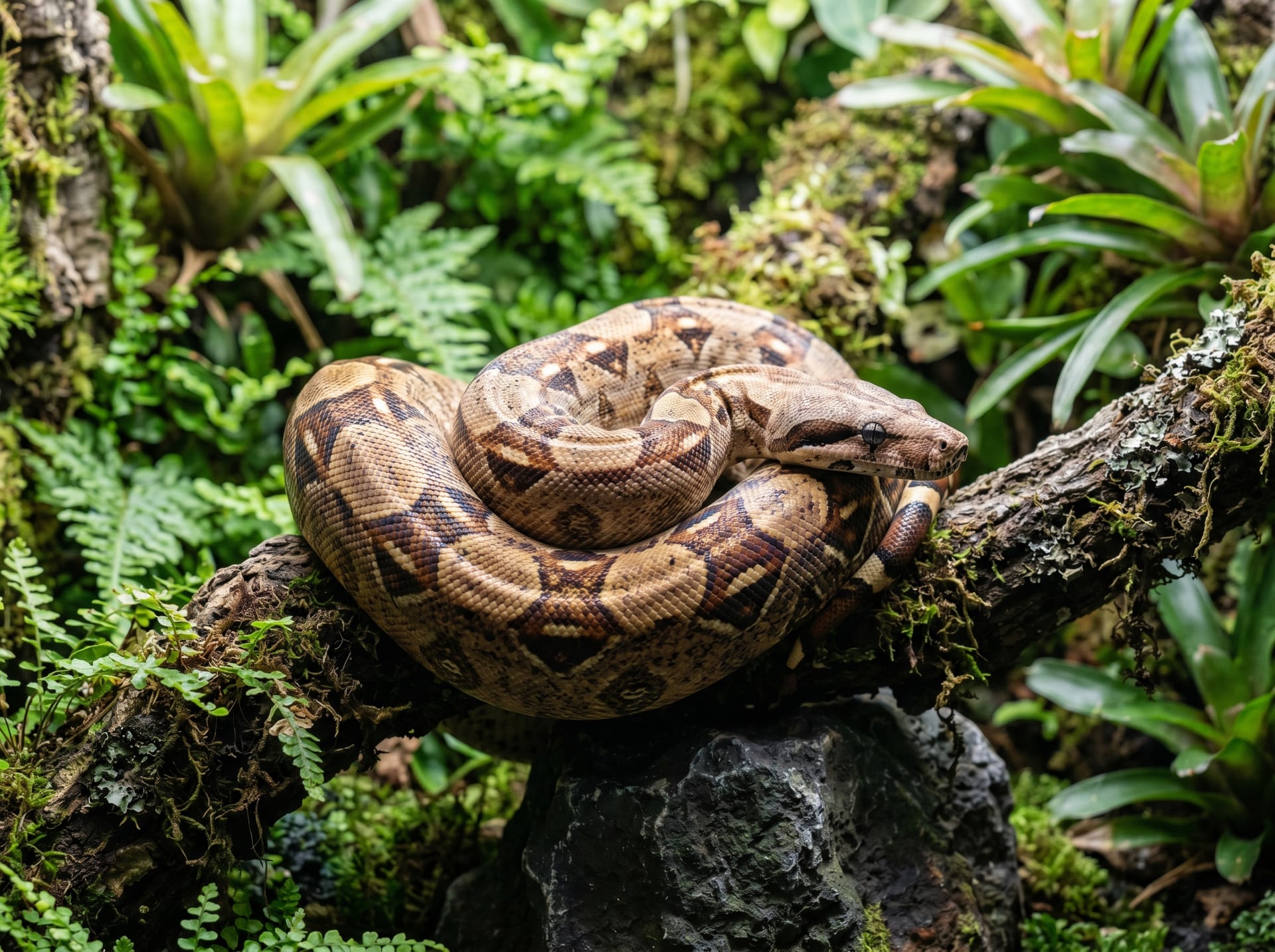
Boa
Boa constrictors, native to Central and South America, are large snakes that typically grow between 1.5 and 3 meters, prized by reptile enthusiasts for their powerful build and striking patterns. Many individuals become calm and handleable with consistent, gentle interaction, making them rewarding long-term companions. That said, their size demands substantial housing and equipment, so careful planning before acquisition is essential.
0% commission on your first sales!Register by September 30, 2026 and your first 2 sales are commission-free!
Breeder Wanted!
List on BreederDirect and sell directly to customers nationwide!
6 Transparency Promises from Br-Choku
Every Reptiles & Amphibians from verified Breeder breeders includes complete information: morph, genetics, feeding requirements, and temperament details.
- Morph Information
- Actual Photos
- Feeding Information
- Temperament Information
- Genetics Information
- Age (Months)
Browse all 34 breeds
Difficulty Level
Feeding Type
Temperament
Verified breeders wanted for Reptiles & Amphibians
Breeders are signing up now ahead of launch. Subscribe to be notified when new listings go live.
Getting alerts is free with a member account. When new listings match your saved search, we'll notify you by email and in-app.
Browse other categories
Verified breeders (preview)
Are you raising reptiles & amphibians?
Register as a breeder and connect with buyers directly.
Apply as a breederAbout Boa
The boa constrictor (Boa constrictor) is a large, non-venomous snake widely distributed across Central and South America, from tropical rainforests to arid scrublands, and has long been recognized by the indigenous peoples of its native range. Body coloration varies greatly among individuals, with beautiful saddle-shaped patterns in brown, gray, and off-white along the back, and selective breeding has produced a wide array of morphs including red, hypo, and albino forms. Adults typically reach 1.5–3 meters, with females tending to grow larger than males. Notably, boas are viviparous—giving birth to live young that hatch inside the mother's body. Their temperament is generally calm; with regular handling, many individuals become quite relaxed and develop a unique bond with their keeper over time. Long-lived and full of personality, boas are a species that reward patience and dedication, offering the full depth of what reptile keeping has to offer.
7 things to know before welcoming a Boa
1Large Enclosure Required
Adult boas require an enclosure at least 150 cm wide. Juveniles can be kept in smaller setups, but you should plan to upgrade the enclosure as your snake grows. More floor space means less stress and a healthier snake overall.
2Temperature Gradient Is Key
As ectotherms, boas need a thermal gradient with a warm basking spot (30–33°C) and a cool side (25–27°C). Nighttime temperatures should not drop below 22°C to prevent digestive issues and immune suppression. Use thermometers at multiple points to monitor accurately.
3Maintain 50–70% Humidity
Insufficient humidity can lead to incomplete sheds in boas. Monitor humidity continuously with a hygrometer and adjust using misting or a wet hide during dry seasons. When the eyes turn blue-gray, indicating pre-shed, temporarily raise humidity to help ensure a clean shed.
4Feed Frozen-Thawed Prey
Boas eat mice or rats sized roughly equal to the thickest part of their body. Frozen-thawed prey is recommended for safety. Feeding frequency is typically once a week for juveniles and every two to four weeks for adults. Sudden changes in appetite can signal health issues.
5Handle with Care and Patience
Boas can become accustomed to handling, but avoid contact immediately after arrival and within 48 hours of feeding. Start with short, infrequent sessions and handle only when the snake appears calm. When managing larger individuals alone, support the full body length and avoid restraining the neck area.
6Understand Upfront and Ongoing Costs
Initial setup costs for a large enclosure, heating equipment, thermostats, and lighting can easily total tens of thousands of yen. Ongoing expenses include electricity for heating and lighting, plus food costs that increase as the snake grows. Since boas can live 15–20 or more years, long-term financial planning is important.
7Find a Reptile-Savvy Vet First
Common health concerns in boas include respiratory infections, stomatitis, and mite infestations. Veterinary clinics experienced with reptiles are limited, so locate one in your area before bringing your snake home. Regular weight checks and visual inspections help detect problems early.
Frequently asked questions about Boa
- Q.Can beginners keep a boa constrictor?
- A.Keeping a boa is possible for beginners, but it requires proper initial setup including a large enclosure and careful temperature and humidity management, as well as planning for an adult-sized animal. Those who have done thorough research or have some experience with reptiles are generally better prepared to take one on.
- Q.How often should I feed my boa?
- A.Juveniles are typically fed every 1–2 weeks, sub-adults every 2 weeks, and adults every 2–4 weeks. Feeding frequency should be adjusted based on the individual's size and activity level, and body condition should be monitored regularly to avoid obesity.
- Q.Do boa constrictors bite people?
- A.Boas may bite if they are not accustomed to handling or mistake a hand for food. However, well-socialized individuals tend to have low aggression, and calm, confident handling significantly reduces the risk of being bitten.
- Q.How long do boa constrictors live?
- A.In proper captive conditions, boas commonly live 20–30 years. Because they are exceptionally long-lived, it is important to carefully consider whether you can commit to their care for their entire lifespan before acquiring one.
- Q.What should I do if my boa has a stuck shed?
- A.Incomplete shedding is most often caused by insufficient humidity. Providing a moist hide and maintaining enclosure humidity at 60–70% helps prevent it. If a stuck shed occurs, gently soaking the affected area with a warm, damp cloth or a shallow lukewarm bath can soften and loosen the retained skin. If eye caps remain stuck, avoid forcing them off and consult a reptile-experienced veterinarian instead.
Useful tools for Boa care
Boa related articles
Emerald Tree Boa Care Guide | High-Humidity Management, Perch Installation, and Feeding Practices for Arboreal Snakes
This guide explains the care methods for the South American Emerald Tree Boa (Corallus caninus). We provide comprehensive coverage of vertical enclosures, high-humidity management, perch placement, handling precautions for their exceptionally long fangs, rare feeding behaviors, and feeding strategies.
Sand Boa Care Guide | Housing, Feeding & Handling for Burrowing Snakes
Comprehensive guide to sand boa care, focusing on the Kenya sand boa. Covers sand substrate setup, under-tank heater temperature management, frozen mouse feeding, breeding, and handling techniques.
Rainbow Boa Care Guide | Brazilian Rainbow Boa's Iridescent Sheen, Cage Setup, and High Humidity Management
Explains how to care for Brazilian Rainbow Boas (Epicrates cenchria). Covers the features of iridescent scales, why high humidity is necessary, cage setup, temperature and humidity management, feeding with frozen mice, how to acclimate them to handling, and common care issues.
More in this category
Can't find the one you're looking for?
Post your wishes for free and breeders with matching animals will contact you with introductions.