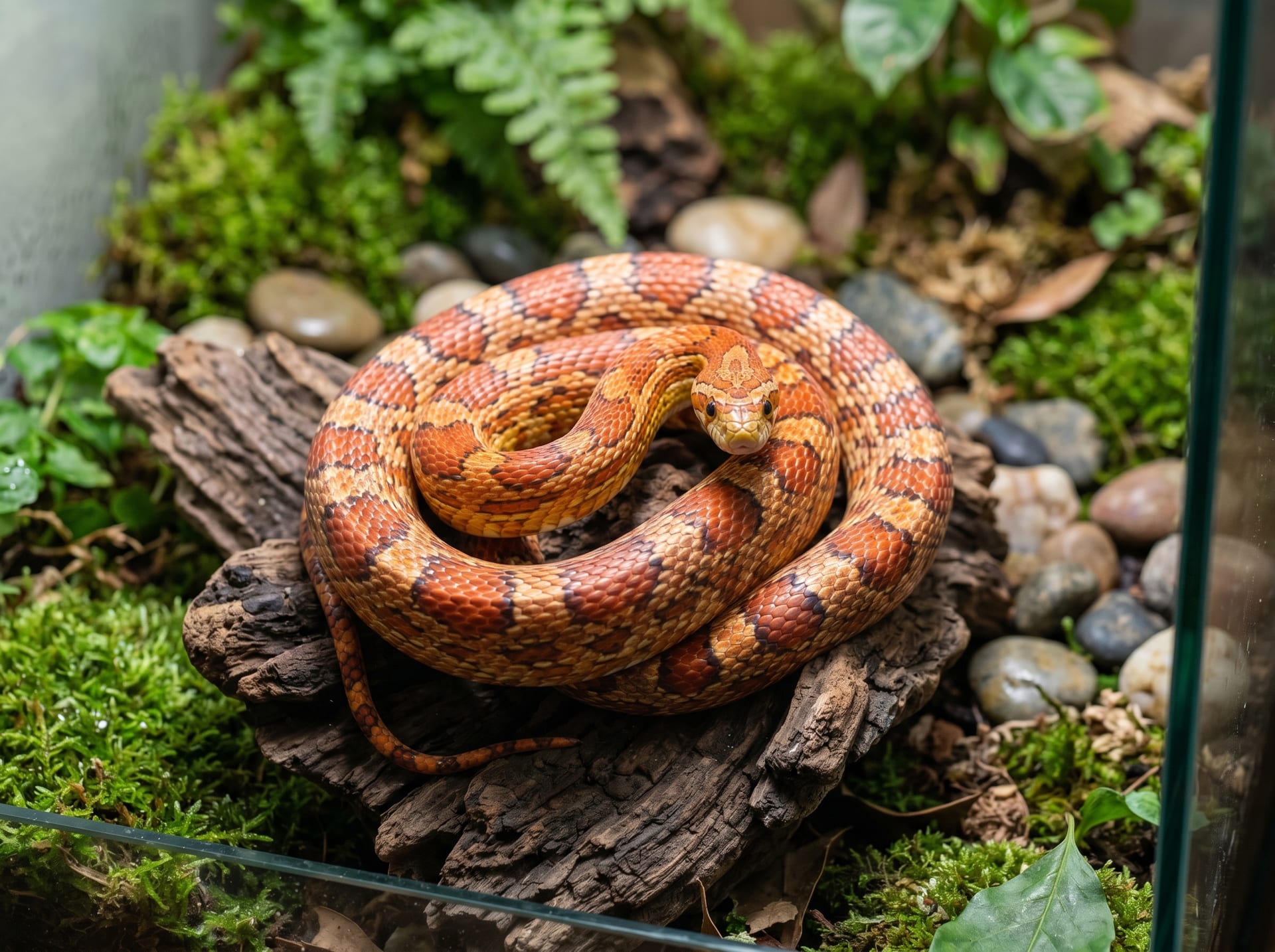
Corn Snake
The most popular beginner snake. Docile temperament and rarely bites. Over 200 color morphs available.
View Corn Snake encyclopedia →0% commission on your first sales!Register by September 30, 2026 and your first 2 sales are commission-free!
Breeder Wanted!
List on BreederDirect and sell directly to customers nationwide!
6 Transparency Promises from Br-Choku
Every Reptiles & Amphibians from verified Breeder breeders includes complete information: morph, genetics, feeding requirements, and temperament details.
- Morph Information
- Actual Photos
- Feeding Information
- Temperament Information
- Genetics Information
- Age (Months)
Browse all 34 breeds
Difficulty Level
Feeding Type
Temperament
Verified breeders wanted for Reptiles & Amphibians
Breeders are signing up now ahead of launch. Subscribe to be notified when new listings go live.
Getting alerts is free with a member account. When new listings match your saved search, we'll notify you by email and in-app.
Browse other categories
Verified breeders (preview)
Are you raising reptiles & amphibians?
Register as a breeder and connect with buyers directly.
Apply as a breederCorn Snake key facts
- Care level
- Beginner-friendly
- Lifespan
- 15-20 years
- Size
- 100-150cm
- Diet
- Frozen mice (once weekly)
- Temperature
- 25-30°C (hot spot 32°C)
- Humidity
- 40-60%
- Enclosure
- 60cm+ enclosure, escape-proof lid essential
- Feeding
- Appropriately sized mouse once weekly
- Notes
- Expert escape artists — secure lid completely
About Corn Snake
The Corn Snake (Pantherophis guttatus) is a colubrid native to the southeastern United States, believed to have gotten its name from its frequent presence around corn storage areas where rodent prey was abundant. In the wild, it inhabits warm grasslands and forest edges, feeding primarily on small mammals and bird eggs. Adults typically reach 100–150cm in length, with a slender and graceful build. One of the species' most celebrated traits is its extraordinary color variety: from the classic wild-type pattern to morphs like Amelanistic, Snow, and Blood Red, over 200 recognized varieties make Corn Snakes a favorite among hobbyist collectors. Temperamentally, they are among the calmest snakes in captivity—rarely biting and often appearing to enjoy gentle handling once acclimated. With a captive lifespan of 15–20 years, the Corn Snake is not only a beginner-friendly choice but a long-term companion well worth the commitment.
7 things to know before welcoming a Corn Snake
1Choosing the Right Enclosure
Adult corn snakes require an enclosure of at least 90 cm in length. Juveniles are typically started in smaller setups to prevent escapes, then transitioned to larger housing as they grow. Always choose an enclosure with a secure, escape-proof lid, as corn snakes are skilled escape artists.
2Temperature and Heating
The general ambient temperature should be kept between 24–28°C, with a warm basking spot of 30–32°C. Place a heat mat under roughly one-third of the enclosure floor to create a thermal gradient, allowing the snake to self-regulate. A thermostat is strongly recommended to maintain stable temperatures safely.
3Feeding: Frozen Mice Are Standard
Frozen-thawed mice are the standard diet for corn snakes. Juveniles typically eat pinky mice every 7–14 days, while adults consume adult mice every 10–14 days. Thaw frozen prey in warm water before feeding. Avoid offering live prey due to injury risk, and skip feedings during shedding or digestion periods.
4Recognizing and Handling Sheds
Signs of an upcoming shed include blue-tinted eyes and a dull, grayish body color, often accompanied by reduced appetite. During this period, minimize handling and raise enclosure humidity to around 60–70% to facilitate a clean shed. If incomplete shedding occurs, soak the snake in lukewarm water and gently remove any retained skin.
5Handling and Taming
Many corn snakes accept handling calmly once acclimated, but newly acquired snakes should be left undisturbed for 1–2 weeks to settle in. Begin with short sessions and gradually increase frequency to a few times per week. Avoid handling for 24–48 hours after feeding to prevent regurgitation.
6Lifespan and Long-Term Costs
With proper care, corn snakes typically live 15–20 years. Initial setup costs, including enclosure, heating equipment, and hides, generally range from ¥30,000–¥50,000. Ongoing monthly expenses, mainly frozen prey and electricity, are relatively modest at a few hundred to around ¥1,000. Given their long lifespan, carefully consider the commitment before bringing one home.
7Health Checks and Vet Care
Regularly monitor your snake's color, eyes, droppings, and weight for any changes, and consult a reptile-specialist veterinarian promptly if something seems off. Common health concerns in corn snakes include respiratory infections, mite infestations, and stomatitis (mouth rot). Since reptile-experienced vets can be scarce in Japan, locate a compatible clinic in your area before bringing your snake home.
Frequently asked questions about Corn Snake
- Q.Are Corn Snakes venomous?
- A.Corn Snakes are completely non-venomous. Even if bitten, there is no venom to worry about. However, clean any bite wound thoroughly with water to reduce the risk of bacterial infection from oral bacteria.
- Q.Can I keep one in a small apartment?
- A.Yes, Corn Snakes are well-suited to apartment living—they make no noise and produce minimal odor. That said, many "no pets" clauses in rental agreements extend to reptiles, so it is worth confirming with your landlord or property manager before bringing one home.
- Q.Does the prey have to be live?
- A.Live prey is not required. Most captive-bred Corn Snakes readily accept thawed frozen mice warmed to a suitable temperature, which is safer for the snake and more convenient for the keeper. Juveniles from reputable breeders are typically pre-acclimated to frozen-thawed feeders.
- Q.Do Corn Snakes need a UV light?
- A.UV lighting is not strictly required for Corn Snakes, but providing a low-level UVB source can support vitamin D3 synthesis and create a more naturalistic environment. At minimum, using a regular light source to establish a day-night cycle is recommended for the snake's well-being.
- Q.Can multiple Corn Snakes share an enclosure?
- A.Single-species housing is strongly recommended. Keeping multiple Corn Snakes together increases the risk of feeding competition, stress, and disease transmission. Significant size differences between individuals also carry a risk of cannibalism, so always house them in separate enclosures.
Useful tools for Corn Snake care
Learn more about Corn Snake in the encyclopedia
View Corn Snake encyclopedia entry →
Care difficulty, lifespan, size and diet — all basics covered.
Corn Snake related articles
Corn Snake Breeding Guide | From Cooling to Mating, Egg-Laying, and Hatching
Detailed guide to corn snake breeding procedures. Covers cooling (hibernation simulation) methods, pairing techniques, egg-laying substrate preparation, egg management, and post-hatch juvenile care.
Snake Types and Beginner's Selection Guide | Corn Snake vs. Ball Python Comparison
A comprehensive comparison of corn snakes and ball pythons, the most popular beginner species. We explain differences in size, temperament, housing requirements, and morphs to help you choose the right snake without regret.
Corn Snake Genetics Guide | Morph Breeding and Line Fixation
A guide to corn snake morph genetics. Learn about inheritance patterns including amelanistic, anerythristic, and snow morphs.
Complete Guide to Corn Snake Care | Enclosure, Feeding, Handling, and Shedding
A comprehensive guide to corn snake care for beginners, covering enclosure selection, temperature management, feeding mice, handling techniques, shedding care, and basic breeding fundamentals.
[Comprehensive Comparison] Ball Python vs Corn Snake | Differences in Care Difficulty, Cost, and Characteristics
A comprehensive comparison of ball pythons and corn snakes from the perspectives of care difficulty, size, cost, and temperament.
5 Recommended Reptile Species for First-Time Owners
Carefully selected reptile species recommended for starting reptile keeping, featuring perspectives on ease of care, initial costs, and temperament. We provide detailed explanations of the characteristics and care points for five beginner-friendly species, including the Leopard Gecko, Corn Snake, and Central Bearded Dragon.
More in this category
Can't find the one you're looking for?
Post your wishes for free and breeders with matching animals will contact you with introductions.