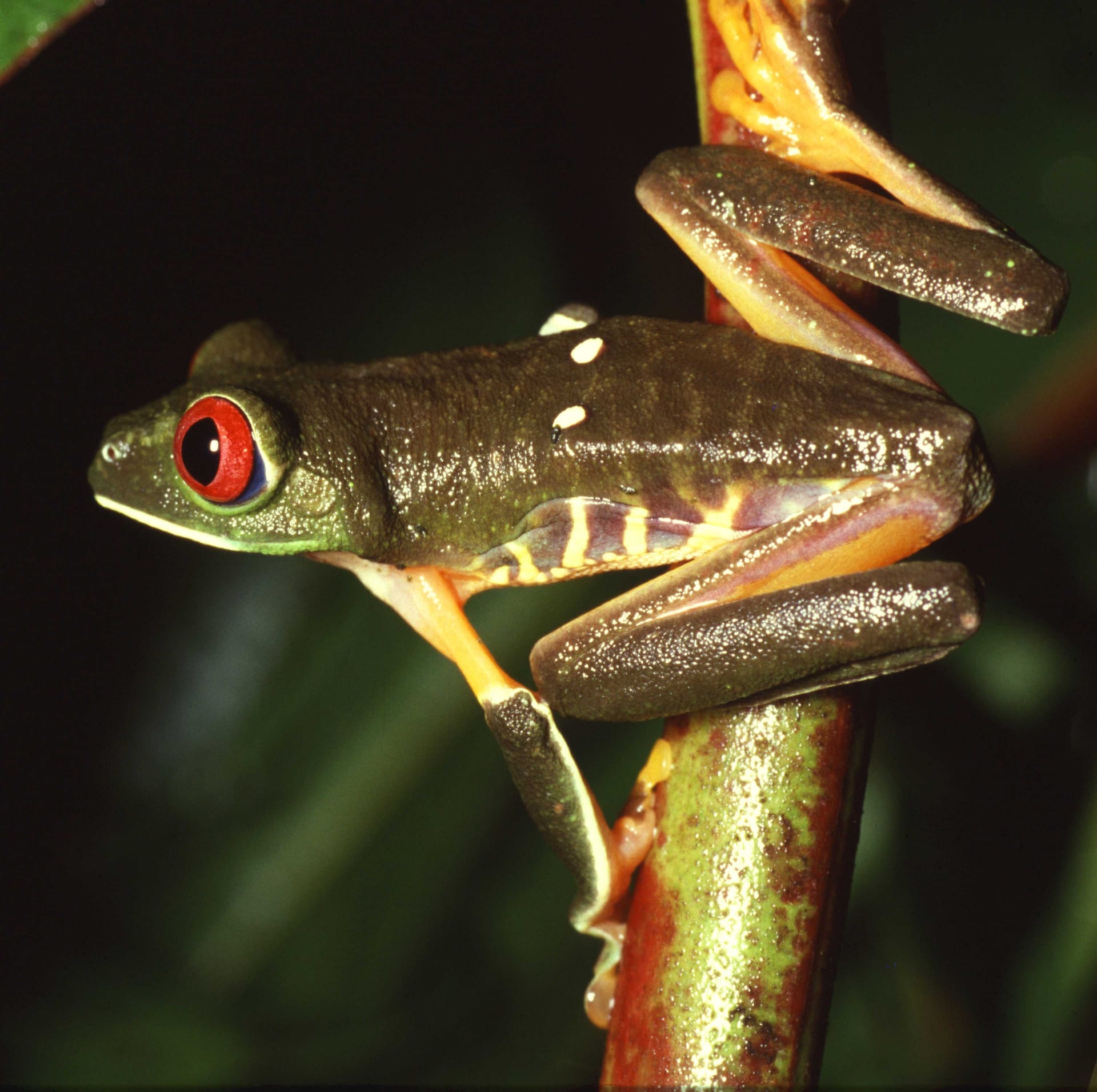
 © Christian R. Linder / CC BY-SA 3.0
Red-Eyed Tree Frog
The Red-Eyed Tree Frog is a nocturnal, arboreal amphibian native to the rainforests of Central America, instantly recognizable by its vivid green back, blue-and-yellow striped flanks, orange limbs, and startling crimson eyes. Despite its bold coloring, it isn't venomous — the flash of color is thought to startle predators just long enough for the frog to escape. By day it rests motionless on the underside of leaves with its eyes closed and legs tucked in, becoming active only after dark. Calm and quiet by nature, it's a favorite among keepers who enjoy observing rather than handling, though its humidity needs call for a bit of prior experience.
View Red-Eyed Tree Frog encyclopedia →0% commission on your first sales!Register by September 30, 2026 and your first 2 sales are commission-free!
Breeder Wanted!
List on BreederDirect and sell directly to customers nationwide!
6 Transparency Promises from Br-Choku
Every Reptiles & Amphibians from verified Breeder breeders includes complete information: morph, genetics, feeding requirements, and temperament details.
- Morph Information
- Actual Photos
- Feeding Information
- Temperament Information
- Genetics Information
- Age (Months)
Browse all 280 breeds
Difficulty Level
Feeding Type
Temperament
Verified breeders wanted for Reptiles & Amphibians
Breeders are signing up now ahead of launch. Subscribe to be notified when new listings go live.
Getting alerts is free with a member account. When new listings match your saved search, we'll notify you by email and in-app.
Browse other categories
Verified breeders (preview)
Are you raising reptiles & amphibians?
Register as a breeder and connect with buyers directly.
Apply as a breederRed-Eyed Tree Frog key facts
- Care level
- Intermediate
- Lifespan
- 5-10 years
- Size
- 5-7cm
- Temperature
- 23〜26℃
- Humidity
- 60〜70%
- Diet
- Crickets and other insects
- Temperature & Humidity
- Aim for 23-26 C. Sustained temperatures above 29 C are lethal, especially combined with dryness. Keep humidity at 60-70%.
- Enclosure
- Height matters: a 45 x 45 x 60 cm terrarium holds two to four juveniles or adults. Use a thin layer of coco fibre or sphagnum with branches and broad-leaved plants as perches.
- Diet & Feeding
- Feed after lights out. Start with about 6 mm crickets and move up to roughly 12 mm as the frogs grow, dusting with supplement.
- Temperament
- Nocturnal and peaceable. Groups work well when young, though males may pester females, so the sexes are sometimes separated.
- Notes
- Stagnant, humid air invites bacterial skin infection, so make at least half the lid mesh. Always provide a large water dish.
About Red-Eyed Tree Frog
The Red-Eyed Tree Frog is a nocturnal, arboreal frog from Central America known for its vivid colors and red eyes. Non-venomous and quiet by nature — here's what to know about its care level, lifespan, and size before bringing one home.
7 things to know before welcoming a Red-Eyed Tree Frog
1Needs Height & Humidity
In the wild these frogs live high in rainforest trees, so their enclosure should prioritize height over floor space, with plants and branches to climb. Since amphibians breathe partly through their skin, consistently high humidity is essential.
2Nocturnal Napper
During the day they rest motionless on the underside of leaves with legs tucked in, becoming active only after dark. Avoid waking or handling them during daylight hours — quiet observation is the best approach.
3Highly Sensitive Skin
Amphibians absorb water and substances directly through their skin, making them vulnerable to chlorine in tap water and residue from hands or chemicals. Use dechlorinated water and dedicated tools, and always wash your hands before and after contact.
4Non-Venomous, Calm Nature
Despite the bold coloring, this frog carries no venom and is generally docile with little aggression. It isn't a species that enjoys handling — it's best appreciated by watching through the glass.
5Diet of Live Insects
Their staple diet is live insects such as crickets, sized appropriately for the frog. Dusting feeder insects with calcium and vitamin supplements is standard practice to prevent nutritional deficiencies.
6Care Level: Intermediate
Daily temperature and humidity management, plus sourcing live feeder insects, add up to a fair amount of ongoing work, which is why this species is considered suitable for intermediate keepers. Prior experience with amphibians or reptiles helps when setting up the enclosure.
7A 5-10 Year Commitment
With proper care, these frogs can live around 5 to 10 years, making them a long-term companion. Have the enclosure, lighting, and humidity setup fully ready before bringing one home.
Frequently asked questions about Red-Eyed Tree Frog
- Q.Is the Red-Eyed Tree Frog venomous?
- A.No, it isn't venomous. Its bright coloring is thought to startle predators and buy the frog time to escape, rather than serve as a warning of toxicity. It's safe to handle, though its sensitive skin means you should wash your hands before and after contact.
- Q.Is this frog suitable for beginners?
- A.Its care level is generally considered intermediate. Managing humidity and temperature and sourcing live feeder insects takes daily effort, so prior experience with amphibians or reptiles is helpful.
- Q.How big do they get?
- A.Adults typically reach about 5 to 7 cm in body length. As they grow, you may need to adjust the size of the enclosure accordingly.
- Q.How long do they live?
- A.They typically live around 5 to 10 years with proper care. Since that's a long-term commitment, it's worth setting up a solid enclosure before bringing one home.
- Q.Are they active during the day?
- A.Not usually — they're nocturnal and spend daylight hours resting motionless on the underside of leaves. To see them active, try observing your frog in the evening or at night.
Useful tools for Red-Eyed Tree Frog care
Learn more about Red-Eyed Tree Frog in the encyclopedia
View Red-Eyed Tree Frog encyclopedia entry →
Care difficulty, lifespan, size and diet — all basics covered.
More in this category
Can't find the one you're looking for?
Post your wishes for free and breeders with matching animals will contact you with introductions.