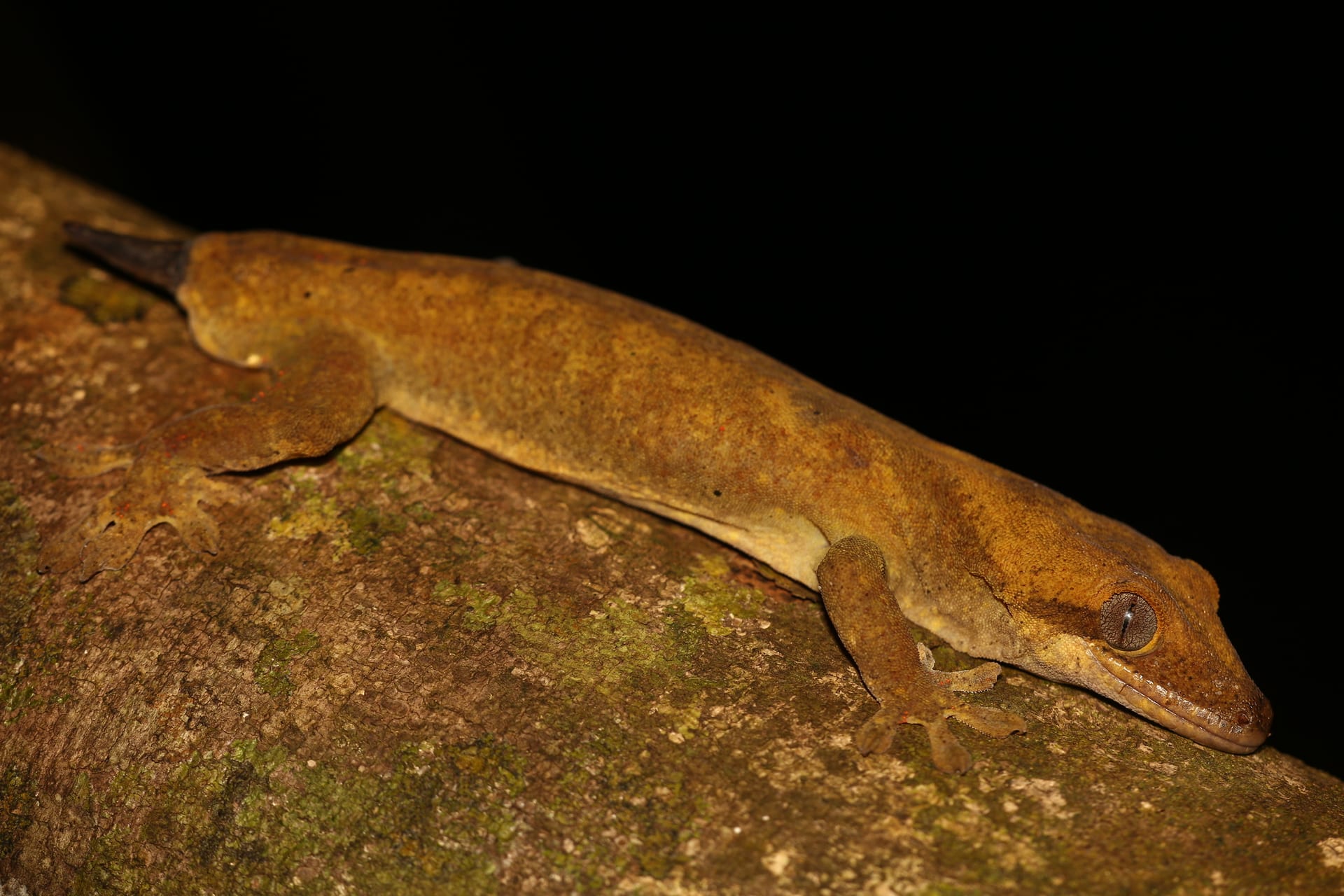
 © Lennart Hudel / CC BY 4.0
Sarasin's Giant Gecko
Sarasin's Giant Gecko is a nocturnal gecko found only in the southern part of New Caledonia's main island. Its brown-to-gray body often shows a white V-shaped mark or white spots on the back of the head, giving it a look similar to the crested gecko but with notably larger eyes. Snout-vent length ranges widely from 9 to 14cm, making growth tracking part of the appeal. Calm and manageable in temperament, this arboreal species also rewards keepers who enjoy building naturalistic, planted enclosures. It's best suited to keepers with some reptile-keeping experience who want a gecko to grow with over time.
View Sarasin's Giant Gecko encyclopedia →0% commission on your first sales!Register by September 30, 2026 and your first 2 sales are commission-free!
Breeder Wanted!
List on BreederDirect and sell directly to customers nationwide!
6 Transparency Promises from Br-Choku
Every Reptiles & Amphibians from verified Breeder breeders includes complete information: morph, genetics, feeding requirements, and temperament details.
- Morph Information
- Actual Photos
- Feeding Information
- Temperament Information
- Genetics Information
- Age (Months)
Browse all 280 breeds
Difficulty Level
Feeding Type
Temperament
Verified breeders wanted for Reptiles & Amphibians
Breeders are signing up now ahead of launch. Subscribe to be notified when new listings go live.
Getting alerts is free with a member account. When new listings match your saved search, we'll notify you by email and in-app.
Browse other categories
Verified breeders (preview)
Are you raising reptiles & amphibians?
Register as a breeder and connect with buyers directly.
Apply as a breederSarasin's Giant Gecko key facts
- Care level
- Intermediate
- Lifespan
- 12-18 years
- Size
- 9-14cm snout-to-vent length, about 25cm in total
- Diet
- Prepared fruit-based gecko diet, plus crickets and dubia roaches
- Temperature & Humidity
- Its habitat is southern New Caledonia at 20 to 600 m, in a climate alternating between a dry season and a rainy one. Being nocturnal it does not need high temperatures, so avoid a strong heat source, build a gradient and adjust from measured readings.
- Enclosure
- It is less arboreal than its relatives and often hides under leaf litter or loose bark, so provide ground-level cover as well as height. Furnish with leafy plants and slender branches so it can use its habit of sleeping face up; setups that leave it sleeping upside down raise the risk of floppy tail syndrome.
- Diet & Feeding
- In the wild it is an omnivore and frugivore, taking insects and fruit. In captivity use a prepared fruit-based gecko diet as the staple with crickets and dubia roaches alongside, dusting the feeders with calcium.
- Temperament
- Nocturnal, active from two or three hours after dark until dawn. Keep it singly and never house males together. It spends the day hidden, so observation is best done at night.
- Notes
- It is not currently listed in the CITES appendices and has no entry in Species+. It is neither a specified animal nor an invasive alien species under Japanese law. It has been found at only six locations in the wild and is widely regarded within herpetological circles as vulnerable to extinction. As a New Caledonian endemic, confirm the origin of any animal you acquire.
About Sarasin's Giant Gecko
A nocturnal gecko endemic to New Caledonia, known for its white V-shaped head marking. An arboreal species suited to intermediate keepers.
7 things to know before welcoming a Sarasin's Giant Gecko
1Nocturnal Activity Pattern
These geckos rest hidden during the day and become active after dark. Don't expect daytime activity — plan to observe them mainly in the evening. Keeping their enclosure in a quiet spot helps them settle into this natural rhythm.
2Vertical Enclosure for Arboreal Life
They spend much of their time climbing branches and leaves, so a tall enclosure suits them better than a wide, low one. Combine driftwood with artificial or live plants to create vertical climbing routes.
3Humidity and Temperature Control
Coming from New Caledonia's humid forests, they do best with consistently moderate humidity. Daily misting combined with good ventilation helps avoid both overly damp and overly dry conditions.
4Individual Variation in Color and Pattern
Base color ranges from brown to gray, and the white V-mark or spotting on the head varies from one individual to the next. Even within the same species, each gecko has its own distinct look worth getting to know.
5Larger Eyes Set It Apart from Crested Geckos
While it resembles the crested gecko at a glance, the noticeably larger eyes are a key distinguishing feature. Take time to appreciate those large nocturnal eyes as one of this species' distinctive charms.
6Size Changes as It Grows
Snout-vent length varies widely from 9 to 14cm, with total length (including the tail) reaching around 25cm. Choose enclosure size and equipment with the adult size in mind, not just how it looks at the time you bring it home.
7Preparing the Enclosure Before Arrival
Set up a tall enclosure with climbing branches, plants, and humidity-supporting equipment before your gecko arrives. As this species suits keepers with some prior reptile experience, it's worth having the basics down before bringing one home.
Frequently asked questions about Sarasin's Giant Gecko
- Q.Can beginners keep Sarasin's Giant Gecko?
- A.This species is generally considered suited to intermediate keepers. Having some basic reptile-keeping knowledge and experience will help you care for it with confidence.
- Q.How is it different from the crested gecko?
- A.It closely resembles the crested gecko in appearance but is distinguished by its notably larger eyes. Body color ranges from brown to gray, sometimes with a white V-shaped mark or spots on the back of the head.
- Q.How big does it grow?
- A.Snout-vent length varies considerably, from 9 to 14cm, with a total length including the tail of around 25cm. It's best to prepare an enclosure sized for this adult length from the start.
- Q.Is it active during the day or at night?
- A.It is nocturnal, so it mostly rests hidden during the day. Active behavior is typically seen at night.
- Q.Is this species subject to CITES regulation?
- A.Sarasin's Giant Gecko is not listed under CITES.
Useful tools for Sarasin's Giant Gecko care
Learn more about Sarasin's Giant Gecko in the encyclopedia
View Sarasin's Giant Gecko encyclopedia entry →
Care difficulty, lifespan, size and diet — all basics covered.
More in this category
Can't find the one you're looking for?
Post your wishes for free and breeders with matching animals will contact you with introductions.