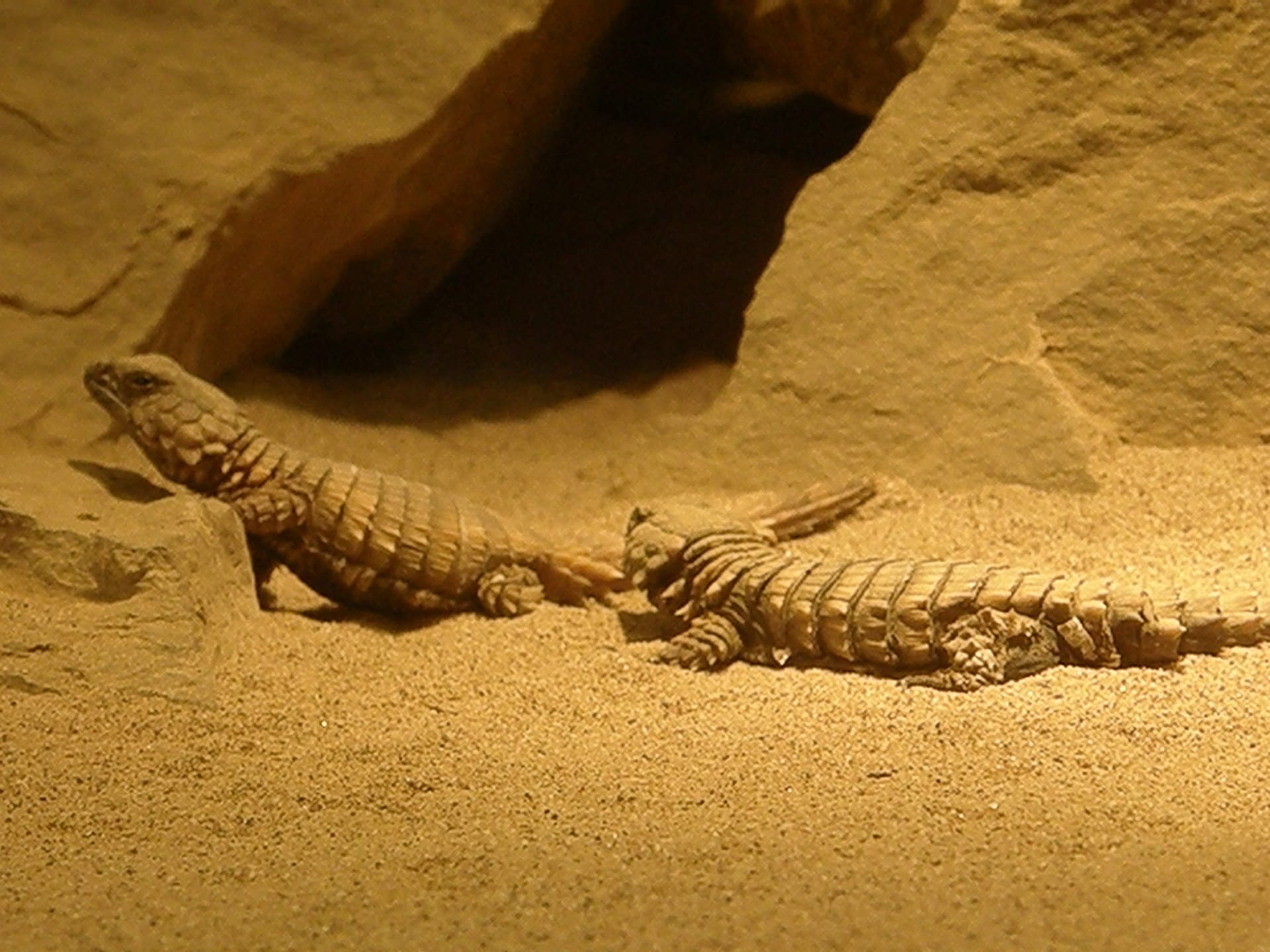
 © frank wouters / CC BY 2.0
Armadillo Girdled Lizard
The Armadillo Girdled Lizard is a small lizard native to the arid rocky outcrops of South Africa, its neck, body, tail, and limbs covered in spiky, bone-plated scales that give it an armor-like appearance. When threatened, it curls into a ball and grips its own tail in its mouth, presenting only its spiked back and tail to predators — the very behavior that inspired its name. Generally slow-moving and capable of settling down with gentle handling, this species nonetheless demands careful attention to temperature, humidity, and UVB lighting, making it a lizard best suited to experienced keepers rather than beginners. Its striking armored look and unique defensive display make it a captivating species to observe up close.
View Armadillo Girdled Lizard encyclopedia →0% commission on your first sales!Register by September 30, 2026 and your first 2 sales are commission-free!
Breeder Wanted!
List on BreederDirect and sell directly to customers nationwide!
6 Transparency Promises from Br-Choku
Every Reptiles & Amphibians from verified Breeder breeders includes complete information: morph, genetics, feeding requirements, and temperament details.
- Morph Information
- Actual Photos
- Feeding Information
- Temperament Information
- Genetics Information
- Age (Months)
Browse all 280 breeds
Difficulty Level
Feeding Type
Temperament
Verified breeders wanted for Reptiles & Amphibians
Breeders are signing up now ahead of launch. Subscribe to be notified when new listings go live.
Getting alerts is free with a member account. When new listings match your saved search, we'll notify you by email and in-app.
Browse other categories
Verified breeders (preview)
Are you raising reptiles & amphibians?
Register as a breeder and connect with buyers directly.
Apply as a breederArmadillo Girdled Lizard key facts
- Care level
- Advanced
- Lifespan
- 15-20 years
- Size
- Up to 21cm total length (SVL 7.5-10.5cm)
- Diet
- Carnivorous: small invertebrates such as insects and spiders; it will also take some plant material
- Temperature & Humidity
- A diurnal species of rocky ground in the semi-desert Succulent Karoo. Base management on an arid setup with a strong basking spot, genuinely cool shade in the same enclosure and a proper night-time drop.
- Enclosure
- It lives wedged into rock crevices, so stack flat rock to create gaps its flattened body can enter. Seat rocks on the enclosure floor before adding substrate and fix them so they cannot collapse. Because it lives in family groups, if keeping several provide more crevices and basking sites than there are animals.
- Diet & Feeding
- It feeds mainly on small invertebrates such as insects and spiders and will also take plant material. In captivity use crickets and roaches as the staple, dusted with calcium and vitamin supplements, and provide UVB since it is diurnal and basks.
- Temperament
- Timid, its first response to alarm being to dive into a crevice. Its jaws are extremely powerful and in a fight can sever digits or small limbs, so watch combinations and space when keeping several. The tail is essential to its defensive posture, so take care never to grasp it there.
- Notes
- Listed on CITES Appendix II since 6 June 1981, currently as the genus-level listing Ouroborus spp. Being Appendix II, it needs no Japanese registration certificate. The IUCN assesses it as Near Threatened, with over-collection for the pet trade reducing wild populations. It does not appear on the schedule of designated dangerous animals under the Order for Enforcement of the Act on Welfare and Management of Animals. Captive-bred animals are traded in Japan, but rarely and at high prices.
About Armadillo Girdled Lizard
A South African lizard covered in spiky, armor-like scales that curls into a ball and grips its own tail when threatened — a distinctive reptile suited to experienced keepers.
7 things to know before welcoming a Armadillo Girdled Lizard
1Suited to Experienced Keepers
The Armadillo Girdled Lizard is considered a species for experienced keepers, requiring careful management of temperature, humidity, and UVB exposure. It's better suited to keepers who already have reptile-keeping experience than to first-time owners.
2Recreate a Rocky Habitat
Native to South Africa's dry rocky outcrops, this species needs an enclosure with rocks and stone arrangements that create hiding spots. Keep the setup on the dry side rather than humid.
3Armor-Like Spiky Scales
The neck, body, tail, and limbs are covered in spiky, bony scales that give the lizard an armor-like appearance. When it senses danger, it grips its own tail in its mouth and curls into a ball, presenting only its spiked back and tail — the behavior behind its name.
4Calm Temperament
Movements tend to be fairly slow and deliberate, and some individuals become calmer once accustomed to handling. Even so, avoid sudden movements that could startle them, and interact at the lizard's own pace.
5UVB and Calcium Care
To help prevent metabolic bone disease, UVB lighting and calcium supplementation are essential parts of care. Regularly check lighting duration and bulb distance to keep UVB exposure appropriate.
6Compact Adult Size
Adults reach a maximum total length of about 21 cm, with a head-body length of roughly 7.5 to 10.5 cm — a relatively compact size for a lizard. Choose an enclosure sized appropriately for this body size.
7Choose a Trustworthy Source
Before bringing one home, look for a seller who can clearly explain the individual's health and how it's been kept. Don't hesitate to ask questions about anything you're unsure of beforehand.
Frequently asked questions about Armadillo Girdled Lizard
- Q.Can beginners keep an Armadillo Girdled Lizard?
- A.This species is considered suited to experienced keepers, so it's best to gain some reptile-keeping experience first. Careful management of temperature, humidity, and UVB lighting requires specialized knowledge.
- Q.How big do adults get?
- A.Adults reach a maximum total length of about 21 cm, with a head-body length of roughly 7.5 to 10.5 cm. That makes them a relatively compact-sized lizard.
- Q.Why is it called the "Armadillo" Girdled Lizard?
- A.When threatened, it grips its own tail in its mouth and curls into a ball, presenting only its spiked back and tail — a defensive posture that resembles how an armadillo curls up, which is where the name comes from.
- Q.Is this species subject to any legal regulations?
- A.Armadillo Girdled Lizard is listed in CITES Appendix II. International trade requires a permit from the exporting country, but as far as CITES is concerned, no registration is needed to buy or sell individuals already legally in Japan.
- Q.What should I pay special attention to in the enclosure?
- A.Since this species comes from dry rocky habitats, avoid excess humidity and provide rock formations for hiding spots. UVB lighting and calcium supplementation are also essential to help prevent metabolic bone disease.
Useful tools for Armadillo Girdled Lizard care
Learn more about Armadillo Girdled Lizard in the encyclopedia
View Armadillo Girdled Lizard encyclopedia entry →
Care difficulty, lifespan, size and diet — all basics covered.
More in this category
Can't find the one you're looking for?
Post your wishes for free and breeders with matching animals will contact you with introductions.