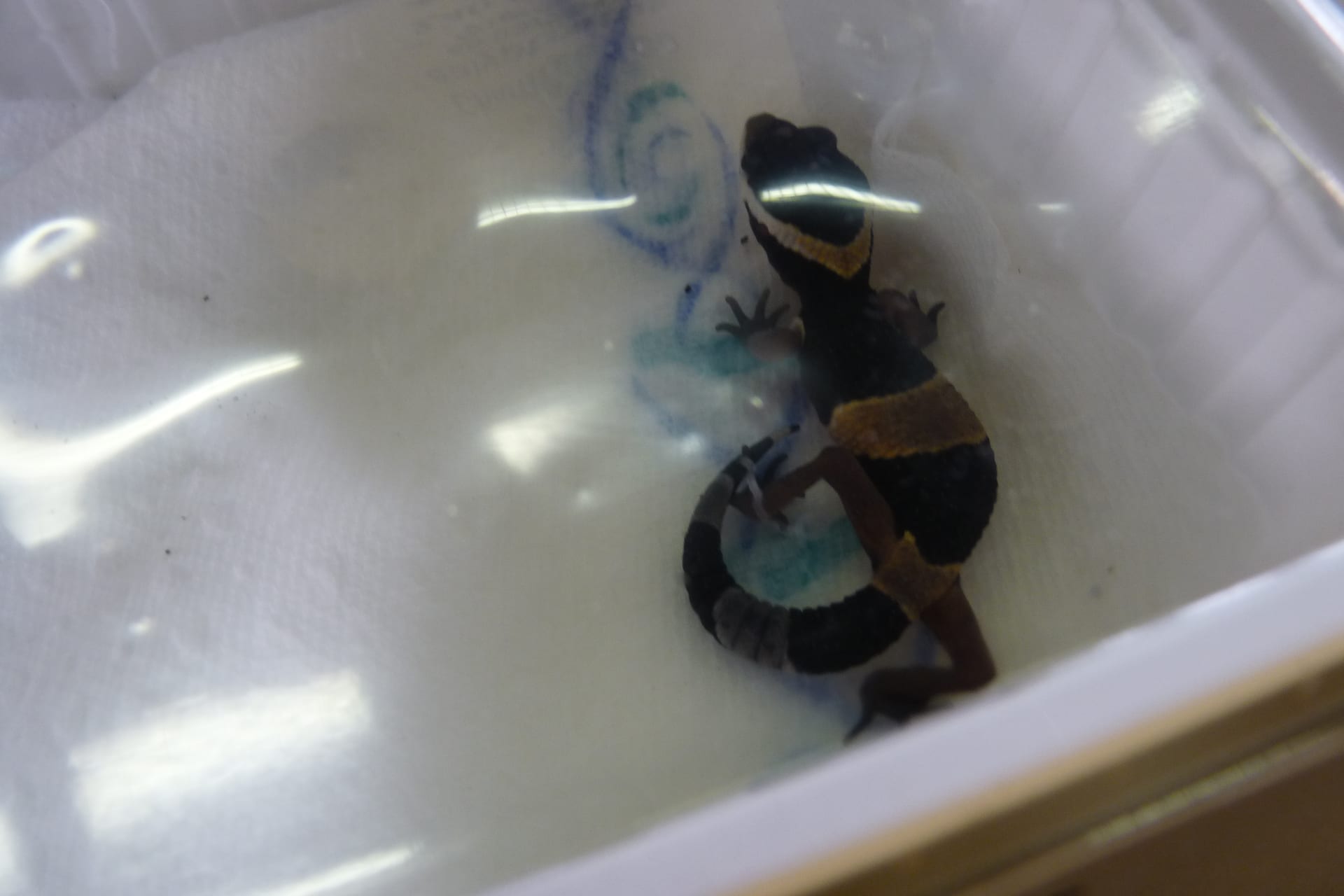
 © Goodshort / CC BY-SA 3.0
East Indian Leopard Gecko
The East Indian Leopard Gecko is a lesser-known relative of the common leopard gecko, native to a limited range across eastern India and Bangladesh. It has a sturdy, thickset body reaching 20–23 cm in total length, with notably short limbs and toes, and large cone-shaped tubercles scattered across its back. Its swollen tail shows a distinctive ringed, segmented pattern. Calm and generally slow-moving, it's a nocturnal species that rewards patient observation once its rhythm is understood. With a chunkier build and bolder texture than the standard leopard gecko, it appeals to keepers looking for something a little different — though as an intermediate-level species, some prior reptile-keeping experience will help things go smoothly.
View East Indian Leopard Gecko encyclopedia →0% commission on your first sales!Register by September 30, 2026 and your first 2 sales are commission-free!
Breeder Wanted!
List on BreederDirect and sell directly to customers nationwide!
6 Transparency Promises from Br-Choku
Every Reptiles & Amphibians from verified Breeder breeders includes complete information: morph, genetics, feeding requirements, and temperament details.
- Morph Information
- Actual Photos
- Feeding Information
- Temperament Information
- Genetics Information
- Age (Months)
Browse all 280 breeds
Difficulty Level
Feeding Type
Temperament
Verified breeders wanted for Reptiles & Amphibians
Breeders are signing up now ahead of launch. Subscribe to be notified when new listings go live.
Getting alerts is free with a member account. When new listings match your saved search, we'll notify you by email and in-app.
Browse other categories
Verified breeders (preview)
Are you raising reptiles & amphibians?
Register as a breeder and connect with buyers directly.
Apply as a breederAbout East Indian Leopard Gecko
A stocky leopard gecko native to eastern India and Bangladesh, known for its cone-shaped tubercles and ringed tail. An intermediate-level species with a striking, distinctive look.
7 things to know before welcoming a East Indian Leopard Gecko
1Suited to Experienced Keepers
This species is generally considered suitable for keepers with some prior reptile experience. Familiarity with basic temperature and humidity management makes day-to-day care and health checks much easier. It tends to be a better fit as a second reptile than as a first.
2Temperature Gradient in the Enclosure
Set up both a warm side and a cooler side in the enclosure so a temperature gradient exists. Being able to move between zones lets the gecko regulate its own body temperature as needed. An under-tank heat mat placed beneath part of the enclosure is a common way to achieve this.
3Hides and Shelter
This gecko tends to be cautious and prefers tucking itself away, so provide several hides throughout the enclosure. Placing a shelter on both the warm and cool sides helps reduce stress. A secure, low-stress setup makes ongoing care much easier.
4A Nocturnal Lifestyle
As a nocturnal species, it spends most of the daytime resting inside its hide. If you want to watch it move around or feed, early evening into the night is the best window. Avoid waking it during the day just to handle it.
5An Insect-Based Diet
Its diet is primarily insect-based, typically live crickets or similar feeder insects. Dusting feeders with a calcium supplement helps round out the nutritional balance. Feeding amounts vary by individual, so aim to offer a portion it finishes without excess left over.
6A Distinctive Build and Tail
The stout body is lined with large, cone-shaped tubercles, and the swollen, segmented tail gives this gecko its distinctive silhouette. Since body condition and tail shape can reflect overall health, regular observation makes it easier to notice changes early.
7Prepare the Setup Before Arrival
Before bringing one home, set up the enclosure, heating equipment, multiple hides, and a water dish in advance. Give it time to settle into its new surroundings without handling at first — a quiet adjustment period matters more than early interaction.
Frequently asked questions about East Indian Leopard Gecko
- Q.How is it different from a common leopard gecko?
- A.Though closely related, the East Indian Leopard Gecko has a sturdier build with prominent, cone-shaped tubercles across its back. Its tail is also swollen and shows a distinctive ringed, segmented shape. The overall texture and build offer a different look from the standard leopard gecko.
- Q.Is it a good choice for a first-time reptile keeper?
- A.It's generally considered an intermediate-level species, so some prior reptile-keeping knowledge is helpful. If you're not yet comfortable with temperature and humidity management, it may be better to gain experience with an easier species first.
- Q.What does it do during the day?
- A.Being nocturnal, it spends most of the daytime resting quietly inside its hide. Active movement is more commonly seen from evening into the night, so it's best left undisturbed during the day.
- Q.Can it be handled?
- A.Individuals vary, but this species tends to be cautious, so letting it settle into its environment first is a priority. Rather than handling it right away, it's best to gradually build trust once it appears calm and comfortable.
- Q.How big does it get as an adult?
- A.Adults typically reach a total length of 20–23 cm. With its sturdy build, it has a noticeably more substantial presence than the common leopard gecko.
Useful tools for East Indian Leopard Gecko care
Learn more about East Indian Leopard Gecko in the encyclopedia
View East Indian Leopard Gecko encyclopedia entry →
Care difficulty, lifespan, size and diet — all basics covered.
More in this category
Can't find the one you're looking for?
Post your wishes for free and breeders with matching animals will contact you with introductions.