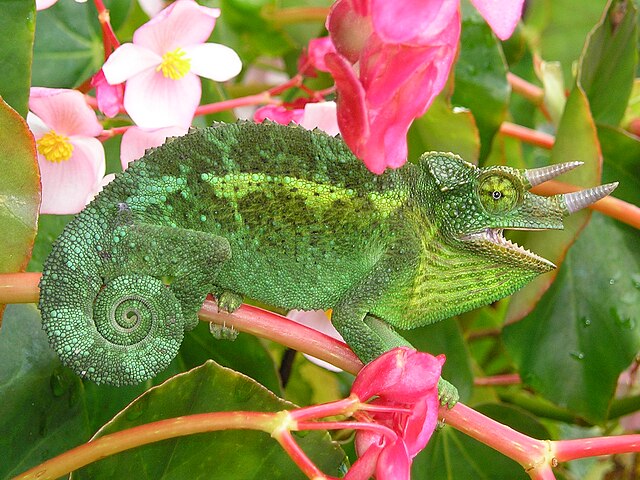
 © 池田正樹 ( talk )masaki ikeda / Public domain
Jackson's Chameleon
Jackson's Chameleon is instantly recognizable by the three horns males grow on their faces, giving them an almost dinosaur-like look. Native to the highlands of East Africa, they can shift their skin color to blend with their surroundings and move each eye independently to scan for movement in every direction. They're solitary, calm animals best enjoyed through quiet observation rather than handling. Among chameleons, a notoriously demanding group to keep, Jackson's Chameleons are considered one of the more approachable species, which is why they're often recommended as a starting point for reptile keepers exploring chameleons. Unusually, they give birth to live young instead of laying eggs.
View Jackson's Chameleon encyclopedia →0% commission on your first sales!Register by September 30, 2026 and your first 2 sales are commission-free!
Breeder Wanted!
List on BreederDirect and sell directly to customers nationwide!
6 Transparency Promises from Br-Choku
Every Reptiles & Amphibians from verified Breeder breeders includes complete information: morph, genetics, feeding requirements, and temperament details.
- Morph Information
- Actual Photos
- Feeding Information
- Temperament Information
- Genetics Information
- Age (Months)
Browse all 280 breeds
Difficulty Level
Feeding Type
Temperament
Verified breeders wanted for Reptiles & Amphibians
Breeders are signing up now ahead of launch. Subscribe to be notified when new listings go live.
Getting alerts is free with a member account. When new listings match your saved search, we'll notify you by email and in-app.
Browse other categories
Verified breeders (preview)
Are you raising reptiles & amphibians?
Register as a breeder and connect with buyers directly.
Apply as a breederAbout Jackson's Chameleon
Jackson's Chameleon is a three-horned chameleon native to East Africa, valued as an approachable entry point into chameleon keeping thanks to its manageable care needs and fascinating color-changing, independent-eye-moving behavior.
7 things to know before welcoming a Jackson's Chameleon
1Give Them Vertical Space
Jackson's Chameleons are arboreal and spend most of their time climbing rather than walking on the ground. Set up the enclosure with height as the priority, adding plenty of climbing branches and live or artificial plants so they can move through cover at different levels. Since adults reach 20-35cm, make sure the enclosure's height and depth can comfortably accommodate their full-grown size.
2UVB Lighting Is Essential
Chameleons rely on UVB exposure to synthesize vitamin D3, which their bodies need to absorb calcium properly. Indoors, this means installing a reptile-grade UVB light and arranging a basking spot alongside a shaded, cooler area so they can regulate their own body temperature.
3Humidity & Watering Habits
Jackson's Chameleons prefer high humidity, but they rarely drink from a standing water bowl — instead, they lick droplets off leaves. Misting the enclosure several times a day, or running a dripper that provides a steady trickle of water, is the standard way to keep them hydrated. A hygrometer in the enclosure helps you track humidity levels rather than guessing.
4House Them Alone
These chameleons are territorial, and housing more than one together — even a male and female — can cause significant stress for both animals. The safest approach is one chameleon per enclosure, only introducing a pair briefly and deliberately if breeding is the goal.
5Keep Handling Minimal
As calm, solitary animals, Jackson's Chameleons tend to find frequent handling stressful rather than enjoyable. They're generally better suited to being watched and appreciated in their enclosure, with hands-on contact reserved for necessary tasks like feeding or cleaning.
6Insect Diet & Supplements
Their diet is primarily live insects such as crickets, sized appropriately for the chameleon's age and build. To prevent nutritional gaps, insects are typically dusted with calcium and vitamin supplements before feeding — a routine step in their regular care.
7A 5-10 Year Commitment
Jackson's Chameleons typically live 5 to 10 years, so it's worth thinking beyond the early growth stage to the full span of ongoing care. Consider in advance how you'll handle their care during trips or a future move, since this is a long-term commitment rather than a short-term pet.
Frequently asked questions about Jackson's Chameleon
- Q.Is this chameleon suitable for beginners?
- A.Jackson's Chameleons are considered relatively approachable compared to other chameleons, but overall they're best suited to keepers with some reptile experience. They need specialized equipment like UVB lighting and consistent humidity control, so it's worth confirming you can set up that environment before bringing one home.
- Q.How can you tell males from females?
- A.Males grow three prominent horns on their faces, while females typically have no horns or only small, barely noticeable ones. Checking for the presence and size of these horns is the clearest way to distinguish the sexes.
- Q.Can you keep more than one together?
- A.Jackson's Chameleons are territorial, so housing one per enclosure is generally recommended. Keeping males together, or even a male and female housed permanently together, can cause ongoing stress for the animals.
- Q.How big do they get as adults?
- A.Adults typically reach around 20 to 35cm in length. Males may look slightly longer overall because of their horns, but this doesn't represent a major size difference between the sexes.
- Q.Will it bond with me or enjoy being handled?
- A.As calm, solitary animals, they don't seek out affection the way a dog or cat might. Rather than frequent handling, enjoying them through quiet observation and letting them adjust at their own pace tends to work better for both of you.
Useful tools for Jackson's Chameleon care
Learn more about Jackson's Chameleon in the encyclopedia
View Jackson's Chameleon encyclopedia entry →
Care difficulty, lifespan, size and diet — all basics covered.
Jackson's Chameleon related articles
See more Jackson's Chameleon articles →More in this category
Can't find the one you're looking for?
Post your wishes for free and breeders with matching animals will contact you with introductions.