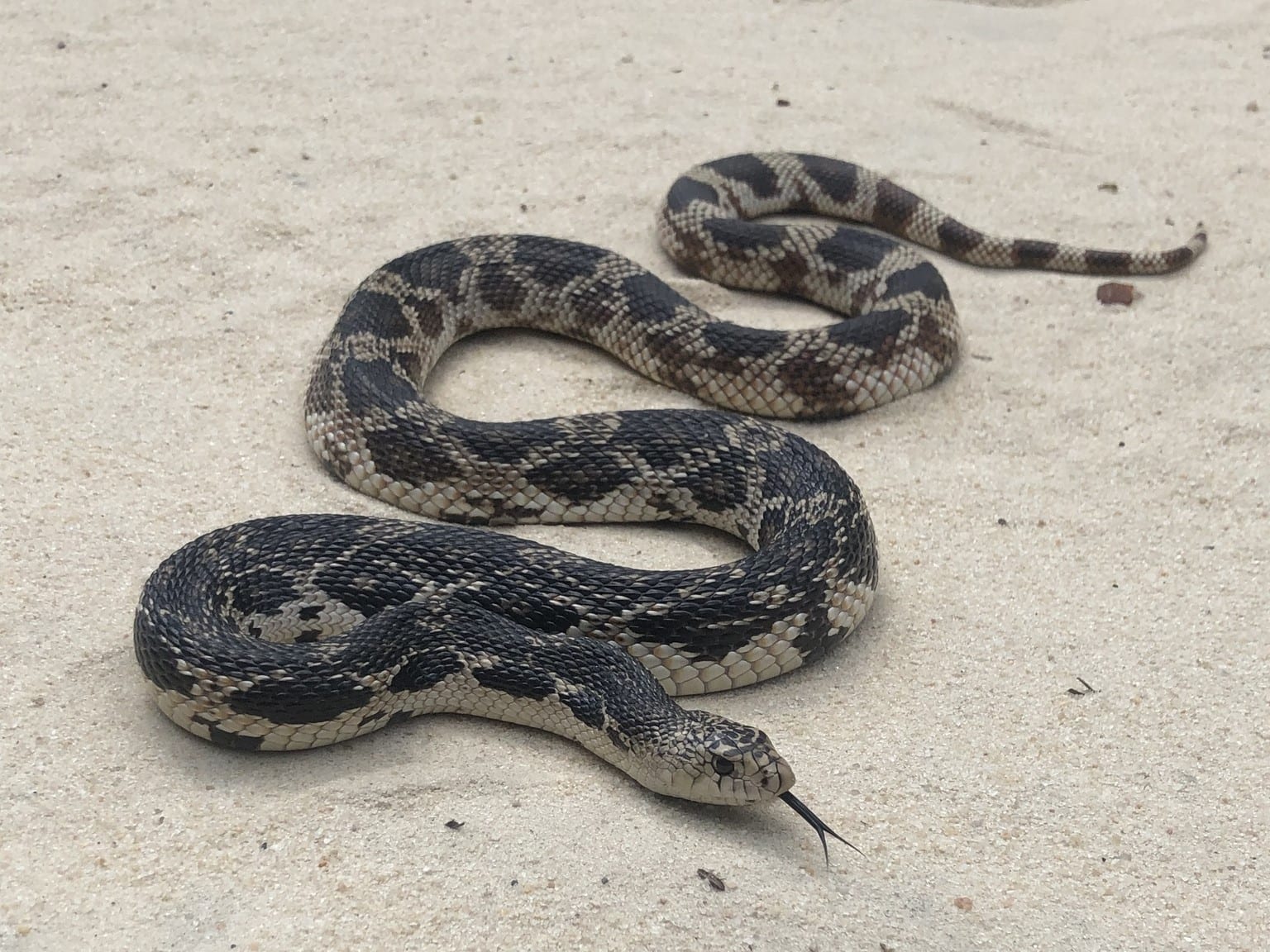
 © John Kees / CC0
Pine Snake
The Pine Snake is a large colubrid native to the sandy soil regions of the southeastern United States, known for its bold pattern of dark brown blotches against a white or pale tan background. Its enlarged rostral scale helps it dig and burrow through loose ground, and when threatened it produces one of the loudest warning hisses of any North American snake. Despite this dramatic display, many individuals settle into a calm, manageable temperament with regular handling. Growing into a muscular body reaching 120 to 230 cm, and often living 20 years or more in captivity, this is a snake suited to keepers looking for a long-term companion.
View Pine Snake encyclopedia →0% commission on your first sales!Register by September 30, 2026 and your first 2 sales are commission-free!
Breeder Wanted!
List on BreederDirect and sell directly to customers nationwide!
6 Transparency Promises from Br-Choku
Every Reptiles & Amphibians from verified Breeder breeders includes complete information: morph, genetics, feeding requirements, and temperament details.
- Morph Information
- Actual Photos
- Feeding Information
- Temperament Information
- Genetics Information
- Age (Months)
Browse all 280 breeds
Difficulty Level
Feeding Type
Temperament
Verified breeders wanted for Reptiles & Amphibians
Breeders are signing up now ahead of launch. Subscribe to be notified when new listings go live.
Getting alerts is free with a member account. When new listings match your saved search, we'll notify you by email and in-app.
Browse other categories
Verified breeders (preview)
Are you raising reptiles & amphibians?
Register as a breeder and connect with buyers directly.
Apply as a breederPine Snake key facts
- Care level
- Intermediate
- Lifespan
- Over 20 years in captivity
- Size
- 120-230cm
- Temperature
- Diet
- Frozen-thawed mice and rats, poultry such as quail
- Temperature & Humidity
- Hold daytime temperatures around 27-29 C, allowing a drop to room temperature at night. Create the gradient with overhead lamps and never place the enclosure in direct sunlight. Keep the setup dry, since spilled water can lead to respiratory infection and scale rot.
- Enclosure
- Adults need an enclosure around 120 x 60 x 60 cm with a securely fastened lid. Use a substrate such as aspen bedding several inches deep so the snake can burrow, add large stones and a sturdy branch set down firmly, and always provide a hide box.
- Diet & Feeding
- The staple is rodents or poultry. This is a fast-growing, powerful snake: feeding appropriately sized prey twice a week is a reasonable guide. Avoid feeding during a shed, when regurgitation is common, and take care to neither over- nor underfeed.
- Temperament
- Animals handled from a young age usually become tractable, but adults with little human contact can be nervous or defensive. It is non-venomous, yet a bite is painful and bloody and teeth may be left in the skin. The feeding response is strong, so stay alert whenever working inside the enclosure.
- Notes
- Not listed on any CITES appendix and not among Japan's designated dangerous animals. Opinions differ over the validity of its subspecies, so trade names and scientific names do not always line up.
About Pine Snake
The Pine Snake is a large North American colubrid with bold dark blotches on a pale body, growing 120-230 cm and living 20+ years in captivity — a species suited to intermediate keepers.
7 things to know before welcoming a Pine Snake
1Plan for a Large Enclosure
Adults reach 120 to 230 cm in length, so they need an enclosure with real length and depth to move around comfortably. Since they like to burrow, leave enough vertical space for a thick substrate layer as well.
2Choose Substrate for Burrowing
An enlarged scale on the snout lets this species dig readily, and it spends much of its time burrowed underground. A loose substrate like aspen bedding, piled deep enough to tunnel through, lets it express this natural behavior.
3Expect a Loud Warning Hiss
When it feels threatened, it shakes its body and produces a loud hissing sound as a warning. This is simply a sign of caution, and the behavior often settles down as the snake grows accustomed to handling.
4Keep Conditions Dry and Warm
Adapted to dry, sandy habitats, this snake does best in an enclosure kept on the dry side with a dedicated warm basking spot. Setting up a temperature gradient lets it choose the conditions it's comfortable in.
5Give It Time to Settle
Temperament varies between individuals, but regular handling tends to produce a calmer, more settled snake over time. Avoid handling too much right after bringing it home, and let it adjust to its new surroundings first.
6Feeding Schedule Changes With Growth
Because this species grows quite large, prey size and feeding frequency need to be adjusted as it matures. Give it some quiet time to digest after each meal rather than handling it right away.
7A Long-Term Commitment
This is a long-lived animal, known to live 20 years or more in captivity. Before bringing one home, think ahead about future changes in your living situation and whether you can care for it for its whole life.
Frequently asked questions about Pine Snake
- Q.Can beginners keep a Pine Snake?
- A.This species is generally considered suitable for intermediate keepers rather than complete beginners. It's best to understand its habits and housing needs thoroughly before bringing one home.
- Q.How big does a Pine Snake get as an adult?
- A.Adults grow to roughly 120 to 230 cm, making this a large, muscular colubrid. Plan for an enclosure sized for its eventual adult length from the start.
- Q.Why does it make such a loud hissing sound?
- A.When it senses danger, it shakes its body and lets out a loud hiss as a warning. This is a defensive display rather than a sign of aggression.
- Q.How long do Pine Snakes live in captivity?
- A.In captivity, this species is known to live 20 years or more. It's worth confirming beforehand that your living situation can support such a long-term commitment.
- Q.Why does it burrow so much?
- A.An enlarged scale on its snout is adapted for burrowing through sandy soil in the wild. Providing loose, diggable substrate in captivity helps it express this natural behavior.
Useful tools for Pine Snake care
Learn more about Pine Snake in the encyclopedia
View Pine Snake encyclopedia entry →
Care difficulty, lifespan, size and diet — all basics covered.
Pine Snake related articles
See more Pine Snake articles →More in this category
Can't find the one you're looking for?
Post your wishes for free and breeders with matching animals will contact you with introductions.