Source: Wikimedia Commons
Pine Snake
IntermediatePituophis melanoleucus
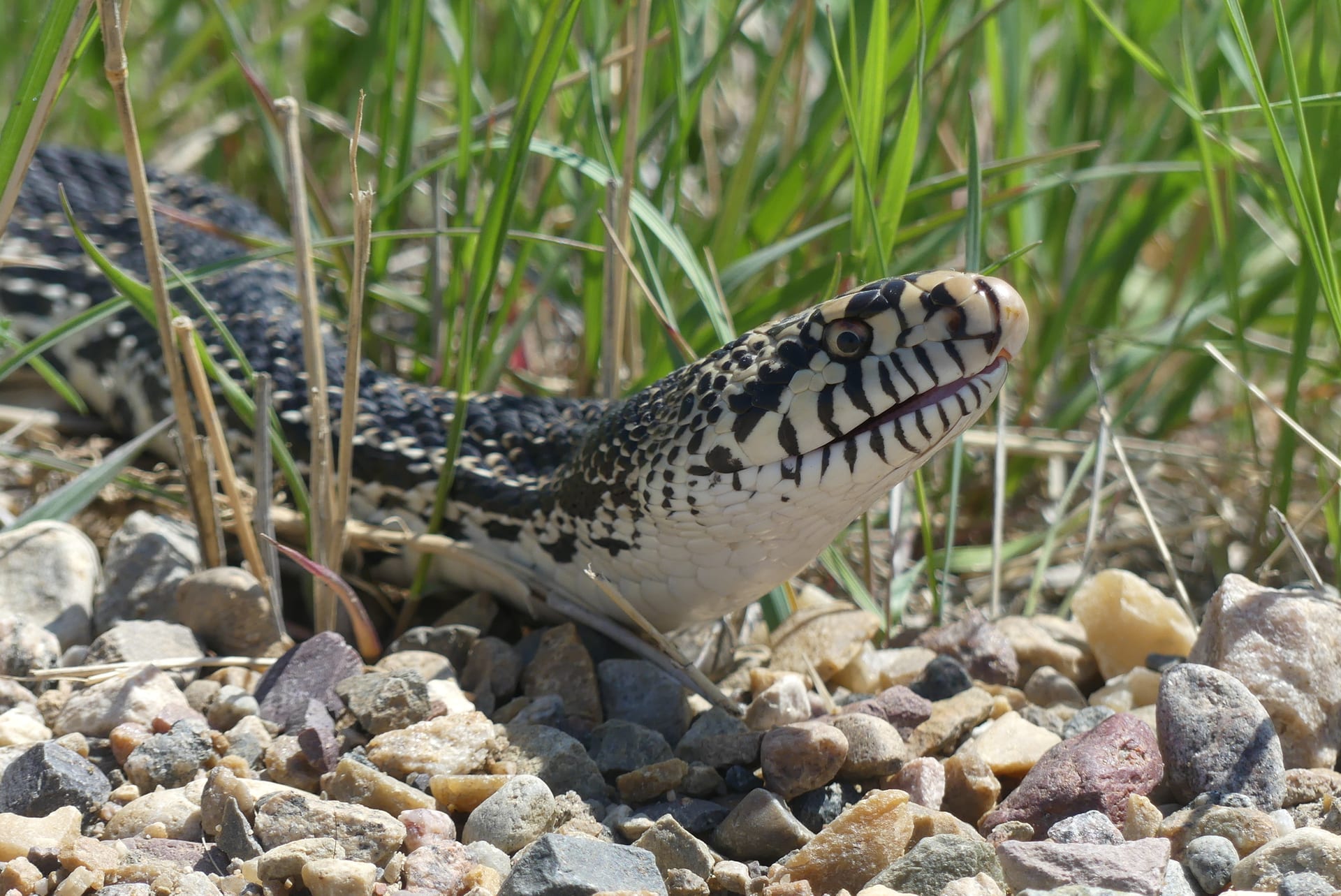
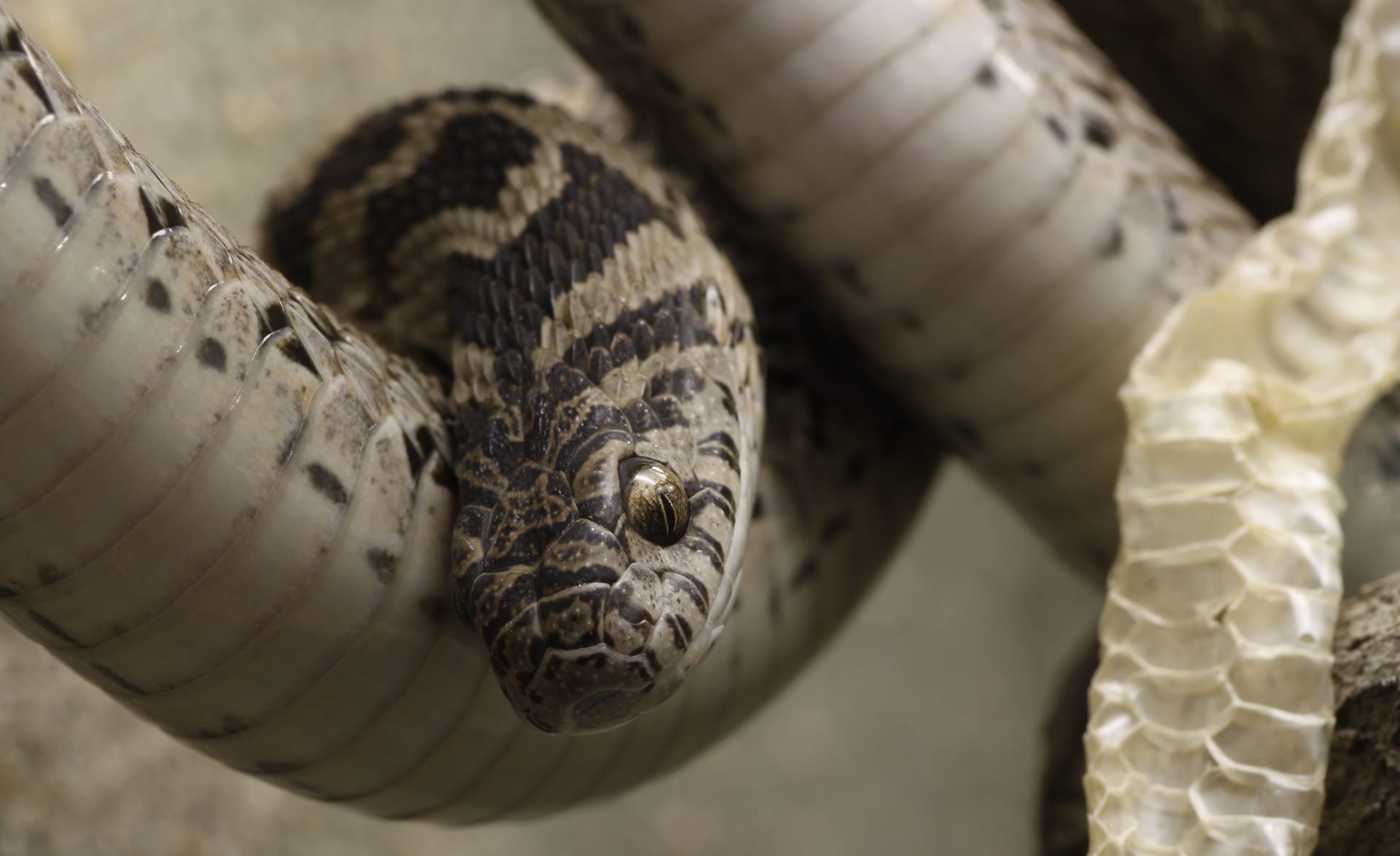
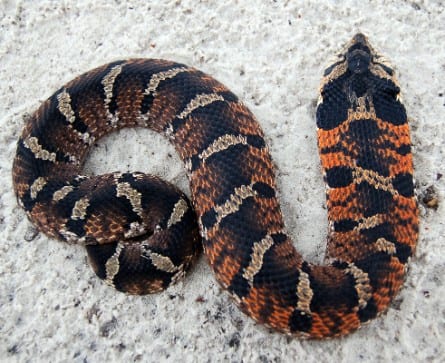
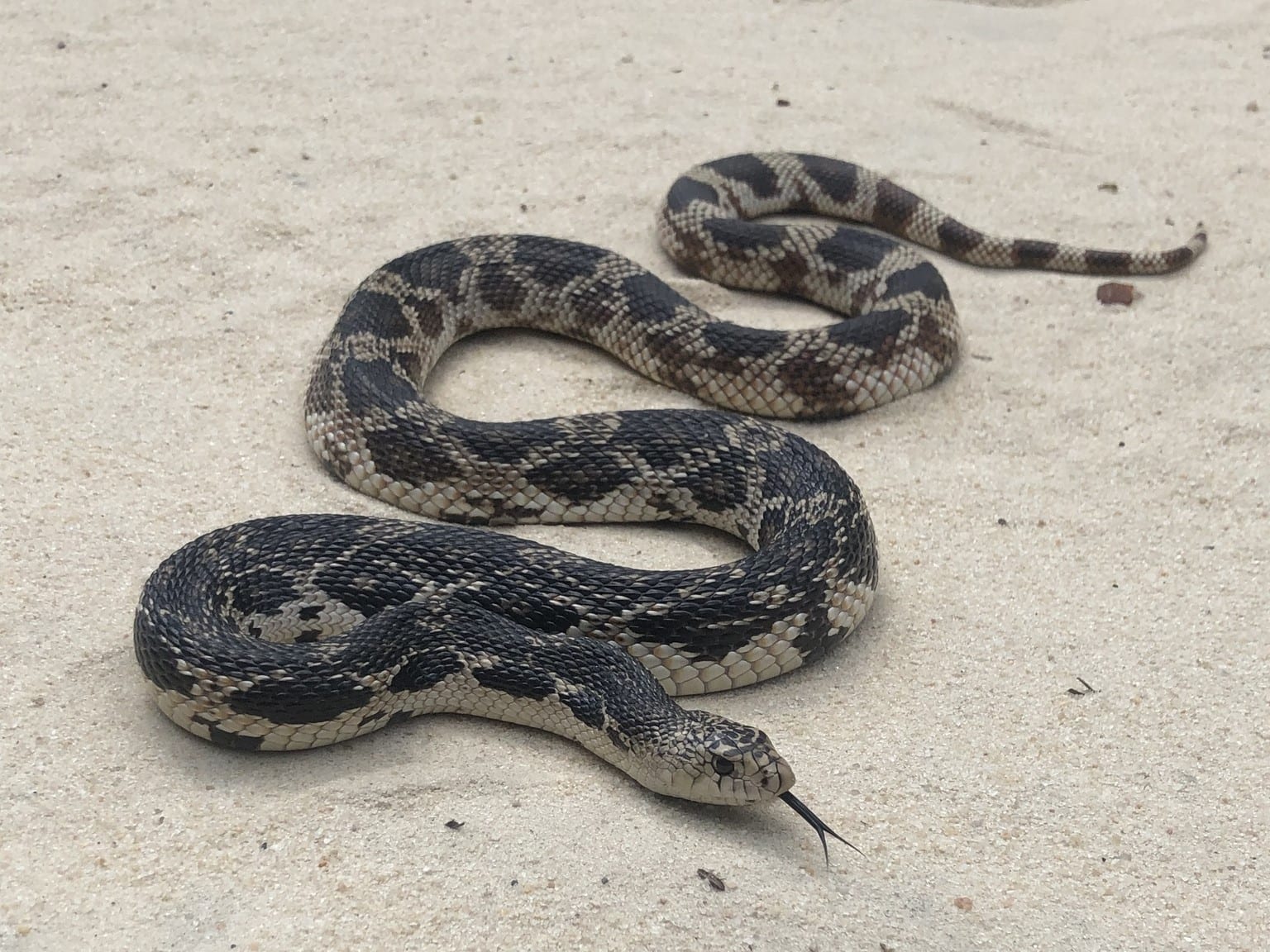
A large colubrid of the sandy-soiled southeastern United States, patterned with dark blotches over a white or pale brown ground. Adults reach 120-230 cm, are powerfully built, dig readily and produce a very loud defensive hiss.
Difficulty
Intermediate
Lifespan
Over 20 years in captivity
Size
120-230cm
Humidity
40〜70%
Diet
Frozen-thawed mice and rats, poultry such as quail
About
Pituophis melanoleucus is a large non-venomous colubrid of the southeastern United States. Its scientific name comes from the Latin for black and white, describing the dark brown to reddish blotches set on a pale ground. Adults reach 120-230 cm and are heavily muscled. The head is small and slightly pointed with an enlarged rostral scale, an adaptation for digging in sandy soil. After spring mating, three to 24 eggs are laid from June to August in burrows the snake excavates itself, and communal nests where several females lay in one place are known. Incubation takes 64-79 days and hatchlings measure 33-45 cm. The species is famous for the loud hiss produced by a flap in its throat, and it can live over 20 years in captivity.
Source: Wikipedia (CC BY-SA 4.0)
Lifespan of the Pine Snake
The Pine Snake lives Over 20 years in captivity.
Size of the Pine Snake
The Pine Snake grows to 120-230cm.
Basic Info
Origin
The southeastern United States (New Jersey, Virginia, the Carolinas, Georgia, Alabama, Florida and neighbouring states), in pine woodland on sandy soils
Lifespan
Over 20 years in captivity
Size
120-230cm
Humidity
40〜70%
Care Specifications
Semi-aggressiveSolitaryBreeding: Moderate
Sources: Reptiles Magazine: Pine Snake Care Sheet / Reptile Database / Wikipedia (English)
References & Sources
Edited & verified by: BreederDirect editorial team
The taxonomic, regulatory, and husbandry data on this page are compiled and verified against the authoritative primary sources below.
Taxonomy & Authority
Accepted name: Pituophis melanoleucus (Daudin, 1803)
Synonyms: Coluber melanoleucus Daudin, 1803, Churchillia bellona Baird & Girard, 1852, Pituophis melanoleucus lodingi Blanchard, 1924
Authority databases: Reptile Database
Nomenclature follows global taxonomic authority databases.
Regulations & Conservation Status
Not CITES-listedIUCN LC · Least Concern
Not listed in the appendices of the Washington Convention. It does not fall under the specific animals listed in the Order for Enforcement of the Law Concerning the Protection and Management of Animals, nor is it designated as an invasive alien species.
Sources: CITES Appendices (species not listed) / Order for Enforcement of the Act on Welfare and Management of Animals (list of designated animals)
Regulations may change. Always verify the latest information with the relevant authorities.
Pine Snake Listings
Loading latest listingsFind listings for this species