Ball Python Morph Market Overview: Understanding Popular Variety Price Trends and Future Outlook
This article explains the mechanisms of the ball python color morph market, price trends of popular varieties, and key points for selecting varieties from an investment perspective.

Key Takeaways
This article explains the mechanisms of the ball python color morph market, price trends of popular varieties, and key points for selecting varieties from an investment perspective.
Related Species
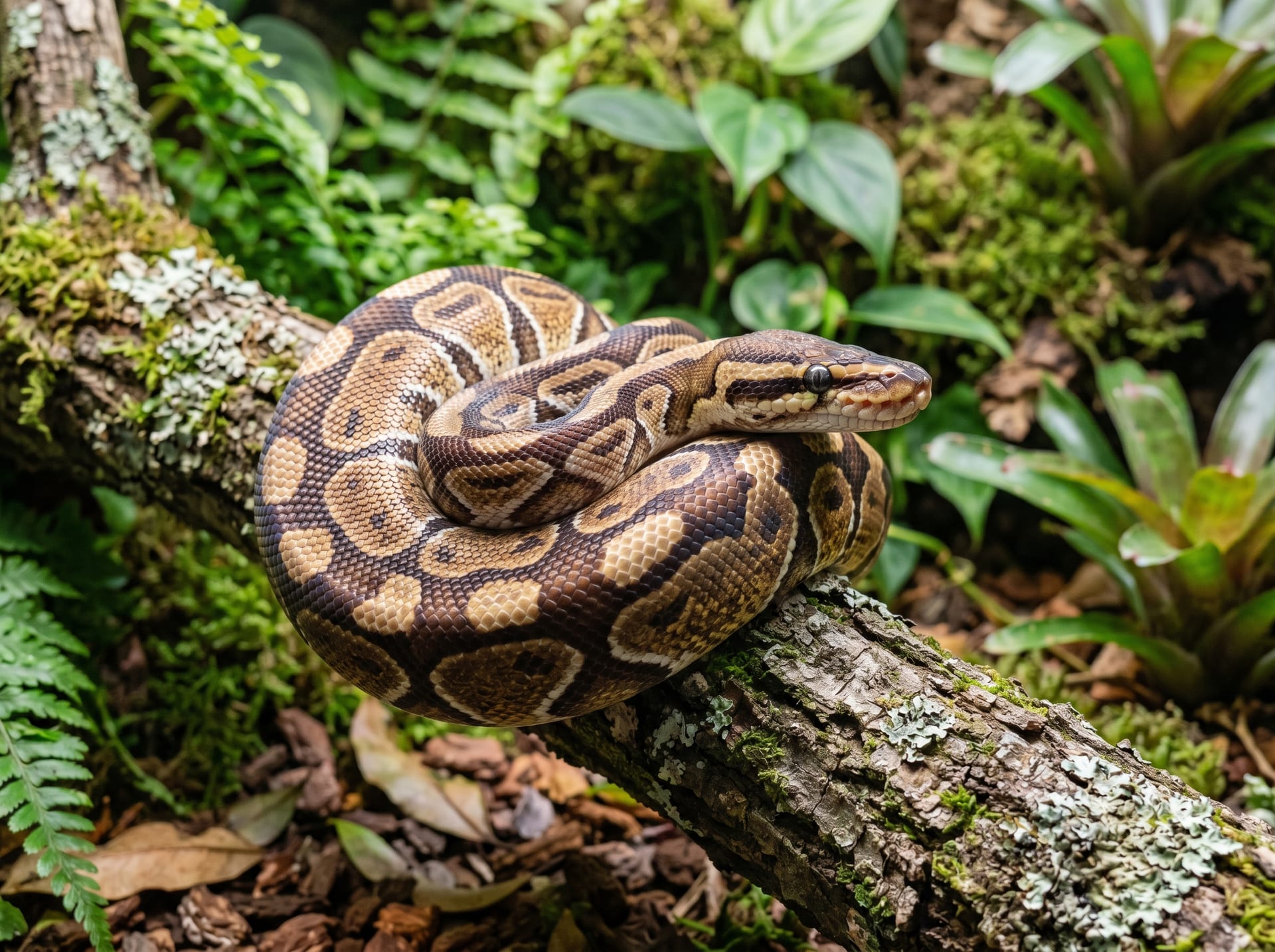
The ball python (Python regius), also known as the royal python, is one of the most kept pet snakes in the world. Its appeal lies in the endless variety of body colors and patterns created by genetic mutations (morphs). Over decades, breeders have combined these morphs, and today thousands of combo morphs exist. In this article, we explain the mechanisms of the morph market, price trends, and key points for selecting varieties.
Ball Python Morph Market History and Present
The morph market is said to have begun in 1992 when the first albino ball python sold for $75,000. At the time, it was a shocking event for the entire industry—"Could anyone really pay that much for a reptile?" Subsequently, foundational morphs like pied, spider, and axanthic were discovered and stabilized in succession, leading to explosive market growth in the 2000s.
Today, new morphs are discovered and developed every year, creating a repeating cycle in which fresh morphs command premium prices while established varieties see dramatic price drops. This "price cycle" is the defining characteristic of the ball python market, and the ability to strategically select varieties as a breeder directly impacts business sustainability.
Morph Genetics and Price Relationships
To understand ball python morph pricing, knowledge of genetic inheritance patterns is essential. They can be broadly divided into three categories.
Dominant Morphs are expressed even in the heterozygous state (single copy), making them easy to produce. They spread rapidly and tend to drop in price quickly. Pastel and spider are prime examples.
Co-dominant Morphs display different phenotypes in the heterozygous versus homozygous state. For example, super pastel—the homozygous form of pastel—has a distinctive appearance and adds value. While production requires planning, the ability to achieve results in a relatively short timeframe is appealing.
Recessive Morphs, exemplified by albino and pied, require inheriting one copy from each parent. Since heterozygous carriers (which appear normal) must be combined over multiple generations to create combos, production is costly and time-consuming. In return, rarity is maintained more easily, and these morphs excel in price stability.
Double recessive (combinations of two recessive morphs) and triple recessive morphs require vast numbers of individuals and generations to reproduce, so their rarity tends to persist in the market long-term.