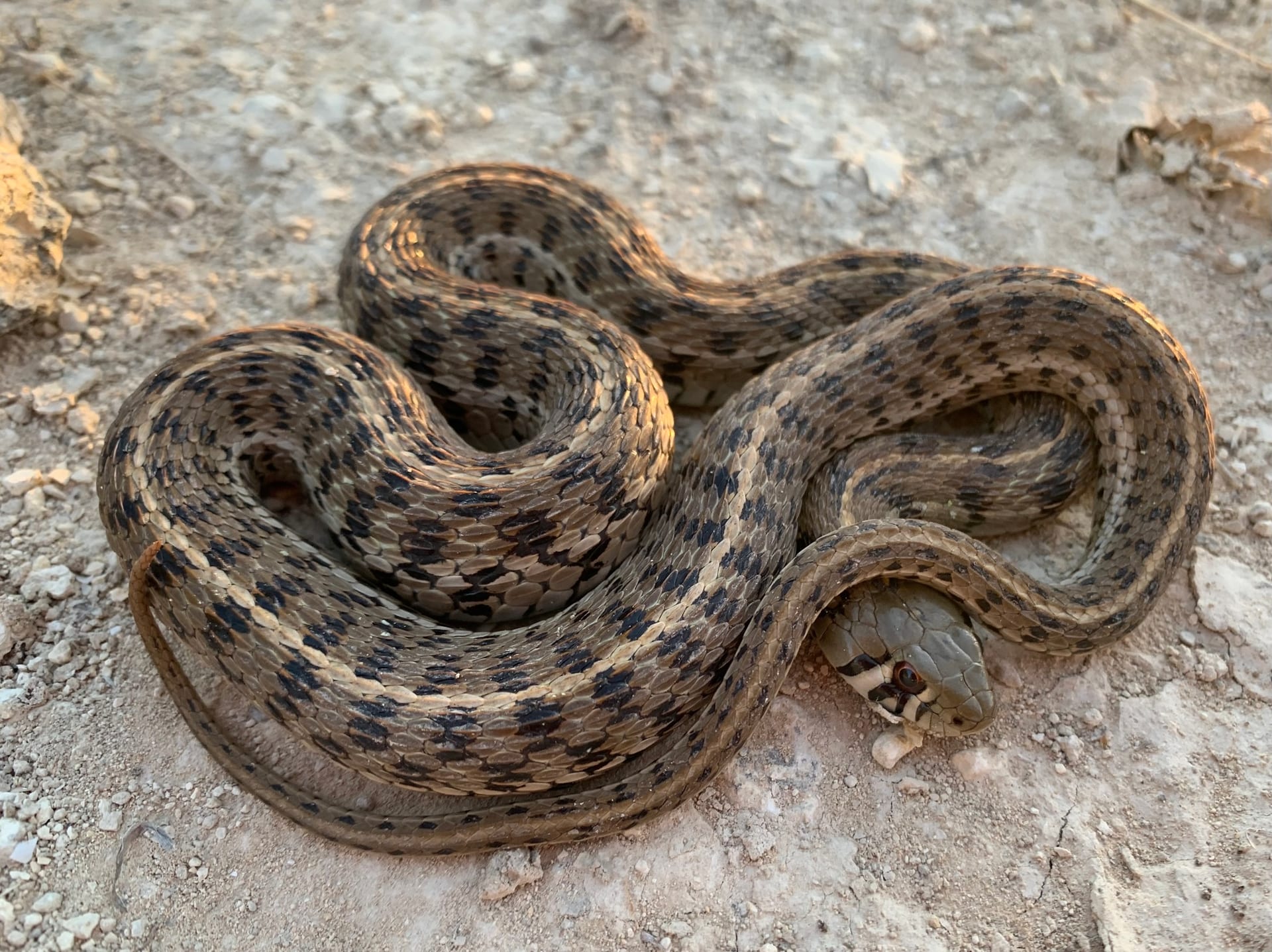
Source: Wikimedia Commons
Checkered Garter Snake
BeginnerThamnophis marcianus
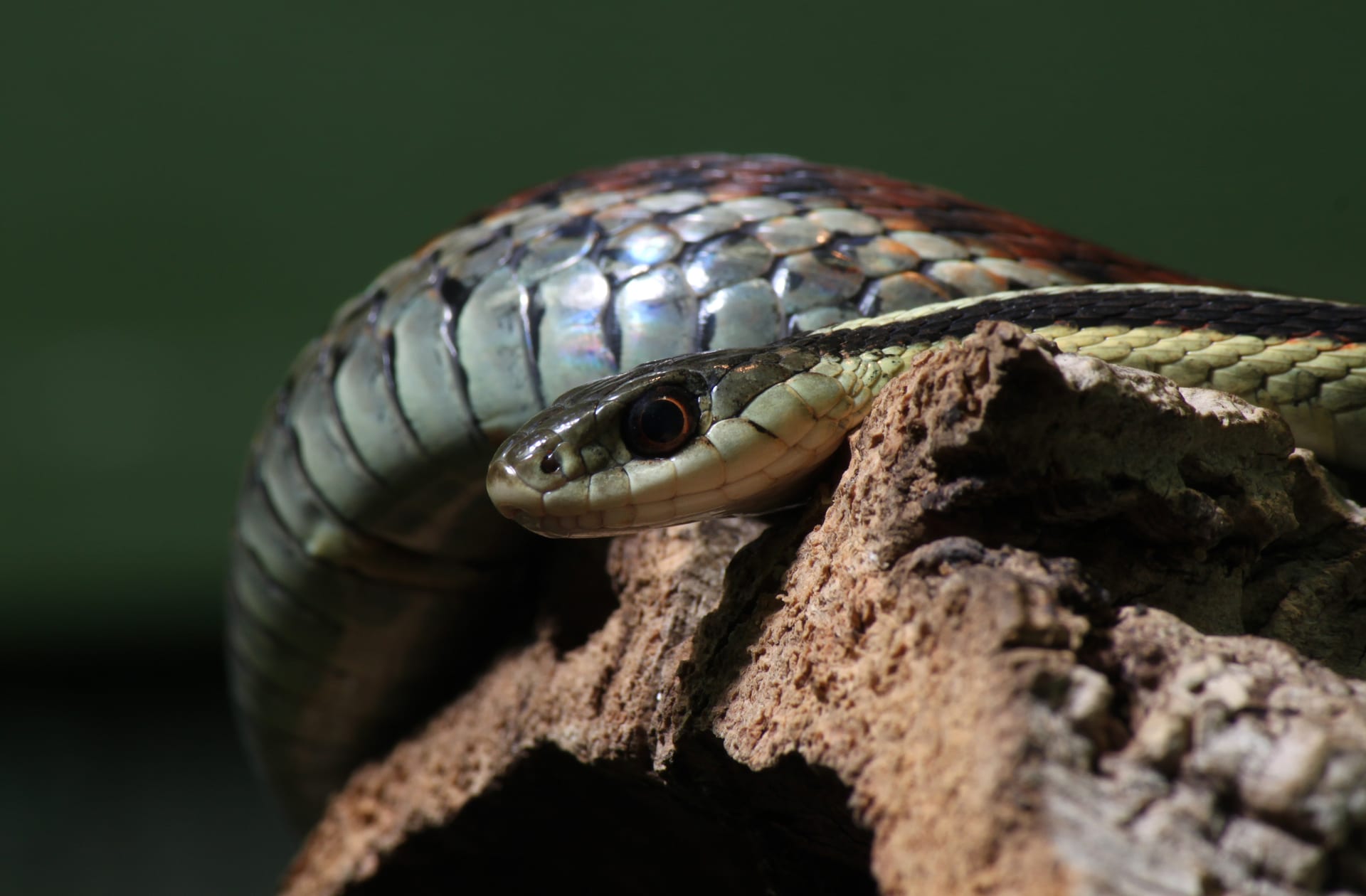
A garter snake with a distinct black checkerboard pattern over a greenish ground. It ranges from the southwestern United States into Central America and usually stays a compact 46-61 cm.
Difficulty
Beginner
Lifespan
10 years or more
Size
46-61cm (max 107cm)
Humidity
35〜60%
Diet
Frozen-thawed mice, fish, earthworms, amphibians
About
Thamnophis marcianus ranges from the southwestern United States through Mexico into Central America. Its name comes from the black checkerboard pattern along a greenish back, and the head markings are also distinctive. Adults are usually 46-61 cm and reach a maximum of 107 cm. It lives in desert, grassland, shrubland and forest from sea level to 2,200 m, always favouring places close to water. Unlike most garter snakes, which are diurnal, this species is at least partly nocturnal. It eats frogs, small fish and earthworms; in captivity it will take mice, though individuals can become fussy feeders. It is ovoviviparous, parthenogenesis has been reported, and two subspecies are recognised.
Source: Wikipedia (CC BY-SA 4.0)
Lifespan of the Checkered Garter Snake
The Checkered Garter Snake lives 10 years or more.
Size of the Checkered Garter Snake
The Checkered Garter Snake grows to 46-61cm (max 107cm).
Basic Info
Origin
The southwestern United States (Texas, New Mexico, Arizona and neighbouring states), Mexico, Belize and Central America, in desert, grassland and shrubland near water
Lifespan
10 years or more
Size
46-61cm (max 107cm)
Humidity
35〜60%
Care Specifications
PeacefulSolitaryBreeding: Easy
Sources: ReptiFiles: Garter Snake Care Sheet / Reptile Database / Wikipedia (English)
References & Sources
Edited & verified by: BreederDirect editorial team
The taxonomic, regulatory, and husbandry data on this page are compiled and verified against the authoritative primary sources below.
Taxonomy & Authority
Accepted name: Thamnophis marcianus (Baird & Girard, 1853)
Synonyms: Eutainia marciana Baird & Girard, 1853, Eutaenia elegans marciana Cope, 1900, Thamnophis ruthveni Hartweg & Oliver, 1938
Authority databases: Reptile Database
Nomenclature follows global taxonomic authority databases.
Regulations & Conservation Status
Not CITES-listedIUCN LC · Least Concern
Not listed in the appendices of the Washington Convention. It does not fall under the specific animals listed in the Order for Enforcement of the Law Concerning the Protection and Management of Animals, nor is it designated as an invasive alien species.
Sources: CITES Appendices (species not listed) / Order for Enforcement of the Act on Welfare and Management of Animals (list of designated animals)
Regulations may change. Always verify the latest information with the relevant authorities.
Checkered Garter Snake Listings
Loading latest listingsFind listings for this species