Source: Wikimedia Commons
Bullsnake
BeginnerPituophis catenifer
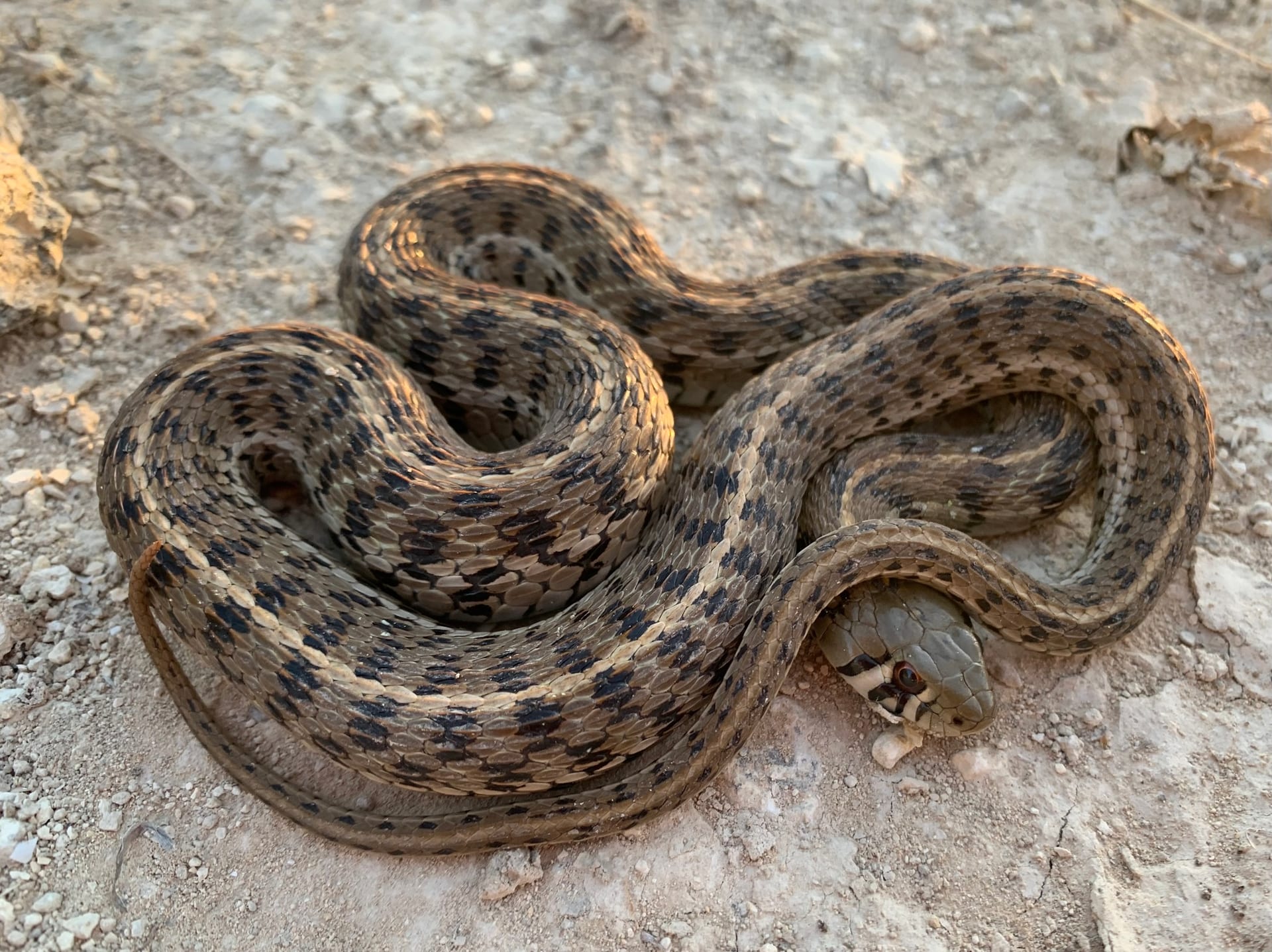
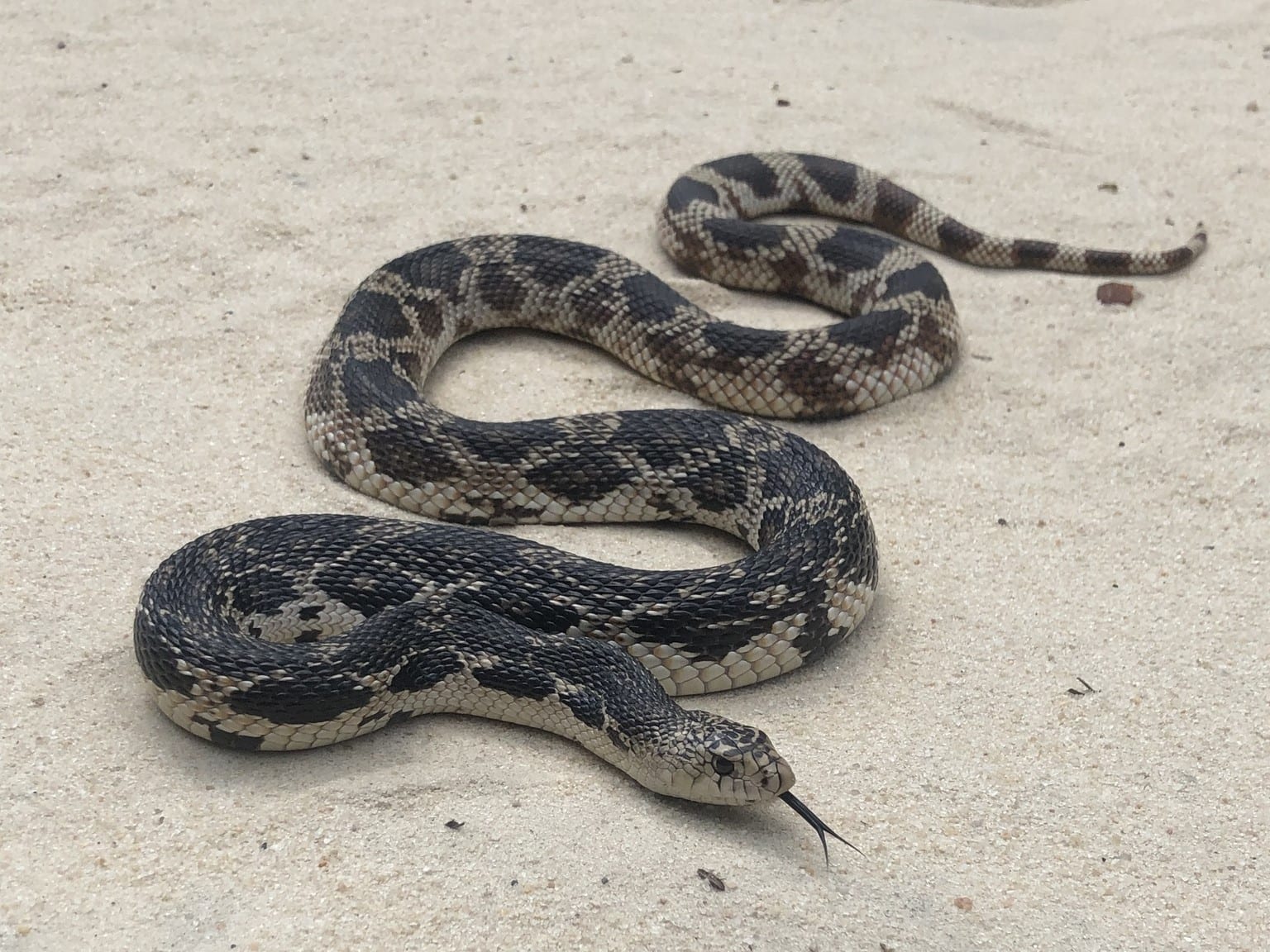
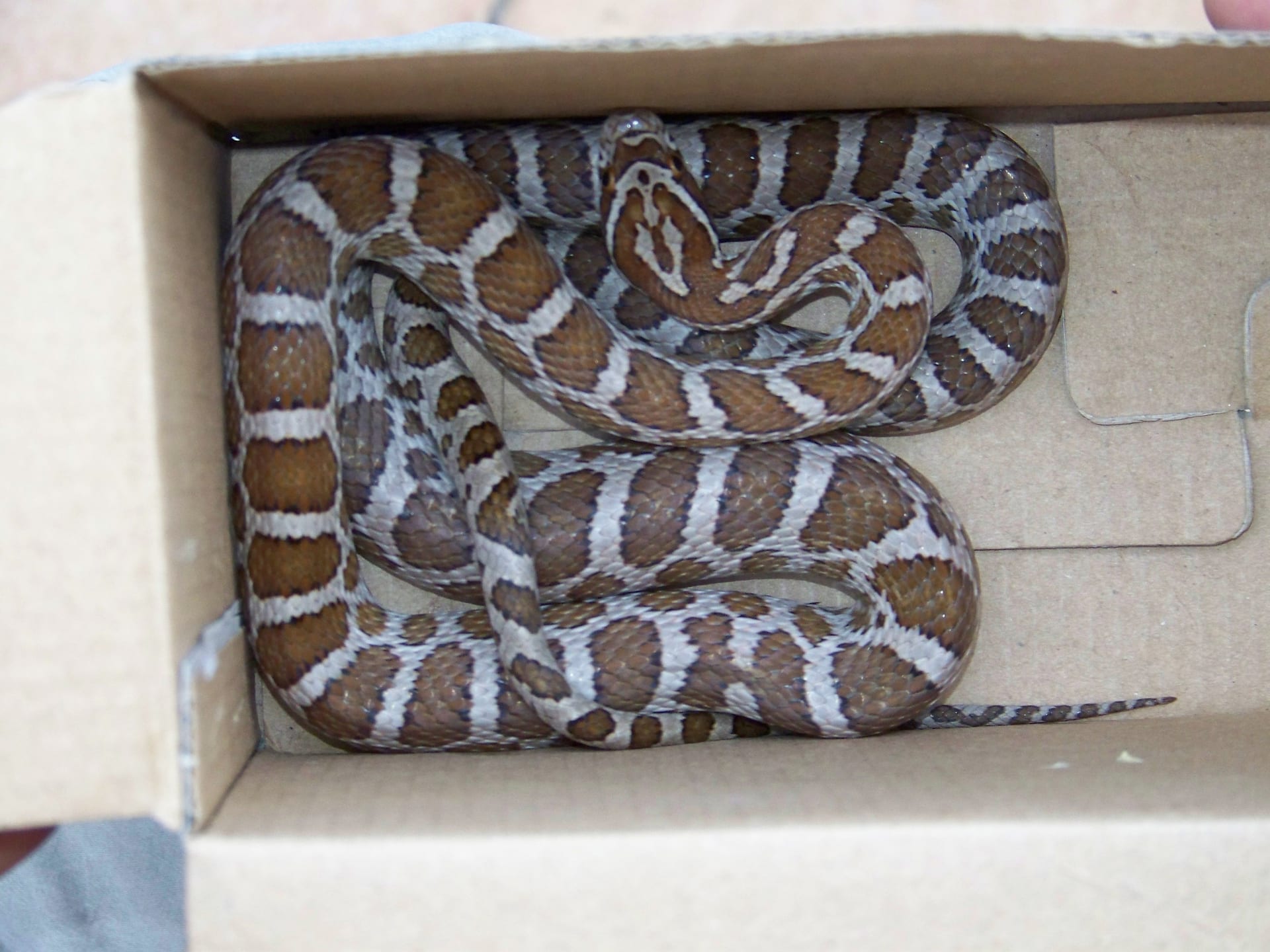
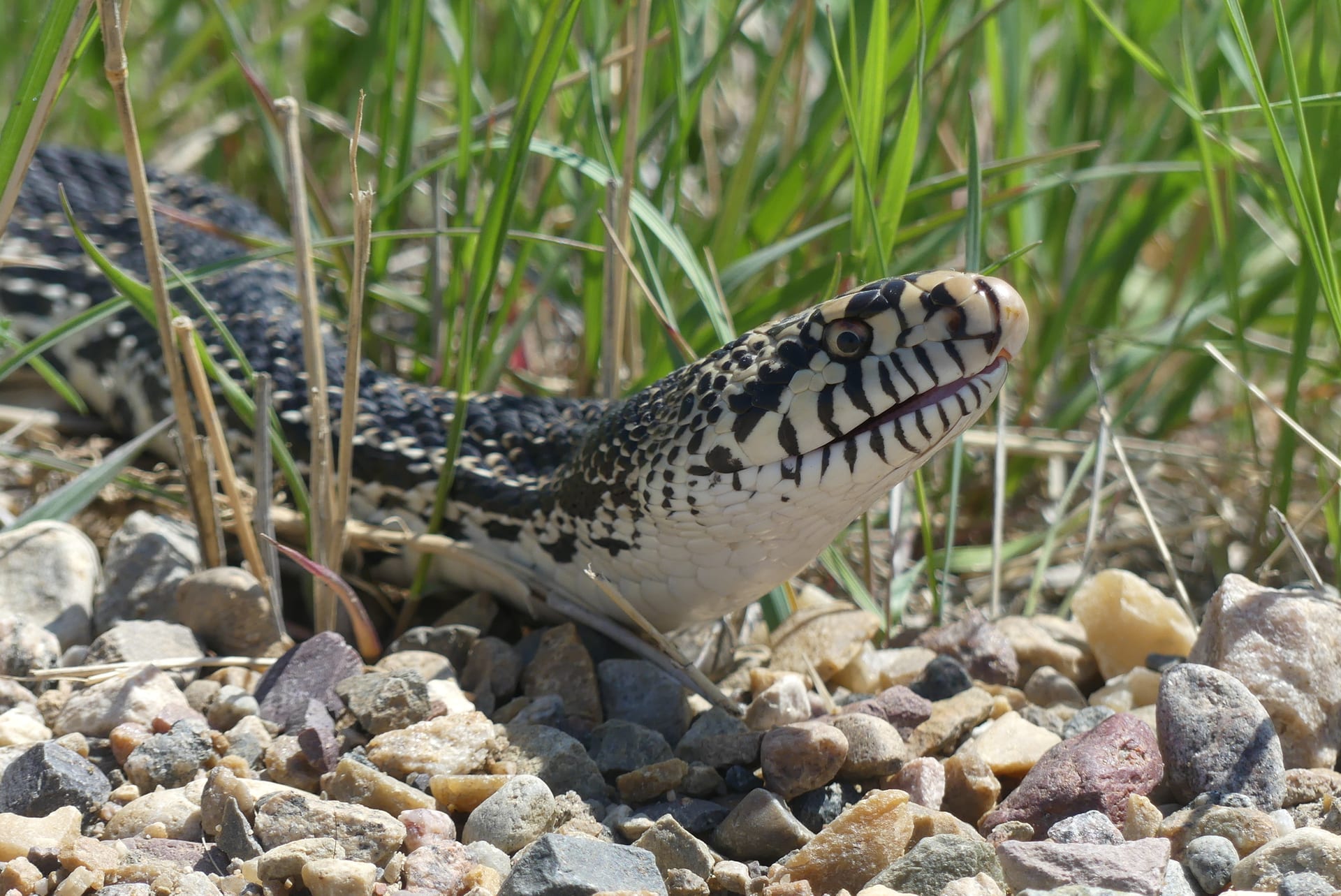
A large North American colubrid with big dark blotches over a sandy brown ground. Adults are 91-213 cm and heavy-bodied, and when threatened they inflate the body and vibrate the tail in imitation of a rattlesnake.
Difficulty
Beginner
Temperature
25〜32℃
Lifespan
About 15 years on average, with records of over 30 years
Size
91-213cm
Humidity
40〜70%
Diet
Frozen-thawed mice and rats
About
Pituophis catenifer is a large colubrid found widely across North America, with nine subspecies currently recognised. Large dark brown to black blotches run along a yellowish to sandy brown ground, with smaller spots on the flanks. Adults are 91-213 cm and heavy-bodied. When threatened it inflates its body, flattens the head into a triangle and rattles its tail against the ground, so it is often mistaken for a rattlesnake, but it has no rattle and is non-venomous. An epiglottal keel in the throat lets it produce a remarkably loud hiss. It is diurnal, inquisitive and given to burrowing. In captivity it has a voracious appetite, so overfeeding must be avoided.
Source: Wikipedia (CC BY-SA 4.0)
Lifespan of the Bullsnake
The Bullsnake lives About 15 years on average, with records of over 30 years.
Size of the Bullsnake
The Bullsnake grows to 91-213cm.
Basic Info
Origin
North America, from British Columbia, Alberta and Saskatchewan in Canada through the western and central United States into Mexico, in grassland, desert and open woodland
Lifespan
About 15 years on average, with records of over 30 years
Size
91-213cm
Temperature
25〜32℃
Care Specifications
PeacefulSolitaryBreeding: Moderate
Sources: Reptiles Magazine: Gopher Snake Care Sheet / Reptile Database / Wikipedia (English)
References & Sources
Edited & verified by: BreederDirect editorial team
The taxonomic, regulatory, and husbandry data on this page are compiled and verified against the authoritative primary sources below.
Taxonomy & Authority
Accepted name: Pituophis catenifer (Blainville, 1835)
Synonyms: Coluber catenifer Blainville, 1835, Pituophis sayi (Schlegel, 1837), Pituophis melanoleucus catenifer
Authority databases: Reptile Database
Nomenclature follows global taxonomic authority databases.
Regulations & Conservation Status
Not CITES-listedIUCN LC · Least Concern
Not listed in the appendices of the Washington Convention. It does not fall under the specific animals listed in the Order for Enforcement of the Law Concerning the Protection and Management of Animals, nor is it designated as an invasive alien species.
Sources: CITES Appendices (species not listed) / Order for Enforcement of the Act on Welfare and Management of Animals (list of designated animals)
Regulations may change. Always verify the latest information with the relevant authorities.
Bullsnake Listings
Loading latest listingsFind listings for this species