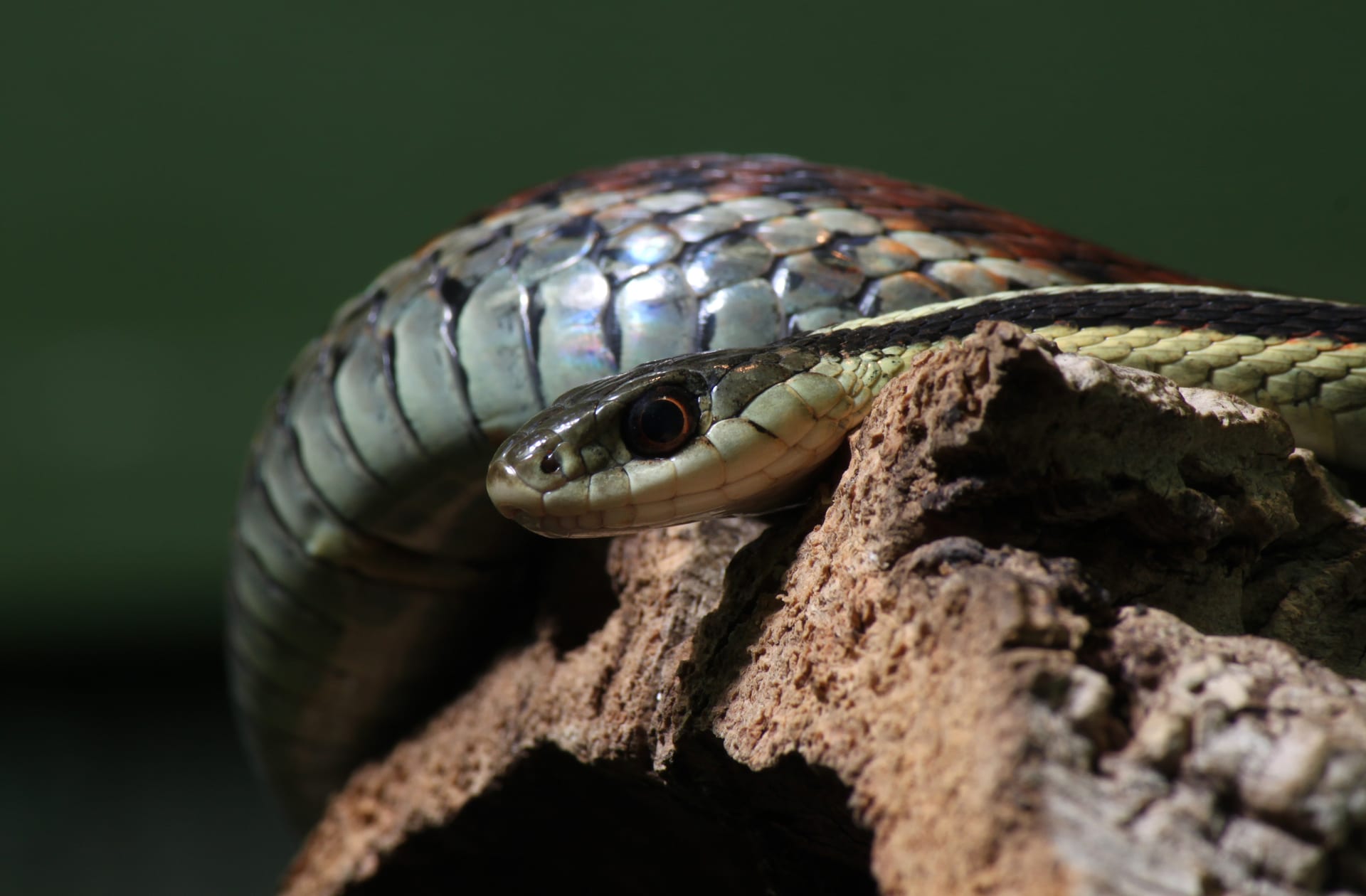
Source: Wikimedia Commons
Common Garter Snake
BeginnerThamnophis sirtalis
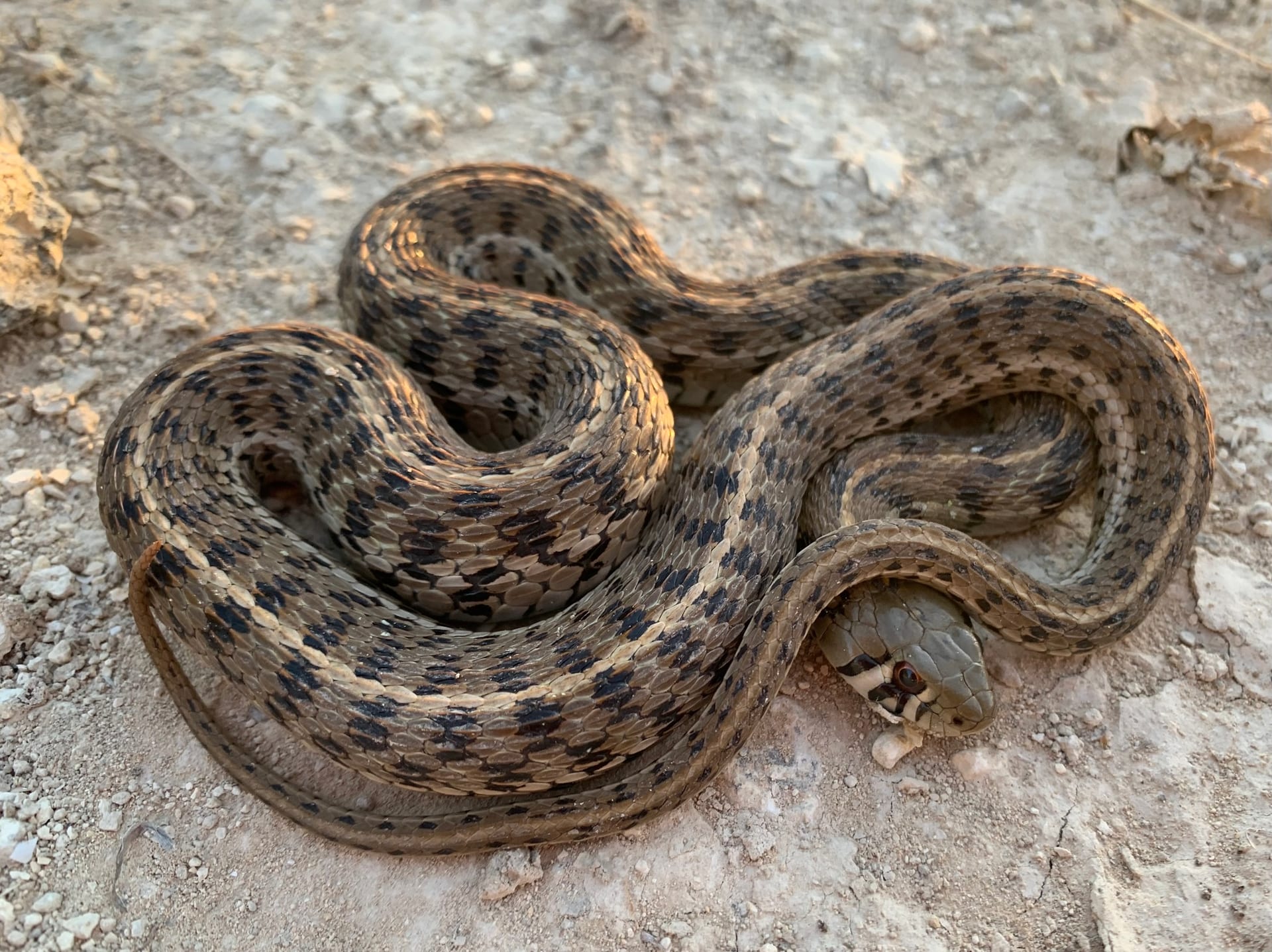
A small to medium colubrid found widely across North America, with yellow stripes over a black, brown or green ground colour. Averaging about 55 cm, it is hardy, tolerates group housing and suits beginners.
Difficulty
Beginner
Lifespan
10 years or more
Size
About 55cm on average (max 137cm)
Humidity
35〜60%
Diet
Frozen-thawed mice, fish, earthworms, amphibians
About
Thamnophis sirtalis is the most widely distributed snake in North America, ranging from the northwestern reaches of Canada to the southern tip of Florida. The typical pattern is yellow longitudinal stripes over a black, brown or green ground, but geographic variation is extensive and twelve subspecies are recognised. It averages about 55 cm and reaches a maximum of 137 cm. Diurnal, it favours the water's edge and both swims and climbs well. It eats fish, amphibians and earthworms, and in captivity takes frozen-thawed mice. Its saliva is mildly venomous but harmless to people. It is ovoviviparous and prolific, and in cold regions it overwinters communally. Small, hardy and tolerant of group housing, it is treated as a beginner's snake in Europe and North America, and several morphs are traded.
Source: Wikipedia (CC BY-SA 4.0)
Lifespan of the Common Garter Snake
The Common Garter Snake lives 10 years or more.
Size of the Common Garter Snake
The Common Garter Snake grows to About 55cm on average (max 137cm).
Basic Info
Origin
North America, from southern Canada across the United States into Mexico, in forests, grasslands, wetlands and near watercourses
Lifespan
10 years or more
Size
About 55cm on average (max 137cm)
Humidity
Care Specifications
PeacefulGroupBreeding: Easy
Sources: ReptiFiles: Garter Snake Care Sheet / Reptile Database / Wikipedia (English)
References & Sources
Edited & verified by: BreederDirect editorial team
The taxonomic, regulatory, and husbandry data on this page are compiled and verified against the authoritative primary sources below.
Taxonomy & Authority
Accepted name: Thamnophis sirtalis (Linnaeus, 1758)
Synonyms: Coluber sirtalis Linnaeus, 1758, Eutainia sirtalis Baird & Girard, 1853, Tropidonotus sirtalis Garman, 1884
Authority databases: Reptile Database
Nomenclature follows global taxonomic authority databases.
Regulations & Conservation Status
Not CITES-listedIUCN LC · Least Concern
Not listed in the appendices of the Washington Convention. It does not fall under the specific animals listed in the Order for Enforcement of the Law Concerning the Protection and Management of Animals, nor is it designated as an invasive alien species.
Sources: CITES Appendices (species not listed) / Order for Enforcement of the Act on Welfare and Management of Animals (list of designated animals)
Regulations may change. Always verify the latest information with the relevant authorities.
Common Garter Snake Listings
Loading latest listingsFind listings for this species