Snake Feeding Schedule Guide by Species | Optimizing Size and Frequency
A guide to snake feeding schedules by species. Includes guidelines for food size, feeding frequency, and how to handle regurgitation.
Key Takeaways
A guide to snake feeding schedules by species. Includes guidelines for food size, feeding frequency, and how to handle regurgitation.
Related Species
When keeping snakes, feeding is one of the most important care considerations. Unlike mammalian pets, snakes need to eat only once every few days to several weeks. Mistakes in frequency or food size can lead to digestive problems, obesity, or worst-case regurgitation causing physical weakness. This article systematically explains feeding schedules for popular species, how to choose the right food size, proper thawing methods, and troubleshooting tips. Those interested in advancing to outdoor keeping should also refer to [[/column/reptile-turtle-pond-outdoor]].
Basic Rules for Choosing Food Size
The first thing to remember about feeding is "food size." The basic guideline is to choose food with a diameter equal to or 1.0 to 1.5 times the thickest part of the snake's body.
Snakes can swallow items larger than their head because their jaw bones are mobile. However, just because they "can" swallow it doesn't mean it's "appropriate."
Risks of Incorrect Size
- If too small: Insufficient nutrient intake slows growth. The snake's stress increases because it has an appetite but cannot be satisfied.
- If too large: Risk of regurgitation increases. Excessive strain on the digestive system can lead to internal organ damage in the worst cases.
Reviewing food size frequently according to growth stages is the foundation of healthy snake keeping.
Feeding Schedules by Species and Growth Stage
Snakes vary greatly in metabolism rate and growth pace depending on species. Below is a summary of guidelines for major kept species.
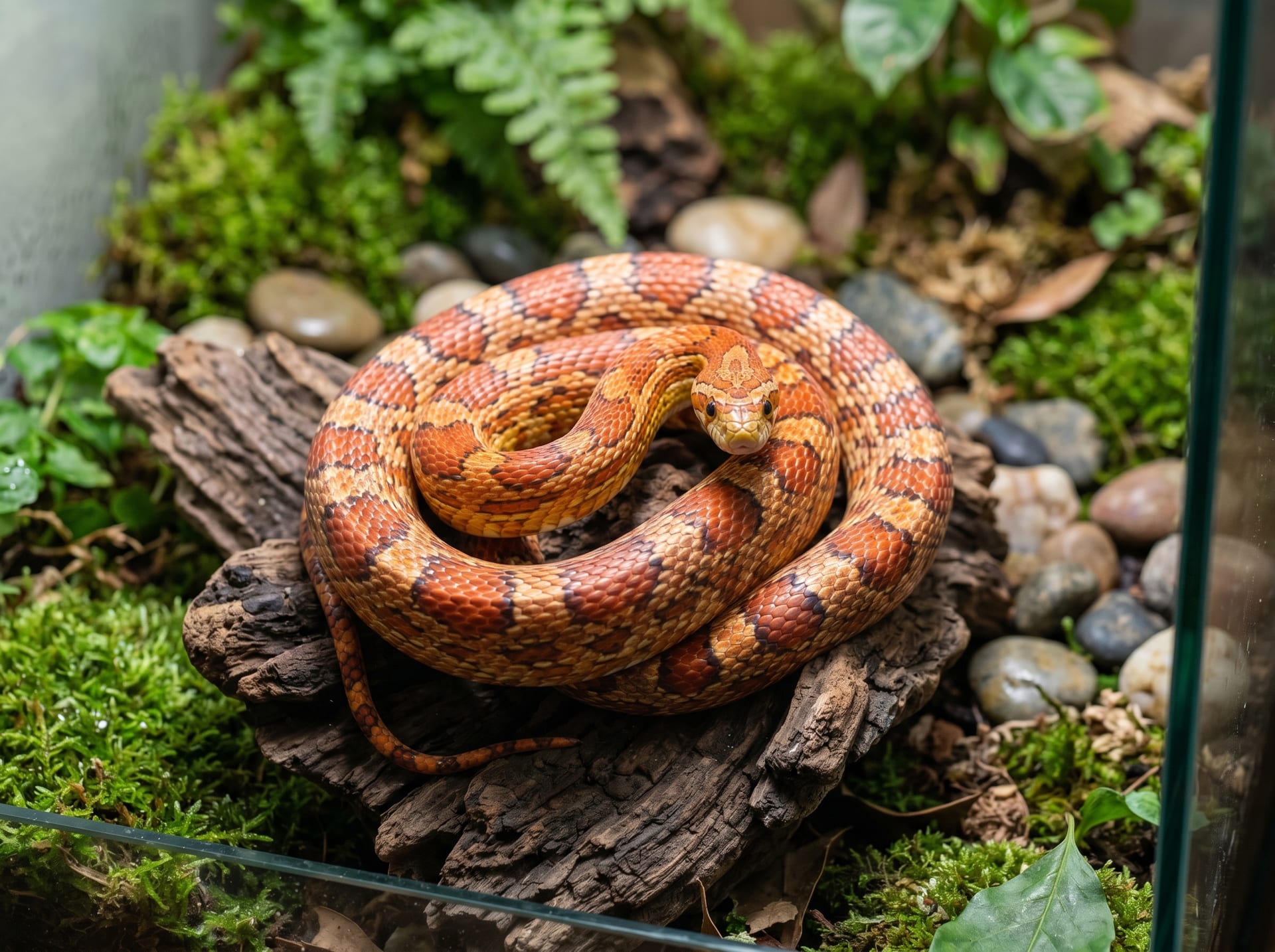
Corn Snake (Pantherophis guttatus)
A native of North America and a classic species that is easy for beginners to handle. It is characterized by being relatively small and having a strong appetite, making feeding easy to control.
- Hatchling (up to 30 cm): Pink mice (newborn mice) / Once every 5-7 days
- Juvenile (30-80 cm): Fuzzy mice (mice beginning to grow fur) / Once every 7-10 days
- Adult (80 cm+): Adult mice / Once every 10-14 days
Corn snakes eat well but are prone to obesity. The ideal condition is when the body has a nice roundness—avoid letting it appear too angular and thin, or conversely, too round and fat. Monitor regularly.
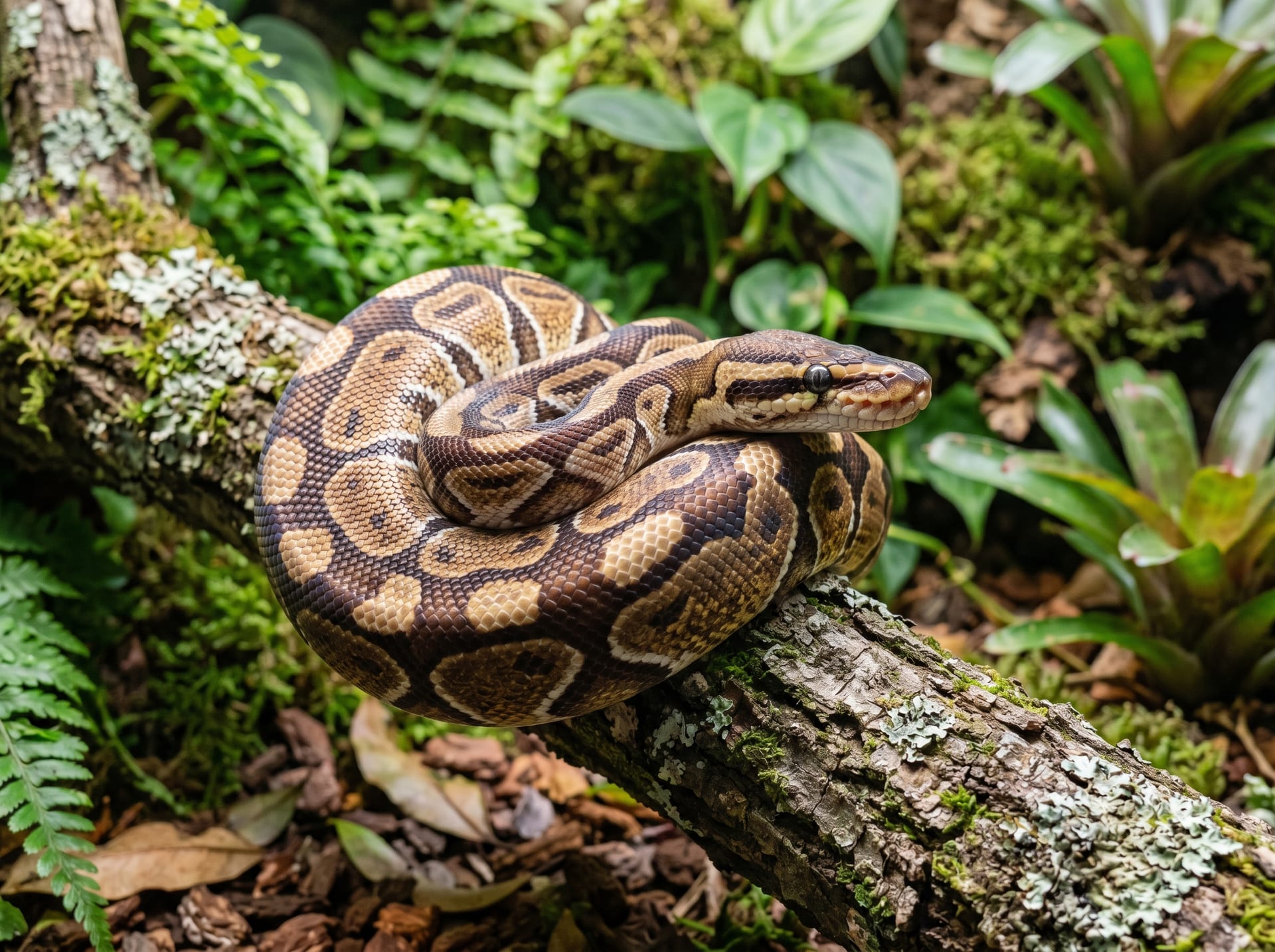
Ball Python (Python regius)
Native to Africa, this species is beloved worldwide for its docile temperament and beautiful patterns. However, it is known for temperamental feeding refusals, and many keepers struggle with establishing consistent feeding.
- Hatchling (up to 500g): Hopper mice (furred juvenile mice) / Once every 7 days
- Juvenile (500g-1.5 kg): Adult mice to small rats / Once every 10 days
- Adult (1.5 kg+): Medium to large rats / Once every 14-21 days
Ball pythons may refuse food during breeding season (autumn to winter). As long as weight doesn't drop dramatically, there is no problem observing and waiting. Forcing them to eat causes stress and can worsen the situation.
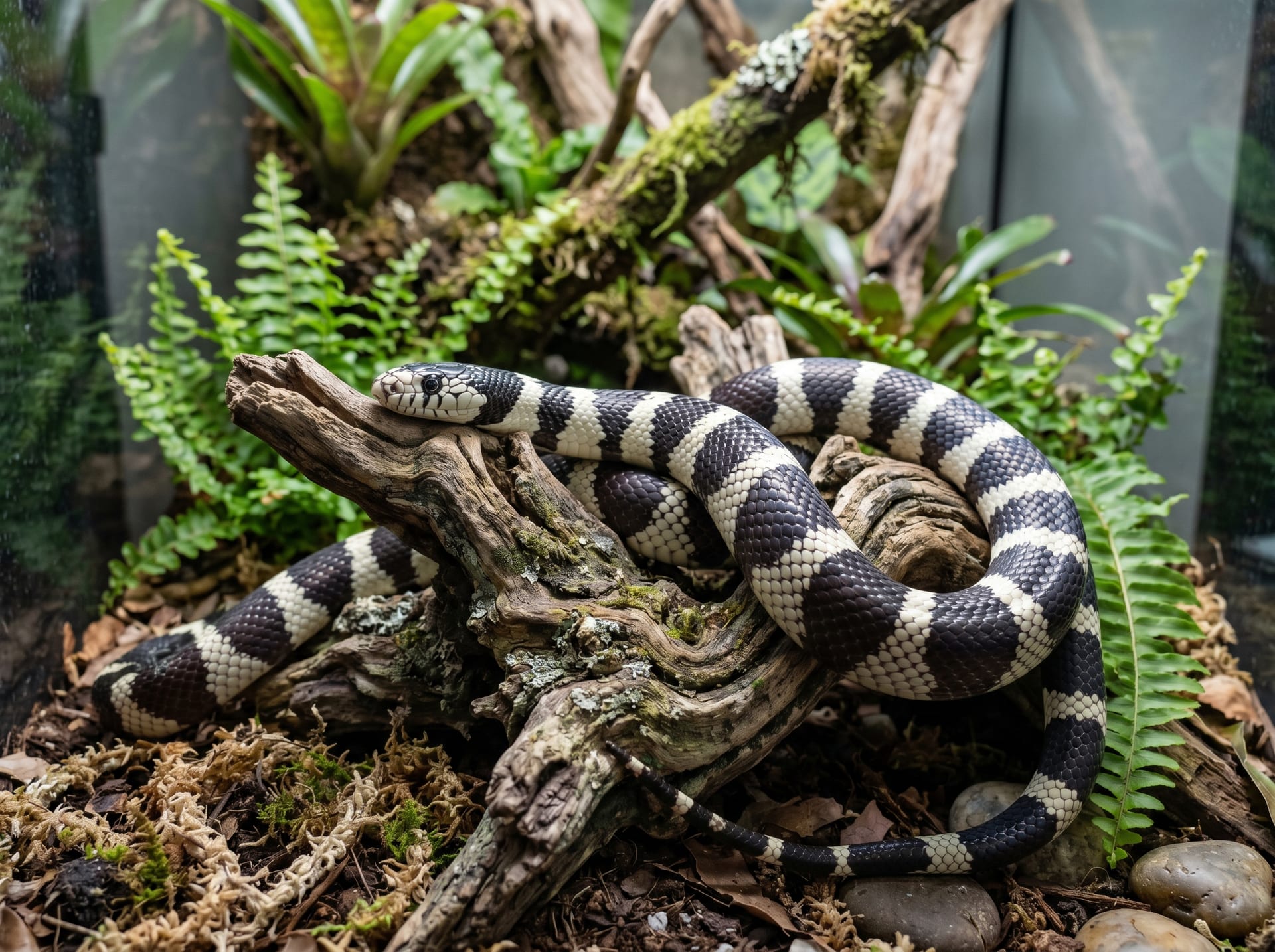
Kingsnake (Lampropeltis spp.)
A medium-sized species distributed throughout North and Central America, with multiple varieties in circulation including California kingsnakes and Mexican black kingsnakes. They are active with a strong appetite, making them easy for beginners to manage.
- Hatchling (up to 40 cm): Pink mice to hopper mice / Once every 5-7 days
- Adult (40 cm+): Adult mice / Once every 7-10 days
Kingsnakes have a habit of preying on other snakes, so care must be taken with multiple snake housing. Moving the snake to a separate container before feeding helps prevent accidental bites and feeding refusals. For ideas about temperature and humidity management with other reptiles, see the setup examples in [[/column/reptile-blue-tongue-skink]].
Proper Thawing and Feeding Procedure for Frozen Prey
In modern snake keeping, frozen mice and frozen rats are the standard due to hygiene and ease of management. Live prey carries the risk of bite wounds, so we strongly recommend transitioning to frozen prey.
Thawing Steps
- Place the frozen prey in a sealed bag, and soak in lukewarm water around 40°C for 15-20 minutes
- After thawing, feel the entire prey with your hand to ensure no cold spots remain
- Lightly dry the surface moisture and hold it by the head with tongs, then present it to the snake's mouth
Thawing temperature is important. If too hot, nutritional value decreases; if too cool, bacteria multiplies easily. 40°C is the optimal temperature range meeting these conditions.
Important Points to Note During and After Feeding
Feeding Timing
- After the snake eats, do not handle for at least 48 hours
- Feed diurnal species in the morning and nocturnal species at night for better feeding response
- Feed only after enclosure temperature is stabilized
If Regurgitation Occurs
Regurgitation suggests that feeding schedule, food size, or temperature may be inappropriate.
- If regurgitation occurs frequently, increase the feeding interval (e.g., from once every 10 days to once every 14 days)
- Reducing food size is also effective
- Low enclosure temperature delays digestion, so adjust with a heating pad
Summary
Snake feeding must be flexibly adjusted according to species, growth stage, and season. The schedules above are merely guidelines; it is important to observe individual differences and establish the optimal rhythm. Regularly check weight and body condition, and build this into long-term health management. Those interested in outdoor keeping or building enclosures for other species should also refer to [[/column/reptile-turtle-pond-outdoor]].
Article Date: July 2026