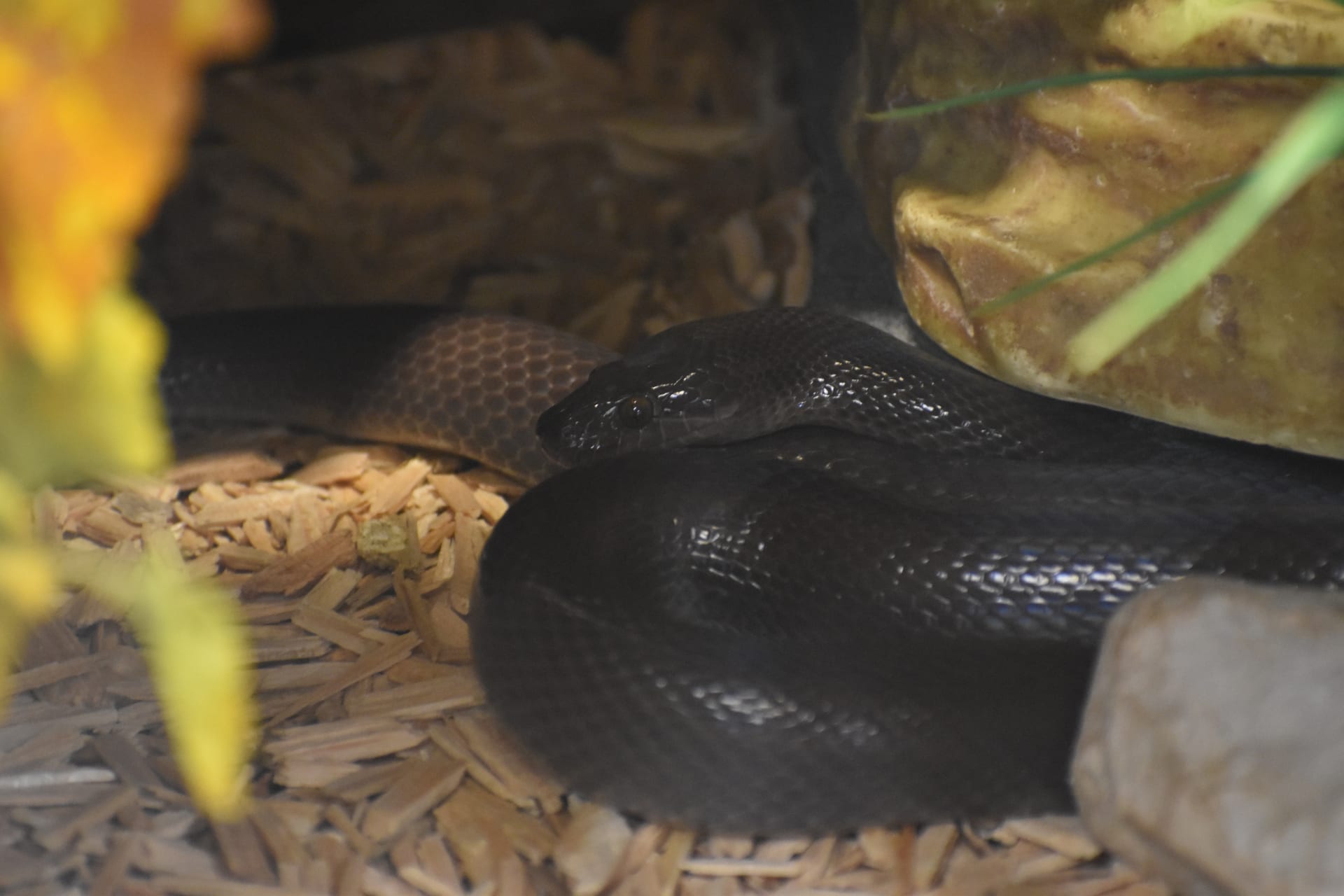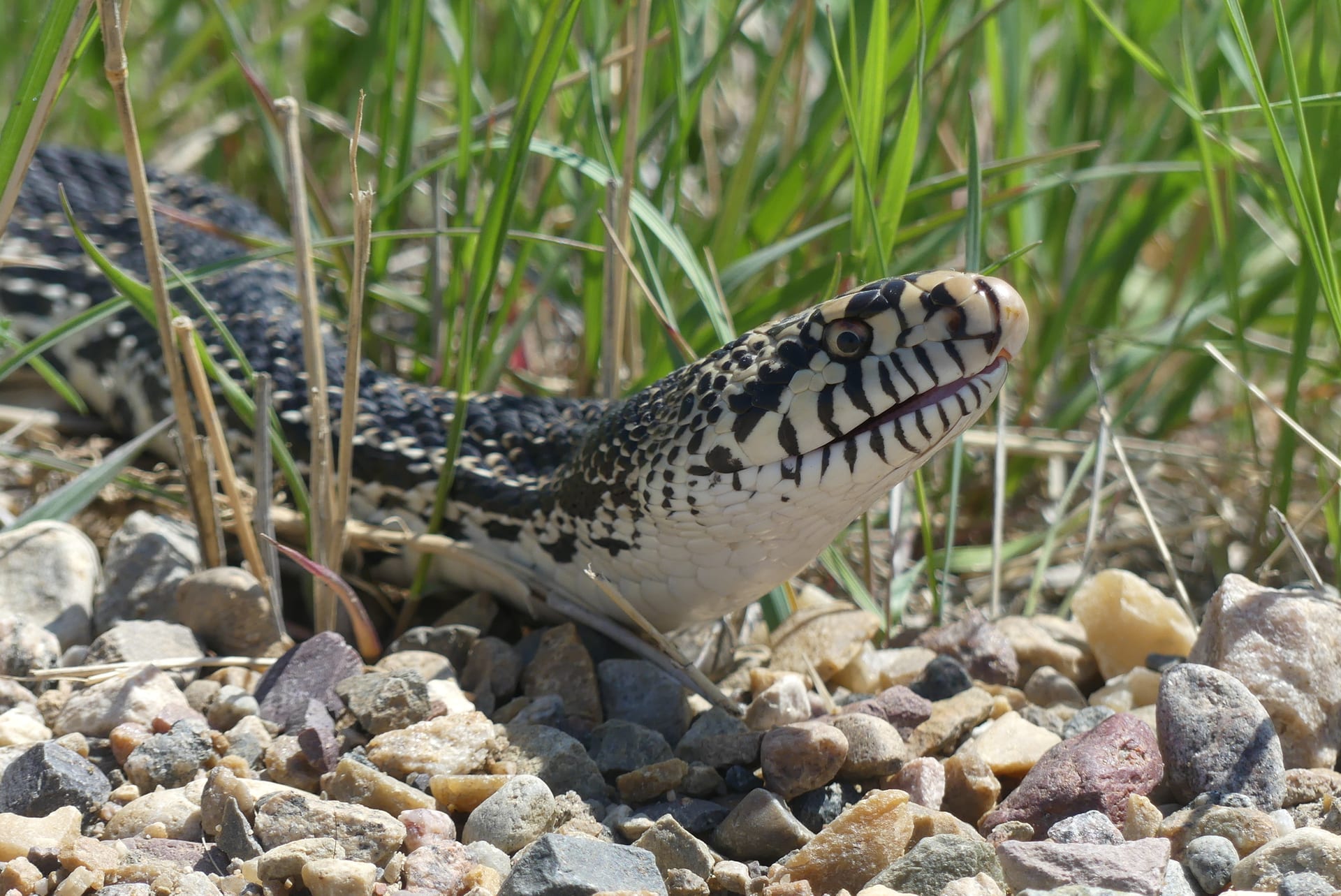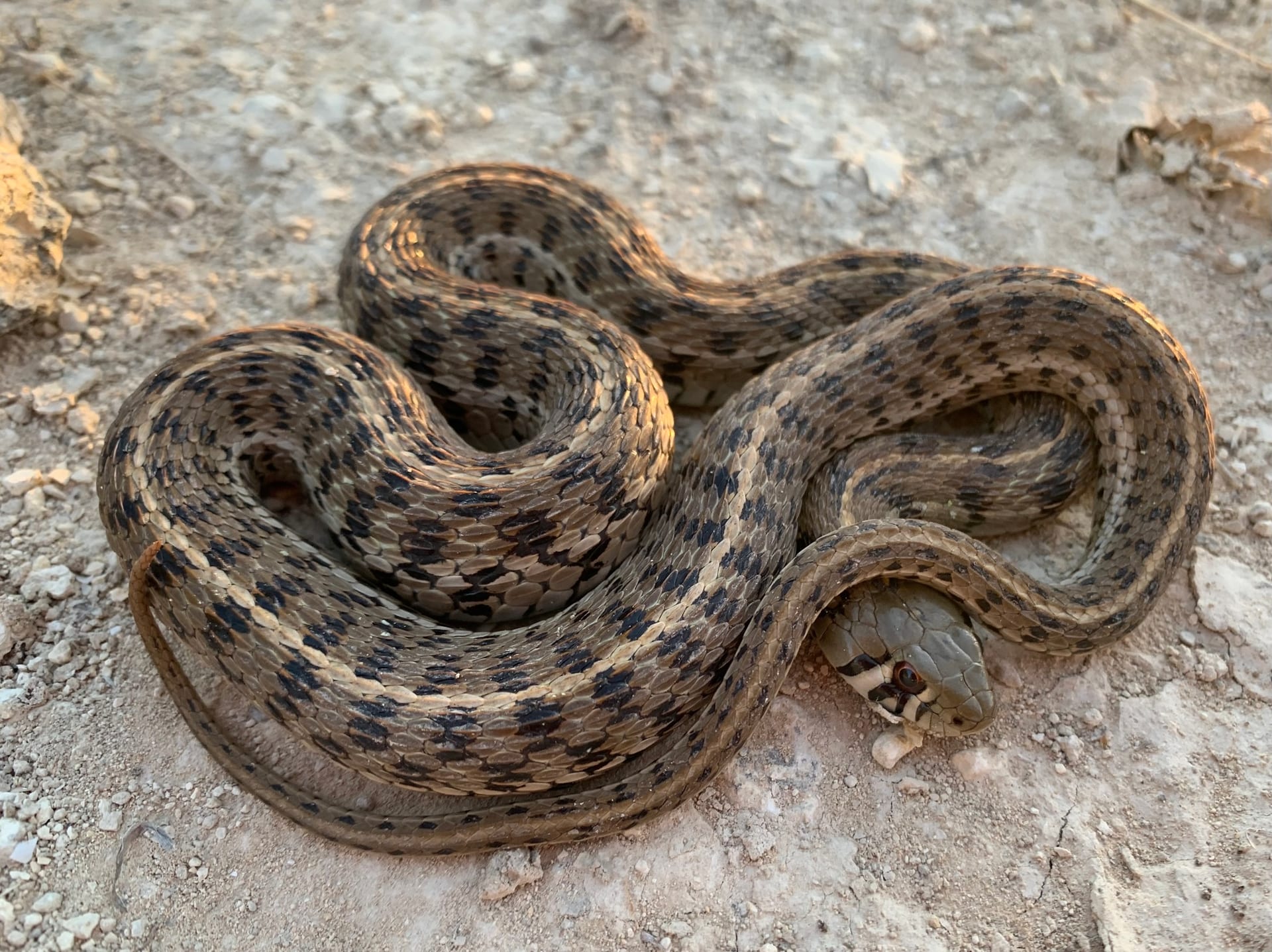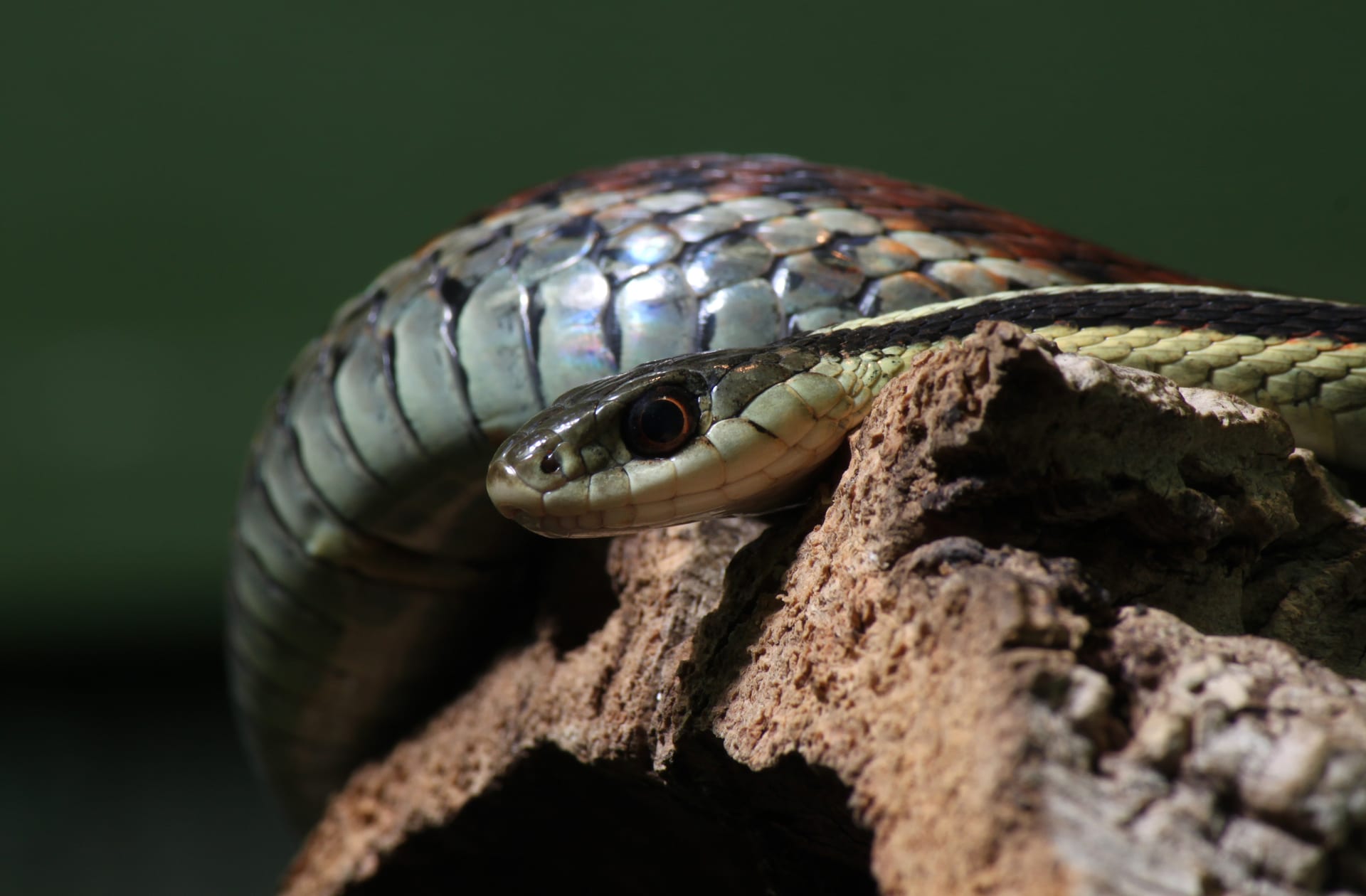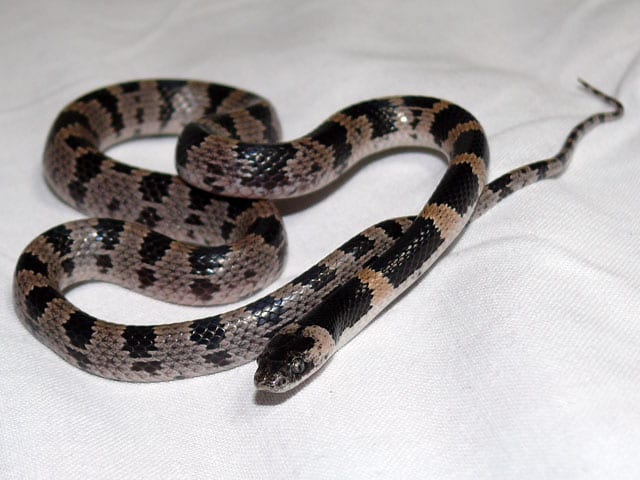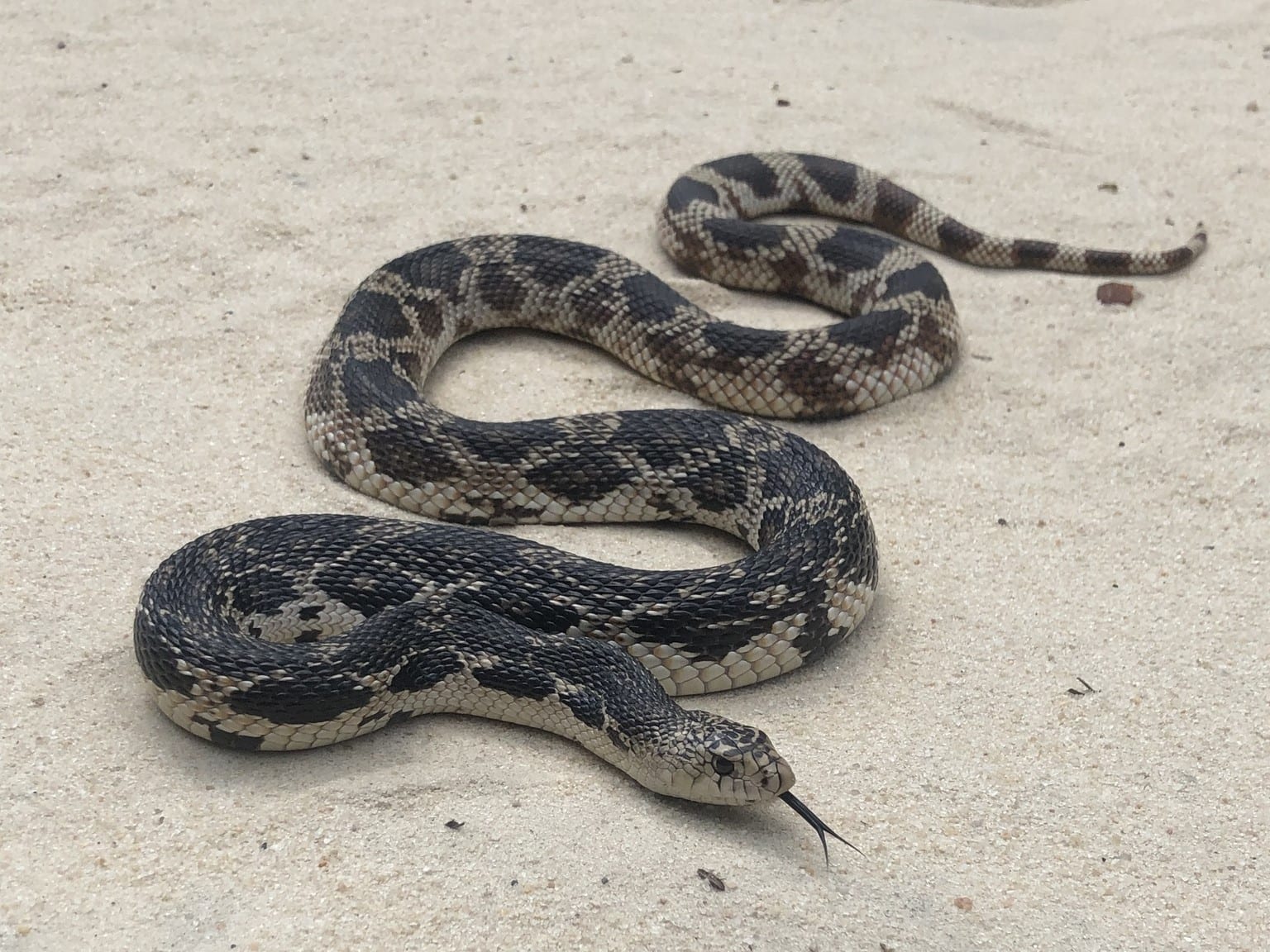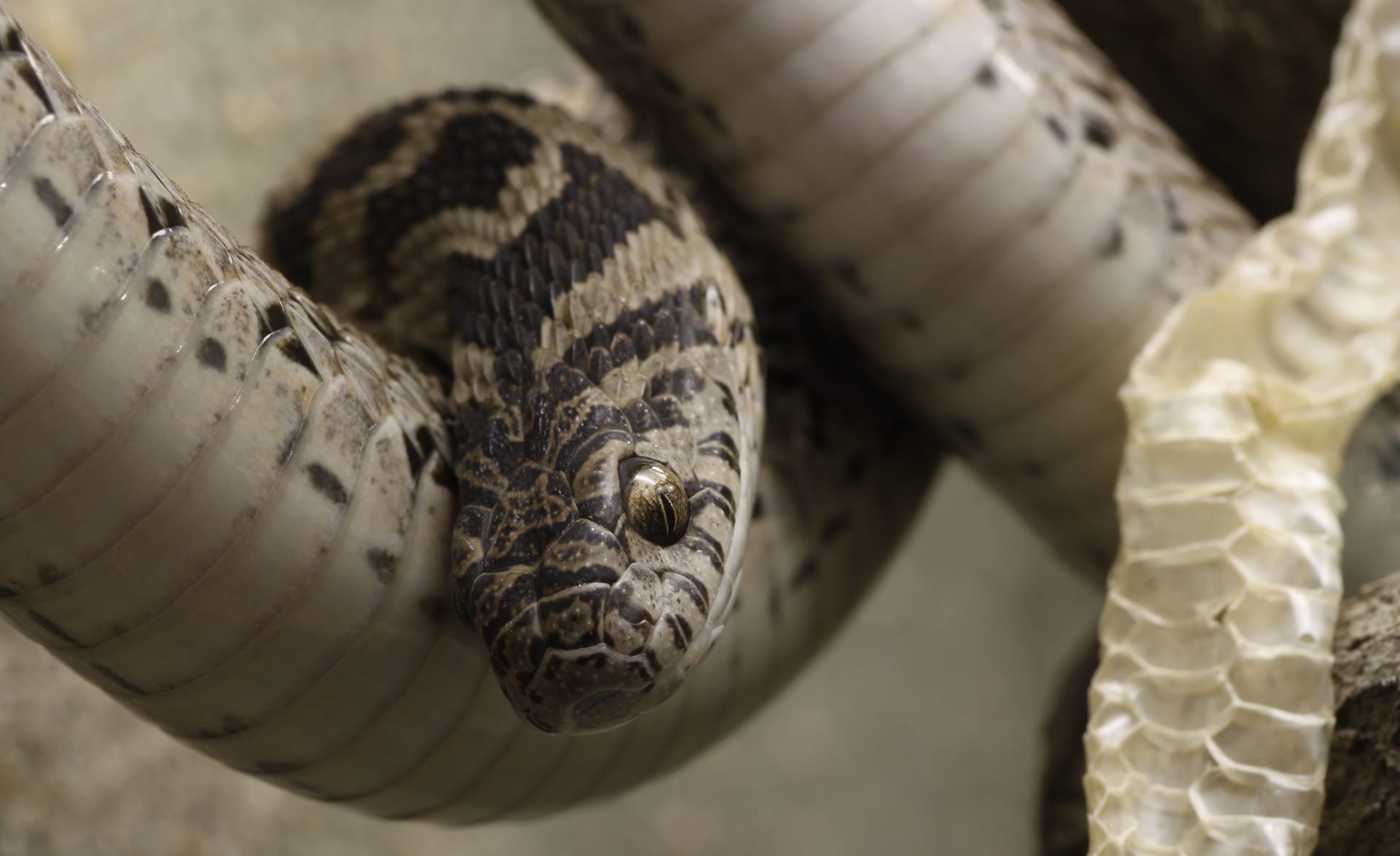
Source: Wikimedia Commons
Common Egg-Eating Snake
IntermediateDasypeltis scabra
An African colubrid that eats nothing but birds' eggs. Adults reach 100-120 cm and the jaws are almost toothless; swallowed eggs are cut open by vertebral spines and the shell is regurgitated whole. It is a known mimic of vipers.
Difficulty
Intermediate
Temperature
25〜32℃
Lifespan
10-15 years
Size
100-120cm
Humidity
40〜70%
Diet
Birds' eggs only
About
Dasypeltis scabra is a colubrid found widely across sub-Saharan Africa. Adults reach 100-120 cm, with a row of rhomboidal dark brown blotches along the back and alternating brown spots on the flanks. The jaws are almost toothless, reflecting an extreme specialisation on birds' eggs. Fine parallel ridges inside the mouth grip the shell, vertebral hypapophyses projecting into the oesophagus puncture the swallowed egg so that only the contents pass to the stomach, and the shell is regurgitated in one piece. The scales are strongly keeled and finely saw-toothed in places, and the snake rubs them together to produce a threatening hiss. Its resemblance to venomous vipers is thought to be mimicry. It is nocturnal, climbs well and raids birds' nests, and lays one or two clutches of 6-25 eggs in summer.
Source: Wikipedia (CC BY-SA 4.0)
Lifespan of the Common Egg-Eating Snake
The Common Egg-Eating Snake lives 10-15 years.
Size of the Common Egg-Eating Snake
The Common Egg-Eating Snake grows to 100-120cm.
Basic Info
Origin
Sub-Saharan Africa (Senegal, Nigeria, Kenya, Tanzania, Namibia, South Africa and neighbouring countries), in savanna and grassland from sea level to 2,600 m
Lifespan
10-15 years
Size
100-120cm
Temperature
Care Specifications
PeacefulSolitary
Sources: Reptile Database / Wikipedia (English)
References & Sources
Edited & verified by: BreederDirect editorial team
The taxonomic, regulatory, and husbandry data on this page are compiled and verified against the authoritative primary sources below.
Taxonomy & Authority
Accepted name: Dasypeltis scabra (Linnaeus, 1758)
Synonyms: Coluber scaber Linnaeus, 1758, Rachiodon scaber Duméril, Bibron & Duméril, 1854, Dasypeltis scabra loveridgei Mertens, 1954
Authority databases: Reptile Database
Nomenclature follows global taxonomic authority databases.
Regulations & Conservation Status
Not CITES-listed
Not listed in the appendices of the Washington Convention. It does not fall under the specific animals listed in the Order for Enforcement of the Law Concerning the Protection and Management of Animals, nor is it designated as an invasive alien species.
Sources: CITES Appendices (species not listed) / Order for Enforcement of the Act on Welfare and Management of Animals (list of designated animals)
Regulations may change. Always verify the latest information with the relevant authorities.
Common Egg-Eating Snake Listings
Loading latest listingsFind listings for this species