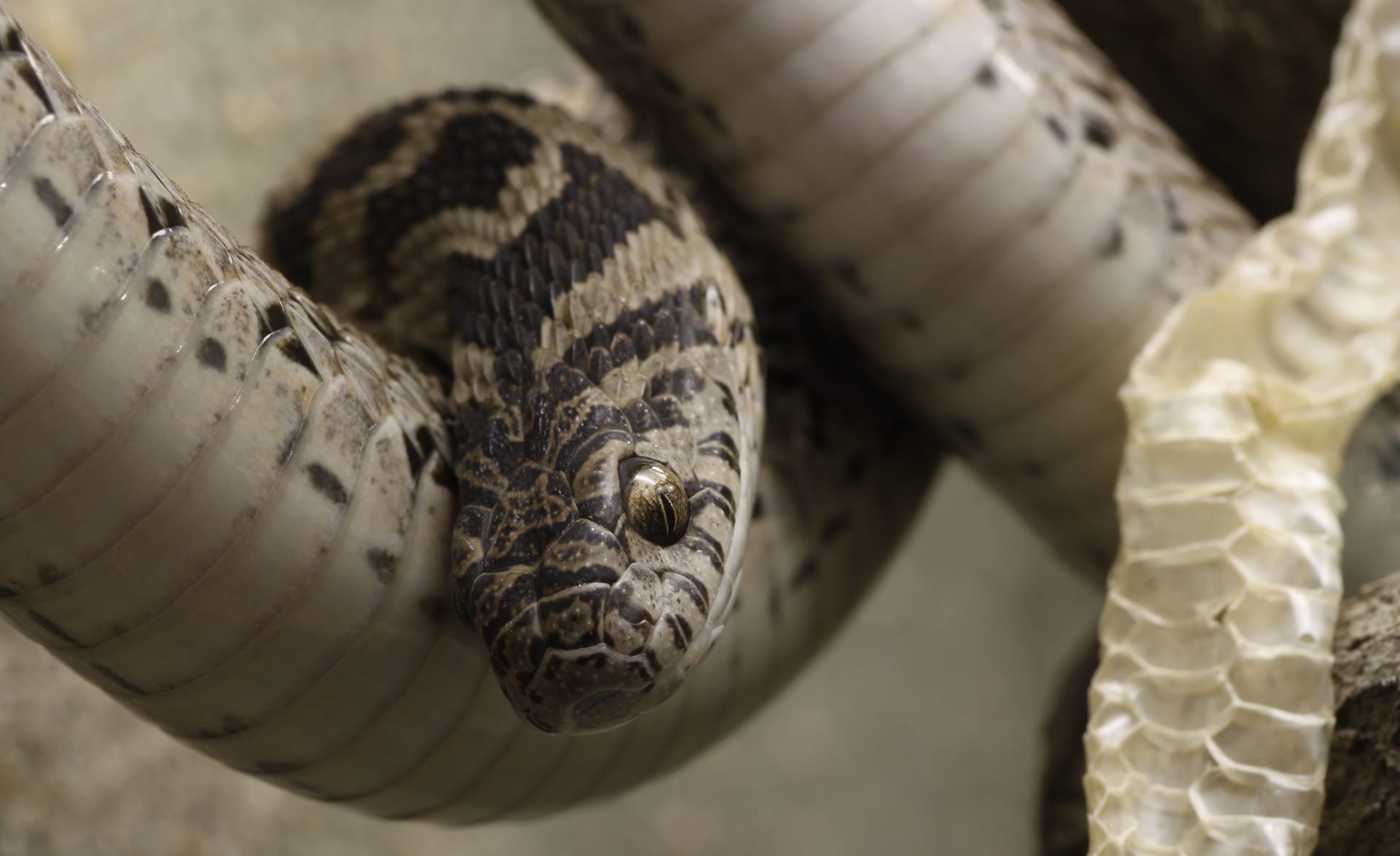
 © Holger Krisp / CC BY 3.0
Common Egg-Eating Snake
The African egg-eating snake is a colubrid native to Africa whose diet consists almost entirely of bird eggs. As they mature, their teeth become largely vestigial, and they swallow eggs whole before cracking the shells against bony projections on their vertebrae, then regurgitating the empty shell. Reaching 100 to 120 cm in length, they're an easy size to handle and generally have a calm temperament. When threatened, they may mimic the defensive posture and rasping sound of venomous vipers, but this is purely a bluff — they are harmless. Their unusual egg-only diet makes them a fascinating choice for keepers who already have some reptile-keeping experience.
View Common Egg-Eating Snake encyclopedia →0% commission on your first sales!Register by September 30, 2026 and your first 2 sales are commission-free!
Breeder Wanted!
List on BreederDirect and sell directly to customers nationwide!
6 Transparency Promises from Br-Choku
Every Reptiles & Amphibians from verified Breeder breeders includes complete information: morph, genetics, feeding requirements, and temperament details.
- Morph Information
- Actual Photos
- Feeding Information
- Temperament Information
- Genetics Information
- Age (Months)
Browse all 319 breeds
Difficulty Level
Feeding Type
Temperament
Verified breeders wanted for Reptiles & Amphibians
Breeders are signing up now ahead of launch. Subscribe to be notified when new listings go live.
Getting alerts is free with a member account. When new listings match your saved search, we'll notify you by email and in-app.
Browse other categories
Verified breeders (preview)
Are you raising reptiles & amphibians?
Register as a breeder and connect with buyers directly.
Apply as a breederCommon Egg-Eating Snake key facts
- Care level
- Intermediate
- Lifespan
- 10-15 years
- Size
- 100-120cm
- Diet
- Birds' eggs only
- Temperature & Humidity
- It lives in savanna and grassland and is absent from both closed-canopy rainforest and true desert, so avoid extremes of damp or dryness and provide a thermal gradient.
- Enclosure
- Nocturnal and strongly inclined to climb, so it does best in a taller enclosure with branches. Provide hides where it can rest during the day.
- Diet & Feeding
- Because it eats nothing but eggs, the whole question of keeping it comes down to a steady supply of small birds' eggs matched to its size. It will not take rodents. Securing food is the main difficulty and makes it unsuitable for a first snake.
- Temperament
- Non-venomous and incapable of a meaningful bite, but when disturbed it inflates itself, rasps its scales together to make a loud noise and strikes with its mouth held wide open.
- Notes
- Not listed on any CITES appendix and not among Japan's designated dangerous animals. Its resemblance to venomous vipers means field identification calls for care.
About Common Egg-Eating Snake
Meet the African egg-eating snake, a colubrid that feeds exclusively on bird eggs. Learn about its biology, temperament, and what to know before bringing one home.
7 things to know before welcoming a Common Egg-Eating Snake
1Securing a reliable egg supply
Their diet consists solely of bird eggs, not the mice typically fed to other snakes. Before bringing one home, make sure you can consistently source appropriately sized eggs, such as quail eggs, for the long term.
2The threat display is a harmless bluff
When startled, they may coil up and rub their scales together to make a hissing sound, mimicking a venomous viper's warning display. Despite the dramatic show, they are harmless with only a weak bite.
3Low bite risk due to reduced teeth
As adults, their teeth are largely vestigial, an adaptation for swallowing eggs whole. Combined with their generally low aggression, this makes them a relatively easy snake to handle.
4Best suited to intermediate keepers
Because their specialized diet requires careful feeding management, they're generally considered suitable for intermediate keepers. It helps to have some foundational reptile-keeping experience before taking one on.
5Housing sized for their adult length
Adults reach 100 to 120 cm in length. Prepare an enclosure spacious enough for them to move and coil comfortably at their full adult size before bringing one home.
6Choosing eggs of the right size
An egg too large for the snake's size can be difficult to swallow, while one too small won't provide adequate nutrition. Egg size should be reassessed as the snake grows.
7Not listed under CITES
The African egg-eating snake is not listed under CITES. There's no need to worry about international trade regulation procedures when bringing one home.
Frequently asked questions about Common Egg-Eating Snake
- Q.Will it eat mice or other typical snake food?
- A.No, the African egg-eating snake has a highly specialized diet consisting only of bird eggs. It generally won't respond to mice or other food typical snakes eat, so you'll need a reliable, ongoing source of eggs.
- Q.Is it venomous, and is a bite dangerous?
- A.No, it's not venomous. When startled it may display a viper-like defensive posture, but this is purely mimicry. Its teeth are also largely vestigial, so bite risk is considered low.
- Q.Can a beginner keep one?
- A.It's generally considered suitable for intermediate keepers rather than complete beginners. Because it requires understanding its specialized diet and securing a stable egg supply, some prior reptile-keeping experience is recommended.
- Q.How large does it get as an adult?
- A.Adults typically reach 100 to 120 cm in length. It's best to prepare an enclosure roomy enough for their full adult size in advance.
- Q.Are there any legal procedures required to acquire one?
- A.The African egg-eating snake is not listed under CITES, so no special procedures related to international trade regulation are generally required.
Useful tools for Common Egg-Eating Snake care
Learn more about Common Egg-Eating Snake in the encyclopedia
View Common Egg-Eating Snake encyclopedia entry →
Care difficulty, lifespan, size and diet — all basics covered.
More in this category
Can't find the one you're looking for?
Post your wishes for free and breeders with matching animals will contact you with introductions.