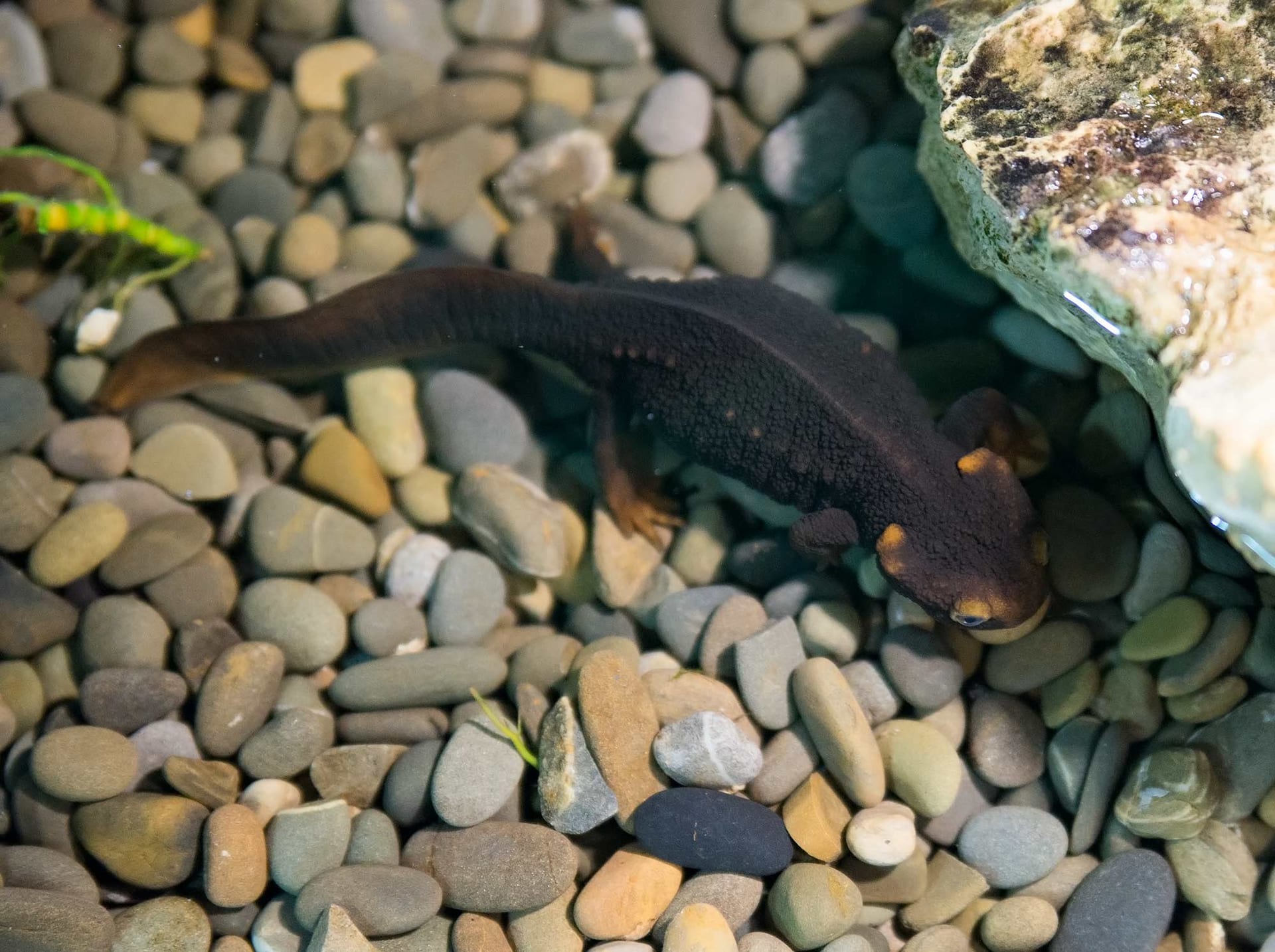
 © Rigelus / CC BY-SA 4.0
Himalayan Crocodile Newt
The Himalayan Crocodile Newt is instantly recognizable by the row of large wart-like glands running along its dark brown sides, giving its body the ridged look of a crocodile's back. Many individuals spend most of their time in water, and their slow, calm movements make them easy and satisfying to watch. The species is best known among keepers for its preference for cool conditions, thriving around 15–18°C, which means keeping them comfortable through the summer heat takes some care. They tend to be peaceful with tankmates and reward patient owners with plenty of time to observe their striking appearance up close. As a species listed on CITES Appendix II, they call for attentive, responsible care.
View Himalayan Crocodile Newt encyclopedia →0% commission on your first sales!Register by September 30, 2026 and your first 2 sales are commission-free!
Breeder Wanted!
List on BreederDirect and sell directly to customers nationwide!
BreederDirect's 6 Transparency Commitments
Every Reptiles & Amphibians from verified Breeder breeders includes complete information: morph, genetics, feeding requirements, and temperament details.
- Morph Information
- Actual Photos
- Feeding Information
- Temperament Information
- Genetics Information
- Age (Months)
Browse all 319 breeds
Difficulty Level
Feeding Type
Temperament
Verified breeders wanted for Reptiles & Amphibians
Breeders are signing up now ahead of launch. Subscribe to be notified when new listings go live.
Getting alerts is free with a member account. When new listings match your saved search, we'll notify you by email and in-app.
Browse other categories
Verified breeders (preview)
Are you raising reptiles & amphibians?
Register as a breeder and connect with buyers directly.
Apply as a breederHimalayan Crocodile Newt key facts
- Care level
- Intermediate
- Lifespan
- More than 10 years in captivity
- Size
- About 17-20 cm total length (some trade forms reported up to about 24 cm)
- Temperature
- 15〜18℃
- Diet
- Carnivore (earthworms, insects, spiders)
- Temperature & Humidity
- A cool range of about 15-18°C is recommended; it does poorly in warm water. Use air conditioning in summer.
- Housing
- Above about 18°C many individuals stay in the water; use an aquarium with 12-15 cm of water and a sizable land area. Move animals that stay on land into a semi-aquatic setup.
- Diet & Feeding
- Offer earthworms, crickets and bloodworms; it learns to take food from forceps.
- Temperament
- Active and inquisitive in water; some individuals become tame and approach for food.
- Health & Cautions
- Its skin is sensitive, so avoid prolonged handling with bare hands. Amphibians can carry infectious diseases such as chytridiomycosis, so never release captive animals or pour tank water into the wild.
- Notes
- Japan's native Echinotriton newts (Okinawa and Amami) are a different genus protected under the Species Conservation Act, which in principle bans capture and transfer. Do not confuse them.
About Himalayan Crocodile Newt
Himalayan Crocodile Newt: a striking amphibian with ridged, wart-like glands along its dark brown sides. Prefers cool 15–18°C conditions, often stays underwater, and suits keepers with some experience. Grows to about 20cm in total length.
7 things to know before welcoming a Himalayan Crocodile Newt
1Needs a Cool Environment
Himalayan Crocodile Newts thrive in cool conditions, roughly 15–18°C. Japanese summers can get hot, so plan ahead with a cooling fan or chiller to keep water and air temperatures in range.
2Often Prefers Life in Water
Many individuals spend most of their time submerged rather than on land. Providing a deep, spacious water area alongside land space helps them settle in, though preferences vary by individual, so watch how yours behaves and adjust the setup accordingly.
3Ridged, Gland-Lined Sides
The row of large wart-like glands along its sides, resembling a crocodile's back, is its signature feature. These glands can secrete substances through the skin, so always wash your hands after handling.
4Calm and Peaceful Nature
Their slow movements and generally peaceful temperament mean they rarely clash with tankmates. They suit keepers who enjoy quietly observing their animals rather than active interaction.
5Sensitive Skin
Its skin is sensitive, so avoid handling it with bare hands for long. Amphibians can carry infections such as chytridiomycosis, so never release animals or pour tank water outdoors.
6Adults Reach About 20cm
Adults grow to about 20cm in total length. Plan for a suitably sized enclosure that can accommodate their full adult size.
7Listed on CITES Appendix II
This species is listed on CITES Appendix II. Understanding that it requires conservation consideration worldwide is part of being a responsible keeper.
Frequently asked questions about Himalayan Crocodile Newt
- Q.Is this newt suitable for beginners?
- A.The Himalayan Crocodile Newt is generally considered suited to intermediate keepers. It requires maintaining cool conditions around 15–18°C, so some prior experience with keeping amphibians is recommended before bringing one home.
- Q.Does it stay underwater all the time?
- A.Many individuals prefer to spend most of their time in water, though some do come onto land. It's best to provide both a water area and land space, and adjust the setup based on your individual's preferences.
- Q.How big does it grow?
- A.Adults reach about 20cm in total length, so it's wise to prepare an enclosure with room to spare.
- Q.What are the bumps on its body?
- A.They are a row of wart-like glands along the newt's sides, giving it the crocodile-like appearance the species is known for. These glands can secrete substances through the skin, so wash your hands thoroughly after handling.
Useful tools for Himalayan Crocodile Newt care
Learn more about Himalayan Crocodile Newt in the encyclopedia
View Himalayan Crocodile Newt encyclopedia entry →
Care difficulty, lifespan, size and diet — all basics covered.
More in this category
Can't find the one you're looking for?
Post your wishes for free and breeders with matching animals will contact you with introductions.