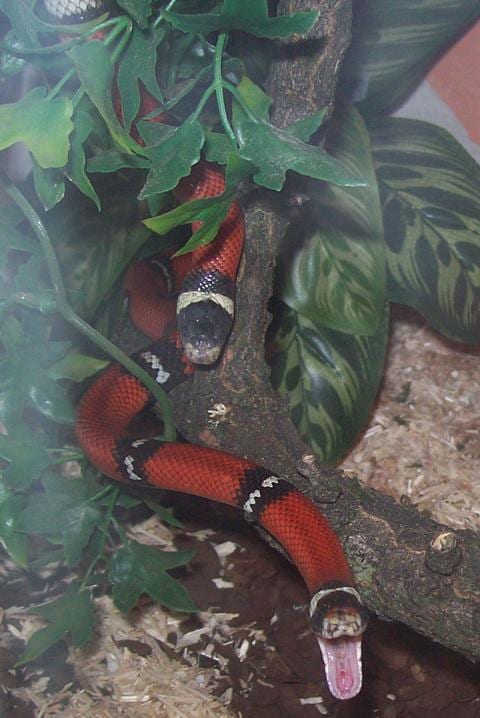
 © Sweetsandz / CC BY-SA 3.0
Sinaloan Milk Snake
The Sinaloan Milk Snake is a strikingly beautiful tricolor snake native primarily to Mexico's Pacific coast. Its bold banding pattern of red, black, and white (or yellow) is a defining feature, and snakes once classified separately as Pueblan or Nelson's Milk Snakes are now recognized as the same species. Generally calm and easy to handle, it makes an excellent choice for first-time reptile keepers. Hardy and adaptable, it settles comfortably into a well-maintained enclosure, making it a long-time favorite among keepers of all experience levels.
View Sinaloan Milk Snake encyclopedia →0% commission on your first sales!Register by September 30, 2026 and your first 2 sales are commission-free!
Breeder Wanted!
List on BreederDirect and sell directly to customers nationwide!
6 Transparency Promises from Br-Choku
Every Reptiles & Amphibians from verified Breeder breeders includes complete information: morph, genetics, feeding requirements, and temperament details.
- Morph Information
- Actual Photos
- Feeding Information
- Temperament Information
- Genetics Information
- Age (Months)
Browse all 280 breeds
Difficulty Level
Feeding Type
Temperament
Verified breeders wanted for Reptiles & Amphibians
Breeders are signing up now ahead of launch. Subscribe to be notified when new listings go live.
Getting alerts is free with a member account. When new listings match your saved search, we'll notify you by email and in-app.
Browse other categories
Verified breeders (preview)
Are you raising reptiles & amphibians?
Register as a breeder and connect with buyers directly.
Apply as a breederSinaloan Milk Snake key facts
- Care level
- Beginner-friendly
- Lifespan
- Over 20 years in captivity
- Size
- 91-122cm
- Temperature
- Humidity
- 40〜60%
- Diet
- Frozen-thawed mice
- Temperature & Humidity
- Aim for a basking surface of 29-32C, a cool side of 23-27C and night-time temperatures of 21-23C. Hold humidity at 40-60 per cent, the general figure for milk snakes. Shedding in patches indicates humidity is too low, so add a humid hide or mist more often.
- Enclosure
- A minimum of about 120 x 60 x 60 cm per adult is recommended, with at least 45 cm of height so lighting can be used safely. Provide snug hides on both the warm and cool sides, plus branches and cork to climb. Use a front-opening enclosure that locks securely.
- Diet & Feeding
- It is carnivorous and in captivity is fed appropriately sized frozen-thawed mice. Always feed it alone in the enclosure.
- Temperament
- Kingsnakes are ophiophagous and will eat each other, so they must be kept alone. They are generally docile and easy to handle, but wash your hands after feeding so they do not mistake them for prey.
- Notes
- The species is not listed in the CITES appendices, and it is neither a specified animal nor an invasive alien species under Japanese law. It is non-venomous and harmless to people, but escaped snakes are hard to recover, so keep the enclosure securely locked. Its red, black and white banding mimics venomous coral snakes, but the species itself is harmless. The trade names Sinaloan, Pueblan and Nelson's all refer to this one species, so check how the lineage is described when buying.
About Sinaloan Milk Snake
A tricolor milk snake native to Mexico's Pacific coast, encompassing what were once classified as the Pueblan and Nelson's subspecies. Known for its bold red-black-white banding, it's hardy and well-suited to first-time reptile keepers.
7 things to know before welcoming a Sinaloan Milk Snake
1Escape-Proof the Enclosure
Milk snakes are surprisingly strong and can push through small gaps to escape. Choose an enclosure with a secure, lockable lid that closes without any gaps.
2Provide a Temperature Gradient
Set up both a warm basking spot and a cooler area so the snake can regulate its own body temperature. Since adults reach 91-122 cm, plan for an enclosure that stays roomy as they grow.
3Add Multiple Hiding Spots
Sinaloan Milk Snakes are naturally secretive and feel stressed without a place to retreat. Placing hides at both the warm and cool ends of the enclosure helps them feel secure.
4Feed Frozen-Thawed Mice
Their staple diet is frozen-thawed mice, sized up gradually as the snake grows. Most individuals have a healthy appetite, one reason this species is considered easy to keep.
5Watch Humidity During Shedding
A shed is often preceded by cloudy eyes, and slightly raising humidity during this period helps ensure a clean, complete shed. Check afterward that no skin has been left behind, especially around the tail tip.
6House Them Separately
Keeping multiple snakes together can lead to problems such as cannibalism, so each snake should have its own enclosure. Individual housing also makes it easier to monitor feeding and health.
7A 20+ Year Commitment
In captivity, this species can live 20 years or more, so it's worth considering whether you can provide care for the long term before bringing one home. It's a hardy, adaptable snake, but consistent temperature and humidity management remains important throughout its life.
Frequently asked questions about Sinaloan Milk Snake
- Q.Is the Sinaloan Milk Snake suitable for beginners?
- A.Yes, it's considered a beginner-friendly species thanks to its hardiness and adaptability. With consistent temperature and humidity management along with a regular feeding routine, it's generally easy to keep successfully.
- Q.What's the difference between this and the Pueblan or Nelson's Milk Snake?
- A.Under current classification, the Pueblan and Nelson's Milk Snakes are considered the same species as the Sinaloan Milk Snake. They were once treated as separate subspecies, but all share the wide red banding characteristic of this group.
- Q.How large do they grow?
- A.Adults typically reach a total length of 91 to 122 cm. It's best to plan for an enclosure sized for this maximum length from the start.
- Q.Can they be housed with other snakes?
- A.No, they should be kept individually. Housing multiple snakes together can lead to problems such as cannibalism.
- Q.How long do they live?
- A.In captivity, they can live 20 years or more. It's worth considering whether you can commit to their long-term care before bringing one home.
Useful tools for Sinaloan Milk Snake care
Learn more about Sinaloan Milk Snake in the encyclopedia
View Sinaloan Milk Snake encyclopedia entry →
Care difficulty, lifespan, size and diet — all basics covered.
More in this category
Can't find the one you're looking for?
Post your wishes for free and breeders with matching animals will contact you with introductions.