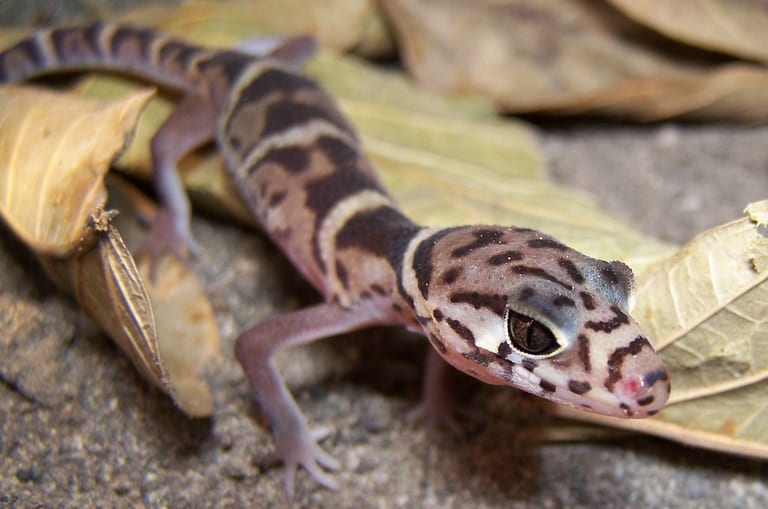
 © Vladlen Henríquez / CC BY-SA 2.5
Central American Banded Gecko
The Central American Banded Gecko is a medium-sized eyelid gecko species native to Central America, easily recognized by the bold brown, black, and yellow bands running across its back. It reaches up to 190mm in total length, with the tail making up 50-54% of that. Being crepuscular, it spends daylight hours tucked away in an underground burrow and becomes active as dusk falls, giving it a calm, low-key temperament. Its beginner-friendly care requirements make it a great choice for anyone new to eyelid geckos, and its striking pattern rewards owners who enjoy quiet observation.
View Central American Banded Gecko encyclopedia →Breeder Wanted!
List on BreederDirect and sell directly to customers nationwide!
BreederDirect's 6 Transparency Commitments
Every Reptiles & Amphibians from verified Breeder breeders includes complete information: morph, genetics, feeding requirements, and temperament details.
- Morph Information
- Actual Photos
- Feeding Information
- Temperament Information
- Genetics Information
- Age (Months)
Browse all 319 breeds
Difficulty Level
Feeding Type
Temperament
Verified breeders wanted for Reptiles & Amphibians
Breeders are signing up now ahead of launch. Subscribe to be notified when new listings go live.
Getting alerts is free with a member account. When new listings match your saved search, we'll notify you by email and in-app.
Browse other categories
Verified breeders (preview)

Are you raising reptiles & amphibians?
Register as a breeder and connect with buyers directly.
Apply as a breederCentral American Banded Gecko key facts
- Care level
- Beginner-friendly
- Lifespan
- 15-20 years
- Size
- Up to 190mm total length, the tail making up 50-54 per cent
- Temperature
- Inside the hot-spot shelter 30-32°C / cool side 24-27°C / 20-22°C at night
- Humidity
- Around 35% ambient (temporarily raised to about 55% while it sleeps)
- Diet
- Crickets, dubia roaches and other insects
- Temperature & Humidity
- Aim for 30-32C inside a hide placed on the hot spot, an ambient cool side of 24-27C and 20-22C at night. Keep ambient humidity around 35 per cent with one moderate spike to about 55 per cent at bedtime. Humid hides on both the warm and cool sides help prevent retained shed.
- Enclosure
- It is terrestrial, so prioritise floor area: about 90 x 45 x 45 cm, or a 20-gallon long tank or larger, is the usual guide for one animal or a small group. Males must not be housed together. It burrows, so provide substrate deep enough to dig in along with cork and flat stones for cover.
- Diet & Feeding
- It is insectivorous and is fed crickets, dubia roaches and other insects sized to fit its mouth. Gut-load the feeders and dust them with calcium. It becomes active after dusk, so feed at night.
- Temperament
- It is crepuscular and spends the day in a burrow. It is considered docile and easy to handle, but it drops its tail, so never handle it by the tail. Males fight and must not be housed together.
- Notes
- The species is not listed in the CITES appendices and has no Species+ entry. It is neither a specified animal nor an invasive alien species under Japanese law. Retained skin on the toes after a shed can cause the digits to die off, so check the toe tips after each shed.
About Central American Banded Gecko
A medium-sized Central American eyelid gecko with bold brown, black, and yellow bands, reaching up to 190mm in total length. Crepuscular and calm by nature, it's a popular, beginner-friendly choice.
7 things to know before welcoming a Central American Banded Gecko
1Crepuscular Lifestyle
They rest hidden underground or under cover through the day and become active as dusk falls. Always provide a dark hide so they can retreat during daylight hours, and avoid pulling them out into bright light. Evening, with the lights turned down, is the best time to observe them.
2Provide Diggable Substrate
Since they naturally burrow during the day, a substrate with enough depth to dig into helps them settle in. Keeping one corner slightly moist also supports smooth shedding.
3Body Size and Enclosure Space
Total length reaches up to 190mm, with the tail accounting for 50-54% of that, making it a medium-sized gecko. Because it is ground-dwelling, floor area matters more than height, and an enclosure of about 90×45×45cm (20-gallon long or larger) is the usual guideline.
4Tail Autotomy
Like other eyelid geckos, this species may drop its tail as a defense response when startled or handled roughly. The tail regrows but often differs in shape or color from the original, so always support the body rather than gripping the tail.
5Calm Temperament
Movements tend to be slow and deliberate, and individuals are generally described as quiet and docile. Rather than handling right away, it's best to let them settle into their new environment first.
6Insectivorous Diet
Diet centers on live insect prey such as crickets, sized appropriately for the gecko's mouth. Dusting feeders with calcium and vitamin supplements helps round out their nutrition.
7Set Up Before Arrival
Having a burrow-like hide, a humid spot, and a proper temperature gradient ready in advance helps the gecko settle in smoothly. While considered beginner-friendly, it's best to finish the basic setup before bringing one home.
Frequently asked questions about Central American Banded Gecko
- Q.Is the Central American Banded Gecko suitable for beginners?
- A.Yes, it's generally considered a beginner-friendly species. That said, since it's crepuscular and spends daylight hours hidden away, providing a proper hide is an important part of its setup.
- Q.How big does this gecko get?
- A.It is a medium-sized gecko that reaches up to 190mm in total length, including the tail. The tail makes up 50-54% of that length.
- Q.Is it okay to hold the gecko by its tail?
- A.It's best to avoid gripping the tail, since eyelid geckos may drop it as a defense response when startled. When picking one up, support the whole body instead.
- Q.What temperature and humidity does it need?
- A.Since it's crepuscular and most active at night, setting up a proper temperature gradient along with a humid corner in the substrate helps it settle in. Keeping both a drier area and a moist spot also supports healthy shedding.
- Q.What should I feed it?
- A.Its diet is centered on insects such as crickets. Choose prey sized appropriately for its mouth, and dust feeders with calcium and vitamin supplements to help round out its nutrition.
Useful tools for Central American Banded Gecko care
Learn more about Central American Banded Gecko in the encyclopedia
View Central American Banded Gecko encyclopedia entry →
Care difficulty, lifespan, size and diet — all basics covered.
More in this category
Can't find the one you're looking for?
Post your wishes for free and breeders with matching animals will contact you with introductions.