 © Peter Paplanus / CC BY 2.0
Striped Mud Turtle
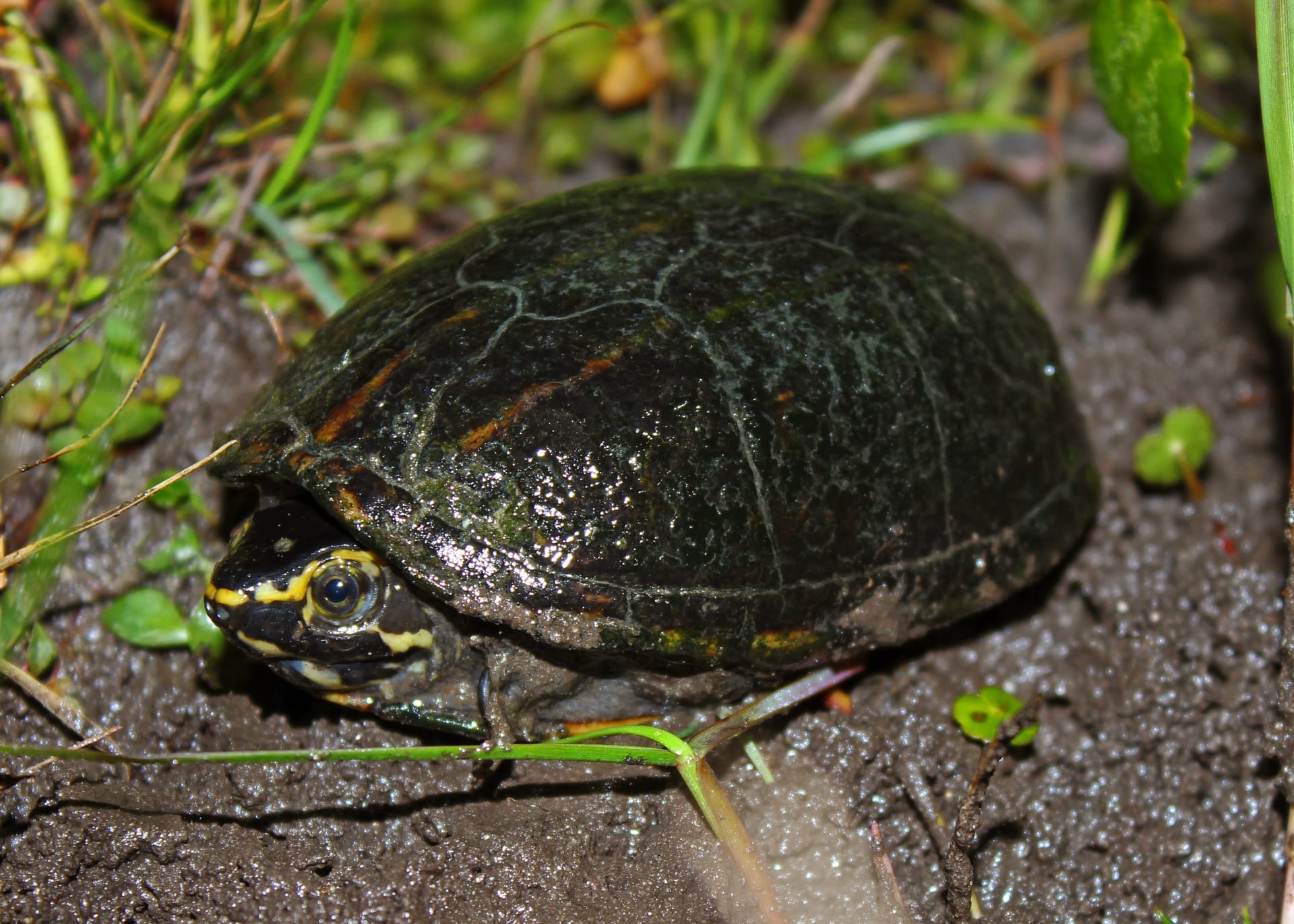
The Striped Mud Turtle is a small freshwater turtle native to the southeastern United States, named for the three pale stripes running along its smooth carapace. Compared with other mud turtles, it spends noticeably more time wandering on land, so keepers get to watch it move between water and dry ground rather than staying submerged. Its temperament tends to be calm once it settles in, which is part of why the species is considered approachable for first-time keepers. With an adult carapace length of about 8 to 12 cm, it stays compact and manageable next to larger turtle species, making enclosure planning easier. Given both aquatic and terrestrial space, this turtle readily shows off its natural, active behavior.
View Striped Mud Turtle encyclopedia →0% commission on your first sales!Register by September 30, 2026 and your first 2 sales are commission-free!
Breeder Wanted!
List on BreederDirect and sell directly to customers nationwide!
6 Transparency Promises from Br-Choku
Every Reptiles & Amphibians from verified Breeder breeders includes complete information: morph, genetics, feeding requirements, and temperament details.
- Morph Information
- Actual Photos
- Feeding Information
- Temperament Information
- Genetics Information
- Age (Months)
Browse all 280 breeds
Difficulty Level
Feeding Type
Temperament
Verified breeders wanted for Reptiles & Amphibians
Breeders are signing up now ahead of launch. Subscribe to be notified when new listings go live.
Getting alerts is free with a member account. When new listings match your saved search, we'll notify you by email and in-app.
Browse other categories
Verified breeders (preview)
Are you raising reptiles & amphibians?
Register as a breeder and connect with buyers directly.
Apply as a breederStriped Mud Turtle key facts
- Care level
- Beginner-friendly
- Lifespan
- 20-35 years
- Size
- 8-12cm straight carapace length
- Temperature
- 22〜27℃、29〜34℃
- Diet
- Turtle pellets as the staple, plus insects, worms, snails, algae and plant matter
- Temperature & Humidity
- Mud and musk turtles do well with water at 22-27 C and a basking spot at 29-34 C. Many keepers give a seasonal cycle even indoors, letting winter temperatures fall to around 10-15 C so feeding and activity slow, and holding 27-32 C only for the warmer half of the year.
- Enclosure
- It needs an enclosure with both land and water, so a shallow tub with a large footprint suits it. A commercial turtle tub is enough for a group of one male and two females. Play sand as substrate encourages nesting and digging without clouding the water too much. A small filter is adequate. Adults do bask, so provide basking heat and UVB.
- Diet & Feeding
- Omnivorous, with a good-quality turtle pellet as the staple; blending more than one brand helps avoid gaps in the diet. Supplement with insects, worms and snails. They are voracious, so guard against obesity: adults roughly three times a week, hatchlings once a day.
- Temperament
- Kept communally they can turn aggressive towards one another, males more readily than females. Hatchlings are tiny but feisty and will try to bite. Handle slowly.
- Notes
- The genus Kinosternon was listed on CITES Appendix II at CoP19 in 2022, effective 23 February 2023. Appendix II means no Japanese registration certificate is required, but international trade needs an export permit from the range state. Captive-bred animals come free of parasites and already adapted to captivity, so choose them where available.
About Striped Mud Turtle
A small mud turtle native to the southeastern U.S., known for wandering on land more than other species. This guide covers the Striped Mud Turtle's traits, temperament, and care basics — a compact, beginner-friendly species with an 8-12 cm adult carapace.
7 things to know before welcoming a Striped Mud Turtle
1Needs Both Water and Land
As one of the more land-active mud turtles, this species needs dry land to climb onto as well as water. Set up its enclosure with both a shallow water area and a dry basking area so it can move naturally between the two.
2Not a Strong Swimmer
Mud turtles aren't strong swimmers, so keep the water shallow enough that the turtle can stand with its head above the surface. Water that's too deep can put it at risk of drowning.
3Generally Calm Temperament
Once acclimated, many individuals settle into a calm routine, which is part of why the species is considered approachable for beginners. Still, avoid handling it when startled and give it space to calm down on its own.
4Has Musk Glands
Like other members of the mud and musk turtle family, it can release a scent from its musk glands when strongly stressed. When picking it up, move slowly and support it with both hands to avoid startling it.
5Omnivorous Diet
This species is omnivorous, eating everything from small aquatic invertebrates to plants. A balanced diet combines commercial turtle pellets with live or frozen foods and vegetables, varied enough to avoid nutritional gaps.
6UVB Lighting Is Essential
Provide a basking light and UVB lighting over the land area to support healthy shell and bone development. Keep an eye on both water and air temperature as well.
7Stays Compact as an Adult
Adults reach a carapace length of only about 8 to 12 cm, making this species easier to plan enclosure space for than larger turtles. Even so, choose a cage large enough to include both a water area and a land area.
Frequently asked questions about Striped Mud Turtle
- Q.Can beginners keep a Striped Mud Turtle?
- A.Yes, this species is generally considered suitable for first-time keepers. That said, you'll still need basic equipment like UVB lighting and a setup with both water and land areas, so prepare those in advance.
- Q.How big does it get?
- A.Adults stay a compact 8 to 12 cm in carapace length. Compared with larger turtle species, this makes it easier to find room for its enclosure.
- Q.Can it be kept together with other turtles?
- A.Compatibility varies by individual, so there's no universal answer. If you do house turtles together, use a spacious enclosure and watch closely for competition over food or hiding spots.
- Q.What should I feed it?
- A.As an omnivore, it naturally eats small aquatic creatures and plants. A base diet of commercial turtle food supplemented with live or frozen foods and vegetables helps keep nutrition balanced — adjust amount and frequency to suit the individual.
- Q.Is it okay to pick it up?
- A.Because it can release a scent from its musk glands when heavily stressed, avoid handling it often; when you do need to, support it slowly with both hands. Most of the time, simply observing it is enough.
Useful tools for Striped Mud Turtle care
Learn more about Striped Mud Turtle in the encyclopedia
View Striped Mud Turtle encyclopedia entry →
Care difficulty, lifespan, size and diet — all basics covered.
More in this category
Can't find the one you're looking for?
Post your wishes for free and breeders with matching animals will contact you with introductions.