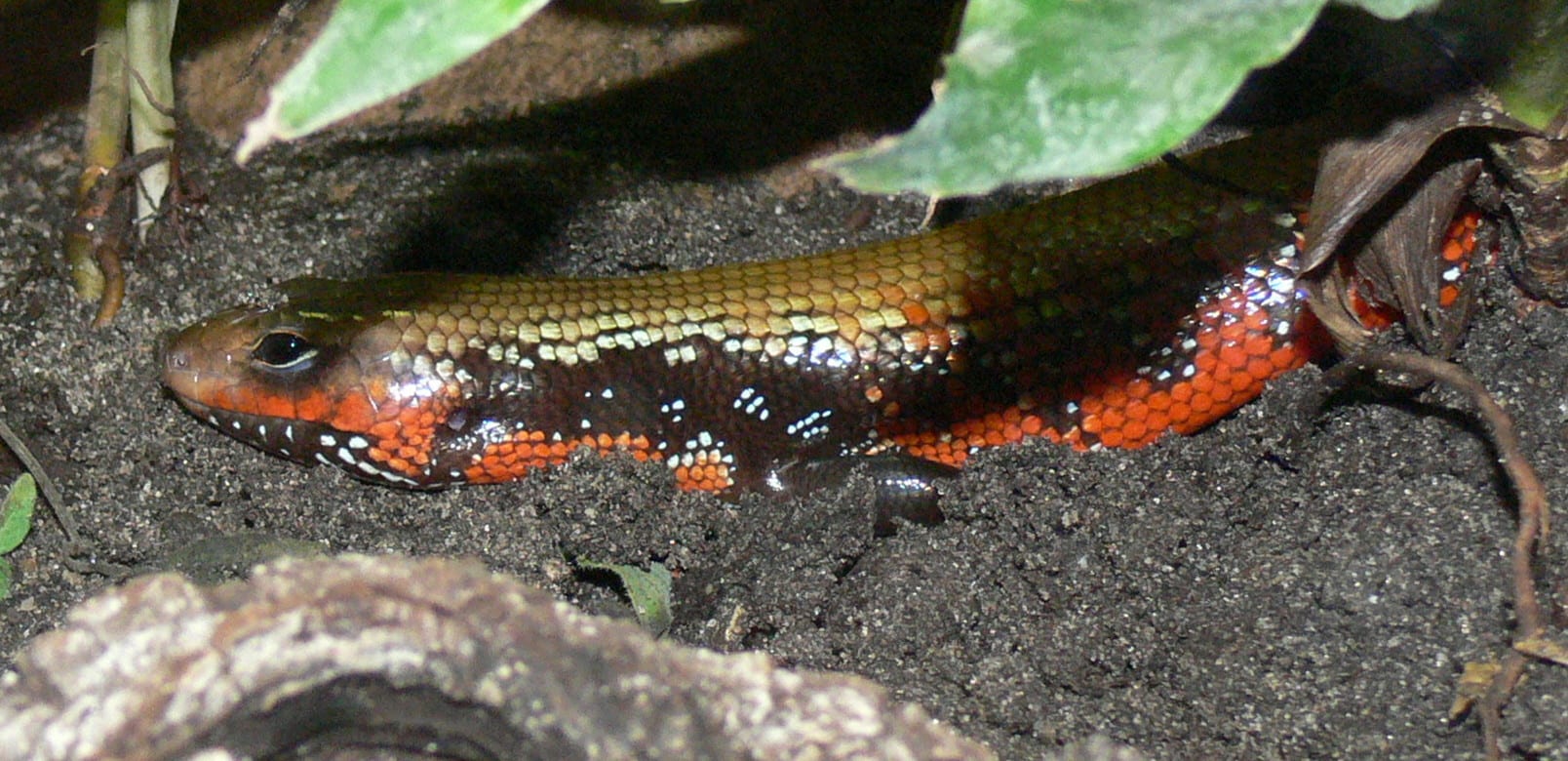
 © User:Haplochromis / CC BY-SA 3.0
African Fire Skink
The African Fire Skink is a striking, large-bodied skink known for its golden-to-copper back and the bold bands of red, black, and white running along its sides. With a sturdy build, thick limbs, and a heavy tail, it grows to an impressive 30–38 cm in total length, yet stays relatively calm once settled into its enclosure. Being crepuscular, it's most active at dawn and dusk, spending much of the day burrowed in substrate or tucked beneath hides and driftwood, so a deep, diggable substrate and secure hiding spots matter. Hardy and forgiving, this skink is a solid choice for first-time reptile keepers, and with proper care can live 15 to 20 years.
View African Fire Skink encyclopedia →0% commission on your first sales!Register by September 30, 2026 and your first 2 sales are commission-free!
Breeder Wanted!
List on BreederDirect and sell directly to customers nationwide!
6 Transparency Promises from Br-Choku
Every Reptiles & Amphibians from verified Breeder breeders includes complete information: morph, genetics, feeding requirements, and temperament details.
- Morph Information
- Actual Photos
- Feeding Information
- Temperament Information
- Genetics Information
- Age (Months)
Browse all 280 breeds
Difficulty Level
Feeding Type
Temperament
Verified breeders wanted for Reptiles & Amphibians
Breeders are signing up now ahead of launch. Subscribe to be notified when new listings go live.
Getting alerts is free with a member account. When new listings match your saved search, we'll notify you by email and in-app.
Browse other categories
Verified breeders (preview)
Are you raising reptiles & amphibians?
Register as a breeder and connect with buyers directly.
Apply as a breederAfrican Fire Skink key facts
- Care level
- Beginner-friendly
- Lifespan
- 15-20 years in captivity
- Size
- 30-38cm total length (SVL 17-18cm)
- Temperature
- Humidity
- 60〜70%
- Diet
- Carnivorous: insects and arthropods such as crickets, roaches and worms
- Temperature & Humidity
- Keep the basking spot at 33-35 C, the cool side at 24-29 C and nights at 21-24 C. Humidity is best managed through the substrate: keep it damp at all times, equivalent to 60-70 percent relative humidity. As long as the substrate stays moist, surface humidity may drop to around 40 percent.
- Enclosure
- Reaching 38 cm, it needs an enclosure of at least about 90 x 45 x 45 cm even for a single animal. Because it burrows, give it 10-15 cm of moisture-retentive substrate and furnish the enclosure with cave-like hides, driftwood and root-style decor. Live plants help stabilise humidity.
- Diet & Feeding
- Insectivorous, taking crickets, roaches and worms. Offer feeders scaled to its size, dusted with calcium and vitamin supplements. Being crepuscular, it responds best when fed around dawn and dusk.
- Temperament
- Usually described as very shy, but housed properly it is active and shows plenty of character. It is hardy and easy to keep, suitable for beginners and experienced keepers alike. Without enough cover it will stay hidden, so provide retreats both on and under the surface.
- Notes
- Not listed on any CITES appendix. It appears neither on the schedule of designated dangerous animals under the Order for Enforcement of the Act on Welfare and Management of Animals nor on Japan's list of invasive alien species. The genus has changed repeatedly and the names Riopa fernandi and Lepidothyris fernandi are still in circulation, so confirm that they refer to the same animal when buying. The fire skink in its traditional broad sense has been split into three species, so animals said to come from East Africa may belong to a different one. No IUCN Red List assessment could be confirmed.
About African Fire Skink
African Fire Skinks are hardy, beginner-friendly skinks with golden-copper backs and red-black-white banding, growing 30–38 cm and living 15–20 years. Learn their care basics, key facts, and FAQs.
7 things to know before welcoming a African Fire Skink
1Deep Substrate and Hides
Fire skinks burrow into substrate and shelter under logs or roots in the wild, so their enclosure should include a reasonably deep substrate layer and several snug hides. Without places to dig and hide, they tend to feel exposed and stressed.
2Active at Dawn and Dusk
These skinks are crepuscular, meaning they're most active in the low light of early morning and evening rather than the middle of the day. Staying hidden during daylight hours is normal behavior, not a sign of illness.
3A Large, Sturdy Skink
Adults reach roughly 30–38 cm in total length with thick limbs and a heavy tail. Because they're bigger and stronger than they look, plan for an enclosure with enough space and secure fittings.
4Hardy and Beginner-Friendly
Fire skinks have a reputation for being robust and forgiving, making them a reasonable choice for keepers new to reptiles. That said, they still need consistent attention to temperature, humidity, and cleanliness.
5May Drop Its Tail
Like many skinks, a fire skink may release its tail (autotomy) when it feels threatened or is grabbed too roughly. Always support it gently with both hands from underneath rather than grabbing suddenly.
6A 15-20 Year Commitment
In captivity, fire skinks can live 15 to 20 years, a commitment closer to that of a cat or dog than a typical reptile. Before bringing one home, make sure you can provide consistent care for the long term.
7Set Up the Enclosure First
Hides, substrate, and a water dish should all be in place before your fire skink arrives, so it can settle in right away. An unprepared enclosure often leads to a skink that stays hidden and struggles to adjust.
Frequently asked questions about African Fire Skink
- Q.Is the African Fire Skink suitable for beginners?
- A.Yes, it's known as a hardy species that's relatively easy for first-time reptile keepers to manage. That said, it still needs the same basic care as any reptile, including proper temperature, humidity, and feeding.
- Q.How big do African Fire Skinks get?
- A.Adults typically reach a total length of about 30–38 cm, with a body length of roughly 17–18 cm. Their thick limbs and tail give them a solid, substantial presence.
- Q.Why does mine stay hidden during the day?
- A.Fire skinks are crepuscular, so they're naturally more active at dawn and dusk and tend to burrow or hide during the day. Not seeing your skink during daytime hours doesn't necessarily mean something is wrong.
- Q.How long do they typically live?
- A.In captivity, fire skinks can live around 15 to 20 years, making them a long-term commitment. It's worth confirming you can provide consistent care for that long before bringing one home.
- Q.Is there anything to be careful of when handling one?
- A.If startled or grabbed too firmly, a fire skink may drop its tail as a stress response. When picking one up, support it gently with both hands from below instead of grabbing suddenly.
Useful tools for African Fire Skink care
Learn more about African Fire Skink in the encyclopedia
View African Fire Skink encyclopedia entry →
Care difficulty, lifespan, size and diet — all basics covered.
More in this category
Can't find the one you're looking for?
Post your wishes for free and breeders with matching animals will contact you with introductions.