Source: Wikimedia Commons
African Fire Skink
BeginnerMochlus fernandi
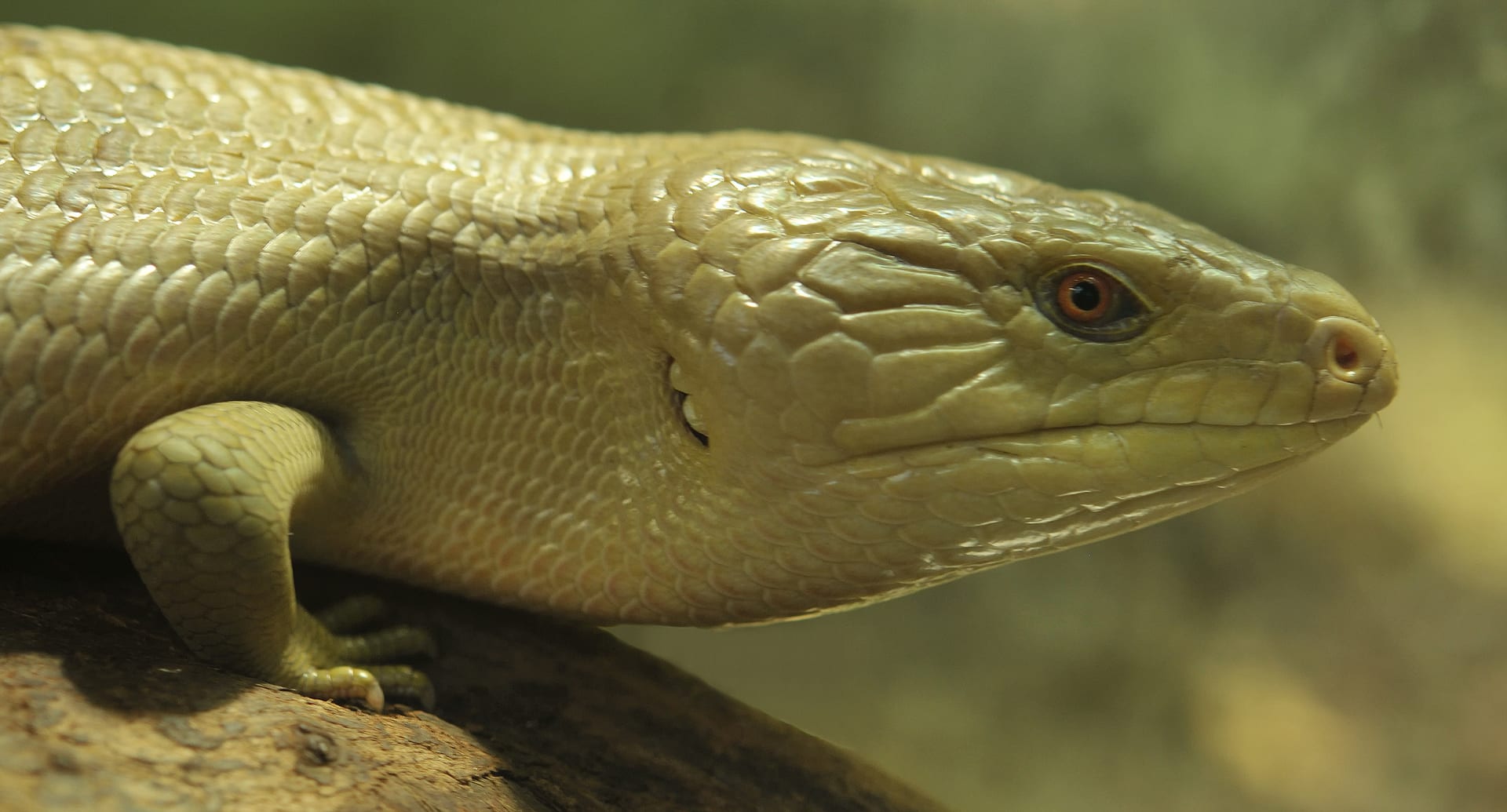
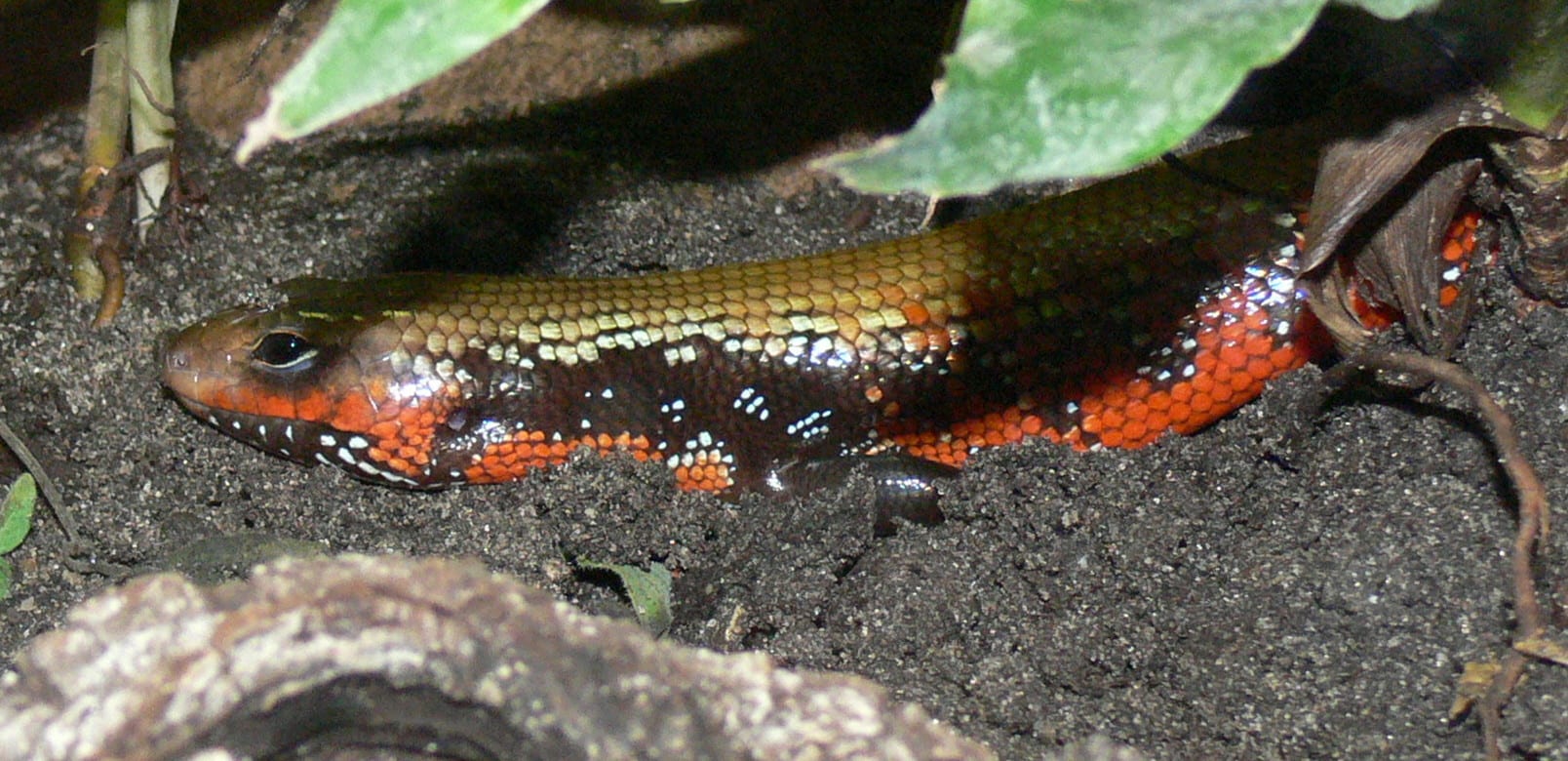
A large skink with a golden to bronze back and flanks banded in black and white over red. It has stout limbs and a thick tail, is crepuscular, and burrows or hides in cavities and under roots.
Difficulty
Beginner
Lifespan
15-20 years in captivity
Size
30-38cm total length (SVL 17-18cm)
Humidity
60〜70%
Diet
Carnivorous: insects and arthropods such as crickets, roaches and worms
About
The African fire skink (Mochlus fernandi) is a large skink of tropical West Africa and the westernmost part of Central Africa. It reaches 30-38 cm in total length with a snout-vent length of 17-18 cm, males being slightly larger and more brightly coloured. The back is a uniform golden to bronze brown, while the flanks from the head to about mid-tail carry strong black and white barring over red, and the legs are dark brown to blackish. Its squarish build and thick tail give it a typically skink-like appearance. The epithet fernandi refers to the island formerly known as Fernando Po, now Bioko. It is crepuscular and also basks during the day, is largely terrestrial, hides in cavities and under roots and will burrow into loose soil.
Source: Wikipedia (CC BY-SA 4.0)
Lifespan of the African Fire Skink
The African Fire Skink lives 15-20 years in captivity.
Captive lifespans of 15-20 years are commonly reported, and as a very hardy animal it is regarded as suitable for beginners.
Size of the African Fire Skink
The African Fire Skink grows to 30-38cm total length (SVL 17-18cm).
Basic Info
Origin
Tropical West Africa and the westernmost part of Central Africa, from Guinea to Angola, in rainforest, woodland and densely vegetated areas
Lifespan
15-20 years in captivity
Size
30-38cm total length (SVL 17-18cm)
Care Specifications
PeacefulSolitaryBreeding: Moderate
Sources: ReptiFiles: Fire Skink Care Sheet / Reptiles Magazine: African Fire Skink Care Sheet / Wikipedia (German): Feuerskink
References & Sources
Edited & verified by: BreederDirect editorial team
The taxonomic, regulatory, and husbandry data on this page are compiled and verified against the authoritative primary sources below.
Taxonomy & Authority
Accepted name: Mochlus fernandi (Burton, 1836)
Synonyms: Tiliqua fernandi Burton, 1836, Riopa fernandi (Burton, 1836), Lepidothyris fernandi (Burton, 1836), Plestiodon harlani Hallowell, 1845
Authority databases: GBIF · Reptile Database
Nomenclature follows global taxonomic authority databases.
Regulations & Conservation Status
Not CITES-listed
Not listed in any CITES appendix (no listing record in Species+). The IUCN Red List assessment could not be confirmed. This species is neither included among the designated animals listed in the Animal Welfare and Management Law Ordinance Schedule nor designated as an alien species under the Invasive Species Act Ordinance.
Sources: CITES Species+ (species not listed)
Regulations may change. Always verify the latest information with the relevant authorities.
African Fire Skink Listings
Loading latest listingsFind listings for this species