Source: Wikimedia Commons
Emerald Tree Skink
IntermediateLamprolepis smaragdina
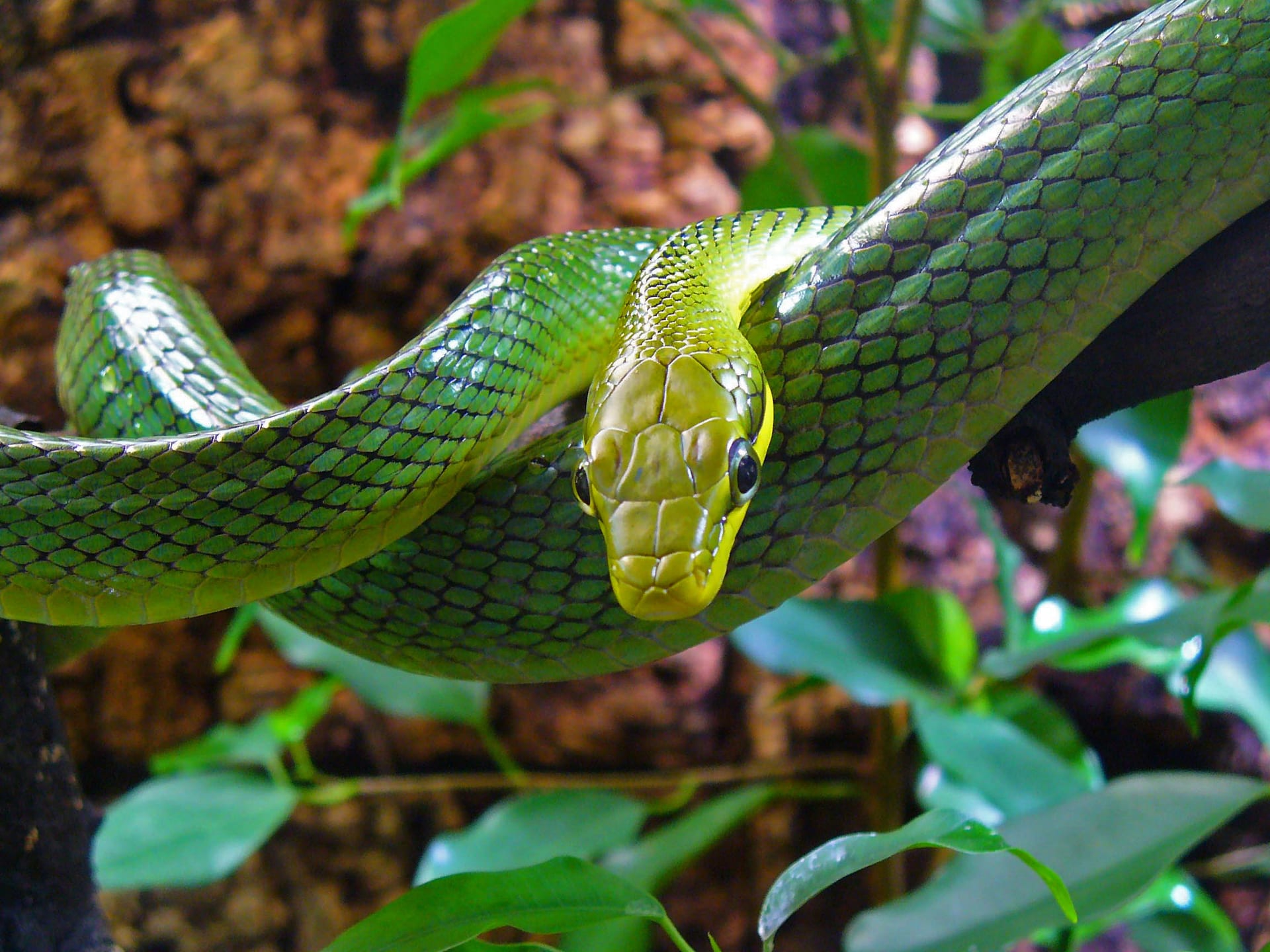
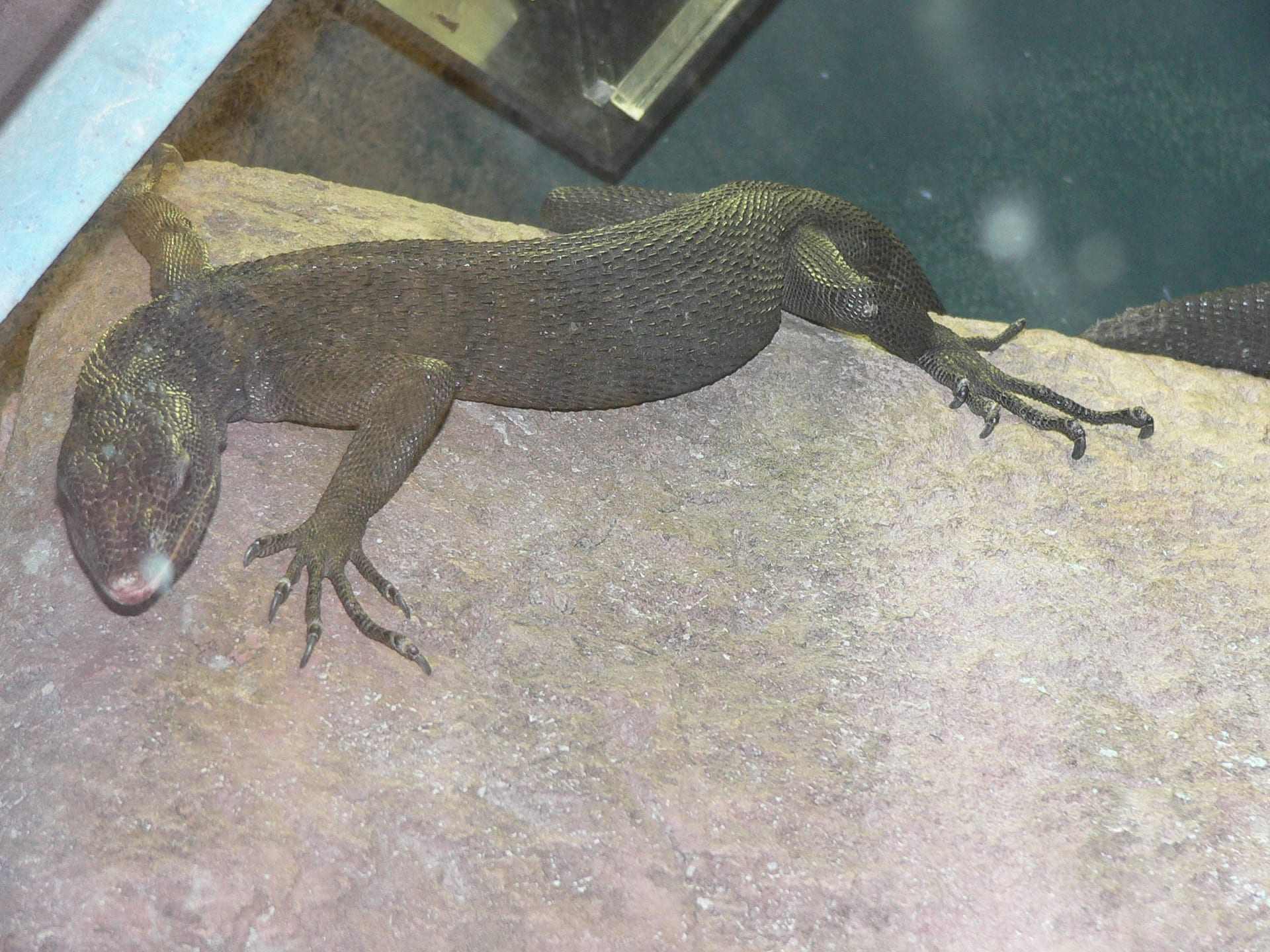
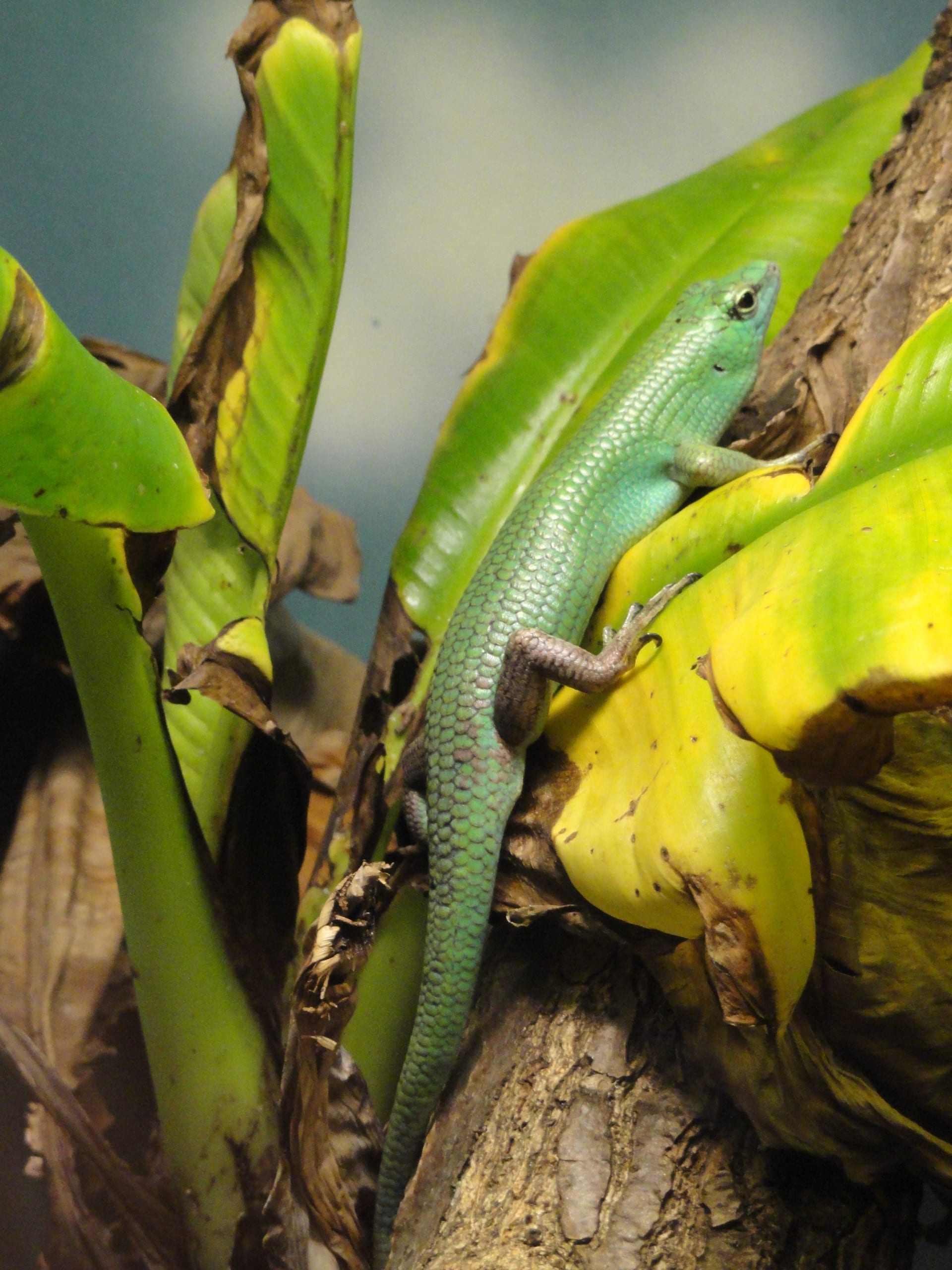
An arboreal skink in bright lime green with large black eyes rimmed in yellow. In some animals the hind limbs or the lower half of the body are medium brown speckled with white, and entirely brown or black-speckled individuals also occur.
Difficulty
Intermediate
Lifespan
At least 7 years with proper care
Size
22-25cm total length
Diet
Carnivorous: insects and arthropods such as crickets and roaches
About
The emerald tree skink (Lamprolepis smaragdina) is an arboreal skink widely distributed across the islands of South-East Asia and Oceania, reaching 22-25 cm in total length. It is typically bright lime green, though some animals have brown hind limbs or a brown lower body speckled with white, and entirely brown or black-speckled individuals occur. The large black eyes are rimmed with yellow. The type locality is Ebon Atoll in the Marshall Islands, and six subspecies are recognised. Genetically the most divergent populations are those of Sulawesi, while oceanic island populations represent more recent expansions, most attributed to waif dispersal before human colonisation. It is diurnal, living in the canopy of forest and moving actively over trunks and branches. It has become more common in the exotic pet trade in recent years, and most animals reaching Japan are wild-caught.
Source: Wikipedia (CC BY-SA 4.0)
Lifespan of the Emerald Tree Skink
The Emerald Tree Skink lives At least 7 years with proper care.
Size of the Emerald Tree Skink
The Emerald Tree Skink grows to 22-25cm total length.
Basic Info
Origin
Indonesia (the Lesser Sundas, Sulawesi, the Moluccas and others), the Philippines, New Guinea, the Solomon Islands, Micronesia, the Marshall Islands and Taiwan; introduced to Saipan in the Northern Mariana Islands
Lifespan
At least 7 years with proper care
Size
22-25cm total length
Care Specifications
Semi-aggressiveGroupBreeding: Hard
Sources: ReptiFiles: Emerald Tree Skink Care Sheet / Reptile Database: Lamprolepis smaragdina / Wikipedia (English)
References & Sources
Edited & verified by: BreederDirect editorial team
The taxonomic, regulatory, and husbandry data on this page are compiled and verified against the authoritative primary sources below.
Taxonomy & Authority
Accepted name: Lamprolepis smaragdina (Lesson, 1829)
Synonyms: Hinulia smaragdina Lesson, 1826, Dasia smaragdina (Lesson, 1826), Lygosoma smaragdina (Lesson, 1826)
Authority databases: GBIF · Reptile Database
Nomenclature follows global taxonomic authority databases.
Regulations & Conservation Status
Not CITES-listedIUCN LC · Least Concern
Not listed in any CITES appendix (not recorded in Species+). IUCN Red List assessment: Least Concern (LC). This species is not included in either the specified animals listed in the appended table of the Ordinance for Enforcement of the Animal Welfare and Management Law, nor the specified invasive alien species under the Ordinance for Enforcement of the Invasive Alien Species Act.
Sources: CITES Species+ (species not listed) / IUCN Red List
Regulations may change. Always verify the latest information with the relevant authorities.
Emerald Tree Skink Listings
Loading latest listingsFind listings for this species