Source: Wikimedia Commons
Red-Tailed Green Rat Snake
AdvancedGonyosoma oxycephalum
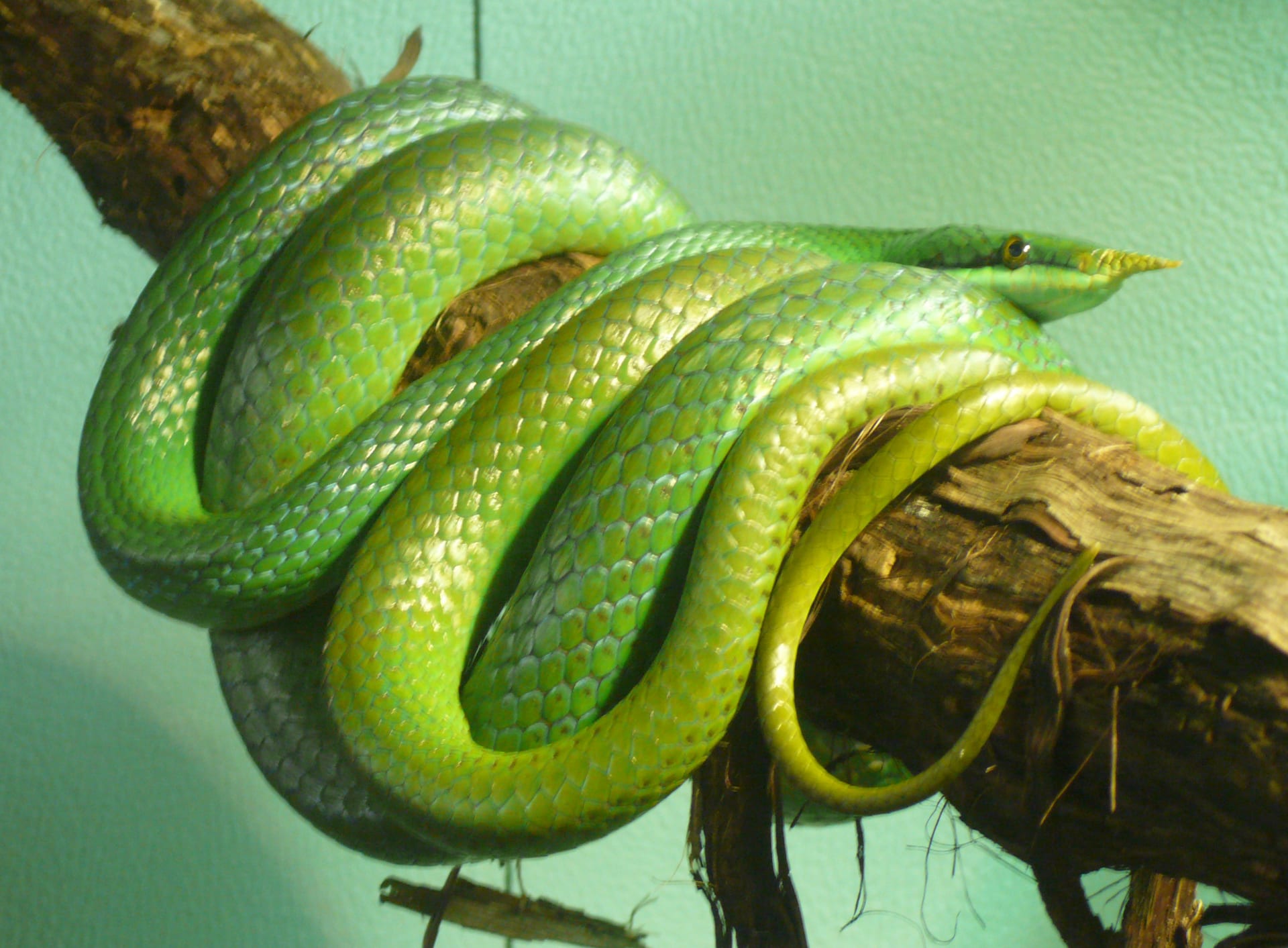
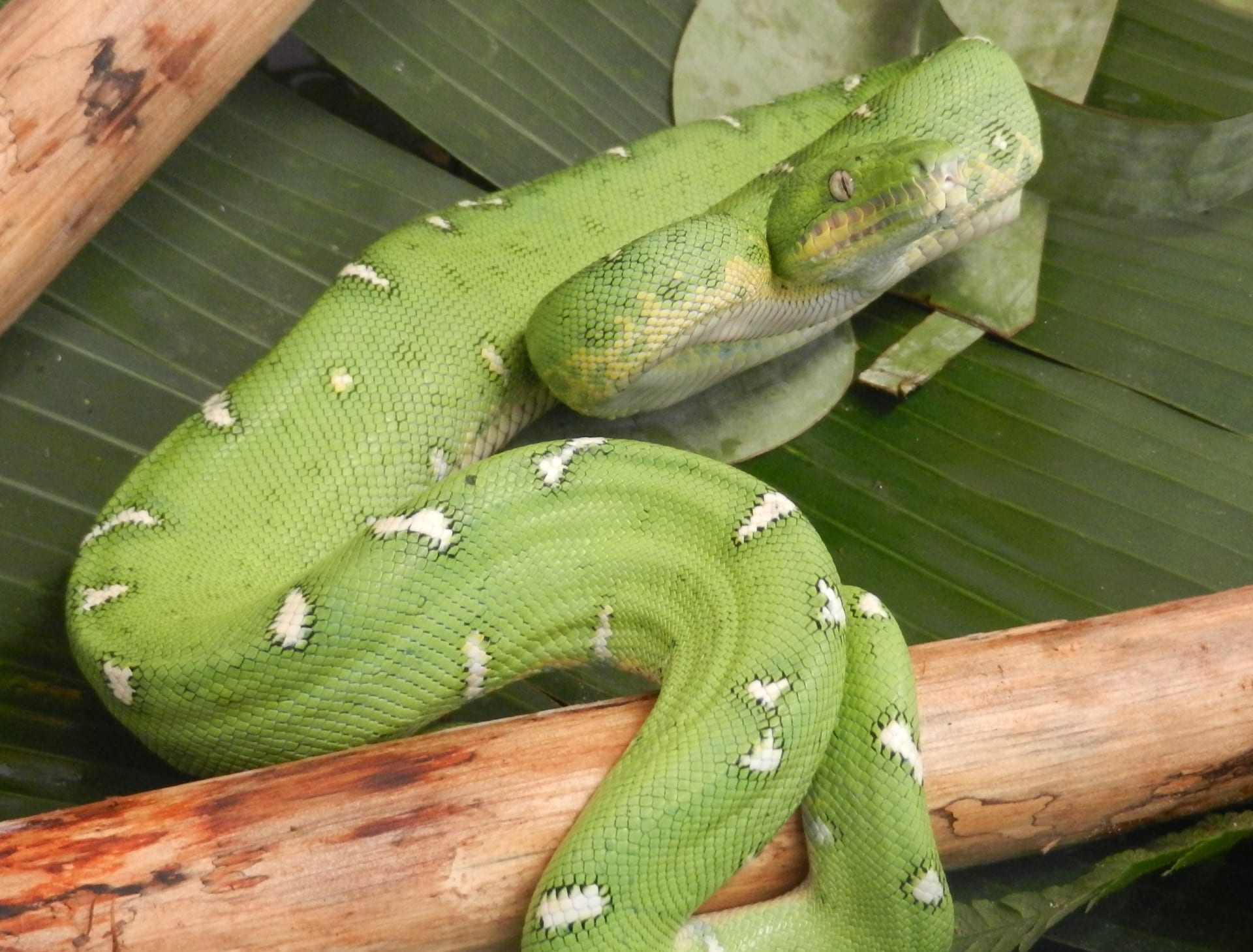
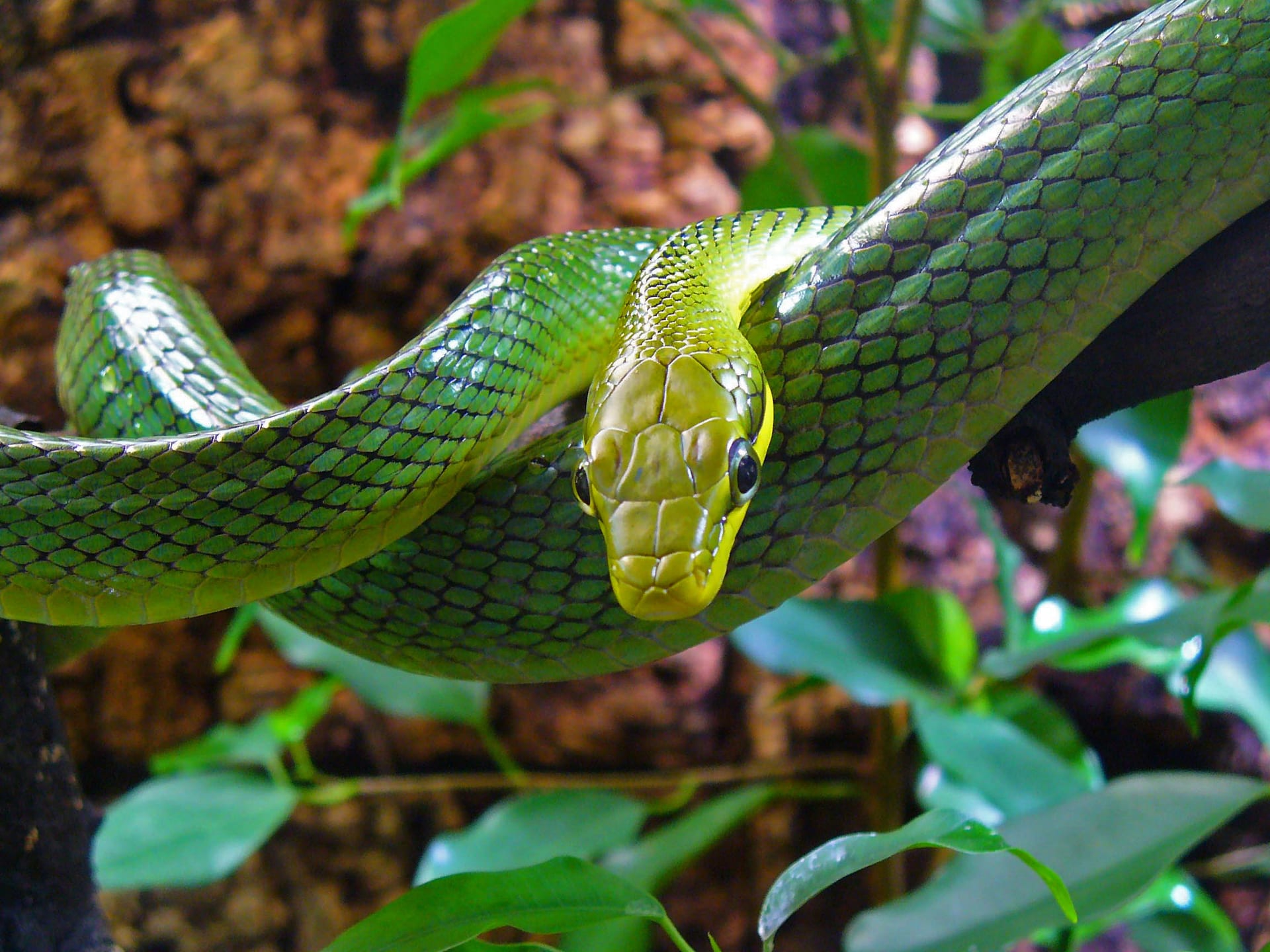
A large arboreal colubrid with a bright green body and an orange, brown or grey tail. The head is narrow with large eyes, and while the labials are yellow to yellow-green the mouth lining is black and the tongue blue. Threatened, it compresses its neck laterally in display.
Difficulty
Advanced
Temperature
25〜32℃
Lifespan
14-20 years
Size
160-230cm total length; females reach 2.4m while males are slightly smaller but more brightly coloured
Humidity
40〜70%
Diet
Carnivorous: birds and their eggs, lizards and bats, caught in mid-air while the snake hangs from branches
About
The red-tailed green rat snake (Gonyosoma oxycephalum) is a large arboreal colubrid of South-East Asian rainforest. It measures 160-230 cm, with females reaching 2.4 m and males slightly smaller but more brightly coloured. The body is long and slender, bright to light green and sometimes marked with a black net-like pattern, while the tail may be orange, brown or grey depending on locality; a grey morph with a yellow head occurs on Panay in the Philippines. The head is narrow, with large, sharp-sighted eyes and a dark line across the eye. The labials are yellow to yellow-green, but the mouth lining is black and the tongue blue. Broad, smooth ventral scales suit it to moving through trees and along branches. It spends almost its whole life in trees and tree cavities and rarely descends. Diurnal, it takes birds and their eggs, lizards and bats, catching them in mid-air while hanging from a branch. It matures at four years, lays three to eight eggs between September and January, and the young hatch after 13-16 weeks at about 45 cm.
Source: Wikipedia (CC BY-SA 4.0)
Lifespan of the Red-Tailed Green Rat Snake
The Red-Tailed Green Rat Snake lives 14-20 years.
Size of the Red-Tailed Green Rat Snake
The Red-Tailed Green Rat Snake grows to 160-230cm total length; females reach 2.4m while males are slightly smaller but more brightly coloured.
Basic Info
Origin
Indonesia, Malaysia, Singapore, Thailand, Myanmar, Cambodia, Laos, Vietnam, the Philippines and India (the Andaman Islands), in the trees of rainforest and swamp
Lifespan
14-20 years
Care Specifications
AggressiveSolitaryBreeding: Hard
Sources: Reptile Database: Gonyosoma oxycephalum / Wikipedia (Japanese) / Wikipedia (English)
References & Sources
Edited & verified by: BreederDirect editorial team
The taxonomic, regulatory, and husbandry data on this page are compiled and verified against the authoritative primary sources below.
Taxonomy & Authority
Accepted name: Gonyosoma oxycephalum (Boie, 1827)
Synonyms: Coluber oxycephalus Boie, 1827, Gonyosoma viride Wagler, 1828, Aepidea robusta Hallowell, 1861
Authority databases: GBIF · Reptile Database
Nomenclature follows global taxonomic authority databases.
Regulations & Conservation Status
Not CITES-listedIUCN LC · Least Concern
Not listed in any CITES appendix (not recorded in Species+). IUCN Red List assessment: Least Concern (LC). This species is not included in either the specified animals listed in the appended table of the Ordinance for Enforcement of the Animal Welfare and Management Law, nor the specified invasive alien species under the Ordinance for Enforcement of the Invasive Alien Species Act.
Sources: CITES Species+ (species not listed) / IUCN Red List
Regulations may change. Always verify the latest information with the relevant authorities.
Red-Tailed Green Rat Snake Listings
Loading latest listingsFind listings for this species