Green Iguana Feeding Guide: Vegetables, Fruits, and Forbidden Foods | ブリちょく
Reptiles| ✍️ BreederDirect Editorial
Green Iguana Feeding Guide: Vegetables, Fruits, and Forbidden Foods
Explanation of proper diet management for green iguanas. Introduction to types of vegetables and fruits suitable for herbivorous green iguanas, feeding frequency, forbidden foods that must never be given, and calcium supplementation methods.
Key Takeaways
Explanation of proper diet management for green iguanas. Introduction to types of vegetables and fruits suitable for herbivorous green iguanas, feeding frequency, forbidden foods that must never be given, and calcium supplementation methods.
Green Iguanas Are Completely Herbivorous! Master the Basics
✍️
BreederDirect Editorial
The BreederDirect editorial team specializes in care information for animals, covering veterinary care and breeding to deliver beginner-friendly guides.
Find Reptiles on BreederDirect
Buy directly from verified breeders
Browse Related Listings
Find Reptiles listings related to this article on BreederDirect. Buy directly from verified breeders.
Related Tools
Related Articles
Browse by Category
🪸Coral
🐠Marine Fish
🐟Tropical Fish
🐡Goldfish
🐟Medaka
🦎Reptiles
Share
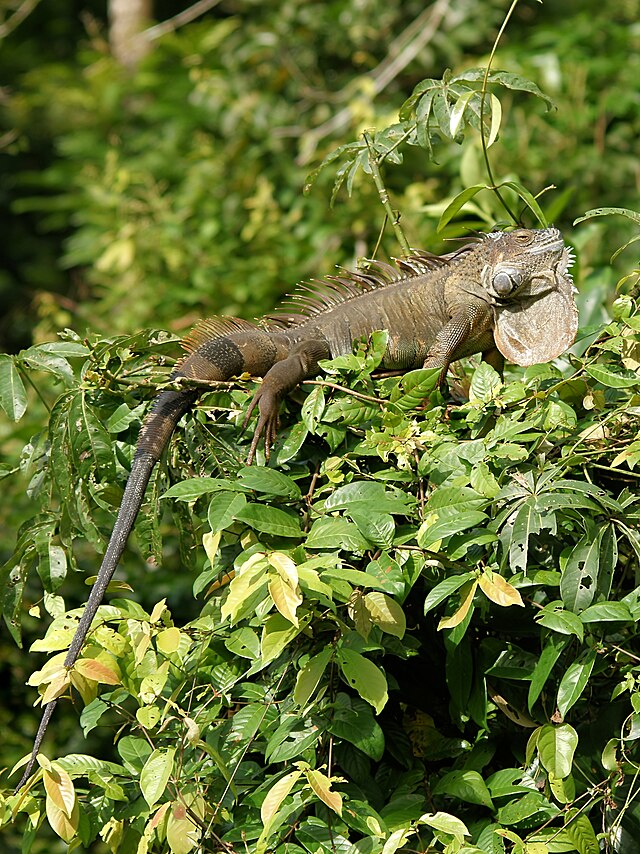
Green iguanas are large lizards native to Central and South America that grow to 1.5 to 2 meters in length when fully mature, making them truly impressive reptiles to keep. The first thing you need to know about caring for them is that green iguanas are completely herbivorous. In the wild, they feed primarily on tree leaves and fruits, and they require no insects or meat whatsoever.
You might think, "They're lizards, so shouldn't I feed them crickets?" However, giving green iguanas animal protein puts severe strain on their kidneys and can lead to kidney failure. This is one of the most dangerous mistakes beginners commonly make.
The fundamental principle of diet management is "a variety of vegetables as the main food, with fruits only in small amounts as treats." If you follow this principle, your green iguana will live a long, healthy life (in captivity, it's not uncommon for them to live 10 to 15 years or longer).
---
Vegetables to Give Actively
The center of a green iguana's diet should be leafy vegetables. The following vegetables have excellent nutritional balance and can be given daily as staple foods.
Vegetables ideal as daily staples
Bok choy: Rich in calcium with excellent palatability. Easy to obtain and stable in price, making it an excellent foundation for the main diet
Komatsuna (Japanese mustard greens): Contains a good balance of vitamin A and calcium. Often confused with spinach, but komatsuna is far superior for green iguanas
Mizuna (Japanese mustard greens): Provides hydration and its different texture is effective when appetite decreases
Watercress: Rich in iron and calcium. Adding small amounts provides nutritional enhancement
Salad greens and leaf lettuce: High water content and easily digestible. However, not nutrient-dense, so combine with other vegetables
Vegetables good to give several times a week
Squash (with skin): Rich in vitamin A. Easier to eat when steamed until soft
Carrot (grated or finely sliced): Rich in beta-carotene. Hard, so chop finely or heat before serving
Green beans: Good balance of protein and dietary fiber
Unripe papaya: Aids digestion and has intestinal-regulating properties
Choose organically grown vegetables when possible, or wash thoroughly before feeding. Pesticide accumulation can negatively impact their health.
---
Fruits Should Be Limited to "Treats" in Small Amounts
Fruits are a delicacy for green iguanas, but their high sugar content makes overfeeding dangerous. Keep them to 10–15% of the overall diet.
Fruits that can be given
Mango: Rich in vitamin A with excellent palatability. However, high in sugar, so limit to once or twice weekly
Strawberry: Rich in vitamin C. Easy to eat when cut into small pieces
Blueberry: Contains antioxidants; in small amounts, health benefits can be expected
Apple (without skin): A standard fruit that also provides hydration. Remove seeds
Banana: Excellent palatability but high in potassium with poor phosphorus-calcium balance, so limit to small amounts
When feeding fruit, mix it with vegetables to prevent your iguana from selecting only fruit. Green iguanas are intelligent and have a habit of picking out their favorite foods.
---
Forbidden Foods That Must Never Be Given
Some foods can be life-threatening if consumed. The following are absolutely forbidden foods.
Toxic items
Avocado: Contains persin, a toxin that causes serious damage to the heart and lungs. Dangerous even in small amounts
Onion, scallion, garlic: Contain compounds that destroy red blood cells, causing anemia
Rhubarb: Extremely high in oxalic acid, which not only prevents calcium absorption but also damages the kidneys
Foods harmful to kidneys and metabolism
Spinach: High in oxalic acid, which combines with calcium to form "calcium oxalate." This leads to both calcium deficiency and kidney strain. Complete avoidance is not necessary, but frequent feeding should be avoided
Broccoli and cauliflower: Contain goitrogens, compounds that interfere with thyroid hormone function. Small amounts once weekly are acceptable, but avoid making them staples
Cabbage: Also contains goitrogens. Small amounts are fine, but don't make it a staple
All animal-based foods
Insects such as crickets and mealworms
Pinkie mice and meat
Dairy and other animal products such as cheese and eggs
These place enormous strain on the kidneys. Don't fall into the trap of thinking "occasional feeding should be fine."
---
The Important Connection Between Calcium Supplementation and UV Light
Often overlooked in green iguana care is calcium supplementation. Calcium deficiency causes a condition called "metabolic bone disease (MBD)," resulting in bone deformities and increased fracture susceptibility.
There are two approaches to calcium supplementation.
1. Supplement dusting
Dust commercial reptile calcium powder over the food. The guideline is 3–4 times weekly. Avoid overdose, so space applications out rather than using them at every feeding.
Calcium powder comes in two types: "with vitamin D3" and "without vitamin D3." Use D3-free powder if you have outdoor enclosures or sufficient UV-B lighting; use D3-fortified powder if UV-B is insufficient.
2. Ultraviolet (UVB) lighting
Green iguanas synthesize vitamin D3 in their bodies when exposed to UVB, which enables calcium absorption. Install appropriate UVB lighting (10.0 or higher intensity is recommended) and keep it on for 12–14 hours daily.
Sunlight through glass passes almost no UVB, so creating an environment with direct exposure is critical.
---
Practical Feeding Schedule and Tips
Finally, here are practical hints for maintaining a sustainable daily feeding routine.
Feeding frequency
- Juveniles (up to 1 year): Daily
- Subadults (1–3 years): Daily to every other day
- Adults (3 years and older): Every 2–3 days
Tips for meal preparation
Wash several types of vegetables together and chop into pieces, then store in the refrigerator for 2–3 days of feedings. Rather than feeding the same vegetables every time, rotate varieties to maintain nutritional balance and keep your iguana from becoming bored.
Don't force feeding if they refuse
Appetite may decrease during shedding, mating season (especially in males), and seasonal transitions. If your iguana appears healthy but hasn't eaten for 2–3 days, monitor the situation. However, if appetite loss persists for a week or longer, consult an exotic animal veterinarian.
Don't forget to provide water
Keep a shallow water dish clean and provide fresh water daily. Green iguanas enjoy soaking, so if possible, provide a container large enough for them to submerge their entire body.
Proper diet management may seem labor-intensive, but once you establish a routine, it becomes second nature. To help your green iguana live a long and healthy life, review its diet starting today.