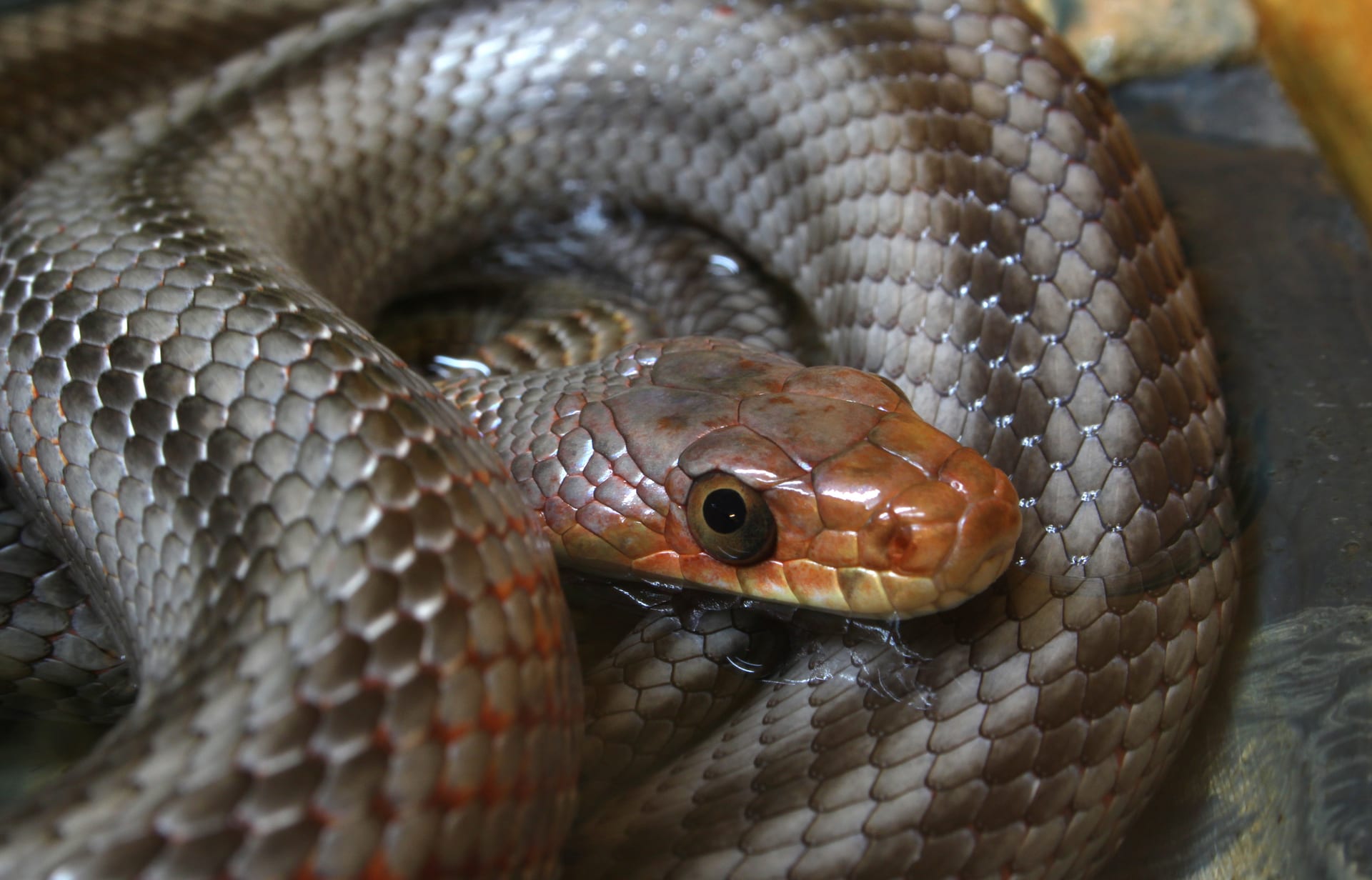
Source: Wikimedia Commons
Oriental Odd-Tooth Snake
AdvancedLycodon orientalis
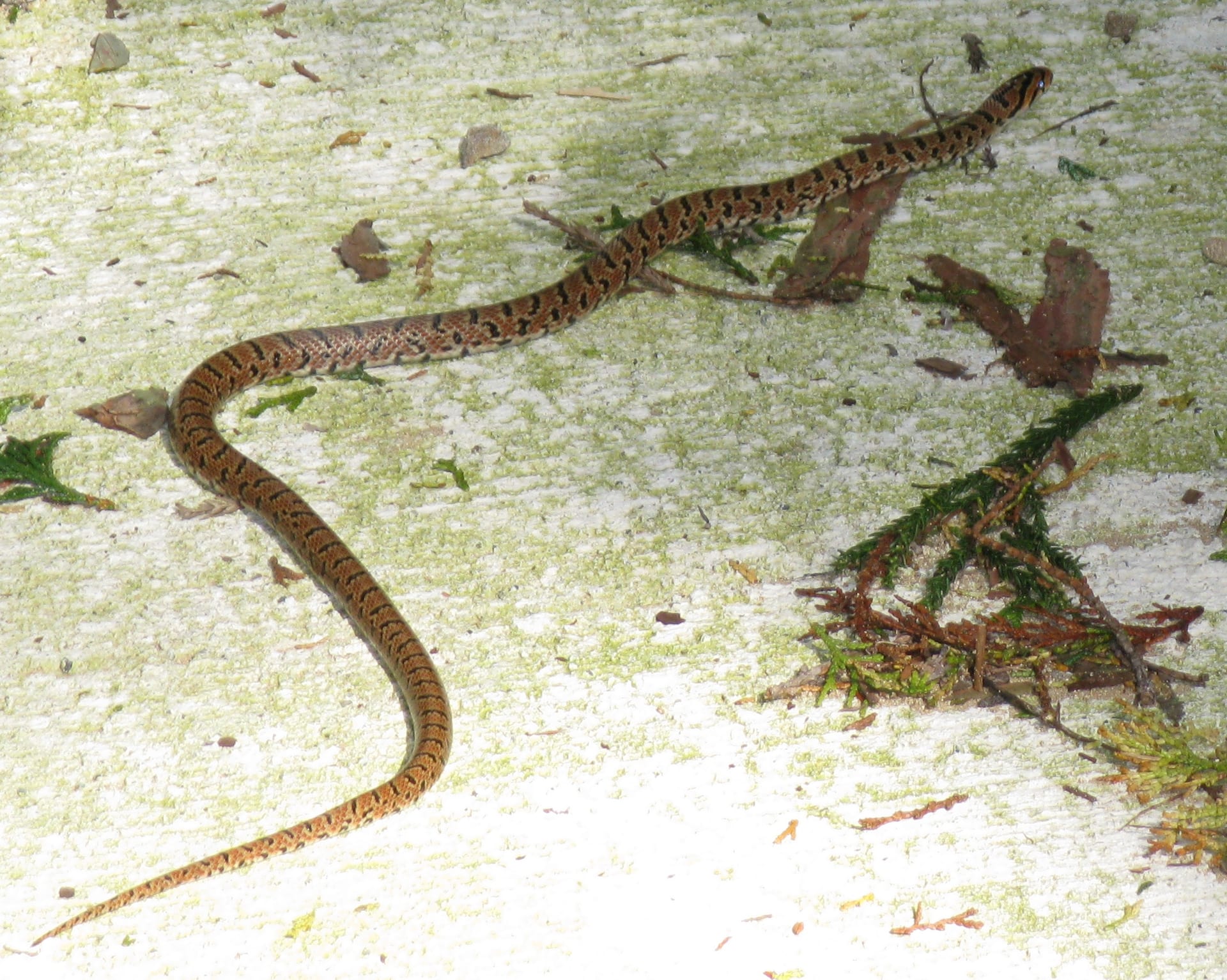
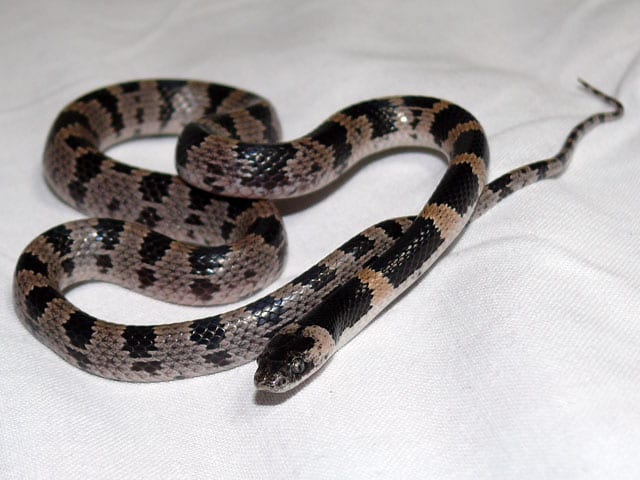
A small Japanese endemic, pale brown with blackish-brown crossbars and a blackish-brown head. Juveniles are more strongly marked and have a pale patch on the nape. Nocturnal and rarely encountered, it is called a phantom snake in some areas.
Difficulty
Advanced
Temperature
25〜32℃
Lifespan
8-12 years
Size
30-70cm total length
Humidity
40〜70%
Diet
Carnivorous: small reptiles such as lizards and snakes, and frogs
About
The Oriental odd-tooth snake (Lycodon orientalis) is a colubrid endemic to Japan. A small species of 30-70 cm, it has 17 rows of dorsal scales, 199-214 ventrals and 68-75 pairs of subcaudals. The head is blackish brown and the body pale brown with blackish-brown crossbars; juveniles are more strongly marked and carry a pale patch on the nape. It lives in low-montane forest, is largely terrestrial though it will climb, and is nocturnal, sheltering by day under stones and fallen timber. Non-venomous, it responds to threat either by mimicking a venomous snake or by feigning death. Its diet consists mainly of small reptiles such as the Japanese odd-scaled snake, the Japanese grass lizard and the Japanese five-lined skink, and it also takes frogs including the Japanese common toad. It is oviparous, laying one to nine eggs in summer. Because it is nocturnal and its numbers have declined, sightings are very rare and it is known in some areas as a phantom snake. It was formerly placed in the genus Dinodon.
Source: Wikipedia (CC BY-SA 4.0)
Lifespan of the Oriental Odd-Tooth Snake
The Oriental Odd-Tooth Snake lives 8-12 years.
Size of the Oriental Odd-Tooth Snake
The Oriental Odd-Tooth Snake grows to 30-70cm total length.
Basic Info
Origin
Endemic to Japan (Hokkaido, Honshu, Shikoku, Kyushu and islands including Izu Oshima, Okushiri, the Oki Islands, Sado, the Goto Islands, Iki, Tanegashima and Yakushima), with a record from Shiashkotan in the Russian Kuril Islands, in low-montane forest
Lifespan
8-12 years
Care Specifications
Semi-aggressiveSolitaryBreeding: Very hard
Sources: Wikipedia (Japanese) / Wikipedia (English): Oriental odd-tooth snake / Reptile Database: Lycodon orientalis
References & Sources
Edited & verified by: BreederDirect editorial team
The taxonomic, regulatory, and husbandry data on this page are compiled and verified against the authoritative primary sources below.
Taxonomy & Authority
Accepted name: Lycodon orientalis (Hilgendorf, 1880)
Synonyms: Ophites orientalis Hilgendorf, 1880, Ophites japonicus Günther, 1880, Dinodon orientale (Hilgendorf, 1880)
Authority databases: GBIF · Reptile Database
Nomenclature follows global taxonomic authority databases.
Regulations & Conservation Status
Not CITES-listedIUCN LC · Least Concern
Not listed in CITES Appendix (no record in Species+). IUCN Red List assessment is Least Concern (LC). This species is neither designated under the Law on Welfare and Management of Animals nor included as a designated invasive species under the Invasive Species Act. Endemic to Japan with declining populations; wild collection may be subject to local government ordinances and protected area regulations.
Sources: CITES Species+ (species not listed) / IUCN Red List
Regulations may change. Always verify the latest information with the relevant authorities.
Oriental Odd-Tooth Snake Listings
Loading latest listingsFind listings for this species