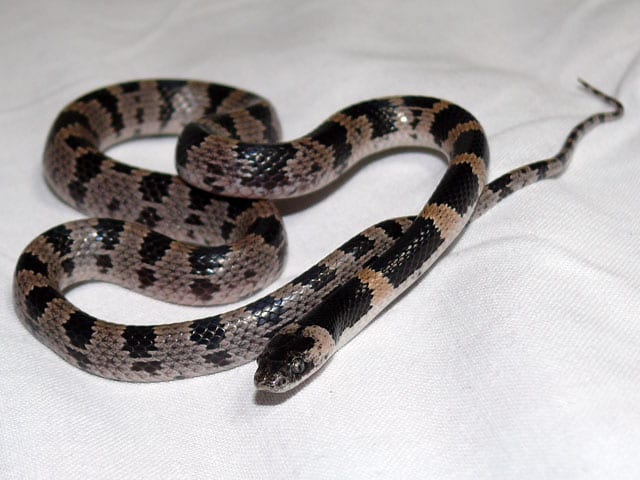
 © Koolah ( talk ) / CC BY-SA 3.0
Oriental Odd-Tooth Snake
The Oriental Odd-Tooth Snake is a small snake native to Japan, found across Honshu, Shikoku, and Kyushu. Its pale brown body is marked with dark brown crossbands, and its notably dark head gives it a distinctive, striking look. Because it is nocturnal and spends much of its time hidden, sightings in the wild are rare, earning it a reputation as a "phantom snake" among Japanese reptile enthusiasts. While generally calm in temperament, it mainly preys on other reptiles, which makes feeding more demanding and is one reason it's considered a species for experienced keepers. Adults reach a total length of about 30 to 70 cm, making them relatively compact snakes with an elusive charm that appeals to dedicated keepers.
View Oriental Odd-Tooth Snake encyclopedia →0% commission on your first sales!Register by September 30, 2026 and your first 2 sales are commission-free!
Breeder Wanted!
List on BreederDirect and sell directly to customers nationwide!
6 Transparency Promises from Br-Choku
Every Reptiles & Amphibians from verified Breeder breeders includes complete information: morph, genetics, feeding requirements, and temperament details.
- Morph Information
- Actual Photos
- Feeding Information
- Temperament Information
- Genetics Information
- Age (Months)
Browse all 280 breeds
Difficulty Level
Feeding Type
Temperament
Verified breeders wanted for Reptiles & Amphibians
Breeders are signing up now ahead of launch. Subscribe to be notified when new listings go live.
Getting alerts is free with a member account. When new listings match your saved search, we'll notify you by email and in-app.
Browse other categories
Verified breeders (preview)
Are you raising reptiles & amphibians?
Register as a breeder and connect with buyers directly.
Apply as a breederOriental Odd-Tooth Snake key facts
- Care level
- Advanced
- Lifespan
- 8-12 years
- Size
- 30-70cm total length
- Diet
- Carnivorous: small reptiles such as lizards and snakes, and frogs
- Temperature & Humidity
- A native temperate snake ranging from Hokkaido to Kyushu, living on the floor of low-montane forest. As an animal adapted to the Japanese climate it needs no excessive heating; aim for cool, slightly damp forest-floor conditions with seasonal variation.
- Enclosure
- A small snake of up to 70 cm; being terrestrial it needs floor area rather than height. Place stone- and log-style hides flush with the floor and provide substrate it can work into. It is nocturnal and hides by day, so observe it in the dimmer hours. Keep a water container available at all times.
- Diet & Feeding
- It specialises in small reptiles, taking lizards and small snakes as well as frogs. It is difficult to convert to mice, which is much of what makes it hard to keep. Before acquiring one, make sure you have a reliable, continuing supply of appropriate food.
- Temperament
- Non-venomous, but when threatened it either raises its forebody in mimicry of a venomous snake or feigns death. Nocturnal and rather highly strung, it is not a species for handling. Because it eats snakes, keep it singly.
- Notes
- Not listed on any CITES appendix. The IUCN assesses it as Least Concern. It appears neither on the schedule of designated dangerous animals under the Order for Enforcement of the Act on Welfare and Management of Animals nor on Japan's list of invasive alien species. It is a declining Japanese endemic and appears on the red lists of several prefectures. Collection from the wild may be restricted by local ordinances or by rules covering protected areas, so check the regulations where you live first. Its narrow diet of small reptiles makes it demanding to keep.
About Oriental Odd-Tooth Snake
A guide to the Oriental Odd-Tooth Snake, Japan's elusive native snake — its pale brown, dark-banded pattern, nocturnal habits, and what to know before bringing one home.
7 things to know before welcoming a Oriental Odd-Tooth Snake
1Advanced-Level Care
The Oriental Odd-Tooth Snake is considered suitable for experienced keepers. Managing its particular feeding needs and habitat requires prior snake-keeping experience.
2Specialized Diet & Feeding
In the wild, this species mainly preys on other reptiles, so getting it to accept prepared food can take extra effort. It's worth researching feeding approaches before bringing one home.
3Nocturnal, Hidden by Day
This snake spends daylight hours tucked away in hides and shelters. If you want to observe its activity, check on it in the evening or at night.
4Calm but Easily Startled
Its temperament is generally mild, but it is easily startled and prefers to stay hidden. Avoid excessive handling and provide a quiet, secure enclosure.
5Compact Size, Less Space
Adults reach only about 30 to 70 cm, so they need less space than larger snake species. Still, choose an enclosure with secure, escape-proof lids.
6Appearance Changes With Age
Juveniles show more distinct banding and a lighter patch behind the head. The pattern and coloring gradually change as the snake matures.
7A Rare, Native Japanese Species
Found across Honshu, Shikoku, and Kyushu, this snake is native to Japan and rarely seen in the wild, earning it the nickname "phantom snake." Its elusive nature appeals to reptile enthusiasts.
Frequently asked questions about Oriental Odd-Tooth Snake
- Q.Is the Oriental Odd-Tooth Snake suitable for beginners?
- A.This species is generally considered suitable for experienced keepers. Its particular feeding requirements call for prior knowledge and snake-keeping experience.
- Q.What should I feed it?
- A.In the wild, it mainly preys on other reptiles, so getting it to accept food can require extra effort. It's a good idea to research feeding methods before bringing one home.
- Q.Will I rarely see it during the day?
- A.Yes, this snake is nocturnal and tends to stay hidden in shelters during daylight hours. Evening or nighttime is the best time to observe its activity.
- Q.Is it aggressive?
- A.Its temperament is generally calm, though it tends to be easily startled and prefers to stay hidden. Avoid excessive handling and provide a quiet, secure environment.
- Q.Is it subject to CITES regulation?
- A.The Oriental Odd-Tooth Snake is not subject to CITES. This is worth knowing when considering this species.
Useful tools for Oriental Odd-Tooth Snake care
Learn more about Oriental Odd-Tooth Snake in the encyclopedia
View Oriental Odd-Tooth Snake encyclopedia entry →
Care difficulty, lifespan, size and diet — all basics covered.
More in this category
Can't find the one you're looking for?
Post your wishes for free and breeders with matching animals will contact you with introductions.