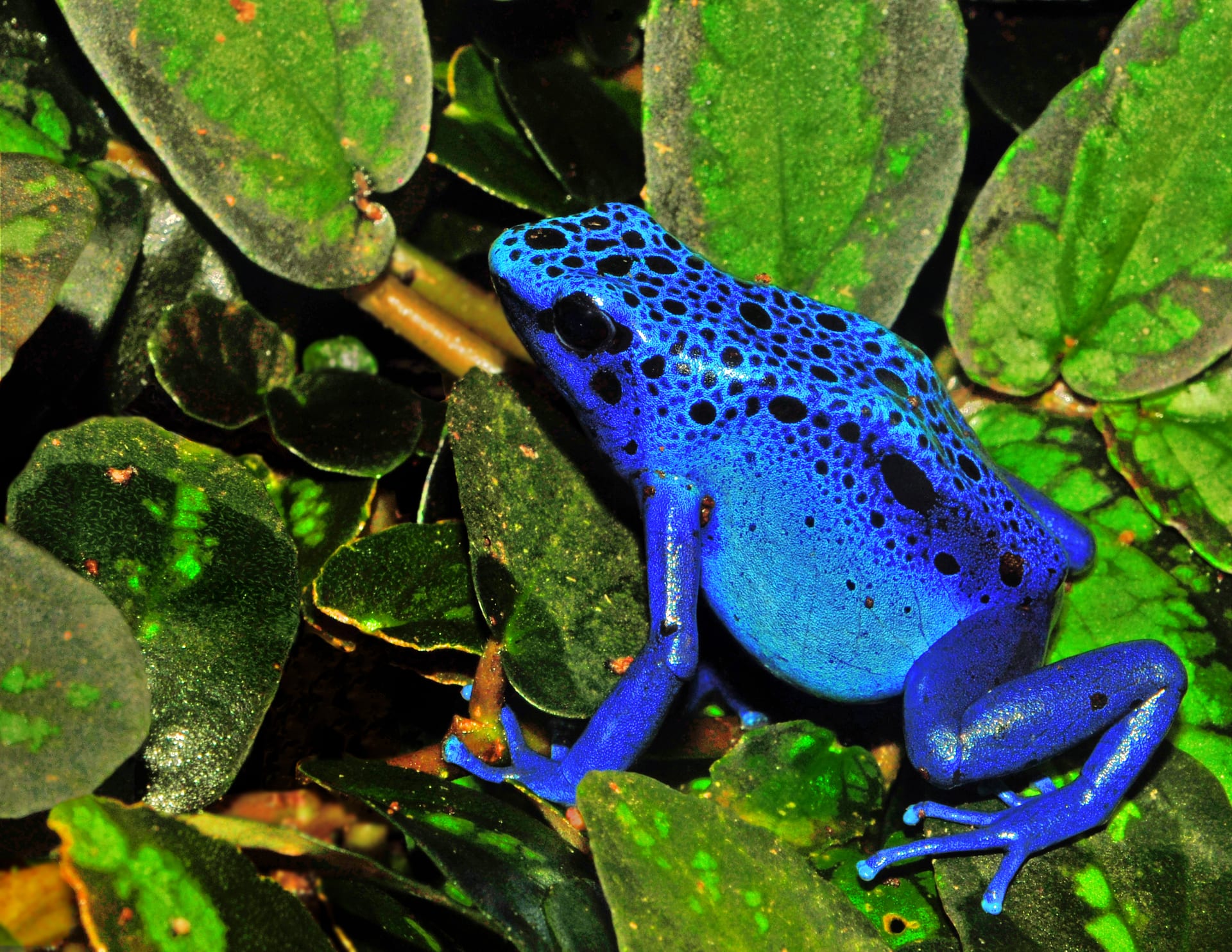
 © Michael Gäbler / CC BY 3.0
Dyeing Poison Frog
The Dyeing Poison Frog is a large poison frog species native to the Guiana Shield in South America, known for its striking black body marked with yellow or white bands and blue-speckled limbs. The all-blue "cobalt" form is also part of this species, and the many regional variants offer a wide range of looks to enjoy. Adults typically reach 3.5 to 7 cm, making them one of the larger poison frogs. Captive-bred individuals are non-toxic, so with the right knowledge even beginners can consider keeping one, though maintaining proper humidity and habitat conditions calls for some experience, which is why this species is generally recommended for intermediate keepers ready to invest in a well-set-up enclosure.
View Dyeing Poison Frog encyclopedia →0% commission on your first sales!Register by September 30, 2026 and your first 2 sales are commission-free!
Breeder Wanted!
List on BreederDirect and sell directly to customers nationwide!
6 Transparency Promises from Br-Choku
Every Reptiles & Amphibians from verified Breeder breeders includes complete information: morph, genetics, feeding requirements, and temperament details.
- Morph Information
- Actual Photos
- Feeding Information
- Temperament Information
- Genetics Information
- Age (Months)
Browse all 280 breeds
Difficulty Level
Feeding Type
Temperament
Verified breeders wanted for Reptiles & Amphibians
Breeders are signing up now ahead of launch. Subscribe to be notified when new listings go live.
Getting alerts is free with a member account. When new listings match your saved search, we'll notify you by email and in-app.
Browse other categories
Verified breeders (preview)
Are you raising reptiles & amphibians?
Register as a breeder and connect with buyers directly.
Apply as a breederDyeing Poison Frog key facts
- Care level
- Intermediate
- Lifespan
- 10-15 years
- Size
- 3.5-7cm
- Temperature
- 23〜28℃
- Humidity
- 70〜100%
- Diet
- Fruit flies, pinhead crickets, springtails
- Temperature & Humidity
- Keep 23-28 C by day with a drop to 18-21 C at night. Maintain 70-100% humidity by misting once or twice daily. Temperatures above 28 C are dangerous.
- Enclosure
- A 61 x 30 x 40 cm glass terrarium suits two to six adults. Use coco fibre or sphagnum, with wood, live plants and leaf litter for hides and visual barriers.
- Diet & Feeding
- Flightless fruit flies (D. melanogaster and D. hydei) as the staple, with pinhead crickets, springtails and isopods. Feed adults every other day and juveniles daily, dusting with a calcium and vitamin supplement.
- Temperament
- Diurnal but shy, and strongly territorial towards conspecifics once mature. It is among the more exclusive Dendrobates, so male-female pairs are the usual unit.
- Notes
- Captive-bred frogs are not toxic, but their skin is delicate, so avoid bare-handed handling. Never mix different locality morphs, as they interbreed.
About Dyeing Poison Frog
A large poison frog from the Guiana Shield with black-and-yellow or white banding and blue-flecked limbs, including the cobalt form. Captive-bred, non-toxic, suited to intermediate keepers.
7 things to know before welcoming a Dyeing Poison Frog
1High humidity is essential
Coming from tropical rainforests, they need consistently high humidity in the enclosure. Regular misting or an automatic misting system helps prevent the habitat from drying out. Balancing ventilation with moisture retention is key to successful husbandry.
2Captive-bred frogs are non-toxic
Wild individuals secrete toxins accumulated from their natural diet, but captive-bred frogs never eat those prey items and therefore do not produce toxins. Still, it's good practice to wash your hands after handling, just to be safe.
3Many regional color variants
With over 30 known regional variants, patterns and coloration differ significantly depending on locality. The all-blue cobalt form is especially popular, and the visual differences between variants can be striking enough that they barely look like the same species. Check which variant you're getting before bringing one home.
4Diet centers on fruit flies
Their main diet consists of tiny insects like fruit flies and springtails. Breeding and managing feeder insects is part of the routine, so it helps to plan your supply source in advance. Dusting food with calcium and other supplements is also essential.
5Keep alone or in small groups
They can be kept individually, but if housing multiple frogs together, watch for territorial disputes between males. When keeping a pair or small group, provide multiple hiding spots and a layout that lets them avoid unwanted interaction.
6A well-cycled vivarium matters
A live planted vivarium with moss is the ideal setup. Getting the layout and micro-ecosystem reasonably established before introducing the frog reduces stress on the animal. Taking time to prepare properly is the surest path to success.
7Larger size needs more space
As adults reach 3.5 to 7 cm, they grow larger than many other poison frog species, so choose an enclosure with adequate space. A cramped habitat can cause stress, so plan the enclosure size with their full growth in mind.
Frequently asked questions about Dyeing Poison Frog
- Q.Is the cobalt form a different species from the Dyeing Poison Frog?
- A.No, the cobalt form is simply an all-blue variant within the Dyeing Poison Frog species. Over 30 regional variants are known, so patterns and coloring vary widely.
- Q.Is it safe to handle captive-bred individuals bare-handed?
- A.Captive-bred individuals are non-toxic because they never eat the prey that wild frogs use to accumulate toxins. Still, washing your hands after handling is a good precaution.
- Q.Can beginners keep this species?
- A.This species is generally considered suited to intermediate keepers. With proper preparation and knowledge — especially around humidity control and feeder insect management — it's an achievable challenge for motivated beginners too.
- Q.Is this species regulated under CITES?
- A.Dyeing Poison Frog is listed in CITES Appendix II. International trade requires a permit from the exporting country, but as far as CITES is concerned, no registration is needed to buy or sell individuals already legally in Japan.
- Q.How large do they grow?
- A.Adults grow to about 3.5 to 7 cm, making them one of the larger poison frog species. Be sure to provide a correspondingly spacious enclosure.
Useful tools for Dyeing Poison Frog care
Learn more about Dyeing Poison Frog in the encyclopedia
View Dyeing Poison Frog encyclopedia entry →
Care difficulty, lifespan, size and diet — all basics covered.
More in this category
Can't find the one you're looking for?
Post your wishes for free and breeders with matching animals will contact you with introductions.